



الصفحة 39
الصفحة 39

Machine Learning and Knowledge Extraction ; 5th IFIP TC 5, TC 12, WG 8.4, WG 8.9, WG 12.9 International Cross-Domain Conference, CD-MAKE 2021, Virtual Event, August 17–20, 2021, Proceedings
Constitutes the refereed proceedings of the 5th IFIP TC 5, TC 12, WG 8.4, WG 8.9, WG 12.9 International Cross-Domain Conference, CD-MAKE 2021, held in virtually in August 2021. The 20 full papers and 2 short papers presented were carefully reviewed and selected from 48 submissions. The cross-domain integration and appraisal of different fields provides an atmosphere to foster different perspectives and opinions; it will offer a platform for novel ideas and a fresh look on the methodologies to put these ideas into business for the benefit of humanity.
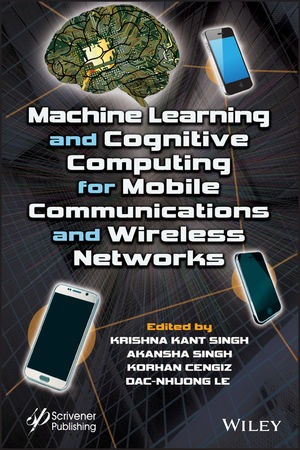
Machine Learning and Cognitive Computing for Mobile Communications and Wireless Networks
Communication and network technology has witnessed recent rapid development and numerous information services and applications have been developed globally. These technologies have high impact on society and the way people are leading their lives. The advancement in technology has undoubtedly improved the quality of service and user experience yet a lot needs to be still done. Some areas that still need improvement include seamless wide-area coverage, high-capacity hot-spots, low-power massive-connections, low-latency and high-reliability and so on. Thus, it is highly desirable to develop smart technologies for communication to improve the overall services and management of wireless communication. Machine learning and cognitive computing have converged to give some groundbreaking solutions for smart machines. With these two technologies coming together, the machines can acquire the ability to reason similar to the human brain. The research area of machine learning and cognitive computing cover many fields like psychology, biology, signal processing, physics, information theory, mathematics, and statistics that can be used effectively for topology management. Therefore, the utilization of machine learning techniques like data analytics and cognitive power will lead to better performance of communication and wireless systems.
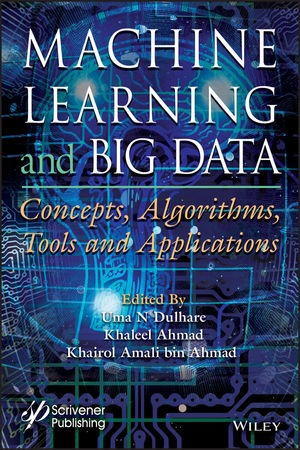
Machine learning and big data : Concepts, algorithms, tools and applications
Showcase novel use-cases and applications, present empirical research results from user-centered qualitative and quantitative experiments of these new applications, and facilitate a discussion forum to explore the latest trends in big data and machine learning by providing algorithms which can be trained to perform interdisciplinary techniques such as statistics, linear algebra, and optimization and also create automated systems that can sift through large volumes of data at high speed to make predictions or decisions without human intervention
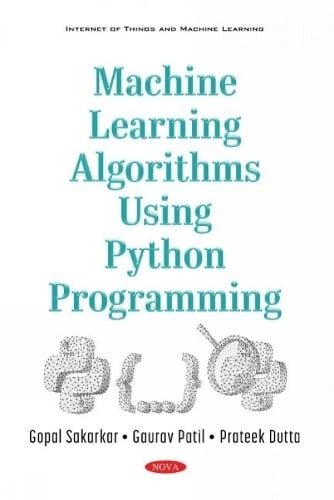
Machine Learning Algorithms Using Python Programming
Presents the key concepts of Machine Learning which includes Python concepts and Interpreter, Foundation of Machine Learning, Data Pre-processing, Supervised Machine Learning, Unsupervised Machine Learning, Reinforcement Learning, Kernel Machine, Design and analysis of Machine Learning experiment and Data visualization. The theoretical concepts along with coding implementation are covered. This book aims to pursue a middle ground between a theoretical textbook and one that focuses on applications. The book concentrates on the important ideas in machine learning.
Machine Learning : The Basics
Approaches ML as the computational implementation of the scientific principle. This principle consists of continuously adapting a model of a given data-generating phenomenon by minimizing some form of loss incurred by its predictions. Trains readers to break down various ML applications and methods in terms of data, model, and loss, thus helping them to choose from the vast range of ready-made ML methods.

Machine Learning : ECML 2005 ; 16th European Conference on Machine Learning, Porto, Portugal, October 3-7, 2005, Proceedings
The European Conference on Machine Learning (ECML) and the European Conference on Principles and Practice of Knowledge Discovery in Databases (PKDD) were jointly organized this year for the ?fth time in a row, after some years of mutual independence before. After Freiburg (2001), Helsinki (2002), Cavtat (2003) and Pisa (2004), Porto received the 16th edition of ECML and the 9th PKDD in October 3–7. Having the two conferences together seems to be working well: 585 di?erent paper submissions were received for both events, which maintains the high s- mission standard of last year. Of these, 335 were submitted to ECML only, 220 to PKDD only and 30 to both. Such a high volume of scienti?c work required a tremendous e?ort from Area Chairs, Program Committee members and some additional reviewers. On average, PC members had 10 papers to evaluate, and Area Chairs had 25 papers to decide upon. We managed to have 3 highly qualified independent reviews per paper (with very few exceptions) and one additional overall input from one of the Area Chairs. After the authors’ responses and the online discussions for many of the papers, we arrived at the ?nal selection of 40 regular papers for ECML and 35 for PKDD. Besides these, 32 others were accepted as short papers for ECML and 35 for PKDD. This represents a joint acceptance rate of around 13% for regular papers and 25% overall.

Logical aspects of computational linguistics ; 4th International Conference, LACL 2001, Le Croisic, France, June 27-29, 2001, Proceedings
Structural Equations in Language Learning.- On the Distinction between Model-Theoretic and Generative-Enumerative Syntactic Frameworks.- Contributed Papers.- A Formal Definition of Bottom-Up Embedded Push-Down Automata and Their Tabulation Technique.- An Algebraic Approach to French Sentence Structure.- Deductive Parsing of Visual Languages.- Lambek Grammars Based on Pregroups.- An Algebraic Analysis of Clitic Pronouns in Italian.- Consistent Identification in the Limit of Any of the Classes k-Valued Is NP-hard.- Polarized Non-projective Dependency Grammars.- On Mixing Deduction and Substitution in Lambek Categorial Grammars.- A Framework for the Hyperintensional Semantics of Natural Language with Two Implementations.- A Characterization of Minimalist Languages.- of Speech Tagging from a Logical Point of View.- Transforming Linear Context-Free Rewriting Systems into Minimalist Grammars.- Recognizing Head Movement.- Combinators for Paraconsistent Attitudes.- Combining Syntax and Pragmatic Knowledge for the Understanding of Spontaneous Spoken Sentences.- Atomicity of Some Categorially Polyvalent Modifiers.
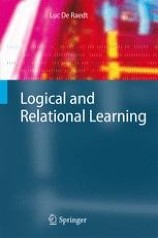
Logical and Relational Learning
This textbook covers logical and relational learning in depth, and hence provides an introduction to inductive logic programming (ILP), multirelational data mining (MRDM) and (statistical) relational learning (SRL). These subfields of data mining and machine learning are concerned with the analysis of complex and structured data sets that arise in numerous applications, such as bio- and chemoinformatics, network analysis, Web mining, natural language processing, within the rich representations offered by relational databases and computational logic.
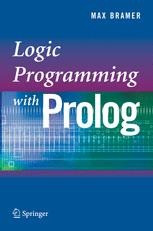
Logic Programming with Prolog
Logic Programming is the name given to a distinctive style of programming, very different from that of conventional programming languages such as C++ and Java. By far the most widely used Logic Programming language is Prolog. Prolog is a good choice for developing complex applications, especially in the field of Artificial Intelligence. This book does not assume that the reader is an experienced programmer or has a background in Mathematics, Logic or Artificial Intelligence. It starts from scratch and aims to arrive at the point where quite powerful programs can be written in the language. It is intended both as a textbook for an introductory course and as a self-study book. On completion the reader will know enough to use Prolog in their own research or practical projects. Each chapter has self-assessment exercises so that the reader may check their own progress. A glossary of the technical terms used completes the book.

Logic Programming ; Vol. 3668 : 21st International Conference, ICLP 2005, Sitges, Spain, October 2-5, 2005, Proceedings
This volume contains the proceedings of the 21st International Conference on Logic Programming which was held in Sitges (Barcelona), Spain, from October 2nd to 5th, 2005. The conference was colocated with the International Conf- ence on ConstraintProgramming(CP 2005)and the following 6 post-conference workshops: – CICLOPS 2005: Colloquium on Implementation of Constraint and Logic Programming Systems – CSLP 2005: Constraint Solving and Language Processing – WCB 2005: Constraint Based Methods for Bioinformatics – WLPE 2005: Logic-Based Methods in Programming Environments – MoVeLog 2005: Mobile Code Safety and Program Veri?cation Using C- putational Logic Tools – CHR 2005: Constraint Handling Rules The conferencecoincided with a solareclipse
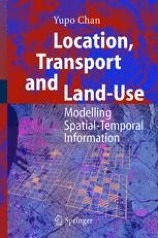
Location, Transport and Land-Use : Modelling Spatial-Temporal Information
Shows the use of statistical tools for forecasting and analyzing implications of land-use decisions. The idea is that la- use on a map is necessarily a consequence of individual, and often conflicting, siting decisions over time.

Literature-based Discovery
When Don Swanson hypothesized a connection between Raynaud’s phenomenon and dietary fish oil, the field of literature-based discovery (LBD) was born. During the subsequent two decades a steady stream of researchers have published articles about LBD and the field has made steady progress in laying foundations and creating an identity. LBD is an inherently multi-disciplinary enterprise where collaborations between the information and biomedical sciences are readily encountered. It is the hope and intention that this volume will plant a flag in the ground and inspire new researchers to the LBD challenge.
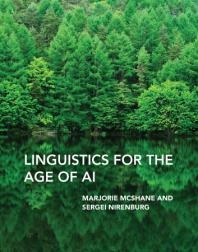
Linguistics for the age of AI
One of the original goals of artificial intelligence research was to endow intelligent agents with human-level natural language capabilities. Recent AI research, however, has focused on applying statistical and machine learning approaches to big data rather than attempting to model what people do and how they do it. In this book, Marjorie McShane and Sergei Nirenburg return to the original goal of recreating human-level intelligence in a machine. They present a human-inspired, linguistically sophisticated model of language understanding for intelligent agent systems that emphasizes meaning—the deep, context-sensitive meaning that a person derives from spoken or written language.

Linear Systems, Signal Processing and Hypercomplex Analysis ; Chapman University, November 2017
includes contributions originating from a conference held at Chapman University during November 14-19, 2017. It presents original research by experts in signal processing, linear systems, operator theory, complex and hypercomplex analysis and related topics.

Linear and Generalized Linear Mixed Models and Their Applications
This book covers two major classes of mixed effects models—linear mixed models and generalized linear mixed models—and it presents an up-to-date account of theory and methods in analysis of these models as well as their applications in various fields. It offers a systematic approach to inference about non-Gaussian linear mixed models. Furthermore, it discusses the latest developments and methods in the field, incorporating relevant updates since publication of the first edition. These include advances in high-dimensional linear mixed models in genome-wide association studies (GWAS), advances in inference about generalized linear mixed models with crossed random effects, new methods in mixed model prediction, mixed model selection, and mixed model diagnostics.

Leveraging applications of formal methods, verification and validation : Verification Principles ; 9th International Symposium on Leveraging Applications of Formal Methods, ISoLA 2020, Rhodes, Greece, October 20–30, 2020, Proceedings, Part I
Constitutes the refereed proceedings of the 9th International Symposium on Leveraging Applications of Formal Methods, ISoLA 2020, which was planned to take place during October 20–30, 2020, on Rhodes, Greece. The papers presented were carefully reviewed and selected for inclusion in the proceedings. Each volume focusses on an individual topic with topical section headings within the volume : Part I, Verification Principles : Modularity and (De-)Composition in Verification ; X-by-Construction: Correctness meets Probability ; 30 Years of Statistical Model Checking ; Verification and Validation of Concurrent and Distributed Systems.

Leveraging applications of formal methods, verification and validation : Engineering Principles ; 9th International Symposium on Leveraging Applications of Formal Methods, ISoLA 2020, Rhodes, Greece, October 20–30, 2020, Proceedings, Part II
Constitutes the refereed proceedings of the 9th International Symposium on Leveraging Applications of Formal Methods, ISoLA 2020, which was planned to take place during October 20–30, 2020, on Rhodes, Greece. The event itself was postponed to 2021 due to the COVID-19 pandemic. The papers presented were carefully reviewed and selected for inclusion in the proceedings. Each volume focusses on an individual topic with topical section headings within the volume: Part II, Engineering Principles : Automating Software Re-Engineering ; Rigorous Engineering of Collective Adaptive Systems.
Legal Programming : Designing Legally Compliant RFID and Software Agent Architectures for Retail Processes and Beyond
LEGAL PROGRAMMING: Designing Legally Compliant RFID and Software Agent Architectures for Retail Processes and Beyond provides a process-oriented discussion of the legal concerns presented by agent-based technologies, processes and programming. It offers a general outline of the potential legal difficulties that could arise in relation to them, focusing on the programming of negotiation and contracting processes in a privacy, consumer and commercial context. The authors will elucidate how it is possible to create form of legal framework and design methodology for transaction agents, applicable in any environment and not just in a specific proprietary framework, that provides the right level of compliance and trust. Key elements considered include the design and programming of legally compliant methods, the determination of rights in respect of objects and variables, and ontologies and programming frameworks for agent interactions. Examples are used to illustrate the points made and provide a practical perspective.

Learning to Live in the Knowledge Society ; IFIP 20th World Computer Congress, IFIP TC 3 ED-L2L Conference September 7–10, 2008, Milano, Italy
The IFIP series publishes state-of-the-art results in the sciences and technologies of information and communication. The scope of the series includes: foundations of computer science; software theory and practice; education; computer applications in technology; communication systems; systems modeling and optimization; information systems; computers and society; computer systems technology; security and protection in information processing systems; artificial intelligence; and human-computer interaction. Proceedings and post-proceedings of refereed international conferences in computer science and interdisciplinary fields are featured. These results often precede journal publication and represent the most current research.
Learning from data streams : Processing techniques in sensor networks
The book provides the reader with a comprehensive overview of stream data processing, including famous prototype implementations like the Nile system and the TinyOS operating system. The set of chapters covers the state-of-art in data stream mining approaches using clustering, predictive learning, and tensor analysis techniques, and applying them to applications in security, the natural sciences, and education.
