



الصفحة 3
الصفحة 3
Natural language processing and chinese computing ; 9th CCF International conference, NLPCC 2020, Zhengzhou, China, October 14–18, 2020, Proceedings, Part I
This two-volume set of LNAI 12340 and LNAI 12341 constitutes the refereed proceedings of the 9th CCF Conference on Natural Language Processing and Chinese Computing, NLPCC 2020, held in Zhengzhou, China, in October 2020. The 70 full papers, 30 poster papers and 14 workshop papers presented were carefully reviewed and selected from 320 submissions. They are organized in the following areas: Conversational Bot/QA; Fundamentals of NLP; Knowledge Base, Graphs and Semantic Web; Machine Learning for NLP; Machine Translation and Multilinguality; NLP Applications; Social Media and Network; Text Mining; and Trending Topics.

Multi-Robot Systems. From Swarms to Intelligent Automata, Vol. III ; Proceedings from the 2005 International Workshop on Multi-Robot Systems
Documents developments in multi-robot systems research. This volume is the result of the Third International workshop on Multi-Robot Systems that was held in March 2005 at the Naval Research Laboratory in Washington, DC.

Multiple-Aspect Analysis of Semantic Trajectories ; First International Workshop, MASTER 2019, Held in Conjunction with ECML-PKDD 2019, Würzburg, Germany, September 16, 2019, Proceedings
This book constitutes the refereed post-conference proceedings of the First International Workshop on Multiple-Aspect Analysis of Semantic Trajectories, MASTER 2019, held in conjunction with the 19th European Conference on Machine Learning and Knowledge Discovery in Databases, ECML PKDD 2019, in Würzburg, Germany, in September 2019.

Multiobjective Problem Solving from Nature : From Concepts to Applications
he book focuses on how MOEAs and related techniques can be used to solve problems, particularly in the disciplines of science and engineering. Contributions by leading researchers show how the concepts of multiobjective optimization can be used to reformulate and resolve problems in broad areas such as constrained optimization, coevolution, classification, inverse modelling and design. The book is distinguished from other texts on MOEAs in that it is not primarily about the algorithms, nor specific applications, but about the concepts and processes involved in solving problems using a multiobjective approach. Each chapter contributes to the central, deep concepts and themes of the book: evaluating the utility of the multiobjective approach; discussing alternative problem formulations; showing how problem formulation affects the search process; and examining solution selection and decision making.

Multimodal Processing and Interaction : Audio, Video, Text
Multimodal Processing and Interaction: Audio, Video and Text presents high quality, state-of-the-art research ideas and results from theoretic, algorithmic and application viewpoints. This edited volume contains both state-of-the-art reviews and original contributions by leading experts in the scientific and technological field of multimedia. It grew out of a four-year collaboration among research groups participating in the European network of Excellence on Multimedia Understanding, Semantics, Computation and Learning (MUSCLE).
Multimedia technology and enhanced learning ; 2nd EAI International conference, ICMTEL 2020, Leicester, UK, April 10-11, 2020, Proceedings, Part II
This two-volume book constitutes the refereed proceedings of the Second International Conference on Multimedia Technology and Enhanced Learning, ICMTEL 2020, held in Leicester, United Kingdom, in April 2020. Due to the COVID-19 pandemic all papers were presented in YouTubeLive. The 83 revised full papers have been selected from 158 submissions. They describe new learning technologies which range from smart school, smart class and smart learning at home and which have been developed from new technologies such as machine learning, multimedia and Internet of Things.

Multimedia Technology and Enhanced Learning ; 2nd EAI International Conference, ICMTEL 2020, Leicester, UK, April 10-11, 2020, Proceedings, Part I
This two-volume book constitutes the refereed proceedings of the Second International Conference on Multimedia Technology and Enhanced Learning, ICMTEL 2020, held in Leicester, United Kingdom, in April 2020. Due to the COVID-19 pandemic all papers were presented in YouTubeLive. The 83 revised full papers have been selected from 158 submissions. They describe new learning technologies which range from smart school, smart class and smart learning at home and which have been developed from new technologies such as machine learning, multimedia and Internet of Things.

Multimedia security : Algorithm development, analysis and applications (algorithms for intelligent systems)
Provides an insight about various techniques used in multimedia security and identifies its progress in both technological and algorithmic perspectives. In the contemporary world, digitization offers an effective mechanism to process, preserve and transfer all types of information. The incredible progresses in computing and communication technologies augmented by economic feasibility have revolutionized the world. The availability of efficient algorithms together with inexpensive digital recording and storage peripherals have created a multimedia era bringing conveniences to people in sharing the digital data that includes images, audio and video. The ever-increasing pace, at which the multimedia and communication technology is growing, has also made it possible to combine, replicate and distribute the content faster and easier, thereby empowering mankind by having a wealth of information at their disposal.

Multi-Agent-Based Simulation VIII ; International Workshop, MABS 2007, Honolulu, HI, USA, May 15, 2007, Revised and Invited Papers
This book constitutes the thoroughly refereed post-proceedings of the 8th International Workshop on Multi-Agent-Based Simulation, MABS 2007, held in Honolulu, HI, USA in May 2007 as an associated event of AAMAS 2007, the main international conference on autonomous agents and multi-agent systems.The 10 revised full papers presented were carefully reviewed and selected from 20 submissions.The papers are organized in topical sections on architectures; teams, learning, education; economy, trust and reputation.

Multi-Agent Systems and Applications ; 9th ECCAI Advanced Course ACAI 2001 and Agent Link's 3rd European Agent Systems Summer School, EASSS 2001, Prague, Czech Republic, July 2-13, 2001. Selected Tutorial Papers
The Advanced Course on Artificial Intelligence ACAI 2001 with the subtitle M ulti- Agent Systems and Their Applications , held in Prague, Czech Republic, was a joint event of ECCAI (the European Coordinating Committee for Artificial Intelligence) and AgentLink, the European Network of Excellence for Agent-Based Computing. Whereas ECCAI organizes two-week ACAI courses on different topics every second year, AgentLink s European Agent Systems Summer School (EASSS) has been an annual event since 1999. This year, both of these important events were merged together, giving weight to the fact that multi-agent systems currently represent one of the hottest topics in AI research. The name, ACAI 2001 Summer School, is intended to emphasize that this event continues the tradition of regular ECCAI activities (ACAI), as well as the EASSS summer schools of AgentLink.

Multiagent System Technologies ; Vol. 4196 ; 4th German Conference, MATES 2006, Erfurt, Germany, September 19-20, 2006, Proceedings
This book constitutes the refereed proceedings of the 4th German Conference on Multiagent Systems Technologies, MATES 2006, co-located with Net.ObjectDays (NoDe 2006). The 15 revised full papers presented were carefully reviewed and selected from 52 submissions. The papers are organized in topical sections on agent communication and interaction, applications and simulation, agent planning, agent-oriented software engineering, as well as trust and security.
Multiagent System Technologies ; Vol. 3550 : 3rd German Conference, MATES 2005, Koblenz, Germany, September 11-13, 2005, Proceedings
After two successful MATES conferences in Erfurt 2003 and 2004, the 3rd G- man conference on Multi-agent System Technologies (MATES 2005) took place in Koblenz, Germany, in September 2005, and was co-located with the 28th German Conference on Arti?cial Intelligence (KI 2005). Building onotheragent-related events in Germany in the past, and organized by the GI German Special Interest Group on Distributed Arti?cial Intelligence, the MATES conference series aims at promoting the theory and applications of agents and multiagent systems. In corporating the 9th International Workshopon Cooperative Information Agents (CIA 2005), the topics of interest for MATES 2005 also covered the ?elds of intelligent information agents and systems for the Internet and the (Semantic) Web. As in recent years, MATES 2005 provided a distinguished, lively and int- disciplinary forum for researchers, users, and developers of agent technology, to present and discuss the latest advances of research and development in the area of autonomous agents and multiagent systems. Accordingly, the topics of MATES 2005 covered the whole range from the theory to applications of age- and multiagent technology. The technical program included a total of 24 sci- ti?c talks, and demonstrations of selected running agent systems, and both the MATES 2005 Best Paper and the CIA 2005 System Innovation awards.

Multiagent System Technologies ; 6th German Conference, MATES 2008, Kaiserslautern, Germany, September 23-26, 2008. Proceedings
This book constitutes the refereed proceedings of the 6th German Conference on Multiagent Systems Technologies, MATES 2008, held in Kaiserslautern, Germany, in September 2008 - co-located with the 31st German Conference on Artificial Intelligence, KI 2008.The 16 revised full papers presented together with 2 invited talks were carefully reviewed and selected from 35 submissions. The papers present and discuss the latest advances of research and development in the area of autonomous agents and multiagent systems ranging from theoretical and methodological issues to applications in various fields.
Multiagent System Technologies ; 5th German Conference, MATES 2007, Leipzig, Germany, September 24-26, 2007, Proceedings
The papers are organized in topical sections on engineering multi-agent systems, multi-agent planning and learning, multi-agent communication, interaction, and coordination, multi-agent resource allocation, multi-agent planning and simulation, as well as trust and reputation.

Multi-Agent Programming : Languages, Platforms and Applications
Part I describes four approaches that are based on computational logic or process algebra--Jason, 3APL, IMPACT, and CLAIM/SyMPA. These programming languages have formal semantics and use heavy machinery based on formal methods, but also provide working platforms for the development of multi-agent systems. Part II presents agent languages and platforms that extend or are based on Java--JADE, Jadex, and JACKTM. Although these have no formal semantics, the languages are well documented and the platforms provide a variety of tools that have been extensively used in practice. Part III provides two significant industry specific applications--The DEFACTO System for coordinating human-agent teams for the future of disaster response, and the ARTIMIS rational dialogue agent technology. The book also features seven appendices, summarising each of the agent programming languages, hence facilitating comparison of the approaches. In particular, Appendix A describes the criteria used for comparing the agent languages and platforms.

Multiagent Engineering : Theory and Applications in Enterprises
1 Multiagent Engineering: A New Software Construction Paradigm Multiagent systems have a long academic tradition. They have their roots in distributed problem solving in Artificial Intelligence (AI) from where they emerged in the mid-eighties as a distinctive discipline. Research in multiagent systems owes much to the work of Rosenschein on rationality and autonomy of intelligent agents, the European MAAMAW workshop series

Mouse controller using electroencephalography (EEG) device
The growing technologies related to neuroscience has to lead many innovative applications, most importantly Electroencephalography, or EEG for short. This field of study has become recently a trend that many companies around the world have started to enter the race of conquering the brain and controlling everything from a mouse controller to the whole human body. This project aims to help disabled people use a computer with ease and simplicity without needing to use their hands, or anything really, which they can achieve by wearing a headset or get someone to put it on them. The headset is designed to read brain activities and send it to a computer program to understand where the user wants to move the mouse cursor on the computer screen using an Artificial Intelligence model. This project helps further researches in this field which pushes the technology even further from where it is now. The device designed for this project can be repurposed pretty easily to serve many different applications other than controlling a mouse.

Motion in Games ; 1st International Workshop, MIG 2008, Utrecht, The Netherlands, June 14-17, 2008. Revised Papers
This book constitutes the thoroughly refereed post-workshop proceedings of the First International Workshop on Motion in Games, held in Utrecht, The Netherlands, during June 14-17, 2008, in collaboration with the NLGD Festival of Games.The 24 revised papers presented during the workshop cover topics on crowd simulation; virtual humans; motion synthesis; interfaces; navigation and steering; and facial and behavioral animation.

Modern IoT onboarding platforms for advanced applications: a practitioner’s guide to KIS.ME
There is no doubt that digitalization solutions from Industry 4.0 and the Internet of Things (IoT) can be perceived as excellent candidate strategies capable of handling the above-stated issues concerning measurements and transparency. However, IoT tools themselves can provide appropriate data only, while their efficient integration and application are possible using a dedicated onboarding platform only. To settle this issue, the book undertakes the problem of modern IoT onboarding platforms for the advanced applications pertaining to manufacturing and logistics. In particular, instead of deliberating about a possible hypothetic platforms, an existing and efficient one is employed, which is called KIS.ME. KIS.ME (Keep It Simple. Manage Everything) is a complete IoT solution for a simple integration in manufacturing and logistics.
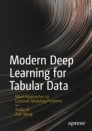
Modern deep learning for tabular data : Novel approaches to common modeling problems
Synthesizes and presents novel deep learning approaches to a seemingly unlikely domain - tabular data. Whether for finance, business, security, medicine, or countless other domain, deep learning can help mine and model complex patterns in tabular data - an incredibly ubiquitous form of structured data. Part I of the book offers a rigorous overview of machine learning principles, algorithms, and implementation skills relevant to holistically modeling and manipulating tabular data. Part II studies five dominant deep learning model designs - Artificial Neural Networks, Convolutional Neural Networks, Recurrent Neural Networks, Attention and Transformers, and Tree-Rooted Networks - through both their 'default' usage and their application to tabular data. Part III compounds the power of the previously covered methods by surveying strategies and techniques to supercharge deep learning systems: autoencoders, deep data generation, meta-optimization, multi-model arrangement, and neural network interpretability.
