



الصفحة 3
الصفحة 3
Fast software encryption ; 15th International Workshop, FSE 2008, Lausanne, Switzerland, February 10-13, 2008, Revised Selected Papers
Constitutes the thoroughly refereed proceedings of the 15th International Workshop on Fast Software Encryption, FSE 2008, held in Lausanne, Switzerland in February 2008.The 26 revised full papers presented together with 4 short papers were carefully reviewed and selected from 72 submissions. The papers address all current aspects of fast and secure primitives for symmetric cryptology and are organized in topical sections on SHA collisions, new hash function designs, block cipher cryptanalysis, implementation aspects, hash function cryptanalysis, stream cipher cryptanalysis, security bounds, and entropy.
Expert Oracle Database Architecture : 9i and 10g Programming Techniques and Solutions
This is a defining book on the Oracle database for any developer or database administrator who works with Oracle-driven database applications. Tom Kyte has a simple philosophy: you can treat Oracle as a black box and just stick data into it or you can understand how it works and exploit it as a powerful computing environment. If you choose the latter, then you will find that there are few information management problems that you cannot solve quickly and elegantly. Expert Oracle Database Architecture is the first of a three-book series that completely explores and defines the Oracle database. It covers all of the most important Oracle architecture features, including: Files, memory structures and processes / Locking and latching / Transactions, concurrency and multi-versioning / Tables and Indexes / Datatypes / Partitioning and parallelism Each feature is taught in a proof-by-example manner, not only discussing what it is, but also how it works, how to implement software using it, and the common pitfalls associated with it.
Experimental Algorithms ; 7th International Workshop, WEA 2008 Provincetown, MA, USA, May 30-June 1, 2008 Proceedings
The Workshop on Experimental Algorithms, WEA, is intended to be an international forum for research on the experimental evaluation and engineering of algorithms, as well as in various aspects of computational optimization and its applications. The emphasis of the workshop is the use of experimental me- ods to guide the design, analysis, implementation, and evaluation of algorithms, heuristics, and optimization programs. WEA 2008 was held at the Provincetown Inn, Provincetown, MA, USA, on May 30 – June 1, 2008. This was the seventh workshop of the series.

Evolutionary Synthesis of Pattern Recognition Systems
Evolutionary Synthesis of Pattern Recognition Systems presents novel effective approaches based on evolutionary computational techniques, such as genetic programming (GP), linear genetic programming (LGP), coevolutionary genetic programming (CGP) and genetic algorithms (GA) to automate the synthesis and analysis of object detection and recognition systems. The book’s concepts, principles, and methodologies will enable readers to automatically build robust and flexible systems—in a systematic manner—that can provide human-competitive performance and reduce the cost of designing and maintaining these systems. Its content covers all key aspects of object recognition: object detection, feature selection, feature discovery, object recognition, domain knowledge. Basic knowledge of programming and data structures, and some calculus, is presupposed.ing the book’s novel ideas

Evolutionary Multiobjective Optimization : Theoretical Advances and Applications
Evolutionary Multiobjective Optimization is a rare collection of the latest state-of-the-art theoretical research, design challenges and applications in the field of multiobjective optimization paradigms using evolutionary algorithms. It includes two introductory chapters giving all the fundamental definitions, several complex test functions and a practical problem involving the multiobjective optimization of space structures under static and seismic loading conditions used to illustrate the various multiobjective optimization concepts.

Engineering Stochastic Local Search Algorithms. Designing, Implementing and Analyzing Effective Heuristics ; International Workshop, SLS 2007, Brussels, Belgium, September 6-8, 2007, Proceedings
Stochastic local search (SLS) algorithms enjoy great popularity as powerful and versatile tools for tackling computationally hard decision and optimization pr- lems from many areas of computer science, operations research, and engineering. However, in recent years it has become evident that at the core of this development task there is a highly complex engineering process, which combines various aspects of algorithm design with empirical analysis techniques and problem-specific background, and which relies heavily on knowledge from a number of disciplines and areas, including computer science, operations research, artificial intelligence, and statistics. This development process needs to be - sisted by a sound methodology that addresses the issues arising in the various phases of algorithm design, implementation, tuning, and experimental eval- tion.

Elementary logic : For software development
This book teaches readers how to better reason about software development, to communicate reasoning, to distinguish between good and bad reasoning, and to read professional literature that presumes knowledge of elementary logic. It explains fundamental concepts and provides reader-friendly instructions for applying logic to software development.
E-business and telecommunication networks ; 3rd International conference, ICETE 2006, Setúbal, Portugal, August 7-10, 2006. Selected Papers
This book constitutes the best papers of the Third International Conference on E-business and Telecommunication Networks, ICETE 2006, held in Setúbal, Portugal, August 7-10, 2006.
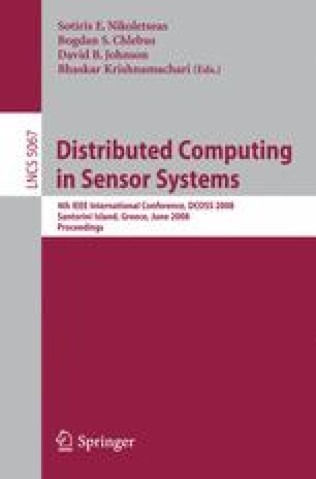
Distributed computing in sensor systems ; 4th IEEE International Conference, DCOSS 2008 Santorini Island, Greece, June 11-14, 2008 Proceedings
The book constitutes the refereed proceedings of the 4th International Conference on Distributed Computing in Sensor Systems, DCOSS 2008, held on Santorini Island, Greece, in June 2008.

Digital watermarking ; 6th International Workshop, IWDW 2007 Guangzhou, China, December 3-5, 2007 Proceedings
This book constitutes the refereed proceedings of the 6th International Workshop, IWDW 2007, held in Guangzhou, China, in December 2007.

Datatype-Generic Programming ; International Spring School, SSDGP 2006, Nottingham, UK, April 24-27, 2006, Revised Lectures
A leitmotif in the evolution of programming paradigms has been the level and extent of parametrisation that is facilitated — the so-called genericity of the paradigm. The sorts of parameters that can be envisaged in a programming language range from simple values, like integers and fioating-point numbers, through structured values, types and classes, to kinds (the type of types and/or classes).Datatype-generic programming is about parametrising programsby the structure of the data that they manipulate. To appreciate the importance of data type genericity,one need look no further than the internet. The internet is a massive repository of structured data, but the structure is rarely exploited. For example, compression of data can be much more efiective if its structure is known, but most compression algorithms regard the input data as simply a string of bits, and take no account of its internal organisation. Datatype-generic programming is about exploiting the structure of data when it is relevant and ignoring it when it is not. Programming languages most c- monly used at the present time do not provide efiective mechanisms for do- menting and implementing datatype genericity.

Database Systems for Advanced Applications ; 13th International Conference, DASFAA 2008, New Delhi, India, March 19-21, 2008. Proceedings
This book constitutes the refereed proceedings of the 13th International Conference on Database Systems for Advanced Applications, DASFAA 2008, held in New Delhi, India, in March 2008.

Data structures and algorithm : Analysis in C++
An advanced algorithms book that bridges the gap between traditional CS2 and Algorithms Analysis courses. As the speed and power of computers increases, so does the need for effective programming and algorithm analysis. By approaching these skills in tandem, Mark Allen Weiss teaches readers to develop well-constructed, maximally efficient programs using the C++ programming language

Data structure and algorithms using C++ : A practical implementation
Intended to flow from the basic concepts of C++ to technicalities of the programming language, its approach and debugging. The chapters of the book flow with the formulation of the problem, it's designing, finding the step-by-step solution procedure along with its compilation, debugging and execution with the output. Keeping in mind the learner’s sentiments and requirements, the exemplary programs are narrated with a simple approach so that it can lead to creation of good programs that not only executes properly to give the output, but also enables the learners to incorporate programming skills in them. The style of writing a program using a programming language is also emphasized by introducing the inclusion of comments wherever necessary to encourage writing more readable and well commented programs. As practice makes perfect, each chapter is also enriched with practice exercise questions so as to build the confidence of writing the programs for learners.
Data Management in Grid and Peer-to-Peer Systems ; 1st International Conference, Globe 2008, Turin, Italy, September 3, 2008. Proceedings
This book constitutes the refereed proceedings of the First International Conference on Data Management in Grid and Peer-to-Peer Systems, Globe 2008, held in Turin, Italy, in September 2008.

Concept Lattices and Their Applications ; Fourth International Conference, CLA 2006 Tunis, Tunisia, October 30-November 1, 2006 Selected Papers
This book constitutes the refereed proceedings of the Fourth International Conference on Concept Lattices and their Applications, CLA 2006, held in Tunis, Tunisia, October 30-November 1, 2006.

Computing and Combinatorics ; 14th Annual International Conference, COCOON 2008 Dalian, China, June 27-29, 2008 Proceedings
The refereed proceedings of the 14th Annual International Computing and Combinatorics Conference, COCOON 2008, held in Dalian, China, in June 2008.
Computers and Games ; 6th International Conference, CG 2008, Beijing, China, September 29 - October 1, 2008. Proceedings
This book constitutes the refereed proceedings of the 6th International Conference on Computers and Games, CG 2008, held in Beijing, China, in September/October 2008 co-located with the 13th Computer Olympiad and the 16th World Computer-Chess Championship.

Computer Science : Theory and Applications ; 2nd International Symposium on Computer Science in Russia, CSR 2007, Ekaterinburg, Russia, September 3-7, 2007, Proceedings
This book covers theory track deals with algorithms, protocols, and data structures; complexity and cryptography; formal languages, automata and their applications to computer science; computational models and concepts; proof theory; and applications of logic to computer science. Many applications are presented.

Computer science : Theory and applications ; 15th International computer science symposium in Russia, CSR 2020, Yekaterinburg, Russia, June 29 – July 3, 2020, Proceedings
This book constitutes the proceedings of the 15th International Computer Science Symposium in Russia, CSR 2020, held in Yekaterinburg, Russia, in June 2020. The 25 full papers and 6 invited papers were carefully reviewed and selected from 49 submissions. The papers cover a broad range of topics, such as: algorithms and data structures; computational complexity, including hardness of approximation and parameterized complexity; randomness in computing, approximation algorithms, fixed-parameter algorithms; combinatorial optimization, constraint satisfaction, operations research; computational geometry; string algorithms; formal languages and automata, including applications to computational linguistics; codes and cryptography; combinatorics in computer science; computational biology; applications of logic to computer science, proof complexity; database theory; distributed computing; fundamentals of machine learning, including learning theory, grammatical inference and neural computing; computational social choice; quantum computing and quantum cryptography; theoretical aspects of big data.
