



الصفحة 28
الصفحة 28

Dependable software engineering : Theories, tools, and applications ; 6th International Symposium, SETTA 2020, Guangzhou, China, November 24–27, 2020, Proceedings
This book constitutes the proceedings of the 6th International Symposium on Dependable Software Engineering, SETTA 2020, held in Guangzhou, China, in November 2020. The 10 full and 1 short paper included in this volume were carefully reviewed and selected from 20 submissions. They deal with latest research results and ideas on bridging the gap between formal methods and software engineering.

Dependable Embedded Systems
This book introduces readers to many new techniques for enhancing and optimizing reliability in embedded systems, which have emerged particularly within the last five years.

Dependable computing ; 2nd Latin-American symposium, LADC 2005, Salvador, Brazil, October 25-28, 2005 : proceedings
Contains the proceedings of the 'Second Latin-American Symposium' on Dependable Computing, LADC 2005. This book comprises 16 papers presented together with 3 invited talks. The papers are organized in topical sections on evaluation, certification, modelling, embedded systems, time, and distributed systems algorithms.

Deepfake detection
The rise of large language models (LLMs) and the increasing sophistication of deepfake images have made detecting synthetic content a pressing challenge. Several approaches have been proposed to tackle this problem, including statistical analysis, and machine learning algorithms. In this project, A novel zero-shot approach is proposed that utilizes the power of LLMs to detect fake text. The pre-trained LLM is fine-tuned to enhance its ability to differentiate real and fake text. The approach uses the LLM to detect text by analyzing the log probabilities of the text. For detecting fake images, computer vision algorithms and neural networks are used to analyze facial features. The facial region is cropped and preprocessed and the neural network identifies patterns indicative of synthetic content.

Deep neural networks and data for automated driving : robustness, uncertainty quantification, and insights towards safety
Environment perception for highly automated driving heavily employs deep neural networks, facing many challenges. How much data do we need for training and testing? How to use synthetic data to save labeling costs for training? How do we increase robustness and decrease memory usage? For inevitably poor conditions: How do we know that the network is uncertain about its decisions? Can we understand a bit more about what actually happens inside neural networks? This leads to a very practical problem particularly for DNNs employed in automated driving: What are useful validation techniques and how about safety? This book unites the views from both academia and industry, where computer vision and machine learning meet environment perception for highly automated driving. Naturally, aspects of data, robustness, uncertainty quantification, and, last but not least, safety are at the core of it. This book is unique: In its first part, an extended survey of all the relevant aspects is provided. The second part contains the detailed technical elaboration of the various questions mentioned above.

Deep Learning-Based Face Analytics
Provides an overview of different deep learning-based methods for face recognition and related problems. Specifically, the authors present methods based on autoencoders, restricted Boltzmann machines, and deep convolutional neural networks for face detection, localization, tracking, recognition, etc. The authors also discuss merits and drawbacks of available approaches and identifies promising avenues of research in this rapidly evolving field.
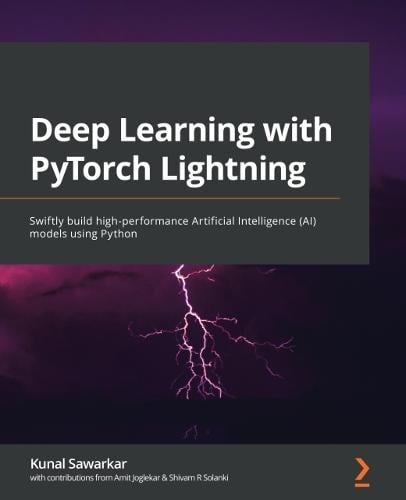
Deep Learning with PyTorch Lightning : Build and train high-performance artificial intelligence and self-supervised models using Python
You’ll learn how to configure PyTorch Lightning on a cloud platform, understand the architectural components, and explore how they are configured to build various industry solutions. You’ll build a neural network architecture, deploy an application from scratch, and see how you can expand it based on your specific needs, beyond what the framework can provide. In the later chapters, you’ll also learn how to implement capabilities to build and train various models like Convolutional Neural Nets (CNN), Natural Language Processing (NLP), Time Series, Self-Supervised Learning, Semi-Supervised Learning, Generative Adversarial Network (GAN) using PyTorch Lightning.

Deep learning methods for converting speech to text = تقنيات التعلم العميق في تحويل الصوت إلى نص
Aims to design and develop a system capable of extracting audio content from films and audio recordings and converting it into text using deep learning techniques. This is done by analyzing audio patterns, extracting sounds and words from the video, and then converting them into written text. Deep learning, a branch of artificial intelligence, is used to accomplish this task. The study also includes comparing different deep learning techniques to determine their effectiveness in this context.

Deep learning architecture and application
As one of the fastest-growing topics in machine learning, deep learning algorithms have achieved unprecedented success in recent years. Novel paradigms (such as contrastive learning and few-shot learning) in deep learning and rising neural network architectures (e.g., transformer and masked autoencoder) are dramatically changing the field of data-driven algorithms. More importantly, deep learning models are redefining the next generation of industrial applications spanning image recognition, speech processing, language translation, healthcare, and other sciences. For example, recent advances in deep representation learning are allowing us to learn about protein 3D structures, which sheds new light on fundamental medicine and biology along with potentially bringing in billions of dollars (e.g., in the pharmaceutical market).

Deep learning approach for text summarization
Machine learning and deep learning, as we know, have started ruling over almost every field in the computing industry and so, has revolutionized the process of text summarization too. Automatic text summarization is an advancing realm of the natural language processing research in which concise textual summaries are generated from lengthy input documents. Extensive research has been carried out on how automatic summarization can be prosecuted through various extractive and abstractive techniques. In this paper, we address all the approaches to text summarization and present the modus operandi of an Architecture called Encoder Decoder, under the machine learning approach.

Decrypted Secrets : Methods and Maxims of Cryptology
Cryptology, for millennia a "secret science", is rapidly gaining in practical importance for the protection of communication channels, databases, and software. Beside its role in computerized information systems (public key systems), more and more applications within computer systems and networks are appearing, which also extend to access rights and source file protection. The first part of this book treats secret codes and their uses - cryptography. The second part deals with the process of covertly decrypting a secret code - cryptanaly-sis - where in particular advice on assessing methods is given. The book presupposes only elementary mathematical knowledge.

Decision Support for Global Enterprises
Decision Support for Global Enterprises consists of peer-reviewed and invited papers with two primary goals: (1) Stimulate creative discussion between academic researchers and the practitioner IS community to improve the research and practice in the area. (2) Increase awareness of the problems and challenges faced by global enterprises that can be met with innovative decision support systems. Limitations are also explored, covering the following topics: the emerging enterprise decision making processes and technologies; decision making in uncertain, changing conditions; the changing infrastructure in organizations and society; the expanding role of web technologies; and emerging theories and practices for managing knowledge and making decisions.

Data-Driven Fault Detection and Reasoning for Industrial Monitoring
Assesses the potential of data-driven methods in industrial process monitoring engineering. The process modeling, fault detection, classification, isolation, and reasoning are studied in detail. These methods can be used to improve the safety and reliability of industrial processes. Fault diagnosis, including fault detection and reasoning, has attracted engineers and scientists from various fields such as control, machinery, mathematics, and automation engineering. Combining the diagnosis algorithms and application cases, this book establishes a basic framework for this topic and implements various statistical analysis methods for process monitoring.

Databases, Information Systems, and Peer-to-Peer Computing ; International Workshops, DBISP2P 2005/2006, Trondheim, Norway, August 28-29, 2006, Revised Selected Papers
The P2P paradigm lends itself to constructing large-scale, complex, adaptive, autonomous and heterogeneous database and information systems, endowed with clearly specified and difierential capabilities to negotiate, bargain, coordinate and self-organize the information exchanges in large-scale networks. This vision will have a radical impact on the structure of complex organizations (business, sci- tific or otherwise) and on the emergence and the formation of social communities, and on how the information is organized and processed. The P2P information paradigm naturally encompasses static and wireless connectivity and static and mobile architectures. Wireless connectivity combined with the increasingly small and powerful mobile devices and sensors poses new challenges as well as opp- tunities to the database community. Information becomes ubiquitous, highly distributed and accessible anywhere and at any time over highly dynamic, - stable networks with very severe constraints on the information management and processing capabilities.

Databases, information systems, and peer-to-peer computing ; 2nd international workshop, DBISP2P 2004, Toronto, Canada, August 29-30, 2004, revised selected papers
Peer-to-peer (P2P) paradigm lends itself to constructing large-scale complex, adaptive, - tonomous and heterogeneous database and information systems, endowed with clearly speci?ed and di?erential capabilities to negotiate, bargain, coordinate, and self-organize the information exchanges in large-scale networks. This vision will have a radical impact on the structure of complex organizations (business, scienti?c, or otherwise) and on the emergence and the formation of social c- munities, and on how the information is organized and processed. The P2P information paradigm naturally encompasses static and wireless connectivity, and static and mobile architectures. Wireless connectivity c- bined with the increasingly small and powerful mobile devices and sensors pose new challenges to as well as opportunities for the database community. Inf- mation becomes ubiquitous, highly distributed and accessible anywhere and at any time over highly dynamic, unstable networks with very severe constraints on the information management and processing capabilities.

Databases and information systems ; 14th International Baltic Conference, DB&IS 2020, Tallinn, Estonia, June 16–19, 2020, Proceedings
This book constitutes the refereed proceedings of the 14th International Baltic Conference on Databases and Information Systems, DB&IS 2020, held in Tallinn, Estonia, in June 2020.* The 22 revised papers presented were carefully reviewed and selected from 52 submissions. The papers are centered around topics like architectures and quality of information systems, artificial intelligence in information systems, data and knowledge engineering, enterprise and information systems engineering, security of information systems.

Database Theory – ICDT 2007 ; 11th International Conference, Barcelona, Spain, January 10-12, 2007, Proceedings
The papers are organized in topical sections on information integration and peer to peer, axiomatizations for XML, expressive power of query languages, incompleteness, inconsistency, and uncertainty, XML schemas and typechecking, stream processing and sequential query processing, ranking, XML update and query, as well as query containment.

Database theory - ICDT 2005 ; 10th international conference, Edinburgh, UK, January 5-7, 2005, Proceedings
This volume collects the papers presented at the 10th International Conference on Database Theory, ICDT 2005, held during January 5–7, 2005, in Edinburgh, UK. ICDT (http://alpha.luc.ac.be/~lucp1080/icdt/) has now a long tra- tion of international conferences, providing a biennial scienti?c forum for the communication of high-quality and innovative research results on theoretical - pects of all forms of database systems and database technology. The conference usually takes place in Europe, and has been held in Rome (1986), Bruges (1988), Paris (1990), Berlin (1992), Prague (1995), Delphi (1997), Jerusalem (1999), London (2001), and Siena (2003) so far. ICDT has merged with the Sym- sium on Mathematical Fundamentals of Database Systems (MFDBS), initiated in Dresden in 1987, and continued in Visegrad in 1989 and Rostock in 1991. ICDT had a two-stage submission process. First, 103 abstracts were subm- ted, which were followed a week later by 84 paper submissions. From these 84 submissions, the ICDT Program Committee selected 24 papers for presentation at the conference. Most of these papers were “extended abstracts” and preli- nary reports on work in progress. It is anticipated that most of these papers will appear in a more polished form in scienti?c journals.

Database systems for advanced applications ; Vol. 3453 ; 10th international conference, DASFAA 2005, Beijing, China, April 17-20, 2005, Proceedings
Data Stream Mining and Resource Adaptive Computation.- Purpose Based Access Control for Privacy Protection in Database Systems.- Complex Networks and Network Data Mining.- Bioinformatics.- Indexing DNA Sequences Using q-Grams.- PADS: Protein Structure Alignment Using Directional Shape Signatures.- LinkageTracker: A Discriminative Pattern Tracking Approach to Linkage Disequilibrium Mapping.- Watermarking and Encryption.- Query Optimization in Encrypted Database Systems.- Watermarking Spatial Trajectory Database.- Effective Approaches for Watermarking XML Data.- XML Query Processing.- A Unifying Framework for Merging and Evaluating XML Information.- Efficient Evaluation of Partial Match Queries for XML Documents Using Information Retrieval Techniques.- PathStack: A Holistic Path Join Algorithm for Path Query with Not-Predicates on XML Data.- XML Coding and Metadata Management.- An Improved Prefix Labeling Scheme: A Binary String Approach for Dynamic Ordered XML.- Efficiently Coding and Indexing XML Document.- XQuery-Based TV-Anytime Metadata Management.- Data Mining.- Effective Database Transformation and Efficient Support Computation for Mining Sequential Patterns.

Database and XMLTechnologies ; 5th International XML Database Symposium, XSym 2007, Vienna, Austria, September 23-24, 2007, Proceedings
This book discuss the use of and synergy between databases and XML. It provided theory and practice of XML data management and its applications. This volume also contains current research in XPath and XQuery processing, XML Updates, Temporal XML and Constraints.
