



الصفحة 20
الصفحة 20
Groupware : Design, Implementation, and Use ; 14th International Workshop, CRIWG 2008, Omaha, NE, USA, September 14-18, 2008, Revised Selected Papers
This book constitutes the refereed post-conference proceedings of the 14th International Workshop on Groupware: Design, Implementation, and Use, held in Omaha, Nebraska, USA, during September 14-18, 2008.The 30 papers presented were carefully reviewed and selected from numerous submission. The topics covered are groupware solutions, co-located groups, groupware for health care, collaborative systems development, collaborative emergency response, groupware approaches, patterns of collaboration.
Groupware : Design, implementation, and use ; 13th International Workshop, CRIWG 2007, Bariloche, Argentina, September 16-20, 2007, Proceedings
This volume constitutes the proceedings of the 13th International Workshop on Groupware (CRIWG 2007). This workshop aims at providing a forum for academic researchers and professionals to exchange their experiences and their ideas about problems and solutions related to the design, development and use of groupware applications.

Ground improvement and reinforced soil structures ; Proceedings of Indian Geotechnical Conference 2020 Vol. 2
This volume comprises the select proceedings of the Indian Geotechnical Conference (IGC) 2020. The contents focus on recent developments in geotechnical engineering for sustainable tomorrow. The volume covers the topics related advances in ground improvement of weak foundation soils for various civil engineering projects and design/construction of reinforced soil structures with different fill materials using synthetic and natural reinforcements in different forms.

Grid Middleware and Services : Challenges and Solutions
This book aims to strengthen and advance scientific and technological excellence in the area of Grid Computing. The main focus in this volume is on Grid middleware and service level agreement.Grid middleware and Grid services are two pillars of grid computing systems and applications. This book includes high-level contributions by leading researchers in both areas and presents current solutions together with future challenges. This volume includes sections on knowledge and data management on grids, Grid resource management and scheduling, Grid information, resource and workflow monitoring services, and service level agreements.
Grid Computing : Software Environments and Tools
The book provides: • Discussion of software engineering and modelling tools for the Grid • Analysis of issues inherent in enabling distributed computing across the Grid • Consideration of the software engineering support necessary for managing Grid applications • Proposal of a posited software engineering lifecycle to support application development for Grid Environments (along with associated tools). • Identification of novel concepts, methods and tools within Grid computing which can be put to work in the context of existing experiments and application case studies

Grid computing : Achievements and prospects
Grid Computing: Achievements and Prospects, the 9th edited volume of the CoreGRID series, includes selected papers from the CoreGRID Integration Workshop, held April 2008 in Heraklion-Crete, Greece. This event brings together representatives of the academic and industrial communities performing Grid research in Europe. The workshop was organized in the context of the CoreGRID Network of Excellence in order to provide a forum for the presentation and exchange of views on the latest developments in grid technology research.

Grid and cooperative computing - GCC 2005 ; 4th International Conference, Beijing, China, November 30 -- December 3, 2005, Proceedings
This volume presents the accepted papers for the 4th International Conference on Grid and Cooperative Computing (GCC2005),held in Beijing, China, during November 30 – December 3, 2005.The conferenceseries of GCC aims to provide an international forum for the presentation and discussion of research trends on the theory, method, and design of Grid and cooperative computing as well as their scienti?c, engineering and commercial applications. It has become a major annual event in this area. The First International Conference on Grid and Cooperative Computing (GCC2002) received 168 submissions. GCC 2003 received 550 submissions, from which 176 regular papers and 173 short papers were accepted. The acceptance rate of regular papers was 32%, and the total acceptance rate was 64%. GCC 2004 received 427 main-conference submissions and 154 workshop submissions. The main conference accepted 96 regular papers and 62 short papers. The - ceptance rate of the regular papers was 23%. The total acceptance rate of the main conference was 37%. For this conference, we received 576 submissions. Each was reviewed by two independent members of the International Program Committee. After carefully evaluating their originality and quality, we accepted 57 regular papers and 84 short papers. The acceptance rate of regular papers was 10%. The total acc- tance rate was 25%.
Grey information : Theory and practical applications
he book covers the latest advances in grey information and systems research, providing a state-of-the-art overview of this important field. Covering the theoretical foundation, fundamental methods and main topics in grey information and systems research, this book includes all the elementary concepts: basic principles, grey numbers and their operations, grey equations and matrices, operators of sequences and generations of grey sequences, grey incidence analysis, grey clusters and grey statistical evaluations, grey systems modeling, grey combined models, grey prediction, grey decisions, grey programming, grey input and output and grey controls, etc.

Graph-theoretic concepts in computer science ; Vol. 3787 ; 31st International Workshop, WG 2005, Metz, France, June 23-25, 2005, Revised Selected Papers
that aims to unite theory and practice by demonstrating how graph-theoretic concepts can be applied to various areas in Computer Science. This book provides results for various classes of graphs, graph computations, graph algorithms, and graph-theoretical applications in various fields.

Graph-theoretic concepts in computer science ; 30th International workshop, WG 2004, Bad Honnef, Germany, June 21-23, 2004, Revised Papers
During its 30-year existence, the International Workshop on Graph-Theoretic Concepts in Computer Science has become a distinguished and high-quality computer science event. The workshop aims at uniting theory and practice by demonstrating how graph-theoretic concepts can successfully be applied to v- ious areas of computer science and by exposing new theories emerging from applications. In this way, WG provides a common ground for the exchange of information among people dealing with several graph problems and working in various disciplines. Thereby, the workshop contributes to forming an interdis- plinary research community. The original idea of the Workshop on Graph-Theoretic Concepts in C- puter Science was ingenuity in all theoretical aspects and applications of graph concepts, wherever applied. Within the last ten years, the development has strengthened in particular the topic of structural graph properties in relation to computational complexity.

Graphics Recognition. Recent Advances and New Opportunities ; 7th International Workshop, GREC 2007, Curitiba, Brazil, September 20-21, 2007. Selected Papers
This book constitutes the thoroughly refereed post-proceedings of the 7th International Workshop on Graphics Recognition, GREC 2007, held in Curitiba, Brazil in September 2007.The 30 revised full papers presented together with a panel discussion report were carefully selected and improved during two rounds of reviewing and revision. The papers are organized in topical sections on technical documents, maps and diagrams understanding; symbol and shape description and recognition; information retrieval, indexing and spotting; sketching interfaces and on-line processing; feature and primitive analysis and segmentation; performance evaluation and ground truthing.

Graph Transformations ; 4th International Conference, ICGT 2008, Leicester, United Kingdom, September 7-13, 2008. Proceedings
This book constitutes the refereed proceedings of the 4th International Conference on Graph Transformations, ICGT 2008, held in Leicester, UK, in September 2008.The 27 revised full papers presented together with 5 tutorial and workshop papers and 3 invited lectures were carefully selected from 57 submissions. All current aspects in graph drawing are addressed including hypergraphs and termgraph rewriting, applications of graph transformation, execution of graph transformations, compositional systems, validation and verification, graph languages and special transformation concepts, as well as patterns and model transformations.
Graph Transformations ; 3rd International Conference, ICGT 2006, Rio Grande do Norte, Brazil, September 17-23, 2006, Proceedings
ICGT 2006 was the 3rd International Conference on Graph Transformation, following the previous two in Barcelona (2002) and Rome (2004), and a series of six international workshops between 1978 and 1998. The scope of the conference concerned graphical structures of various kinds (like graphs, diagrams and visual sentences) that are useful when describing complex structures and systems in a direct and intuitive way. These structures are often enriched with formalisms that model their evolution via suitable kinds of transformations. The ?eld of the conference was concerned with the theory, applications, and implementation issues of such formalisms. Particularemphasis wasputonmetamodelswhichcanaccommodateavarietyofgraphicalstructures within the same abstract theory.
Graph drawing ; Vol. 3843 ; 13 th International symposium, GD 2005, Limerick, Ireland, September 12-14, 2005, Revised Papers
The 13th International Symposium on Graph Drawing (GD 2005) was held in Limerick, Ireland, September 12-14, 2005. One hundred and ?fteen participants from 19 countries attended GD 2005. In response to the call for papers the Program Committee received 101 subm- sions, each detailing original research or a system demonstration. Each submission was reviewed by at least three Program Committee members; each referee’s c- ments were returned to the authors. Following extensive discussions, the comm- tee accepted 38 long papers, 3 short papers and 3 long system demos, each of which were presented during one of the conference’s 12 sessions. Eight posters were also accepted and were on display throughout the conference.

Graph drawing ; Vol. 3383 ; 12th International symposium, GD 2004, New York, NY, USA, September 29-October 2, 2004, Revised Selected Papers
This book constitutes the thoroughly refereed post-proceedings of the 12th International Symposium on Graph Drawing, GD 2004, held in New York, NY, USA in September/October 2004. The 39 revised full papers and 12 revised short papers presented together with 4 posters and a report on the graph drawing context were carefully selected during two rounds of reviewing and improvement. All current aspects in graph drawing are addressed ranging from foundational and methodological issues to applications for various classes of graphs in a variety of fields.

Graph drawing ; 15th International symposium, GD 2007, Sydney, Australia, September 24-26, 2007. Revised Papers
The 16th International Symposium on Graph Drawing (GD 2008) was held in Hersonissos, near Heraklion, Crete, Greece, September 21-24, 2008, and was attended by 91 participants from 19 countries. In response to the call for papers the Program Committee received 83 s- missions,eachdescribing originalresearchand/or a systemdemonstration.Tamassia showed how graph drawing techniques can be used as an e?ective tool in computer security and pointed to future research directions in this area. Following what is now a tradition, the 15th Annual Graph Drawing Contest was held during the conference, also including a Graph Drawing Challenge to the conference attendees.

Graph drawing ; 14th International symposium, GD 2006, Karlsruhe, Germany, September 18-20, 2006, Revised Papers
The 33 revised full papers and 5 revised short papers presented together with 2 invited talks, 1 system demo, 2 poster papers address all current aspects in graph drawing, ranging from foundational and methodological issues to applications for various classes of graphs in a variety of fields.
Grammatical Picture Generation : A Tree-Based Approach
The book presents important types of picture generators, using a tree-based approach to stress their common algorithmic basis, the treatment influenced by the theory of computation, and the theory of formal languages in particular. It guides the reader through the basics of the tree-based approach on to dedicated chapters on line-drawing languages, collage grammars, iterated function systems, grid picture languages, languages of fractals, and languages of coloured collages, while presenting results about (un)decidable, NP-complete, or efficiently solvable problems, normal forms, hierarchies of language classes, and related phenomena.
Google Maps Mashups with Google Mapplets
Have a Google Maps mashup that you'd like to expose to millions of users on maps.google.com? New to the mapping craze, but have an idea for a killer map–based application? Want to learn how to create GeoRSS and KML feeds with your geotagged content, exposing your customer to new ways of exploring and navigating your content? Google Maps Mashups with Google Mapplets Is the first book to cover Google's Mapplet technology Shows you how to create Google Maps–based applications and publish to maps.google.com Provides a single–source resource and practical guide to Mapplets and mashups Teaches you how to mash up Mapplets using location–specific data
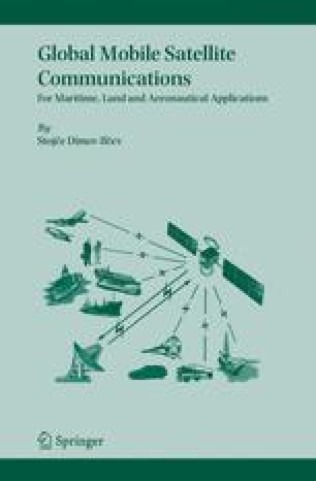
Global mobile satellite communications : For maritime, Land and aeronautical applications
This book is important for modern shipping, truck, train and aeronautical societies because GMSC in the present millennium provides more effective business and trade, with emphasis on safety and commercial communications. Global Mobile Satellite Communications is written to make bridges between potential readers and current GMSC trends, mobile system concepts and network architecture using a simple mode of style with understandable technical information, characteristics, graphicons, illustrations and mathematics equations
