



الصفحة 2
الصفحة 2

Data and applications security XXI ; 21st Annual IFIP WG 11.3 Working Conference on data and applications security, Redondo Beach, CA, USA, July 8-11, 2007, Proceedings
This book presented secure query evaluation, location-based security/mobile security, distributed security issues, cryptographic-based security, temporal access control and usage control, as well as system security issues.

Data analytics, computational statistics, and operations research for engineers : Methodologies and applications
Presents applications of computationally intensive methods, inference techniques, and survival analysis models. It discusses how data mining extracts information and how machine learning improves the computational model based on the new information.

Conditionals, Information, and Inference
Conditionals are fascinating and versatile objects of knowledge representation. On the one hand, they may express rules in a very general sense, representing, for example, plausible relationships, physical laws, and social norms. On the other hand, as default rules or general implications, they constitute a basic tool for reasoning, even in the presence of uncertainty. In this sense, conditionals are intimately connected both to information and inference. Due to their non-Boolean nature, however, conditionals are not easily dealt with. They are not simply true or false — rather, a conditional “if A then B” provides a context, A, for B to be plausible (or true) and must not be confused with “A entails B” or with the material implication “not A or B.” This ill- trates how conditionals represent information, understood in its strict sense as reduction of uncertainty. To learn that, in the context A, the proposition B is plausible, may reduce uncertainty about B and hence is information. The ab- ity to predict such conditioned propositions is knowledge and as such (earlier) acquired information. The ?rst work on conditional objects dates back to Boole in the 19th c- tury, and the interest in conditionals was revived in the second half of the 20th century, when the emerging Arti?cial Intelligence made claims for appropriate formaltoolstohandle“generalizedrules.”Sincethen,conditionalshavebeenthe topic of countless publications, each emphasizing their relevance for knowledge representation, plausible reasoning, nonmonotonic inference, and belief revision.

Computer Vision -- ECCV 2006 ; Vol. 3951 ; 9th European Conference on Computer Vision, Graz, Austria, May 7-13, 2006, Proceedings, Part I
The papers are organized in topical sections on recognition, statistical models and visual learning, 3D reconstruction and multi-view geometry, energy minimization, tracking and motion, segmentation, shape from X, visual tracking, face detection and recognition, and more.

Computer science : Theory and applications ; 15th International computer science symposium in Russia, CSR 2020, Yekaterinburg, Russia, June 29 – July 3, 2020, Proceedings
This book constitutes the proceedings of the 15th International Computer Science Symposium in Russia, CSR 2020, held in Yekaterinburg, Russia, in June 2020. The 25 full papers and 6 invited papers were carefully reviewed and selected from 49 submissions. The papers cover a broad range of topics, such as: algorithms and data structures; computational complexity, including hardness of approximation and parameterized complexity; randomness in computing, approximation algorithms, fixed-parameter algorithms; combinatorial optimization, constraint satisfaction, operations research; computational geometry; string algorithms; formal languages and automata, including applications to computational linguistics; codes and cryptography; combinatorics in computer science; computational biology; applications of logic to computer science, proof complexity; database theory; distributed computing; fundamentals of machine learning, including learning theory, grammatical inference and neural computing; computational social choice; quantum computing and quantum cryptography; theoretical aspects of big data.

Computational methods in systems biology ; 18th International Conference, CMSB 2020, Konstanz, Germany, September 23–25, 2020, Proceedings
This book constitutes the refereed proceedings of the 18th International Conference on Computational Methods in Systems Biology, CMSB 2020, held in Konstanz, Germany, in September 2020.* The 17 full papers and 5 tool papers were carefully reviewed and selected from 30 submissions. In addition 3 abstracts of invited talks and 2 tutorials have been included in this volume. Topics of interest include formalisms for modeling biological processes; models and their biological applications; frameworks for model verification, validation, analysis, and simulation of biological systems; high-performance computational systems biology and parallel implementations; model inference from experimental data; model integration from biological databases; multi-scale modeling and analysis methods; computational approaches for synthetic biology; and case studies in systems and synthetic biology.

Machine Learning: ECML 2007 ; 18th European Conference on Machine Learning, Warsaw, Poland, September 17-21, 2007, Proceedings
The two premier annual European conferences in the areas of machine learning and data mining have been collocated ever since the ?rst joint conference in Freiburg, 2001. The European Conference on Machine Learning (ECML) traces its origins to 1986, when the ?rst European Working Session on Learning was held in Orsay, France. The European Conference on Principles and Practice of KnowledgeDiscoveryinDatabases(PKDD) was?rstheldin1997inTrondheim, Norway.

Machine learning challenges : Evaluating predictive uncertainty, Visual Object Classification, and Recognizing Textual Entailment, 1st Pascal Machine Learning Challenges Workshop, MLCW 2005, Southampton, UK, April 11-13, 2005, Revised Selected Papers
Constitutes the refereed post-proceedings of the First PASCAL Machine Learning Challenges Workshop, MLCW 2005. 25 papers address three challenges: finding an assessment base on the uncertainty of predictions using classical statistics, Bayesian inference, and statistical learning theory; second, recognizing objects from a number of visual object classes in realistic scenes; third, recognizing textual entailment addresses semantic analysis of language to form a generic framework for applied semantic inference in text understanding.

Machine Learning : ECML 2005 ; 16th European Conference on Machine Learning, Porto, Portugal, October 3-7, 2005, Proceedings
The European Conference on Machine Learning (ECML) and the European Conference on Principles and Practice of Knowledge Discovery in Databases (PKDD) were jointly organized this year for the ?fth time in a row, after some years of mutual independence before. After Freiburg (2001), Helsinki (2002), Cavtat (2003) and Pisa (2004), Porto received the 16th edition of ECML and the 9th PKDD in October 3–7. Having the two conferences together seems to be working well: 585 di?erent paper submissions were received for both events, which maintains the high s- mission standard of last year. Of these, 335 were submitted to ECML only, 220 to PKDD only and 30 to both. Such a high volume of scienti?c work required a tremendous e?ort from Area Chairs, Program Committee members and some additional reviewers. On average, PC members had 10 papers to evaluate, and Area Chairs had 25 papers to decide upon. We managed to have 3 highly qualified independent reviews per paper (with very few exceptions) and one additional overall input from one of the Area Chairs. After the authors’ responses and the online discussions for many of the papers, we arrived at the ?nal selection of 40 regular papers for ECML and 35 for PKDD. Besides these, 32 others were accepted as short papers for ECML and 35 for PKDD. This represents a joint acceptance rate of around 13% for regular papers and 25% overall.

Logics in Artificial Intelligence ; 11th European Conference, JELIA 2008, Dresden, Germany, September 28-October 1, 2008. Proceedings
Constitutes the refereed proceedings of the 11th European Conference on Logics in Artificial Intelligence, JELIA 2008, held in Dresden, Germany, Liverpool, in September/October 2008.The 32 revised full papers presented together with 2 invited talks were carefully reviewed and selected from 98 submissions. The papers cover a broad range of topics including belief revision, description logics, non-monotonic reasoning, multi-agent systems, probabilistic logic, and temporal logic.

Logic Programming and Nonmonotonic Reasoning ; 9th International Conference, LPNMR 2007, Tempe, AZ, USA, May 15-17, 2007, Proceedings
This book constitutes the refereed proceedings of the 9th International Conference on Logic Programming and Nonmonotonic Reasoning, LPNMR 2007, held in Tempe, AZ, USA, May 2007.

Logic Programming ; Vol. 4079 ; 22nd International Conference, ICLP 2006, Seattle, WA, USA, August 17-20, 2006, Proceedings
This book constitutes the refereed proceedings of the 22nd International Conference on Logic Programming, ICLP 2006, held in Seattle, WA, USA, in August 2006. The 20 revised full papers and 6 application papers presented together with 2 invited talks, 2 tutorials and special interest papers, as well as 17 poster presentations and the abstracts of 7 doctoral consortium articles, were carefully reviewed and selected from 83 initial submissions. The papers cover all issues of current research in logic programming - they are organized in topical sections on theory, functional and constraint logic programming, program analysis, answer-set programming, semantics, and applications.

Location- and context-awareness ; 3rd International Symposium, LoCA 2007, Oberpfaffenhofen, Germany, September 20-21, 2007, Proceedings
These proceedings contain the papers presented at the 3rd International S- posium on Location- and Context-Awareness in September of 2007. Computing has become mobile, wireless, and portable. The rangeof contexts encountered while sitting at a desk working on a computer is very limited c- pared to the large variety of situations experienced away from the desktop.

Linear and Generalized Linear Mixed Models and Their Applications
This book covers two major classes of mixed effects models—linear mixed models and generalized linear mixed models—and it presents an up-to-date account of theory and methods in analysis of these models as well as their applications in various fields. It offers a systematic approach to inference about non-Gaussian linear mixed models. Furthermore, it discusses the latest developments and methods in the field, incorporating relevant updates since publication of the first edition. These include advances in high-dimensional linear mixed models in genome-wide association studies (GWAS), advances in inference about generalized linear mixed models with crossed random effects, new methods in mixed model prediction, mixed model selection, and mixed model diagnostics.

Learning Theory ; Vol. 4005 ; 19th Annual Conference on Learning Theory, COLT 2006, Pittsburgh, PA, USA, June 22-25, 2006, Proceedings
Constitutes the refereed proceedings of the 19th Annual Conference on Learning Theory, COLT 2006, held in Pittsburgh, Pennsylvania, USA in June 2006. The 43 revised full papers presented together with 2 articles on open problems and 3 invited lectures were carefully reviewed and selected from a total of 102 submissions. The papers cover a wide range of topics including clustering, un- and semisupervised learning, statistical learning theory, regularized learning and kernel methods, query learning and teaching, inductive inference, learning algorithms and limitations on learning, online aggregation, online prediction and reinforcement learning.

Learning theory ; 20th Annual Conference on Learning theory, COLT 2007, San Diego, CA, USA, June 13-15, 2007, Proceedings
It covers unsupervised, semisupervised and active learning, statistical learning theory, inductive inference, regularized learning, kernel methods, SVM, online and reinforcement learning, learning algorithms and limitations on learning, dimensionality reduction, as well as open problems.

Large-Scale Knowledge Resources. Construction and Application ; 3rd International Conference on Large-Scale Knowledge Resources, LKR 2008, Tokyo, Japan, March 3-5, 2008. Proceedings
At the start of the 21st century,we are now well on the way to wards aknowled- intensive society, in which knowledge plays ever more important roles. Thus, research interest should inevitably shift from information to knowledge, with the problems of building, organizing, maintaining and utilizing knowledge - coming centralissues in a wide varietyof felds. The 21stCentury COE program “Framework for Systematization and Application of Large-scale Knowledge - sources (COE-LKR)” conducted by the Tokyo Institute of Technology is one of several early attempts worldwide to address these important issues. Inspired by this project, LKR2008 aimed at bringing together diverse contributions in cognitive science, computer science, education and linguistics to explore design, construction, extension, maintenance, validation and application of knowledge.
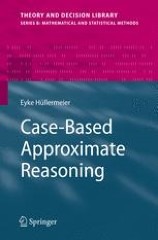
Case-Based Approximate Reasoning
Case-based reasoning (CBR) has received a great deal of attention in recent years and has established itself as a core methodology in the field of artificial intelligence. The key idea of CBR is to tackle new problems by referring to similar problems that have already been solved in the past. More precisely, CBR proceeds from individual experiences in the form of cases. The generalization beyond these experiences typically relies on a kind of regularity assumption demanding that 'similar problems have similar solutions'. Making use of different frameworks of approximate reasoning and reasoning under uncertainty, notably probabilistic and fuzzy set-based techniques, this book develops formal models of the above inference principle, which is fundamental to CBR. The case-based approximate reasoning methods thus obtained especially emphasize the heuristic nature of case-based inference and aspects of uncertainty in CBR. This way, the book contributes to a solid foundation of CBR which is grounded on formal concepts and techniques from the aforementioned fields. Besides, it establishes interesting relationships between CBR and approximate reasoning, which not only cast new light on existing methods but also enhance the development of novel approaches and hybrid systems.

Business Information Systems ; 10th International Conference, BIS 2007, Poznan, Poland, April 25-27, 2007, Proceedings
This volume covers research trends as well as current achievements and cutting-edge developments in the area of modern business information systems. It contiants Business Process Management, Web Services, Ontologies, Information Retrieval, System Design, Agents and Mobile Applications, Decision Support, Social Issues, Specific MIS Issues.

Beginning Java 17 Fundamentals : Object-Oriented Programming in Java 17
Learn the fundamentals of the Java 17 LTS or Java Standard Edition version 17 Long Term Support release, including basic programming concepts and the object-oriented fundamentals necessary at all levels of Java development. You will: Write your first Java programs with emphasis on learning object-oriented programming / How to work with switch expressions, value types (records), local variable type inference, pattern matching switch and more from Java 17 / Handle exceptions, assertions, strings and dates, and object formatting / Learn about how to define and use modules / Dive in depth into classes, interfaces, and inheritance in Java / Use regular expressions / Take advantage of the JShell REPL tool
