



الصفحة 2
الصفحة 2
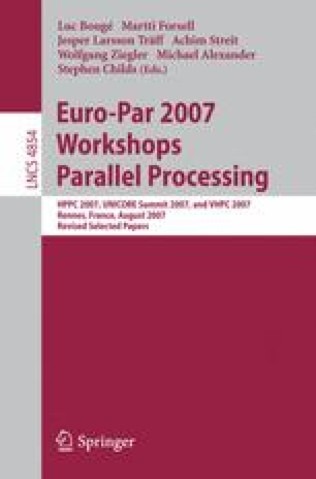
Euro-Par 2007 Workshops : Parallel Processing ; HPPC 2007, UNICORE Summit 2007, and VHPC 2007, Rennes, France, August 28-31, 2007, Revised Selected Papers
Parallel and distributed processing , although within the focus of computer science research for along time ,is gainingmore and more importance in awidespectrum of applications. These proceedings aim to demonstrate the use of parallel and distributed processing concepts in diferent application felds, and attempt to spark interest in novel research directions to advance the embracing model of high-performance computing research in general. The objective of these workshops is to specifcally address researchers c- ing from university, industry and governmental research organizations and application-oriented companies, in order to close the gap between purely sentifc research and the applicability of the research ideas to real-life problems.

Euro-Par 2007 Parallel Processing ; 13th International Euro-Par Conference, Rennes, France, August 28-31, 2007, Proceedings
This book covering support tools and environments; performance prediction and evaluation; scheduling and load balancing; compilers for high performance; parallel and distributed databases; grid and cluster computing; peer-to-peer computing; distributed systems and algorithms; parallel and distributed programming; parallel numerical algorithms; distributed and high-performance multimedia; theory and algorithms for parallel computation; high performance networks; mobile and ubiquitous computing.

Distributed, High-Performance and Grid Computing in Computational Biology ; International Workshop, GCCB 2006, International Workshop, GCCB 2006, Eilat, Israel, January 21, 2007, Proceedings
Modern computational biology and bioinformatics are characterized by large and complex structured data and by applications requiring considerable computing resources, such as processing units, storage elements and software programs. In addition, these disciplines are intrinsically geographically distributed in terms of their instruments, communities and computing resources. Tackling the computational challenges in computational biology and bioinformatics increasingly requires high-end and distributed computing infrastructures, systems and tools.
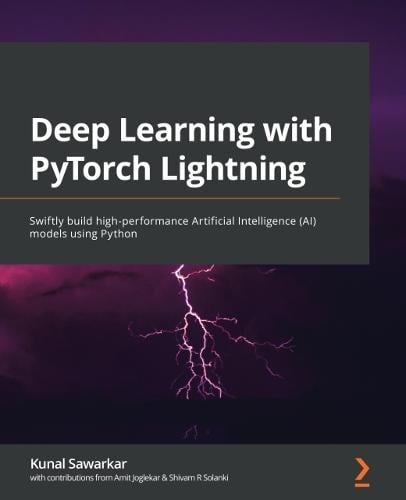
Deep Learning with PyTorch Lightning : Build and train high-performance artificial intelligence and self-supervised models using Python
You’ll learn how to configure PyTorch Lightning on a cloud platform, understand the architectural components, and explore how they are configured to build various industry solutions. You’ll build a neural network architecture, deploy an application from scratch, and see how you can expand it based on your specific needs, beyond what the framework can provide. In the later chapters, you’ll also learn how to implement capabilities to build and train various models like Convolutional Neural Nets (CNN), Natural Language Processing (NLP), Time Series, Self-Supervised Learning, Semi-Supervised Learning, Generative Adversarial Network (GAN) using PyTorch Lightning.

Computational Science and Its Applications - ICCSA 2008 ; International Conference, Perugia, Italy, June 30– July 3, 2008, Proceedings, Part II
The two-volume set LNCS 5072 and 5073 constitutes the refereed proceedings of the International Conference on Computational Science and Its Applications, ICCSA 2008, held in Perugia, Italy in June/July 2008.

Computational methods in systems biology ; 18th International Conference, CMSB 2020, Konstanz, Germany, September 23–25, 2020, Proceedings
This book constitutes the refereed proceedings of the 18th International Conference on Computational Methods in Systems Biology, CMSB 2020, held in Konstanz, Germany, in September 2020.* The 17 full papers and 5 tool papers were carefully reviewed and selected from 30 submissions. In addition 3 abstracts of invited talks and 2 tutorials have been included in this volume. Topics of interest include formalisms for modeling biological processes; models and their biological applications; frameworks for model verification, validation, analysis, and simulation of biological systems; high-performance computational systems biology and parallel implementations; model inference from experimental data; model integration from biological databases; multi-scale modeling and analysis methods; computational approaches for synthetic biology; and case studies in systems and synthetic biology.

Co-governed Sovereignty Network : Legal Basis and Its Prototype & Applications with MIN Architecture
This book introduces MIN, a novel networking architecture to implement the sovereign equality of all countries in the cyberspace. Combining legal theory and network technology, it first discusses the historical development of sovereignty and expounds the legal basis of cyberspace sovereignty. Then, based on the high-performance blockchain, it describes a new network architecture designed to implement co-governance at the technical level.

CMOS Hotplate Chemical Microsensors
Covers all aspects of successful sensor prototyping: theory of transducer modelling, microelectronics design considerations, system design issues, and issues related to system and device microfabrication, packaging, and testing. A variety of different hotplates for different operation conditions is detailed and a family of metal-oxide-covered microhotplate-based microsensor systems with increasing complexity is presented. These systems belong to a new generation of chemical microsensors and represent examples of the successful integration of nanomaterials, microtechnology and microelectronics.The book provides students, scientists and engineers with an accessible introduction to the field of microhotplate-based chemical sensing, with all the necessary fundamental knowledge included. Beyond that, it also provides detailed information on all important issues concerning complex high-performance CMOS chemical microsensor systems; hence it will also be valuable to experts already familiar with the field.

CMOS Cascade Sigma-Delta Modulators for Sensors and Telecom : Error Analysis and Practical Design
CMOS Cascade Sigma-Delta Modulators for Sensors and Telecom: Error Analysis and Practical Design starts with a tutorial presentation of the fundamentals of low-pass sigma-delta modulators, their applications, and their most common architectures. It then presents an exhaustive analysis of SC circuit errors with a twofold outcome. On the one hand, compact expressions are derived to support design plans and quick top-down design. On the other, detailed behavioral models are presented to support accurate verification. This set of models allows the designer to determine the required specifications for the different modulator building blocks and form the basis of a systematic design approach. The book is completed in subsequent chapters with the detailed presentation of three high-performance modulator ICs: the first two are intended for DSL-like applications, whereas the third one is intended for automotive sensors.

Laser additive manufacturing: design, materials, processes and applications
Laser-based additive manufacturing (LAM) is a revolutionary advanced digital manufacturing technology developed in recent decades, which is also a key strategic technology for technological innovation and industrial sustainability. This technology unlocks the design and constraints of traditional manufacturing and meets the needs of complex geometry fabrication and high-performance part fabrication. A deeper understanding of the design, materials, processes, structures, properties and applications is desired to produce novel functional devices, as well as defect-free structurally sound and reliable LAM parts.The topics in this Special Issue reprint include macro- and micro-scale additive manufacturing with lasers, such as structure/material design, fabrication, modeling and simulation, in situ characterization of additive manufacturing processes and ex situ materials characterization and performance, with an overview that covers various applications in aerospace, biomedicine, optics and energy.

Languages and Compilers for Parallel Computing ; 21th International Workshop, LCPC 2008, Edmonton, Canada, July 31 - August 2, 2008, Revised Selected Papers
This book constitutes the thoroughly refereed post-conference proceedings of the 21th International Workshop on Languages and Compilers for Parallel Computing, LCPC 2008, held in Edmonton, Canada, in July/August 2008.The 18 revised full papers and 6 revised short papers presented were carefully reviewed and selected from 35 submissions. The papers address all aspects of languages, compiler techniques, run-time environments, and compiler-related performance evaluation for parallel and high-performance computing and comprise

Job Scheduling Strategies for Parallel Processing ; 13th International Workshop, JSSPP 2007, Seattle, WA, USA, June 17, 2007. Revised Papers
Constitutes the thoroughly refereed post-workshop proceedings of the 13th International Workshop on Job Scheduling Strategies for Parallel Processing, JSSPP 2007, held in Seattle, WA, USA, in June 2007, in conjunction with the 21st ACM International Conference on Supercomputing, ICS 2007.The 10 revised full research papers presented went through the process of strict reviewing and subsequent improvement. The papers cover all current issues of job scheduling strategies for parallel processing from the supercomputer-centric viewpoint but also address many nontraditional high-performance computing and parallel environments that cannot or need not access a traditional supercomputer.
Beginning Scala 3 : A functional and Object-Oriented Java Language
Introduces you to the Scala programming language, its object-oriented and functional programming characteristics, and then guides you through Scala constructs and libraries that allow you to assemble small components into high-performance, scalable systems. You will understand why Scala is judiciously used for critical business applications by leading companies such as Twitter, LinkedIn, Foursquare, the Guardian, Morgan Stanley, Credit Suisse, UBS, and HSBC – and you will be able to use it in your own projects. You will: Get started with Scala 3 or Scala language programming in general / Understand how to utilitze OOP in Scala / Perform functional programming in Scala / Master the use of Scala collections, traits and implicits / Leverage Java and Scala interopability / Employ Scala for DSL programming / Use patterns and best practices in Scala
Architecture of computing systems ; 34th International Conference, ARCS 2021, Virtual Event, June 7–8, 2021, Proceedings
This book constitutes the proceedings of the 34th International Conference on Architecture of Computing Systems, ARCS 2021, held virtually in July 2021. The 12 full papers in this volume were carefully reviewed and selected from 24 submissions. 2 workshop papers (VEFRE) are also included. ARCS has always been a conference attracting leading-edge research outcomes in Computer Architecture and Operating Systems, including a wide spectrum of topics ranging from fully integrated, self-powered embedded systems up to high-performance computing systems. It also provides a platform covering newly emerging and cross-cutting topics, such as autonomous and ubiquitous systems, reconfigurable computing and acceleration, neural networks and artificial intelligence. The selected papers cover a variety of topics from the ARCS core domains, including heterogeneous computing, memory optimizations, and organic computing.
Applied mathematics and machine learning
The simultaneous availability of large datasets and high-performance computing capability in recent years has enabled the rapid development of powerful machine learning algorithms. On the one hand, state-of-the-art machine learning techniques have transformed many areas of science and engineering; on the other hand, theoretical discoveries in mathematical algorithms, differential equations, and statistical inferences, to name a few, have provided the foundation for the exploration of new multidisciplinary models for solving practical problems. This Special Issue endeavors to continue the journey that started in our previous Special Issue (Applied Mathematics and Computational Physics) by providing a platform for researchers from both academia and industry, as well as government, to present their new computational methods that have engineering and physics applications.

Algorithms in Bioinformatics ; 7th International Workshop, WABI 2007, Philadelphia, PA, USA, September 8-9, 2007, Proceedings
All current issues of algorithms in bioinformatics are addressed, ranging from mathematical tools to experimental studies of approximation algorithms and reports on significant computational analyses. Numerous biological problems are dealt with, including genetic mapping, sequence alignment and sequence analysis, phylogeny, comparative genomics, and protein structure. Furthermore the papers feature high-performance computing approaches to computationally hard learning and optimization problems in bioinformatics and cover methods, software and dataset repositories for development and testing of such algorithms and their underlying models.
Advances in computer systems architecture ; Vol. 3740 ; 10th Asia-Pacific conference, ACSAC 2005, Singapore, October 24-26, 2005, Proceedings
The papers are organized in topical sections on energy efficient and power aware techniques, methodologies and architectures for application-specific systems, processor architectures and microarchitectures, high-reliability and fault-tolerant architectures, compiler and OS for emerging architectures, data value predictions, reconfigurable computing systems and polymorphic architectures, interconnect networks and network interfaces, parallel architectures and computation models, hardware-software partitioning, verification, and testing of complex architectures, architectures for secured computing, simulation and performance evaluation, architectures for emerging technologies and applications, and memory systems hierarchy and management
Advances in computer systems architecture ; 12th Asia-Pacific Conference, ACSAC 2007, Seoul, Korea, August 23-25, 2007, Proceedings
Covering hardware and software techniques for state-of-the-art multicore and multithreaded architectures.

Advanced parallel processing technologies ; 7th International Symposium, APPT 2007 Guangzhou, China, November 22-23, 2007 Proceedings
APPT was upgraded to the International Symposium on Advanced Parallel Processing Technologies. However, it kept its traditional flavor by sharing of the underlying theories and applications, and the establishment of new and long-term collaborative channels. And it will continue to provide a forum for researchers, professionals, and industrial practitioners from around the world to report on new advances in high-performance architecture and software, as well as to identify issues and directions for research and development in the new era of evolving technologies.
Advanced machine learning and deep learning approaches for remote sensing
Provides research on how technologies such as artificial intelligence-based machine learning and deep learning can be applied to remote sensing. Through this, we can see the process of solving the existing problems of image and image signal processing for remote sensing. These techniques are computationally intensive and require the help of high-performance computing devices. With the development of devices such as GPUs, remote sensing technology, and aerial sensing technology, it is possible to monitor the Earth with high-resolution images and to obtain vast amounts of Earth observation data. The papers published in this reprint describe recent advances in big data processing and artificial intelligence-based technologies for remote sensing technology.
