



الصفحة 2
الصفحة 2

Foundations of 3D Graphics Programming : Using JOGL and Java3D ; 2nd ed.
This thoroughly updated and enhanced second edition of Foundations of 3D Graphics Programming is an innovative shortcut to graphics theory and programming using JOGL, a new vehicle of 3D graphics programming in Java. This revised edition of the successful, reader-friendly text covers all graphics basics and several advanced topics, as well as some basic concepts in Java programming for those who currently are C/C++ programmers. Specifically, it provides all the core aspects of OpenGL programming in Java using JOGL, along with concisely presented computer graphics theories. In addition, it uses a top-down approach to lead the reader into programming and applications up-front. The content about theory provides a high-level understanding of all basic graphics, and of using JOGL instead of implementing a graphics system. Explanations are integrated with the sample programs, which are specifically designed for learning and accompanying this book.

Foundation Flash CS3 for Designers
This book is all you'll need to learn Flash CS3 from the ground up, or learn about all these new features, if you already have previous Flash experience. Flash experts Tom Green and David Stiller take you step-by-step through all facets of Flash CS3, with the emphasis firmly on good design techniques that you use in your own projects.
Foundation Flash Cartoon Animation
Covering every aspect of Flash animation, the book is a fast-paced yet thorough review of the Flash animation process. This book not only reveals the step-by-step process followed by one of today's leading Flash animation studios, but also give you valuable tips and tricks to take your Flash animation to the next level.

Foundation Flash 8
The fourth edition of friends of ED's legendary beginner Flash book, Foundation Flash 8 uses a series of structured exercises and detailed discussions to help you start your exploration of Flash. The detailed tutorial style will ensure that you retain the knowledge you gain and are able to draw upon it throughout your Flash career. Foundation Flash 8 features a running case study that evolves into a fully-functional Flash website as you work through the tutorials, so you'll immediately see everything that you learn being used in a practical project. This book focuses on the core skills that you need to get started working with Flash 8: understanding the interface, becoming familiar with the creative tools and their capabilities, grasping the relationships between the different components that make up a Flash movie, and getting insight into how to put all the pieces together to create your own Flash-based website.

Foundation Expression Blend 2 : Building applications in WPF and silverlight
This book shows you how to take full advantage of Blend's interface, together with and Silverlight's vastly improved designer-developer workflow, guiding you through every step of development from downloading and installing of the development environment through creating finished, functional projects. You'll learn how to create simple drawing applications with the InkCanvas, make tabbed and scrollable interfaces, as well as build fully featured media players, photo galleries, and interactive 3D designs. Each chapter discusses major WPF and Silverlight features, provides a hands-on tutorial, and explains how that feature is implemented in the real world. In the end, you will have a collection of impressive WPF and Silverlight applications that can be added to your portfolio.
Foundation ActionScript for Flash 8
This book contains all you need to understand and make use of ActionScript, and to have some fun while learning. The Foundation series teaching style is ideal if you're a non-programmer who wants to learn Flash programming quickly and thoroughly. The authors teach the basics, and provide an all-around proficiency in ActionScript, as well as Flash components within Flash 8. You'll gain the practical skills to build ActionScript based Flash projects, including making initial design decisions, structuring code, and testing. An ongoing case study means that by the end of the book, you'll have constructed a cutting-edge Flash site to showcase your newly learned skills.
Foundation ActionScript animation : Making things move!
In this book Keith Peters guides you through some basic animation theory and then demystifies the math and physics behind creating realistic animation, looking at trigonometry, velocity and acceleration, and bouncing & friction. This book will teach you how to use Flash ActionScript to move the objects in your movies, rather than letting Flash's tween engine do it for you. The benefit of this is smaller, more realistic, more dynamic interactive movies that seem to come alive on your screen. Almost all of the code featured in this book will work fine in either Flash MX 2004 or Flash 8, and with a few minor adjustments, most of it can even be applied to Flash MX.
Foundation ActionScript 3 Animation : Making Things Move!
The material inside this book covers everything you need to know to harness the power of ActionScript 3.0. The book goes on to provide information on all the relevant trigonometry you will need, before moving on to physics concepts such as acceleration, velocity, easing, springs, collision detection, conservation of momentum, 3D, and forward and inverse kinematics.
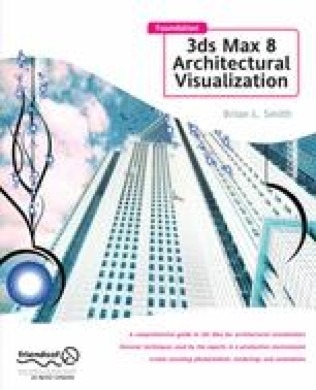
Foundation 3ds Max 8 Architectural Visualization
Welcome to the world of 3D architectural visualizations using the most powerful and versatile 3D software package on the planet: 3ds Max. In just the last few years, the visualization industry has arguably become the fastest-growing 3D industry, and may soon overtake all others in total number of users. Just as the use of computer-aided design became the norm for nearly all architectural, engineering, and construction firms in the 1990s, 3D visualizations have become standard practice today. This book takes you through the challenge of learning one of the most complex computer programs ever created, by way of easy-to-follow tutorials and instruction. It specifically focuses on those parts of the program you need to know to produce stunning architectural visualizations.
Flash 8 Essentials
As a creative professional or interactive developer, you’ll be amazed at the exciting possibilities presented to you by the features available in Flash 8; but as a busy designer, we know you won't have as much time as you’d like to explore these new additions. Never fear; this book wastes no time looking at timeline basics, tweens, or movie-publishing options—it focuses exclusively on the new Flash 8 features, getting you quickly up to speed with a combination of illustrative tutorials, handy references, and inspirational examples. By the end of the book, you’ll know that there’s no shortage of new tools to enhance and inspire your Flash development; and since this book is written by some of the community's leading Flash experts, you’ll know you’re in good hands.

Essential Renderman
RenderMan has long been associated with top-end film production and is an essential tool for creating many of the effects and images in recent animated films (such as Monsters, Inc., Finding Nemo and The Incredibles). RenderMan is widely available and, with the demand for higher quality images, is now used by computer-based artists at all levels of the graphics industry. Intended to provide a straightforward and easy introduction to the basic techniques involved, this book provides an excellent grounding, enabling readers to confidently move to more advanced texts.

Entertainment computing – ICEC 2007 ; 6th International Conference, Shanghai, China, September 15-17, 2007, Proceedings
This book are organized in topical sections on augmented, virtual and mixed reality, computer games, image processing, mesh and modeling, digital storytelling and interactive systems, sound, music and creative environments, video processing, rendering, computer animation and networks, game based interfaces, as well as robots and cyber pets.

Entertainment computing - ICEC 2006 ; 5th International Conference, Cambridge, UK, September 20-22, 2006, Proceeding
ICEC 2006 attracted 47 full paper submissions, 48 short paper submissions in total 95 technical papers. Based on a thorough review and selection process by 85 international experts from academia and industry as members of the Program Committee, a high-quality program was compiled. The International Program Committee consisted of experts from all over the world As a result, 17 full papers and 17 short papers were accepted as submitted or with minor revisions. For the remaining submissions, 28 were recommended to change according to the reviews and were submitted as posters. This proceedings volume presents 62 technical contributions which are from many different countries.

Entertainment Computing - ICEC 2005 ; 4th International Conference, Sanda, Japan, September 19-21, 2005, Proceedings
First of all, we appreciate the hard work of all the authors who contributed to ICEC 2005 by submitting their papers. ICEC 2005 attracted 95 technical paper submissions, 8 poster submissions and 7 demo submissions, in total 110. This number is nearly equal to ICEC 2004. Based on a thorough review and selection process carried out by 76 international experts from academia and industry as members of the senior and international program committees, a high-quality program was compiled. The program committee consisted of experts from all over the world: 1 from Austria, 3 from Bulgaria, 2 from Canada, 4 from China, 1 from Finland, 4 from France, 10 from Germany, 1 from Greece, 1 from Ireland, 1 from Israel, 1 from Italy, 26 from Japan, 1 from Korea, 4 from The Netherlands, 1 from New Zealand, 1 from Norway, 1 from Singapore, 1 from Thailand, 4 from the UK, and 8 from the USA. In this number, reviewers are included. The final decision was made at the senior program committee meeting based on three reviewers' feedback, available online via the conference management tool. Through earnest and fair discussion at the meeting, 25 technical papers were accepted as long papers and 32 technical papers were accepted as short papers from 95 submitted technical papers. Moreover, 3 poster papers and 5 demo papers were accepted.

Dream catcher
Dream Catcher is a video generation application that helps in many fields as science fiction, imagine event’s scenarios, education, animation and montage. By applying artificial algorithms implemented and trained on a dataset containing video samples and there descriptions to generate videos from any given text. The idea of generating videos from text is a new idea that was first presented at 2017, even that international companies like Google and OpenAi In the last year, was working on developing models to generate images from text. To make it easier to use the application, there are many ways to enter the text either by an image, voice or Typing from the keyboard.

Deepfake
The technology used to create such digital content has quickly become accessible to the masses, such as “DEEPFAKE.” Deep fakes refer to manipulated videos, or other digital representations produced by sophisticated artificial intelligence, that yields to synthesize a sequence of face images and voices of characters corresponding to their identities, such as voice tone, facial expression, with a good lip synchronization. Therefore, this study is about developing real-time video generation software, which generates a target video from a single input image. Several methods and algorithms have been applied to detect, analyze personalize facial expression, voice and natural head poses to present a life-like image instead of a low quality one.

Data-Driven 3D Facial Animation
Data-Driven 3D Facial Animation: systematically describes the emerging data-driven techniques developed over the last ten years or so. Although data-driven 3D facial animation is used more and more in animation practice, to date there have been very few books that specifically address the techniques involved. Comprehensive in scope, the book covers not only traditional lip-sync (speech animation), but also expressive facial motion, facial gestures, facial modeling, editing and sketching, and facial animation transferring. It provides an up-to-date reference source for academic research and for professionals working in the facial animation field.

Curves and Surfaces for Computer Graphics
Computer graphics is important in many areas including engineering design, architecture, education, and computer art and animation. This book examines a wide array of current methods used in creating real-looking objects in the computer, one of the main aims of computer graphics.

Crowd Simulation
Focuses on methods and techniques for crowd simulation, filling the gap in the professional literature. This survey covers topics that include Modelling of Populations; Virtual Human Animation; Behavioural Animation of Crowds; and, Crowd Rendering and Populated Environments.

Computer vision / computer graphics collaboration Techniques ; 3rd International Conference on Computer Vision/Computer Graphics, MIRAGE 2007, Rocquencourt, France, March 28-30, 2007, Proceedings
This volume contains foundational, methodological, and application issues.
