



الصفحة 15
الصفحة 15

Beginning C# 2008 Databases : From novice to professional
Assuming only basic knowledge of C# 2008, Beginning C# 2008 Databases teaches all the fundamentals of database technology and database programming readers need to quickly become highly proficient database users and application developers. A comprehensive tutorial on both SQL Server 2005 and ADO.NET 3.0, Beginning C# 2008 Databases explains and demonstrates how to create database objects and program against them in both T–SQL and C#. Full of practical, detailed examples, it's been fully revised and updated for C# 2008 and offers the most complete, detailed, and gentle introduction to database technology for all C# programmers at any level of experience.
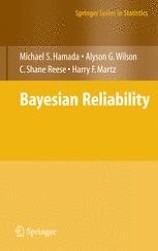
Bayesian reliability
Bayesian Reliability presents modern methods and techniques for analyzing reliability data from a Bayesian perspective. The adoption and application of Bayesian methods in virtually all branches of science and engineering have significantly increased over the past few decades. This increase is largely due to advances in simulation-based computational tools for implementing Bayesian methods. The authors extensively use such tools throughout this book, focusing on assessing the reliability of components and systems with particular attention to hierarchical models and models incorporating explanatory variables. Such models include failure time regression models, accelerated testing models, and degradation models. The authors pay special attention to Bayesian goodness-of-fit testing, model validation, reliability test design, and assurance test planning. Throughout the book, the authors use Markov chain Monte Carlo (MCMC) algorithms for implementing Bayesian analyses--algorithms that make the Bayesian approach to reliability computationally feasible and conceptually straightforward.

Bayesian Methods in the Search for MH370
This book demonstrates how nonlinear/non-Gaussian Bayesian time series estimation methods were used to produce a probability distribution of potential MH370 flight paths. It provides details of how the probabilistic models of aircraft flight dynamics, satellite communication system measurements, environmental effects and radar data were constructed and calibrated. The probability distribution was used to define the search zone in the southern Indian Ocean. The book describes particle-filter based numerical calculation of the aircraft flight-path probability distribution and validates the method using data from several of the involved aircraft’s previous flights. Finally it is shown how the Reunion Island flaperon debris find affects the search probability distribution.

Barriers and Biases in Computer-Mediated Knowledge Communication : And How They May Be Overcome
This books deals with computer-mediated cooperation and communication scenarios in teaching and learning situations, leisure activities (e.g. laypersons looking for expert information on the internet), and net-based communication at work. Such scenarios will become increasingly important. But the successful use of such computer-mediated settings is not trivial. Cooperative learning and work itself requires special skills and strategies. And the technical settings with sometimes restricted, sometimes new possibilities for communication add problems on top of the cooperation itself. What are the barriers in computer-mediated communication for cooperative learning and work? Which are the most relevant biases in computer-mediated information processing? Based on empirical research the contributors from psychology, education and computer sciences offer different perspectives on the nature and causes of such barriers.

B 2007 : Formal Specification and Development in B ; 7th International Conference of B Users, Besancon, France, January 7-19, 2007, Proceedings
These proceedingsrecordthe papers presented at the Seventh InternationalC- ference of B Users (B 2007), held in the city of Besan¸ con in the east of France. All the submitted papers in these proceedings were peer reviewed by at least three reviewers drawn from the B committee, depending on the subject matter of the paper. The authorsof the papersforB 2007werefrom Australia,Canada, Finland, Germany, France, Switzerland, and the UK. The conference featured a rangeof contributions by distinguished invited speakers drawn from both ind- try and academia.
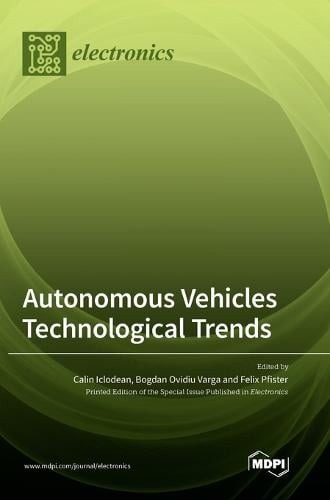
Autonomous vehicles technological trends
The automotive industry has always been synonymous with research and innovation, but nowadays the industry is adding pressure and is establishing the agenda of the researchers from the field. Visions have been provided, and the hardware and the software exist; the only question remaining is: “who is going to deliver”? To answer this question, we encouraged scientists, researchers, industry specialists, and academics to share their vision of autonomous vehicles. What will the platform look like? What kind of hardware and software is most suitable? Who will make the connection between these two interdependent environments (and how), so that in the end the AI will define the process? These are the pressing issues of the current moment, and this Special Issue will help all those interested in the topic to promote their vision and ideas.
Autonomous intelligent systems : Multi-agents and data mining ; 2nd International workshop, AIS-ADM 2007, St. Petersburg, Russia, June 3-5, 2007, Proceedings
MAS offiers powerful metaphors for information system conceptualization, a range of new techniques, and technologies specifically focused on the design and implementation of lar- scale open distributed intelligent systems. KDD also provides intelligent inf- mation technology with powerful ideas, algorithms, and software means to help cope with the main problem of artificial intelligence, formulated in the we- known question “Where does the knowledge come from?”, thus actually making modern applications intelligent and adaptive. The evident recent trend in both science and industry is to integrate and take advantage of both technologies. The existing experience with combined application of multi-agent technology to design architectures of distributed (- erarchical and peer-to-peer) data mining and KDD systems, as well as the u- lization of data mining and KDD achievements to provide enhanced intelligence of MAS, confirms the fact that both technologies are capable of mutual enri- ment and their integrateduse may result in intelligent information systems with new emergent properties.
Autonomous intelligent systems : Agents and data mining ; International workshop, AIS-ADM 2005
This book constitutes the refereed proceedings of the International Workshop on Autonomous Intelligent Systems: Agents and Data Mining, AIS-ADM 2005, held in St. Petersburg, Russia in June 2005. The 17 revised full papers presented together with 5 invited papers and the abstract of an invited talk were carefully reviewed and selected from 29 submissions. The papers are organized in topical sections on agent-based data mining issues, ontologies and Web mining, and applications and case studies.

Automata, languages and programming ; Vol. 4052 : 33rd International Colloquium, ICALP 2006, Venice, Italy, July 10-14, 2006, Proceedings, Part II
a series of annual conferences of the European Association for Theoretical Computer Science (EATCS) which frsttookplacein 1972.Thisyear,. ICALP 2006 consisted of four invited lectures and the contributed papers. This volume of the proceedings contains all contributed papers presented at the conference in Track A, together with the paper by the invited speaker Noga Alon , A companion volume contains all contributed papers presented inTrack Band TrackCtogetherwiththepapersbytheinvited speakers Cynthia Dwork (Microsoft Research, USA) and Prakash Panangaden (Mc Gill University, Canada). The programhad an additional invited lecture by Simon Peyton Jones (Microsoft Research, UK), which does not appear in the proceedings.

Automata, languages and programming ; Vol. 4051 : 33rd International Colloquium, ICALP 2006, Venice, Italy, July 10-14, 2006, Proceedings, Part I
ICALP is a series of annual conferences of the European Association for Theoretical Computer Science (EATCS) which frsttookplacein1972 .Thisyear, ICALP 2006 consisted of four invited lectures and the contributed papers. This volume of the proceedings contains all contributed papers presented at the conference in Track A, together with the paper by the invited speaker Noga Alon (Tel Aviv University, Israel). A companion volume contains all contributed paper spresentedinTrackBandTrackCtogetherwiththepapersbytheinvited speakers Cynthia Dwork (Microsoft Research, USA) and Prakash Panangaden (Mc Gill University, Canada).

Artificial life models in software
Artificial Life Models in Software presents software tools, environments and realities dealing with creation, imitation and analysis of artefactual, virtual and living forms, written by those who personally design and produce software, hardware and art installations in artificial life, simulated complex systems and virtual worlds. This timely volume offers a nearly exhaustive overview and original analysis of major non-profit artificial life software packages. The carefully selected topics include: · simulation of real and imaginary life forms and their evolution · self-organization · emergent behaviours · swarm intelligence · evolutionary robotics · agent-based simulations · adaptive, complex and biologically inspired ecosystems · creative computer art There has long been a need within the academic and research community for an informal introduction and guidance to modern software tools for modelling and simulation of life-like phenomena – Artificial Life Models in Software fills this gap and provides invaluable information to both professional and amateur readers, offering detailed reviews of contemporary software for artificial life.
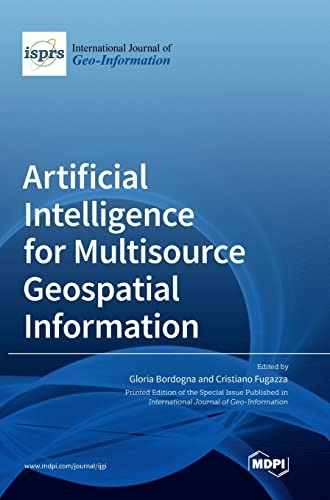
Artificial intelligence for multisource geospatial information
Collects 10 original research contributions published in the Special Issue entitled “Artificial Intelligence for Multisource Geospatial Information” of the ISPRS International Journal of Geo-Information. The focus is on different methods of Geospatial Artificial Intelligence (GeoAI) based on deep learning using different network architectures, clustering, soft computing, and semantic approaches. They are proposed to deal with a variety of Geospatial Big Data (GBD), such as georeferenced texts and photos in social networks, remote sensing images, cartographic maps, multidimensional geo databases, metadata in spatial data infrastructures, and for different tasks, such as for multisource georeferenced text integration and geodata flexible querying, for social sensing by applying sentiment analysis, clustering and geo analysis, for segmentation of roads, clouds and snow, and for detection of small targets and people on the streets.
Artificial Intelligence and Cybersecurity : Advances and Innovations
Provides advanced system implementation for Smart Cities using artificial intelligence. It addresses the complete functional framework workflow and explores basic and high-level concepts. The book is based on the latest technologies covering major challenges, issues and advances, and discusses intelligent data management and automated systems.

Artificial intelligence : Methodology, systems, and applications ; 10th International Conference, AIMSA 2002, Varna, Bulgaria, September 4-6, 2002. Proceedings
The AIMSA conference series was frst conceived in 1984 as a gathering of AI researchers and students from Eastern and Central Europe.Sincethenthecon- rence has followed a biennial schedule of meetings in Bulgaria, attracting parti- pantsfrom awidergeographicalarea.The AIMSA organizers are delighted to present you with another exciting program, coveringmostareasof Artifcial Intelligence.Inkeepingwithitsm- sion to inform the research community and excite the commercial sector, AIMSA presents this year two invited contributions from world-leading European rese- chersworkingoncutting-edgeAIresearch: Prof.CaroleGoble, ontheSemantic Web.
Artificial Intelligence : Applications and innovations
It's about the science of artificial intelligence (AI). AI is the study of the design of intelligent computational agents. This book provides a valuable resource for researchers, scientists, professionals, academicians and students dealing with the new challenges and advances in the areas of AI and innovations. This book also covers a wide range of applications of machine learning such as fire detection, structural health and pollution monitoring and control. Provides insight into prospective research and application areas related to industry and technology / Discusses industry- based inputs on success stories of technology adoption / Discusses technology applications from a research perspective in the field of AI / Provides a hands- on approach and case studies for readers of the book to practice and assimilate learning
Artificial immune systems ; Vol. 3627 ; 4th International conference, ICARIS 2005, Banff, Alberta, Canada, August 14-17, 2005, Proceedings
Your immune system is unique. It is in many ways as complex as your brain, butit is not centred in one location, like the brain. It is not a single organ—it consistsof many different cell types, diverse methods of intercellular communication, andmany different organs. Its functionality is blurred throughout you—we can’textract the immune system, or point to where it begins and ends. The immunesystem is not separable from the system it protects. It has integral links to everyorgan of our bodies.This has radical implications for the field of Artificial Immune Systems (AIS),that we are only now beginning to comprehend. One of the first insights is thatmodelling the immune system, or developing any kind of immune algorithm, isdifficult. The immune system is one aspect of biology that we find difficult toapply simple reductionist explanations to. We can very successfully extract sub-processes of the whole and create immune algorithms based on those processes.
Artifical intelligence for human computing ; ICMI 2006 and IJCAI 2007 International Workshops, Banff, Canada, November 3, 2006 Hyderabad, India, January 6, 2007 Revised Selceted Papers
This book contains the thoroughly refereed post-proceedings of two events discussing AI for Human Computing.It presented a vision of the future of computing technology in which AI, in particular machine learning and agent technology, plays an essential role.

Arabic talking heads
The need for someone to talk to about what is going on inside us while ensuring privacy has become a necessary requirement, especially since some people in our Arab societies judge people who visit a psychiatrist as mentally ill. Therefore, in this project, we propose a solution to the previous problem, where an Arabic-speaking robot, through an interactive chat application can mitigate the psychological and negative effects that humans are exposed to in various cases.
Applications of Graph Transformations with Industrial Relevance ; 3rd International Symposium, AGTIVE 2007, Kassel, Germany, October 10-12, 2007, Revised Selected and Invited Papers
This book constitutes the thoroughly refereed post-conference proceedings of the Third International Symposium on Applications of Graph Transformations, AGTIVE 2007, held in Kassel, Germany, in October 2007.

Application of power electronics converters in smart grids and renewable energy systems
Focuses on the applications of Power Electronics Converters in smart grids and renewable energy systems. The topics covered include methods to CO2 emission control, schemes for electric vehicle charging, reliable renewable energy forecasting methods, and various power electronics converters. The converters include the quasi neutral point clamped inverter, MPPT algorithms, the bidirectional DC-DC converter, and the push–pull converter with a fuzzy logic controller.
