



الصفحة 14
الصفحة 14
Graphics Recognition : TenYears Review and Future Perspectives ; 6th International Workshop, GREC 2005, Hong Kong, China, August 25-26, 2005, Revised Selected Papers
This book contains refereed and improved papers presented at the 6th IAPR Workshop on Graphics Recognition (GREC 2005). This year is the tenth anniversary of GREC, Graphics recognition is a particular field in the domain of document analysis, which combines pattern recognition and image processing techniques for the analysis of any kind of graphical information in documents from either paper or electronic formats. In its 10 year history, the graphics recognition community has extended its research topics from the analysis and understanding of graphic documents (including engineering drawings vectorization and recognition), to graphics-based information retrieval and symbol recognition, to new media analysis, and even stepped into research areas of other communities

Graph Transformations ; 4th International Conference, ICGT 2008, Leicester, United Kingdom, September 7-13, 2008. Proceedings
This book constitutes the refereed proceedings of the 4th International Conference on Graph Transformations, ICGT 2008, held in Leicester, UK, in September 2008.The 27 revised full papers presented together with 5 tutorial and workshop papers and 3 invited lectures were carefully selected from 57 submissions. All current aspects in graph drawing are addressed including hypergraphs and termgraph rewriting, applications of graph transformation, execution of graph transformations, compositional systems, validation and verification, graph languages and special transformation concepts, as well as patterns and model transformations.
Graph Transformation ; 13th International Conference, ICGT 2020, Held as Part of STAF 2020, Bergen, Norway, June 25–26, 2020, Proceedings
This book constitutes the refereed proceedings of the 13th International Conference on Graph Transformation, ICGT 2020, in Bergen, Norway, in June 2020.* The 16 research papers and 4 tool paper presented in this book were carefully reviewed and selected from 40 submissions. One invited paper is also included. The papers deal with the following topics: theoretical advances; application domains; and tool presentations.
Google Maps Mashups with Google Mapplets
Have a Google Maps mashup that you'd like to expose to millions of users on maps.google.com? New to the mapping craze, but have an idea for a killer map–based application? Want to learn how to create GeoRSS and KML feeds with your geotagged content, exposing your customer to new ways of exploring and navigating your content? Google Maps Mashups with Google Mapplets Is the first book to cover Google's Mapplet technology Shows you how to create Google Maps–based applications and publish to maps.google.com Provides a single–source resource and practical guide to Mapplets and mashups Teaches you how to mash up Mapplets using location–specific data

Google Guice : Agile Lightweight Dependency Injection Framework
Guice (pronounced “Juice”) is the Jolt Award-winning, 100% Java icing on the cake of Java dependency injection. Unlike other popular dependency injection frameworks such as Spring, Guice fully embraces modern Java language features and combines simplicity with stunning performance and developer–friendliness. Google Guice: Agile Lightweight Dependency Injection Framework will not only tell you “how,” it will also tell you “why” and “why not,” so that all the knowledge you gain will be as widely applicable as possible. Filled with examples and background information, this book is an invaluable addition to your knowledge of modern agile Java.
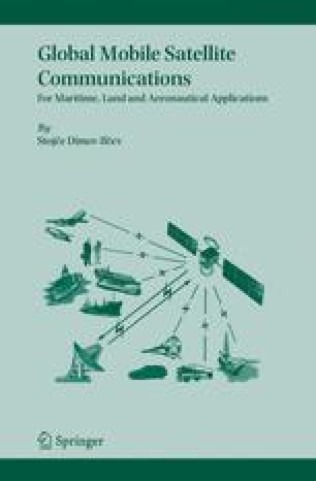
Global mobile satellite communications : For maritime, Land and aeronautical applications
This book is important for modern shipping, truck, train and aeronautical societies because GMSC in the present millennium provides more effective business and trade, with emphasis on safety and commercial communications. Global Mobile Satellite Communications is written to make bridges between potential readers and current GMSC trends, mobile system concepts and network architecture using a simple mode of style with understandable technical information, characteristics, graphicons, illustrations and mathematics equations

GeoSpatial semantics ; 2nd International Conference, GeoS 2007, Mexico City, Mexico, November 29-30, 2007
This paper reports a simple case study of extracting the two types of such hierarchies from formal texts of traffic code. Problems of concurrent use of both hierarchies for ontology reasoning are dis-cussed, particularly, in context of the different views on geospatial ontologies.
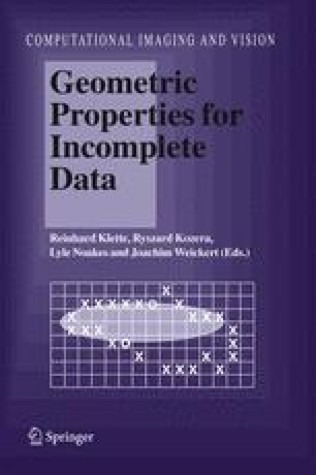
Geometric Properties for Incomplete Data
Computer vision and image analysis require interdisciplinary collaboration between mathematics and engineering. This book addresses the area of high-accuracy measurements of length, curvature, motion parameters and other geometrical quantities from acquired image data. It is a common problem that these measurements are incomplete or noisy, such that considerable efforts are necessary to regularise the data, to fill in missing information, and to judge the accuracy and reliability of these results. This monograph brings together contributions from researchers in computer vision, engineering and mathematics who are working in this area.
Geometric Modeling and Processing - GMP 2006 ; 4th International Conference, GMP 2006, Pittsburgh, PA, USA, July 26-28, 2006, Proceedings
This book constitutes the refereed proceedings of the 4th International Conference on Geometric Modeling and Processing, GMP 2006, held in Pittsburgh, PA, USA in July 2006. The 36 revised full papers and 21 revised short papers presented were carefully reviewed and selected from a total of 84 submissions. All current issues in the area of geometric modeling and processing are addressed and the impact in such areas as computer graphics, computer vision, machining, robotics, and scientific visualization is shown. The papers are organized in topical sections on shape reconstruction, curves and surfaces, geometric processing, shape deformation, shape description, shape recognition, geometric modeling, subdivision surfaces, and engineering applications.

Geometric Fundamentals of Robotics
Geometric Fundamentals of Robotics provides an elegant introduction to the geometric concepts that are important to applications in robotics. This second edition is still unique in providing a deep understanding of the subject: rather than focusing on computational results in kinematics and robotics, it includes significant state-of-the art material that reflects important advances in the field, connecting robotics back to mathematical fundamentals in group theory and geometry.
Genetic rogramming ; Vol. 3447 : 8th European conference, EuroGP 2005, Lausanne, Switzerland, March 30-April 1, 2005, Proceedings
In this volume we present the contributions for the 18th European Conference on Genetic Programming (EuroGP 2005). The conference took place from 30 March to 1 April in Lausanne, Switzerland. EuroGP is a well-established conf- ence and the only one exclusively devoted to genetic programming. All previous proceedings were published by Springer in the LNCS series. From the outset, EuroGP has been co-located with the EvoWorkshops focusing on applications of evolutionary computation. Since 2004, EvoCOP, the conference on evolutionary combinatorial optimization, has also been co-located with EuroGP, making this year’s combined events one of the largest dedicated to evolutionary computation in Europe. Genetic programming (GP) is evolutionary computation that solves complex problems or tasks by evolving and adapting a population of computer programs, using Darwinian evolution and Mendelian genetics as its sources of inspiration. Some of the 34 papers included in these proceedings address foundational and theoretical issues and there is also a wide variety of papers dealing with di?erent application areas, such as computer science, engineering, language processing, biology and computational design, demonstrating that GP is a powerful and practical problem-solving paradigm.
Genetic Programming ; Vol. 3905 ; 9th European Conference, EuroGP 2006, Budapest, Hungary, April 10-12, 2006. Proceedings
This book constitutes the refereed proceedings of the 9th European Conference on Genetic Programming, EuroGP 2006, held in Budapest, Hungary, in April 2006, colocated with EvoCOP 2006. The 21 revised plenary papers and 11 revised poster papers were carefully reviewed and selected from 59 submissions. The papers address fundamental and theoretical issues, along with a wide variety of papers dealing with different application areas, such as computer science, engineering, machine learning, Kolmogorov complexity, biology and computational design.

Genetic algorithms: theory, design and programming
We present a series of scientific contributions that delve into the intricate theoretical foundations and practical nuances of genetic algorithms (GAs). Beyond the academic realm, GAs have demonstrated profound applications in societal decision-making and engineering optimization, showcased through real-world examples and case studies. A dedicated section on programming principles offers a thorough guide for implementing GAs across diverse languages. This edition, tailored for researchers and academics, serves as a testament to the scientific advancements within the field, inviting readers to explore the nuanced journey from theoretical constructs to pragmatic applications in the dynamic landscape of GAs.

Generative programming and component engineering ; 4th International conference, GPCE 2005, Tallinn, Estonia, September 29 - October 1, 2005, Proceedings
Generative Programming and Component Engineering (GPCE) is a leading - searchconferenceonautomaticprogrammingandcomponentengineering.These approaches to software engineering have the potential to revolutionize software development as automation and components revolutionized manufacturing. The conference brings together researchers and practitioners interested in adva- ing automation for software development. It is also a premier forum for cro- fertilization between the programming language and software engineering - search communities. GPCEaroseasajointconference, mergingthepriorconferenceonGenerative and Component-Based Software Engineering (GCSE) and the Workshop on - mantics, Applications, andImplementationofProgramGeneration(SAIG). The proceedingsofthepreviousGPCEconferenceswerepublishedintheLNCSseries of Springer as volumes2487,2830, and 3286.In 2005 GPCE wasco-locatedwith the International Conference on Functional Programming (ICFP) and the s- posium on Trends in Functional Programming (TFP), re?ecting the vigorous interaction between the functional programming and generative programming research communities. GPCE and ICFP are both sponsored by the Association for Computing Machinery. The quality and breadth of the papers submitted to GPCE 2005 was impr- sive. All 86 papers, including 5 papers for tool demonstrations, were rigorously reviewed by 17 highly quali?ed Program Committee members. The members of the Program Committee ?rst provided in-depth individual reviews of the s- mitted papers, and then debated the merits of the papers through an extended electronicProgramCommitteemeeting.After much(friendly) argument,25r- ular papers and 2 tool demonstration papers were selected for publication. The ProgramCommittee provided extensive technical feedback to the authors of the submittedpapers.Theconferenceprogramwascomplementedwiththreeinvited talks, three extended tutorials, and three all-day workshops.

Generative and transformational techniques in software engineering II : International Summer School, GTTSE 2007, Braga, Portugal, July 2-7, 2007. Revised Papers
This tutorial book presents an augmented selection of the material presented at the International Summer School on Generative and Transformational Techniques in Software Engineering, GTTSE 2007, held in Braga, Portugal, in July 2007.The 7 tutorial lectures presented together with 5 short tutorials and 4 contributions to the participants workshop were carefully selected during multiple rounds of reviewing and improvement. The tutorials given by renowned representatives of complementary approaches and problem domains combine foundations, methods, examples, and tool support.
Generative and transformational techniques in software engineering ; International Summer School, GTTSE 2005, Braga, Portugal, July 4-8, 2005. Revised Papers
This tutorial book presents an augmented selection of material presented at the International Summer School on Generative and Transformational Techniques in Software Engineering, GTTSE 2005. The book comprises 7 tutorial lectures presented together with 8 technology presentations and 6 contributions to the participants workshop.

Fuzzy Systems Engineering : Theory and Practice
This book is devoted to reporting innovative and significant progress in fuzzy system engineering. Given the maturation of fuzzy logic, this book is dedicated to exploring the recent breakthroughs in fuzziness and soft computing in favour of intelligent system engineering. This monograph presents novel developments of the fuzzy theory as well as interesting applications of the fuzzy logic exploiting the theory to engineer intelligent systems.

Fuzzy Models and Algorithms for Pattern Recognition and Image Processing
Fuzzy Models and Algorithms for Pattern Recognition and Image Processing presents a comprehensive introduction of the use of fuzzy models in pattern recognition and selected topics in image processing and computer vision. Unique to this volume in the Kluwer Handbooks of Fuzzy Sets Series is the fact that this book was written in its entirety by its four authors. A single notation, presentation style, and purpose are used throughout. The result is an extensive unified treatment of many fuzzy models for pattern recognition. The main topics are clustering and classifier design, with extensive material on feature analysis relational clustering, image processing and computer vision. Also included are numerous figures, images and numerical examples that illustrate the use of various models involving applications in medicine, character and word recognition, remote sensing, military image analysis, and industrial engineering.

Fuzzy mathematical programming and fuzzy matrix games
This book presents a systematic and focused study of the application of fuzzy sets to two basic areas of decision theory, namely Mathematical Programming and Matrix Game Theory. Apart from presenting most of the basic results available in the literature on these topics, the emphasis is on understanding their natural relationship in a fuzzy environment

Fuzzy Logic, Identification and Predictive Control
Fuzzy Logic, Identification and Predictive Control is a comprehensive introduction to the use of fuzzy methods in many different control paradigms encompassing robust, model-based, PID-like and predictive control. This combination of fuzzy control theory and industrial serviceability will make a telling contribution to your research whether in the academic or industrial sphere and also serves as a fine roundup of the fuzzy control area for the graduate student
