



الصفحة 12
الصفحة 12

Language Technologies for the Challenges of the Digital Age ; 27th International Conference, GSCL 2017, Berlin, Germany, September 13-14, 2017, Proceedings
Constitutes the refereed proceedings of the 27th biennial conference of the German Society for Computational Linguistics and Language Technology, GSCL 2017, held in Berlin, Germany, in September 2017, which focused on language technologies for the digital age. The 16 full papers and 10 short papers included in the proceedings were carefully selected from 36 submissions. Topics covered include text processing of the German language, online media and online content, semantics and reasoning, sentiment analysis, and semantic web description languages.

Language and Automata Theory and Applications ; 2nd International Conference, LATA 2008, Tarragona, Spain, March 13-19, 2008. Revised Papers
This book constitutes the refereed proceedings of the Second International Conference on Language and Automata Theory and Applications, LATA 2008, held in Tarragona, Spain, in March 2008.The 40 revised full papers presented were carefully reviewed and selected from 134 submissions. The papers deal with the various issues related to automata theory and formal languages

Knowledge discovery, knowledge engineering and knowledge management ; 10th International Joint Conference, IC3K 2018, Seville, Spain, September 18-20, 2018, Revised Selected Papers
Constitutes the thoroughly refereed proceedings of the 10th International Joint Conference on Knowledge Discovery, Knowledge Engineering and Knowledge Management, IC3K 2018, held in Seville, Spain, in September 2018. The 12 full papers presented were carefully reviewed and selected from 167 submissions. The papers are organized in topical sections on knowledge discovery and information retrieval; knowledge engineering and ontology development; and knowledge management and information sharing.

Knowledge Discovery in Inductive Databases ; Vol.3933 ; 4th International Workshop, KDID 2005, Porto, Portugal, October 3, 2005, Revised Selected and Invited Papers
The 4th International Workshop on Knowledge Discovery in Inductive Databases (KDID 2005) was held in Porto, Portugal, on October 3, 2005 in conjunction with the 16th European Conference on Machine Learning and the 9th European Conference on Principles and Practice of Knowledge Discovery in Databases. Ever since the start of the ?eld of data mining, it has been realized that the integration of the database technology into knowledge discovery processes was a crucial issue. This vision has been formalized into the inductive database perspective introduced by T. Imielinski and H. Mannila (CACM 1996, 39(11)). The main idea is to consider knowledge discovery as an extended querying p- cess for which relevant query languages are to be speci?ed.

Knowledge Discovery in Inductive Databases ; 5th International Workshop, KDID 2006 Berlin, Germany, September 18th, 2006 Revised Selected and Invited Papers
Constitutes the thoroughly refereed joint postproceedings of the 5th International Workshop on Knowledge Discovery in Inductive Databases, KDID 2006. The papers address various current topics in knowledge discovery and data mining in the framework of inductive databases such as constraint-based mining, database technology and inductive querying.

KI 2008 : Advances in Artificial Intelligence ; 31st Annual German Conference on AI, KI 2008, Kaiserslautern, Germany, September 23-26, 2008. Proceedings
This book constitutes the thoroughly refereed proceedings of the 31th Annual German Conference on Artificial Intelligence, KI 2008, held in Kaiserslautern, Germany, September 2008.The 15 revised full papers presented together with 2 invited contributions and 30 posters were carefully reviewed and selected from 77 submissions. The papers cover important areas such as pattern recognition, multi-agent systems, machine learning, natural language processing, constraint reasoning, knowledge representation and management, planning, and temporal reasoning.
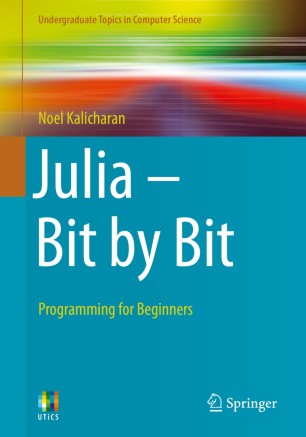
Julia - Bit by Bit : Programming for Beginners
The main goal of this book is to teach fundamental programming principles to beginners using Julia, one of the fastest growing programming languages today. Julia can be classified as a "modern" language, possessing many features not available in more popular languages like C and Java.
JavaScript data structures and algorithms : An Introduction to understanding and implementing core data structure and algorithm fundamentals
Combines clear explanations of data structure and algorithm theory with practical code samples, examples and exercises, all specifically relevant to JavaScript Provides background information on object-oriented programming and native JavaScript concepts to help understand how everything fits together Illustrates how these theoretical computer science concepts ties back to practical applications in software engineering
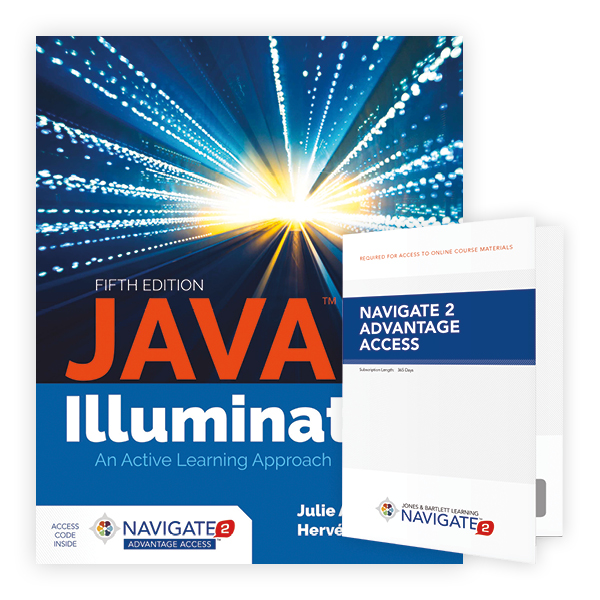
Java Illuminated ; 5th ed.
Provides learners with an interactive, user-friendly approach to learning the Java programming language. Comprehensive but accessible, the text takes a progressive approach to object-oriented programming, allowing students to build on established skills to develop new and increasingly complex classes. Java Illuminated follows an activity-based active learning approach that ensures student engagement and interest.
Java Design Patterns : A Hands-On Experience with Real-World Examples
Covers classical design patterns with the latest editions of Java and Eclipse Includes implementation of the Java design patterns in real-world applications Each chapter has a Q&A section to help you understand the pros and cons of each design pattern
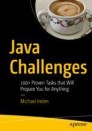
Java Challenges 100+ : Proven Tasks that Will Prepare You for Anything
Expand your knowledge of Java with this entertaining learning guide, which features 100+ exercises and programming challenges. Java Challenges will prepare you for your next exam or job interview, and covers many practical topics, such as strings, arrays, data structures, recursion, and date and time. The APIs and other material included in this book are Java 17 compatible. You will: Improve your Java knowledge by solving enjoyable but challenging programming puzzles / Solve mathematical problems, recursions, strings, arrays and more / Manage data processing and data structures like lists, sets, maps / Handle advanced recursion as well as binary trees, sorting and searching / Gamify key fundamentals for fun and easier reinforcement
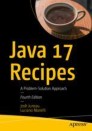
Java 17 Recipes : A Problem-Solution Approach
Quickly find solutions to dozens of common programming problems encountered while building Java applications, with recipes presented in the popular problem-solution format. Look up the programming problem that you want to resolve. Read the solution. Apply the solution directly in your own code. Problem solved! covers of some of the newest features, APIs, and more such as pattern matching for switch, Restore Always-Strict-Floating-Point-Semantics, enhanced pseudo-random number generators, the vector API, sealed classes, and enhancements in the use of String. Source code for all recipes is available in a dedicated GitHub repository. This must-have reference belongs in your library. You will learn : Look up solutions to everyday problems involving Java SE 17 LTS and other recent releases / Develop Java SE applications using the latest in Java SE technology / Incorporate Java major features introduced in versions 17, 16, and 15 into your code
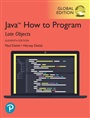
Java : how to program. Late objects : Introducing Jshell
Introduction to Computers, the Internet and Java / Introduction to Java Applications; Input/Output and Operators / Control Statements: Part 1; Assignment, ++ and Operators / Control Statements: Part 2; Logical Operators / Methods / Arrays and ArrayLists / Introduction to Classes and Objects / Classes and Objects: A Deeper Look / Object-Oriented Programming: Inheritance / Object-Oriented Programming: Polymorphism and Interfaces / Exception Handling: A Deeper Look / JavaFX Graphical User Interfaces / JavaFX GUI / Strings, Characters and Regular Expressions / Files, Input/Output Streams, NIO and XML Serialization / Generic Collections / Lambdas and Streams / Recursion / Searching, Sorting and Big O / Generic Classes and Methods: A Deeper Look / Custom Generic Data Structures / JavaFX Graphics and Multimedia / Concurrency / Accessing Databases with JDBC / Introduction to JShell: Java 9's REPL for Interactive Java
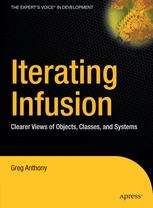
Iterating Infusion : Clearer Views of Objects, Classes, and Systems
Iterating Infusion presents comprehensive tools for you to best manage and work with object orientation. These include simplified fundamental concepts, popular language comparisons, advanced designing strategies, a broad usage progression, thorough design notations (interaction algebra), and data-oriented (fundamentally-OO) languages. The title, Iterating Infusion, alludes to the fact that any system has multiple, coexisting functional levels and that new levels—both lower and higher—are continually added to the same functional area. The practical effect is to bring processes into focus, always clarifying the vague. The extreme form of this is when separate but compatible technologies are brought together to create advancements; these can be baby-steps or great leaps, with varying amounts of effort. In more general terms, the same thing in a different context can take on much more power. And actually, this phenomenon is at the heart of object-oriented software.
Computable Models of the Law : Languages, Dialogues, Games, Ontologies
This book originate from a workshop held at the European University Institute of Florence, Italy, in December 2006. The workshop was devoted to the discussion of the different ways of understanding and explaining contemporary law, for the purpose of building computable models of it -- especially models enabling the development of computer applications for the legal domain.
Component-based software engineering ; 11th International Symposium, CBSE 2008, Karlsruhe, Germany, October 14-17, 2008. Proceedings
This book constitutes the refereed proceedings of the 11th International ACM SIGSOFT Symposium on Component-Based Software Engineering, CBSE 2008, held in Karlsruhe, Germany in October 2008.
Component-Based Software Development for Embedded Systems : An Overview of Current Research Trends
Embedded systems are ubiquitous. They appear in cell phones, microwave ovens, refrigerators, consumer electronics, cars, and jets. Some of these embedded s- tems are safety- or security-critical such as in medical equipment, nuclear plants, and X-by-wire control systems in naval, ground and aerospace transportation - hicles. With the continuing shift from hardware to software, embedded systems are increasingly dominated by embedded software. Embedded software is complex. Its engineering inherently involves a mul- disciplinary interplay with the physics of the embedding system or environment. Embedded software also comes in ever larger quantity and diversity. The next generation of premium automobiles will carry around one gigabyte of binary code. The proposed US DDX submarine is e?ectively a ?oating embedded so- ware system, comprising 30 billion lines of code written in over 100 programming languages. Embedded software is expensive. Cost estimates are quoted at around US$15– 30 per line (from commencement to shipping). In the defense realm, costs can range up to $100, while for highly critical applications, such as the Space Shuttle, the cost per line approximates $1,000. In view of the exponential increase in complexity, the projected costs of future embedded software are staggering.
Compiler construction ; Vol. 3923 : 15th International Conference, CC 2006, Held as Part of the Joint European Conferences on Theory and Practice of Software, ETAPS 2006, Vienna, Austria, March 30-31, 2006, Proceedings
ETAPS 2006 was the ninth instance of the European Joint Conferences on Theory and Practice of Software. ETAPS is an annual federated conference that was established in 1998 by combining a number of existing and new conferences. The events that comprise ETAPS address various aspects of the system devel- ment process, including speci?cation, design, implementation, analysis and impro- ment. The languages, methodologies and tools which support these activities are all well within its scope. Di?erent blends of theory and practice are represented, with an inclination towards theory with a practical motivation on the one hand and soundly based practice on the other.
Compiler construction ; Vol. 3443 : 14th International Conference, CC 2005, Held as Part of the Joint European Conferences on Theory and Practice of Software, ETAPS 2005, Edinburgh, UK, April 4-8, 2005. Proceedings
"This book constitutes the refereed proceedings of 14th International Conference, CC 2005, Held as Part of the Joint European Conferences on Theory and Practice of Software, ETAPS 2005, including Topics Programming Languages, Compilers, Interpreters Logics and Meanings of Programs / Mathematical Logic and Formal Languages / Software Engineering / Artificial Intelligence"
Compiler construction ; 17th International Conference, CC 2008, Held as Part of the Joint European Conferences on Theory and Practice of Software, ETAPS 2008, Budapest, Hungary, March 29 - April 6, 2008. Proceedings
This book constitutes the proceedings of the 17th International Conference on Compiler Construction, CC 2008. It covers analysis and transformations, compiling for parallel architectures, runtime techniques and tools, analyses, and atomicity and transactions.
