



Page 1
Page 1

Multimedia Content Analysis and Mining ; International Workshop, MCAM 2007, Weihai, China, June 30-July 1, 2007, Proceedings
The workshop gives a snapshot of the current wor- wide research in multimedia analysis. Through recent advances in computing, networking, and data storage, multimedia will create new interesting technical possibilities in a wide range of ?elds, such as entertainment, commerce, science, medicine, and public safety.

Modern deep learning for tabular data : Novel approaches to common modeling problems
Synthesizes and presents novel deep learning approaches to a seemingly unlikely domain - tabular data. Whether for finance, business, security, medicine, or countless other domain, deep learning can help mine and model complex patterns in tabular data - an incredibly ubiquitous form of structured data. Part I of the book offers a rigorous overview of machine learning principles, algorithms, and implementation skills relevant to holistically modeling and manipulating tabular data. Part II studies five dominant deep learning model designs - Artificial Neural Networks, Convolutional Neural Networks, Recurrent Neural Networks, Attention and Transformers, and Tree-Rooted Networks - through both their 'default' usage and their application to tabular data. Part III compounds the power of the previously covered methods by surveying strategies and techniques to supercharge deep learning systems: autoencoders, deep data generation, meta-optimization, multi-model arrangement, and neural network interpretability.

Modeling, Simulation and Optimization of Complex Processes HPSC 2018 ; Proceedings of the 7th International Conference on High Performance Scientific Computing, Hanoi, Vietnam, March 19-23, 2018
The contributions cover a broad, interdisciplinary spectrum of scientific computing and showcase recent advances in theory, methods, and practical applications. Subjects covered include numerical simulation, methods for optimization and control, machine learning, parallel computing and software development, as well as the applications of scientific computing in mechanical engineering, airspace engineering, environmental physics, decision making, hydrogeology, material science and electric circuits.
Modeling and Using Context ; 5th International and Interdisciplinary Conference, CONTEXT 2005, Paris, France, July 5-8, 2005, Proceedings
Context is of crucial importance for research and applications in many disciplines, as evidenced by many workshops, symposia, seminars, and conferences on specific aspects of context. The International and Interdisciplinary Conference on Modeling and Using Context (CONTEXT), the oldest conference series focusing on context, provides a unique interdisciplinary emphasis, bringing together participants from a wide range of disciplines, including artificial intelligence, cognitive science, computer science, linguistics, organizational science, philosophy, psychology, ubiquitous computing, and application areas such as medicine and law, to discuss and report on context-related research and projects. Previous CONTEXT conferences were held in Rio de Janeiro, Brazil (1997), Trento, Italy (1999, LNCS 1688), Dundee, UK (2001, LNCS 2116), and Palo Alto, USA (2003, LNCS 2680). CONTEXT 2005 was held in Paris, France during July 5–8, 2005. There was a strong response to the CONTEXT 2005 Call for Papers, with 120 submissions received. A careful review process assessed all submissions, with each paper first reviewed by the international Program Committee, and then reviewer discussions were initiated as needed to assure that the final decisions carefully considered all aspects of each paper. Reviews of submissions by the Program Chairs were supervised independently and anonymously, to assure fair consideration of all work. Out of the 120 submissions, 23 were selected as full papers for oral presentation, and 20 were selected as full papers for poster presentation. These outstanding papers are presented in this proceedings.

Mobile health technologies for ambient assisted living and healthcare
The use of telemedicine and mobile devices is growing, and sensors might aid in creating creative solutions. Developing these solutions is crucial for monitoring senior citizens, lifestyles, and medical procedures. The development of assistive technology for various users to follow sports and other activities is strongly tied to this study area. Data protection is crucial, and the development of these solutions for medical uses should be verified. The security and privacy of the information may be tied to other recognized research projects for their acceptability. ICT research has considerably improved quality of life and has fully assimilated all citizens into society through medical rehabilitation and assistive technology. The technologies and research fields that influence medical informatics include databases, networking, graphical user interfaces, data mining, machine learning, intelligent decision support systems, and specialized programming languages.

Membrane Computing; 8th International Workshop, WMC 2007 Thessaloniki, Greece, June 25-28, 2007 Revised Selected and Invited Papers
This volume contains a selection of papers presented at the Eighth Workshop on Membrane Computing, WMC8, which took place in Thessaloniki, Greece, during June 25–28, 2008. Special attention was paid to the interaction of membrane computing with biology and computer science, focusing on the - ological roots of membrane computing, on applications of membrane computing in biology and medicine, and on possible electronically based implementations.

Membrane Computing ; Vol. 4361 ; 7th International Workshop, WMC 2006, Leiden, Netherlands, July 17-21, 2006, Revised, Selected, and Invited Papers
The present volume contains a selection of papers presented at the Seventh Workshop on Membrane Computing, WMC7, which took place in Leiden, The Netherlands, during July 17–21, 2006. The ?rst three workshops on membrane computing were organized in Curtea de Arge¸ s, Romania – they took place in August 2000 (with the proceedings published in Lecture Notes in Computer Science, volume2235),in August 2001(with a selection of papers published asa special issue of Fundamenta Informaticae, volume 49, numbers 1–3, 2002), and in August 2002 (with the proceedings published in Lecture Notes in Computer Science, volume 2597). The next three workshops were organized in Tarragona, Spain, in July 2003, in Milan, Italy, in June 2004, and in Vienna, Austria, in July 2005, with the proceedings published as volumes 2933, 3365, and 3850, respectively, of Lecture Notes in Computer Science. The 2006edition of WMC wasorganized(and supported) byLorentzCenter, Leiden, under the auspices of the European Molecular Computing Consortium (EMCC). Special attention was paid to the interaction of membrane computing with biology, focusing both on the biological roots of membrane computing and on applications of membrane computing in biology and medicine.

Medical Image Computing and Computer-Assisted Intervention - MICCAI 2008 ; 11th International Conference, New York, NY, USA, September 6-10, 2008, Proceedings, Part II
The program committee carefully selected 258 revised papers from numerous submissions for presentation in two volumes, based on rigorous peer reviews. The first volume includes 127 papers related to medical image computing, segmentation, shape and statistics analysis, modeling, motion tracking and compensation, as well as registration. The second volume contains 131 contributions related to robotics and interventions, statistical analysis, segmentation, intervention, modeling, and registration.

Medical Biometrics ; 1st International Conference, ICMB 2008, Hong Kong, China, January 4-5, 2008, Proceedings
Medical biometrics primarily refers to the usage of beh- ioral and physiological characteristics of humans for medical diagnosis and body care. Thus the goal of medical biometrics is to explore solutions to the open problems in medicine using biometric measurements, technologies and systems.

Intelligent robotics and applications ; 1st International Conference, ICIRA 2008, Wuhan, China, October 15-17, 2008, Proceedings, Part I
These two volumes constitute the refereed proceedings of the First International Conference on Intelligent Robotics and Applications, ICIRA 2008, held in Wuhan, China, in October 2008.The 265 revised full papers presented were thoroughly reviewed and selected from 552 submissions; they are devoted but not limited to robot motion planning and manipulation; robot control; cognitive robotics; rehabilitation robotics; health care and artificial limb; robot learning; robot vision; human-machine interaction & coordination; mobile robotics.

Intelligent robotics and applications ; 1st International Conference, ICIRA 2008 Wuhan, China, October 15-17, 2008 Proceedings, Part II
This two volumes constitute the refereed proceedings of the First International Conference on Intelligent Robotics and Applications, ICIRA 2008, held in Wuhan, China, in October 2008.The 265 revised full papers presented were thoroughly reviewed and selected from 552 submissions; they are devoted but not limited to robot motion planning and manipulation; robot control; cognitive robotics; rehabilitation robotics; health care and artificial limb; robot learning; robot vision; human-machine interaction & coordination; mobile robotics.

Intelligent Paradigms for Healthcare Enterprises : Systems Thinking
This book is an overview of intelligent paradigms and strategic investments that might payoff for the healthcare enterprise. Specifically, the reader will get ideas for efficiency enhancements for improving effectiveness and quality of care and for increasing patient safety.

Intelligent Interactive multimedia systems for e-healthcare applications
It looks at how the latest technologies (artificial intelligence, deep learning, machine learning, big data, IoT, smart device, etc.) help to manage health data, diagnose health issues, monitor treatment, predict pandemic diseases, and more. It covers several important applications of multimedia in healthcare, including for data visualization purposes, for computer vision for elder healthcare monitoring, for detection of lung nodules, for health monitoring and management systems using machine learning techniques, and for fusion applications in medical image processing. The book goes into detail on the various methods and techniques for supporting multimedia systems for e-healthcare.

Image Processing : Dealing with Texture ; 2nd ed.
Updates the classic work on texture analysis theory and methods without abandoning the foundational essentials of this landmark work. Like the first, the new edition offers an analysis of texture in digital images that are essential to a diverse range of applications such as: robotics, defense, medicine and the geo-sciences. Designed to easily locate information on specific problems, the text is structured around a series of helpful questions and answers. Updated to include the most recent developments in the field, many chapters have been completely revised including: Fractals and Multifractals, Image Statistics, Texture Repair, Local Phase Features, Dual Tree Complex Wavelet Transform, Ridgelets and Curvelets and Deep Texture Features. The book takes a two-level mathematical approach: light math is covered in the main level of the book, with harder math identified in separate boxes.
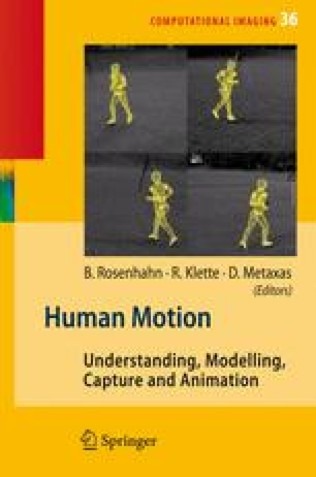
Human motion : Understanding, modeling, capture and animation
Edward Muybridge (1830–1904) is known as the pioneer in motion capt- ing with his famous experiments in 1887 called “Animal Locomotion”. Since then, the feld of animal or human motion analysis has grown in many dir- tions. However, research and results that involve human-like animation and the recovery of motion is still far from being satisfactory. Progress in human motion analysis depends on empirically anchored and grounded research in computer vision, computer graphics, and biomechanics. This book is based on a June 2006 workshop held in Dagstuhl, Germany. This workshop brought together for the frst time researchers from the afo- mentioned disciplines.

Heterogeneity in statistical genetics : How to assess, address, and account for mixtures in association studies
Heterogeneity, or mixtures, are ubiquitous in genetics. Even for data as simple as mono-genic diseases, populations are a mixture of affected and unaffected individuals. Still, most statistical genetic association analyses, designed to map genes for diseases and other genetic traits, ignore this phenomenon.In this book, we document methods that incorporate heterogeneity into the design and analysis of genetic and genomic association data. Among the key qualities of our developed statistics is that they include mixture parameters as part of the statistic, a unique component for tests of association. A critical feature of this work is the inclusion of at least one heterogeneity parameter when performing statistical power and sample size calculations for tests of genetic association.
HCI and usability for medicine and health care ; 3rd Symposium of the Workgroup Human-computer interaction and usability engineering of the Austrian Computer Society, USAB 2007 Graz, Austria, November, 22, 2007, Proceedings
The work group Human–Computer Interaction & Usability Engineering (HCI&UE) of the Austrian Computer Society (OCG) serves as a platform for interdisciplinary exchange, research and development. Our 2007 topic was “Human–Computer Interaction for Medicine and Health Care” (HCI4MED), Medical information systems are already extremely sophisticated and technological performance increases exponentially.

Handbook on Craniofacial Superimposition : The MEPROCS Project
This book is the first comprehensive guide to a new soft computing technique which is used in complex forensic cases. The chapters include detailed technical and practical overviews, and discussions about the latest tools, open problems and ethical and legal issues involved. The book will be of interest to researchers and practitioners in forensic medicine and computational intelligence.

Handbook of Biochips : Integrated Circuits and Systems for Biology and Medicine
This book provides a broad survey of the field of biochips, including fundamentals of microelectronics and biomaterials interaction with various, living tissues, as well as numerous, diverse applications. Although a wide variety of biochips will be described, there will be a focus on those at the brain-machine interface. Analysis is included of the relationship between different categories of biochips and their interactions with the body and coverage includes wireless remote control of biochips and arrays of microelectrodes, based on new biomaterials.

Fuzzy Models and Algorithms for Pattern Recognition and Image Processing
Fuzzy Models and Algorithms for Pattern Recognition and Image Processing presents a comprehensive introduction of the use of fuzzy models in pattern recognition and selected topics in image processing and computer vision. Unique to this volume in the Kluwer Handbooks of Fuzzy Sets Series is the fact that this book was written in its entirety by its four authors. A single notation, presentation style, and purpose are used throughout. The result is an extensive unified treatment of many fuzzy models for pattern recognition. The main topics are clustering and classifier design, with extensive material on feature analysis relational clustering, image processing and computer vision. Also included are numerous figures, images and numerical examples that illustrate the use of various models involving applications in medicine, character and word recognition, remote sensing, military image analysis, and industrial engineering.
