



Page 1
Page 1

Heterogeneity in statistical genetics : How to assess, address, and account for mixtures in association studies
Heterogeneity, or mixtures, are ubiquitous in genetics. Even for data as simple as mono-genic diseases, populations are a mixture of affected and unaffected individuals. Still, most statistical genetic association analyses, designed to map genes for diseases and other genetic traits, ignore this phenomenon.In this book, we document methods that incorporate heterogeneity into the design and analysis of genetic and genomic association data. Among the key qualities of our developed statistics is that they include mixture parameters as part of the statistic, a unique component for tests of association. A critical feature of this work is the inclusion of at least one heterogeneity parameter when performing statistical power and sample size calculations for tests of genetic association.

Genetic rogramming ; Vol. 3447 : 8th European conference, EuroGP 2005, Lausanne, Switzerland, March 30-April 1, 2005, Proceedings
In this volume we present the contributions for the 18th European Conference on Genetic Programming (EuroGP 2005). The conference took place from 30 March to 1 April in Lausanne, Switzerland. EuroGP is a well-established conf- ence and the only one exclusively devoted to genetic programming. All previous proceedings were published by Springer in the LNCS series. From the outset, EuroGP has been co-located with the EvoWorkshops focusing on applications of evolutionary computation. Since 2004, EvoCOP, the conference on evolutionary combinatorial optimization, has also been co-located with EuroGP, making this year’s combined events one of the largest dedicated to evolutionary computation in Europe. Genetic programming (GP) is evolutionary computation that solves complex problems or tasks by evolving and adapting a population of computer programs, using Darwinian evolution and Mendelian genetics as its sources of inspiration. Some of the 34 papers included in these proceedings address foundational and theoretical issues and there is also a wide variety of papers dealing with di?erent application areas, such as computer science, engineering, language processing, biology and computational design, demonstrating that GP is a powerful and practical problem-solving paradigm.

Genetic Programming Theory and Practice V
Genetic Programming Theory and Practice V was developed from the fifth workshop at the University of Michigan’s Center for the Study of Complex Systems to facilitate the exchange of ideas and information related to the rapidly advancing field of Genetic Programming (GP). Contributions from the foremost international researchers and practitioners in the GP arena examine the similarities and differences between theoretical and empirical results on real-world problems. The text explores the synergy between theory and practice, producing a comprehensive view of the state of the art in GP application.
Evolutionary computation, machine learning and data mining in bioinformatics ; 6th European Conference, EvoBIO 2008, Naples, Italy, March 26-28, 2008. Proceedings
The feld of bioinformatics has two main objectives: the creation and main- nance of biological databases, and the discovery of knowledge from life sciences data in order to unravel the mysteries of biological function, leading to new drugs and therapies for human disease. Life sciences data come in the form of biological sequences, structures, pathways, or literature. One major aspect of discovering biological knowledge is to search, predict, or model specifc infortioninagivendatasetinorderto generate new in teresting knowledge.Computer science methods such as evolutionary computation, machine learning, and data mining all have a great deal to ofer the feld of bioinformatics.

Evolutionary computation, machine learning and data mining in bioinformatics ; 5th European Conference, EvoBIO 2007, Valencia, Spain, April 11-13, 2007, Proceedings
This book Covers brings together experts in computer science with experts in bioinformatics and the biological sciences. It presents contributions on fundamental and theoretical issues along with papers dealing with different applications areas.

Deep Learning, Machine Learning and IoT in Biomedical and Health Informatics : Techniques and Applications
Examines and demonstrates state-of-the-art approaches for IoT and Machine Learning based biomedical and health related applications. This book aims to provide computational methods for accumulating, updating and changing knowledge in intelligent systems and particularly learning mechanisms that help us to induce knowledge from the data. It is helpful in cases where direct algorithmic solutions are unavailable, there is lack of formal models, or the knowledge about the application domain is inadequately defined. In the future IoT has the impending capability to change the way we work and live. These computing methods also play a significant role in design and optimization in diverse engineering disciplines. With the influence and the development of the IoT concept, the need for AI (artificial intelligence) techniques has become more significant than ever.
Machine learning for brain disorders
Organized into five parts. Part One presents the fundamentals of ML. Part Two looks at the main types of data used to characterize brain disorders, including clinical assessments, neuroimaging, electro- and magnetoencephalography, genetics and omics data, electronic health records, mobile devices, connected objects and sensors. Part Three covers the core methodologies of ML in brain disorders and the latest techniques used to study them. Part Four is dedicated to validation and datasets, and Part Five discusses applications of ML to various neurological and psychiatric disorders.

Machine learning for biomedical application
Biomedicine is a multidisciplinary branch of medical science that consists of many scientific disciplines, e.g., biology, biotechnology, bioinformatics, and genetics; moreover, it covers various medical specialties. In recent years, this field of science has developed rapidly. This means that a large amount of data has been generated, due to (among other reasons) the processing, analysis, and recognition of a wide range of biomedical signals and images obtained through increasingly advanced medical imaging devices. The analysis of these data requires the use of advanced IT methods, which include those related to the use of artificial intelligence, and in particular machine learning. It is a summary of the Special Issue “Machine Learning for Biomedical Application”, briefly outlining selected applications of machine learning in the processing, analysis, and recognition of biomedical data, mostly regarding biosignals and medical images.
Linear and Generalized Linear Mixed Models and Their Applications
This book covers two major classes of mixed effects models—linear mixed models and generalized linear mixed models—and it presents an up-to-date account of theory and methods in analysis of these models as well as their applications in various fields. It offers a systematic approach to inference about non-Gaussian linear mixed models. Furthermore, it discusses the latest developments and methods in the field, incorporating relevant updates since publication of the first edition. These include advances in high-dimensional linear mixed models in genome-wide association studies (GWAS), advances in inference about generalized linear mixed models with crossed random effects, new methods in mixed model prediction, mixed model selection, and mixed model diagnostics.
Bioinformatics research and development ; 2nd International Conference, BIRD 2008 Vienna, Austria, July 7-9, 2008 Proceedings
This book constitutes the refereed proceedings of the Second International Bioinformatics Research and Development Conference, BIRD 2008, held in Vienna, Austria in July 2008.

Bioinformatics research and applications ; 3rd International Symposium,ISBRA 2007, Atlanta, GA, USA, May 7-10, 2007, Proceedings
This book including clustering and classification, gene expression analysis, gene networks, genome analysis, motif finding, pathways, protein structure prediction, protein domain interactions, phylogenetics, and software tools.
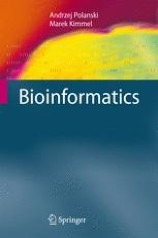
Bioinformatics
In this textbook present mathematical models in bioinformatics and they describe the biological problems that inspire the computer science tools used to handle the enormous data sets involved. The first part of the book covers the mathematical and computational methods, while the practical applications are presented in the second part. The mathematical presentation is descriptive and avoids unnecessary formalism, and yet remains clear and precise. Emphasis is laid on motivation through biological problems and cross applications. Each of the four chapters in the first part is accompanied by exercises and problems to support an understanding of the techniques presented. Each of the six chapters of the second part is devoted to some specific application domain: sequence alignment, molecular phylogenetics and coalescence theory, genomics, proteomics, RNA, and DNA microarrays. Each chapter concludes with a problems and projects section, to deepen the reader's understanding and to allow for the design of derived methods. Many of the projects involve publicly available software and/or Web-based bioinformatics depositories. Finally, the book closes with a thorough bibliography, reaching from classic research results to very recent findings, providing many pointers for future research.Overall, this volume is ideally suited for a senior undergraduate or graduate course on bioinformatics, with a strong focus on its mathematical and computer science background.

Applications of evolutionary computing ; Vol. 3449 ; Evoworkshops : EvoBIO, EvoCOMNET, EvoHot, EvoIASP, EvoMUSART, and EvoSTOC
Evolutionary computation (EC) techniques are e?cient nature-inspired pl- ning and optimization methods based on the principles of natural evolution and genetics. Due to their e?ciency and the simple underlying principles, these methods can be used for a large number of problems in the context of problem solving,optimization,andmachinelearning. Alargeandcontinuouslyincreasing number of researchers and practitioners make use of EC techniques in many - plication domains. The book at hand presents a careful selection of relevant EC applications combined with thorough examinations of techniques for a successful application of EC. The presented papers illustrate the current state of the art in the application of EC and should help and inspire researchers and practitioners to develop e?cient EC methods for design and problem solving.
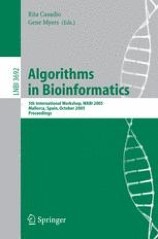
Algorithms in Bioinformatics ; Vol. 3692 ; 5th international workshop, WABI 2005, Mallorca, Spain, October 3-6, 2005, Proceedings
this book present the proceedings of the 5th Workshop on Algorithmsin Bioinformatics (WABI 2005) which took place in Spain, 2005. The Workshop on Algorithms in Bioinformatics highlights research workspecifically developed to address algorithmic problems in biosequence analysis. The emphasis is therefore on statistical and probabilistic algorithms that addressimportant problems in the field of molecular and structural biology. the workshop aims to present recent research results, includingsignificant work in progress, and to identify and explore directions of futureresearch.Original research papers (including significant work in progress) or state-of-the-art surveys were solicited on all aspects of algorithms in bioinformatics,including, but not limited to: exact and approximate algorithms for genomics,genetics, sequence analysis, gene and signal recognition, alignment, molecularevolution, phylogenetics, structure determination or prediction, gene expressionand gene networks, proteomics, functional genomics, and drug design.

Advances in bioinformatics and computational biology ; 2nd Brazilian symposium on bioinformatics, BSB 2007, Angra dos Reis, Brazil, August 29-31, 2007, Proceedings
This book address a broad range of current topics in computationl biology and bioinformatics featuring original research in computer science, mathematics and statistics as well as in molecular biology, biochemistry, genetics, medicine, microbiology and other life sciences.
