



Page 1
Page 1
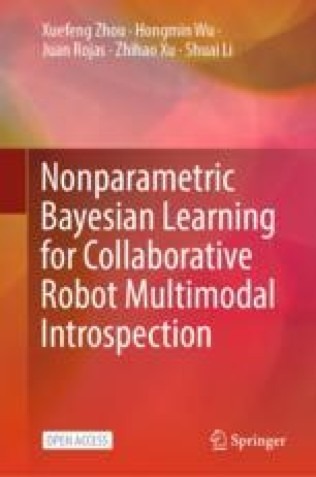
Nonparametric Bayesian Learning for Collaborative Robot Multimodal Introspection
This book focuses on robot introspection, which has a direct impact on physical human–robot interaction and long-term autonomy, and which can benefit from autonomous anomaly monitoring and diagnosis, as well as anomaly recovery strategies.

Multiagent System Technologies ; 5th German Conference, MATES 2007, Leipzig, Germany, September 24-26, 2007, Proceedings
The papers are organized in topical sections on engineering multi-agent systems, multi-agent planning and learning, multi-agent communication, interaction, and coordination, multi-agent resource allocation, multi-agent planning and simulation, as well as trust and reputation.

Medical Imaging and Informatics ; 2nd International Conference, MIMI 2007, Beijing, China, August 14-16, 2007 Revised Selected Papers
This book constitutes the thoroughly refeered post-conference proceedings of the Second Interational Conference on Medical Imaging and Informatics, MIMI 2007, held in Beijing, China, in August 2007.The 40 revised full papers presented together with 4 keynote talks were carefully reviewed and selected from 110 submissions. The papers are organized in topical sections on medical image segmentation and registration, medical informatics, PET, fMRI, ultrasound and thermal imaging, 3D reconstruction and visualization. The volume is rounded off by 4 papers from 2 workshops on legal, ethical and social issues in medical imaging and informatics, as well as on computer-aided diagnosis (CAD).
Medical Image Computing and Computer-Assisted Intervention - MICCAI 2008 ; 11th International Conference, New York, NY, USA, September 6-10, 2008, Proceedings, Part I
The program committee carefully selected 258 revised papers from numerous submissions for presentation in two volumes, based on rigorous peer reviews. The first volume includes 127 papers related to medical image computing, segmentation, shape and statistics analysis, modeling, motion tracking and compensation, as well as registration. The second volume contains 131 contributions related to robotics and interventions, statistical analysis, segmentation, intervention, modeling, and registration.
Medical Image Computing and Computer-Assisted Intervention -- MICCAI 2005 ; 8th International Conference, Palm Springs, CA, USA, October 26-29, 2005, Proceedings, Part II
Robotics, Image-Guided Surgery and Interventions -- Image Registration II -- Medical Image Computing -- Atlases -- Shape I -- Structural and Functional Brain Analysis -- Model-Based Image Analysis -- Image-Guided Intervention: Simulation, Modeling and Display -- Simulation and Modeling II -- Medical Image Computing -- Shape II -- Image Segmentation and Analysis II -- Image Registration III --
Medical Image Computing and Computer-Assisted Intervention – MICCAI 2005 ; 8th International Conference, Palm Springs, CA, USA, October 26-29, 2005, Proceedings, Part I
This paper presents a method for classification of medical images, using machine learning and deformation-based morphometry. A morphological representation of the anatomy of interest is first obtained using highdimensional template warping, from which regions that display strong correlations between morphological measurements and the classification (clinical) variable are extracted using a watershed segmentation, taking into account the regional smoothness of the correlation map which is estimated by a crossvalidation strategy in order to achieve robustness to outliers. A Support Vector Machine-Recursive Feature Elimination (SVM-RFE) technique is then used to rank computed features from the extracted regions, according to their effect on the leave-one-out error bound. Finally, SVM classification is applied using the best set of features, and it is tested using leave-one-out. The results from a group of 61 brain images of female normal controls and schizophrenia patients demonstrate not only high classification accuracy (91.8%) and steep ROC curves, but also exceptional stability with respect to the number of selected features and the SVM kernel size

Medical data processing and analysis
Medical data can be defined as obtaining information from patients (such as signals, images, sounds, chemical components and their concentration, body temperature, respiratory rate, blood pressure, and different treatment measurements) to quantify the patient’s status and disease stage. Computer-aided diagnostic (CAD) systems use classical image processing, computer vision, machine learning, and deep learning methods for image analysis. Using image classification or segmentation algorithms, they find a region of interest (ROI) pointing to a specific location within the given image or an outcome of interest in the form of a label pointing to a diagnosis or prognosis. Computer science, with the evolution of artificial intelligence and machine learning techniques, facilitates the modeling and interpretation of results—from carrying out measurements to experiments and observations.

Medical Biometrics ; 1st International Conference, ICMB 2008, Hong Kong, China, January 4-5, 2008, Proceedings
Medical biometrics primarily refers to the usage of beh- ioral and physiological characteristics of humans for medical diagnosis and body care. Thus the goal of medical biometrics is to explore solutions to the open problems in medicine using biometric measurements, technologies and systems.

IoT and AI Technologies for Sustainable Living : A Practical Handbook
Brings together all the latest methodologies, tools and techniques related to the Internet of Things and Artificial Intelligence in a single volume to build insight into their use in sustainable living. The areas of application include agriculture, smart farming, healthcare, bioinformatics, self-diagnosis systems, body sensor networks, multimedia mining, and multimedia in forensics and security. Provides a comprehensive discussion of modeling and implementation in water resource optimization, recognizing pest patterns, traffic scheduling, web mining, cyber security and cyber forensics. It will help develop an understanding of the need for AI and IoT to have a sustainable era of human living. The tools covered include genetic algorithms, cloud computing, water resource management, web mining, machine learning, block chaining, learning algorithms, sentimental analysis and Natural Language Processing (NLP).
Intelligent Paradigms for Healthcare Enterprises : Systems Thinking
This book is an overview of intelligent paradigms and strategic investments that might payoff for the healthcare enterprise. Specifically, the reader will get ideas for efficiency enhancements for improving effectiveness and quality of care and for increasing patient safety.
Information Processing in Medical Imaging ; 20th International Conference, IPMI 2007, Kerkrade, The Netherlands, July 2-6, 2007, Proceedings
The 20th International Conference on Information Processing in Medical Im- ing(IPMI)washeldduringJuly2–6,2007,atRolducAbbey,locatedinKerkrade in the south of the Netherlands. IPMI is one of the longest running conferences in medical imaging.

Image Analysis and Recognition ; 17th International Conference, ICIAR 2020, Póvoa de Varzim, Portugal, June 24–26, 2020, Proceedings, Part II
This two-volume set LNCS 12131 and LNCS 12132 constitutes the refereed proceedings of the 17th International Conference on Image Analysis and Recognition, ICIAR 2020, held in Póvoa de Varzim, Portugal, in June 2020. The 54 full papers presented together with 15 short papers were carefully reviewed and selected from 123 submissions. The papers are organized in the following topical sections: image processing and analysis; video analysis; computer vision; 3D computer vision; machine learning; medical image and analysis; analysis of histopathology images; diagnosis and screening of ophthalmic diseases; and grand challenge on automatic lung cancer patient management.

Image Analysis and Recognition ; 17th International Conference, ICIAR 2020, Póvoa de Varzim, Portugal, June 24–26, 2020, Proceedings, Part I
This two-volume set LNCS 12131 and LNCS 12132 constitutes the refereed proceedings of the 17th International Conference on Image Analysis and Recognition, ICIAR 2020, held in Póvoa de Varzim, Portugal, in June 2020. The 54 full papers presented together with 15 short papers were carefully reviewed and selected from 123 submissions. The papers are organized in the following topical sections: image processing and analysis; video analysis; computer vision; 3D computer vision; machine learning; medical image and analysis; analysis of histopathology images; diagnosis and screening of ophthalmic diseases; and grand challenge on automatic lung cancer patient management.

Health Information Science ; 9th International Conference, HIS 2020, Amsterdam, The Netherlands, October 20–23, 2020, Proceedings
This book constitutes the proceedings of the 9th International Conference on Health Information Science, HIS 2020, which took place in Amsterdam, The Netherlands, during October 20-23, 2020. The 11 full papers and 6 short papers presented in this volume were carefully reviewed and selected from 62 submissions. They were organized in topical sections named: mental health; medical record processing; medical information systems; medical diagnosis with machine learning; and health behavior and medication.

Foundations of augmented cognition ; 3rd International Conference, FAC 2007, Held as Part of HCI International 2007, Beijing, China, July 22-27, 2007, Proceedings
These papers address the latest research and development efforts and highlight the human aspects of design and use of computing systems. This volume contains papers in the thematic area of Augmented Cognition.

Fault Diagnosis of Analog Integrated Circuits
Fault Diagnosis of Analog Integrated Circuits is a textbook for advanced undergraduate and graduate level students as well as practicing engineers. The objective of this book is to study the testing and fault diagnosis of analog and analog part of mixed signal circuits. A background in analog integrated circuit, artificial neural network is desirable but not essential.

Fault Diagnosis and Tolerance in Cryptography ; 3rd International Workshop, FDTC 2006, Yokohama, Japan, October 10, 2006, Proceedings
The sophistication of the underlying cryptographic algorithms, the high complexity of the implementations, and the easy access and low cost of cryptographic devices resulted in increased concerns regarding the reliability and security of crypto-devices. The effectiveness of side channel attacks on cryptographic devices, like timing and power-based attacks, has been known for some time. Several recent investigations have demonstrated the need to develop methodologies and techniques for designing robust cryptographic systems (both hardware and software) to protect them against both accidental faults and maliciously injected faults with the purpose of extracting the secret key. This trend has been particularly motivated by the fact that the equipment needed to carry out a successful side channel attack based on fault injection is easily accessible at a relatively low cost (for example, laser beam technology), and that the skills needed to use it are quite common.

Explainable artificial intelligence in troke from the clinical, rehabilitation and nursing perspectives
As we know, strokes are one of the world's leading causes of death, and the cruel aspect of a stroke is that it leaves people with severe functional disability and/or cognitive impairment. Strokes have a significant impact on economies worldwide, as it is estimated that about 10% of the male population and 8% of the female population are affected by them. Such people need personal help in their everyday life and must be materially supported by social services. With the advancement of medicine, artificial intelligence, and new technologies have been developing rapidly and are gradually applied in diseases of the nervous system, increasingly helping diagnosis, treatment, rehabilitation, and prognosis of disease.

Dr.phone
Dr phone is a software system that helps in talking with the doctor automatically and easily without the need to go to the doctor's clinic to diagnose the patient's condition. our application presents an available platform to make a video call between the doctor and the patient according to the patient’s needs. The system accepts the patient’s request after choosing an available doctor andthen waits for the doctor to accept his request, if there is no doctor available, the system performs an AI chatbot to the patient's need to give him the appropriate diagnosis. when the call finished the doctor represents medical record including the medicine and the analytics and record the next appointment if it’s needed then send them to the patient's email, the patient also can see the nearest pharmacies or labs according to his location, and finally the patient rates the doctor after the call is finished then payment by his available wallet.

Digital Mammography ; 9th International Workshop, IWDM 2008 Tucson, AZ, USA, July 20-23, 2008 Proceedings
This volume (5116) of Springer’s Lecture Notes in Computer Science contains the th proceedings of the 9 International Workshop on Digital Mammography (IWDM) which was held July 20 – 23, 2008 in Tucson, AZ in the USA.
