



Page 1
Page 1
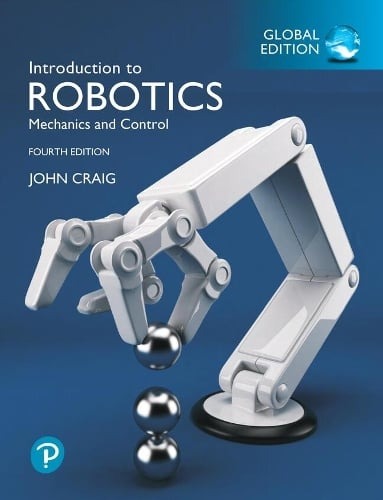
Introduction to robotics : Analysis, control, applications
Offers a guide to the fundamentals of robotics, robot components and subsystems and applications. The author—a noted expert on the topic—covers the mechanics and kinematics of serial and parallel robots, both with the Denavit-Hartenberg approach as well as screw-based mechanics. In addition, the text contains information on microprocessor applications, control systems, vision systems, sensors, and actuators.

Haptic and Audio Interaction Design ; 1st International Workshop, HAID 2006, Glasgow, UK, August 31 - September 1, 2006, Proceedings
Overview The International Workshop on Haptic and Audio Interaction Design was - ganized as part of the EPSRC-funded MultiVis project. The main focus of the workshop was to investigate how the modalities of sound and haptics (touch) could be used together in interaction, and what novel interfaces could be p- vided when they are used in conjunction. What are the relative advantages of each of the modalities when used alone and together? Are there reasons why haptic-based information is moreuseful in certain situations than equivalent - dio information? How can di?erent modalities be used together to create c- pelling and useful interaction with computer-based systems?

Handbook of networked and embedded control systems
The Handbook of Networked and Embedded Control Systems, the first of its kind, provides engineers, computer scientists, mathematicians, and students a broad, comprehensive source of information and technology to address many questions and aspects of embedded and networked control. A carefully organized collection of important results, tools, software, and technology, this work unifies into a single reference many scattered articles, websites, and specification sheets—information that might otherwise be difficult to find.

From Animals to Animats 9 ; 9th International Conference on Simulation of Adaptive Behavior, SAB 2006, Rome, Italy, September 25-29, 2006, Proceedings
This book constitutes the refereed proceedings of the 9th International Conference on Simulation of Adaptive Behavior, SAB 2006. The 35 revised full papers and 35 revised poster papers presented are organized in topical sections on the animat approach to adaptive behaviour, perception and motor control, action selection and behavioral sequences, navigation and internal world models, learning and adaptation, evolution, collective and social behaviours, applied adaptive behavior and more.

Embedded Robotics : Mobile Robot Design and Applications with Embedded Systems
This book presents a unique examination of mobile robots and embedded systems, from introductory to intermediate level. It is structured in three parts, dealing with Embedded Systems (hardware and software design, actuators, sensors, PID control, multitasking), Mobile Robot Design (driving, balancing, walking, and flying robots), and Mobile Robot Applications (mapping, robot soccer, genetic algorithms, neural networks, behavior-based systems, and simulation).

Embedded Robotics : Mobile Robot Design and Applications with Embedded Systems
The EyeBot controller and mobile robots have evolved over more than a decade. This book gives an in-depth introduction to embedded systems and autonomous mobile robots, using the EyeBot controller (EyeCon) and the EyeBot mobile robot family as application examples. This book combines teaching and research material and can be used for courses in Embedded Systems as well as in Robotics and Automation.

Embedded robotics : From mobile robots to autonomous vehicles with Raspberry Pi and Arduino
Presents a unique examination of mobile robots and autonomous vehicles using embedded systems, from introductory to advanced level. It is structured in four parts, dealing with Embedded Systems (processors, sensors, actuators, control, multitasking and communication), Robot Hardware (driving and walking robots, autonomous boats and planes, as well as robot manipulators), Robot Software (localization, navigation, image processing and automotive systems), and Artificial Intelligence (neural networks, genetic algorithms and deep learning). The book is organized for ease of use, with numerous figures, photographs, and worked example programs. The book is written as a text for courses in computer science, computer engineering, IT, electronics engineering, and mechatronics, as well as a guide for robot hobbyists and researchers.

Cybersecurity of Digital Service Chains : Challenges, Methodologies, and Tools
This book presents the main scientific results from the H2020 GUARD project. The GUARD project aims at filling the current technological gap between software management paradigms and cybersecurity models, the latter still lacking orchestration and agility to effectively address the dynamicity of the former. This book provides a comprehensive review of the main concepts, architectures, algorithms, and non-technical aspects developed during three years of investigation; the description of the Smart Mobility use case developed at the end of the project gives a practical example of how the GUARD platform and related technologies can be deployed in practical scenarios.

Control Reconfiguration of Dynamical Systems : Linear Approaches and Structural Tests
The book addresses advanced engineering students, developers and researchers that have a specific interest in control reconfiguration. A good understanding of multi-variable dynamic systems is helpful, but the second part is accessible even without this.

CMOS Biotechnology
"CMOS Biotechnology reviews the recent research and developments joining CMOS technology with biology. Written by leading researchers these chapters delve into four areas including: Microfluidics for electrical engineers / CMOS Actuators CMOS Electrical Sensors CMOS Optical Sensors Bioanalytical instruments have been miniaturized on ICs to study various biophenomena or to actuate biosystems. These bio-lab-on-IC systems utilize the IC to facilitate faster, repeatable, and standardized biological experiments at low cost with a small volume of biological sample. CMOS Biotechnology will interest electrical engineers, bioengineers, biophysicists as well as researchers in MEMS, bioMEMS, microelectronics, microfluidics, and circuits and systems."

Knowledge-Based Intelligent Information and Engineering Systems ; Vol.3684 : 9th International Conference, KES 2005, Melbourne, Australia, September 14-16, 2005, Proceedings, Part IV
The KES conference series has been established for almost a decade, and it cont- ues each year to attract participants from all geographical areas of the world, including Europe, the Americas, Australasia and the Paci?c Rim. The KES conferences cover a wide range of intelligent systems topics. The broad focus of the conference series is the theory and applications of intelligent systems. From a pure research ?eld, intel- gent systems have advanced to the point where their abilities have been incorporated into many business and engineering application areas. KES 2005 provided a valuable mechanism for delegates to obtain an extensive view of the latest research into a range of intelligent-systems algorithms, tools and techniques. The conference also gave de- gates the chance to come into contact with those applying intelligent systems in diverse commercial areas. The combination of theory and practice represented a unique opp- tunity to gain an appreciation of the full spectrum of leading-edge intelligent-systems activity. The papers for KES 2005 were either submitted to invited sessions, chaired and organized by respected experts in their ?elds, or to a general session, managed by an extensive International Program Committee, or to the Intelligent Information Hiding and Multimedia Signal Processing (IIHMSP) Workshop, managed by an International Workshop Technical Committee.

Knowledge-Based Intelligent Information and Engineering Systems ; Vol. 4253 ; 10th International Conference, KES 2006, Bournemouth, UK, October 9-11 2006, Proceedings, Part III
Delegates and friends, we are very pleased to extend to you the sincerest of welcomes to this, the 10th International Conference on Knowledge Based and Intelligent Information and Engineering Systems at the Bournemouth International Centre in Bournemouth, UK, brought to you by KES International. This is a special KES conference, as it is the 10th in the series, and as such, it represents an occasion for celebration and an opportunity for reflection. The first KES conference was held in 1997 and was organised by the KES conference founder, Lakhmi Jain. In 1997, 1998 and 1999 the KES conferences were held in Adelaide, Australia. In 2000 the conference moved out of Australia to be held in Brighton, UK; in 2001 it was in Osaka, Japan; in 2002, Crema near Milan, Italy; in 2003, Oxford, UK; in 2004, Wellington, New Zealand; and in 2005, Melbourne, Australia. The next two conferences are planned to be in Italy and Croatia. Delegate numbers have grown from about 100 in 1997, to a regular figure in excess of 500. The conference attracts delegates from many different countries, in Europe, Australasia, the Pacific Rim, Asia and the Americas, and may truly be said to be ‘International’.
KI 2006 ; 29th Annual German Conference on AI, KI 2006, Bremen, Germany, June 14-17, 2006, Proceedings
Constitutes the thoroughly refereed post-proceedings of the 29th Annual German Conference on Artificial Intelligence, KI 2006, held in Bremen, Germany, in June 2006. This was co-located with RoboCup 2006, the innovative robot soccer world championship, and with ACTUATOR 2006, the 10th International Conference on New Actuators.
Big data-enabled internet of things
Covers analytical techniques for handling the huge amount of data generated by the Internet of Things, from architectures and platforms to security and privacy issues, applications, and challenges as well as future directions. The fields of Big Data and the Internet of Things (IoT) have seen tremendous advances, developments, and growth in recent years. The IoT is the inter-networking of connected smart devices, buildings, vehicles and other items which are embedded with electronics, software, sensors and actuators, and network connectivity that enable these objects to collect and exchange data. The IoT produces a lot of data. Big data describes very large and complex data sets that traditional data processing application software is inadequate to deal with, and the use of analytical methods to extract value from data. This edited book covers analytical techniques for handling the huge amount of data generated by the Internet of Things, from architectures and platforms to security and privacy issues, applications, and challenges as well as future directions.

Axial flux permanent magnet brushless machines
This book deals with the analysis, construction, design, control and applications of AFPM machines. The authors present their own research results, as well as significant research contributions made by others.
Autotuning of PID Controllers : A Relay Feedback Approach
Recognising the benefits of improved control, the second edition of Autotuning of PID Controllers provides simple yet effective methods for improving PID controller performance. The practical issues of controller tuning are examined using numerous worked examples and case studies in association with specially written autotuning MATLAB® programs to bridge the gap between conventional tuning practice and novel autotuning methods. Autotuning of PID Controllers is more than just a monograph, it is an independent learning tool applicable to the work of academic control engineers and of their counterparts in industry looking for more effective process control and automation.
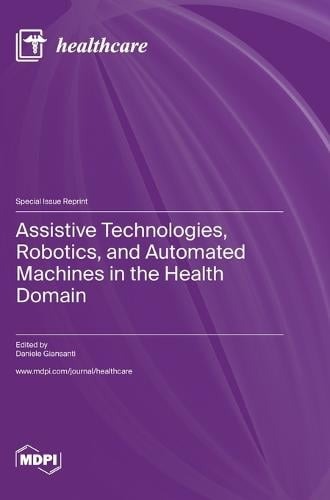
Assistive technologies, robotics, and automated machines in the health domain
The field of healthcare is constantly evolving and advancing with new technologies and innovations. Among these, assistive technologies, robotics, and automated machines are rapidly gaining ground as powerful tools to improve the quality of care and enhance patient outcomes. From wearable devices that monitor vital signs to surgical robots that assist in complex procedures, these technologies have the potential to revolutionize the way we deliver healthcare. The development and the integration of assistive technologies, care robots, and automated machines are strategic both as single components, when paired together, and when interconnected in the health domain.This reprint explores the latest developments in assistive technologies, robotics, and automated machines in the health domain, providing a comprehensive overview of their applications and potential impact. The reprint is for the benefit of healthcare professionals, researchers, engineers, and students interested in these rapidly evolving fields.
