



Page 4
Page 4

Design of Wireless Autonomous Datalogger ICs
The book starts with a comprehensive introduction on the most important design aspects and trade-offs for miniaturized low-power telemetric dataloggers. After the general introduction follows an in-depth case study of an autonomous CMOS datalogger IC for the registration of in vivo loads on oral implants. After tackling the design of the datalogger on the system level, the design of the different building blocks is elaborated in detail, with emphasis on low power

Defence Industry Applications of Autonomous Agents and Multi-Agent Systems
In this book defense and security related applications are increasingly being tackled by researchers and practioners using technologies developed in the field of Intelligent Agent research.

Defence Applications of Multi-Agent Systems; International Workshop, DAMAS 2005, Utrecht, The Netherlands, July 25, 2005, Revised and Invited Papers
This book constitutes the thoroughly refereed post-proceedings of the International Workshop on Defence Applications of Multi-Agent Systems, DAMAS 2005, held in Utrecht, The Netherlands in July 2005 as an associated event of AAMAS 2005, the main international conference on autonomous agents and multi-agent systems. The 10 revised full papers presented together with 1 invited article are organized in topical sections on decision support and simulation, unmanned aerial vehicles, as well as on systems and security.
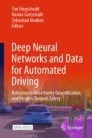
Deep neural networks and data for automated driving : robustness, uncertainty quantification, and insights towards safety
Environment perception for highly automated driving heavily employs deep neural networks, facing many challenges. How much data do we need for training and testing? How to use synthetic data to save labeling costs for training? How do we increase robustness and decrease memory usage? For inevitably poor conditions: How do we know that the network is uncertain about its decisions? Can we understand a bit more about what actually happens inside neural networks? This leads to a very practical problem particularly for DNNs employed in automated driving: What are useful validation techniques and how about safety? This book unites the views from both academia and industry, where computer vision and machine learning meet environment perception for highly automated driving. Naturally, aspects of data, robustness, uncertainty quantification, and, last but not least, safety are at the core of it. This book is unique: In its first part, an extended survey of all the relevant aspects is provided. The second part contains the detailed technical elaboration of the various questions mentioned above.

Declarative agent languages and technologiesV ; 5th International Workshop, DALT 2007, Honolulu, HI, USA, May 14, 2007, Revised Selected and Invited Papers
This book constitutes the thoroughly refereed post-workshop proceedings of the 5th International Workshop on Declarative Agent Languages and Technologies, DALT 2007, held in Honolulu, USA, in 2007.

Declarative agent languages and technologies IV ; 4th International Workshop, DALT 2006, Hakodate, Japan, May 8, 2006, Selected, Revised and Invited Papers
Constitutes the thoroughly refereed post-proceedings of the 4th International Workshop on Declarative Agent Languages and Technologies, DALT 2006, held in Japan in May 2006. This was an associated event of AAMAS 2006, the main international conference on autonomous agents and multi-agent systems. The 12 revised full papers presented together with one invited talk and three invited papers were carefully selected for inclusion in the book.

Declarative agent languages and technologies III ; 3rd International Workshop, DALT 2005, Utrecht, The Netherlands, July 25, 2005, Selected and Revised Papers
The workshop on Declarative Agent Languages and Technologies is a we- established venue for researchers interested in sharing their experiences in the areas of declarative and formal aspects of agents and multi-agent systems, and in engineering and technology. Today it is still a challenge to develop techno- gies that can satisfy the requirements of complex agent systems. The design and development of multi-agent systems still calls for models and technologies that ensure predictability, enable feature discovery, allow for the veri?cation of properties, and guarantee ?exibility. Declarative approaches are potentially a valuable means for satisfying the needs of multi-agent system developers and for specifying multi-agent systems.

Declarative agent languages and technologies II ; 2nd international workshop, DALT 2004, New York, NY, USA, July 19, 2004, revised selected papers
Nearly 40 research groups worldwide were motivated to contribute to this event by submitting their most recent research achievements, covering a wide variety of the topics listed in the call for papers. More than 30 top researchers agreed to join the Program Committee, which then collectively faced the hard task of selecting the one-day event program. The fact that research in multi-agent systems is no longer only a novel and promising research horizon at dawn is, in our opinion, the main reason behind DALT’s (still short) success story. On the one hand, agent theories and app- cations are mature enough to model complex domains and scenarios, and to successfully address a wide range of multifaceted problems, thus creating the urge to make the best use of this expressive and versatile paradigm, and also pro?t from all the important results achieved so far. On the other hand, bui- ing multi-agent systems still calls for models and technologies that could ensure system predictability, accommodate ?exibility, heterogeneity and openness, and enable system veri?cation.

Databases, Information Systems, and Peer-to-Peer Computing ; International Workshops, DBISP2P 2005/2006, Trondheim, Norway, August 28-29, 2006, Revised Selected Papers
The P2P paradigm lends itself to constructing large-scale, complex, adaptive, autonomous and heterogeneous database and information systems, endowed with clearly specified and difierential capabilities to negotiate, bargain, coordinate and self-organize the information exchanges in large-scale networks. This vision will have a radical impact on the structure of complex organizations (business, sci- tific or otherwise) and on the emergence and the formation of social communities, and on how the information is organized and processed. The P2P information paradigm naturally encompasses static and wireless connectivity and static and mobile architectures. Wireless connectivity combined with the increasingly small and powerful mobile devices and sensors poses new challenges as well as opp- tunities to the database community. Information becomes ubiquitous, highly distributed and accessible anywhere and at any time over highly dynamic, - stable networks with very severe constraints on the information management and processing capabilities.

Creating Cool MINDSTORMS® NXT Robots
Build and program MINDSTORM NXT robots with Daniele Benedettelli, one of the world's most respected NXT robot builders. He shows you how to build and program them from scratch, starting with the simplest robots and progressing in difficulty to a total of seven award–winning robots! You can download all the code, along with low–resolution videos that show how your robot works when it's finished. You don't need to be a programmer to develop these cool robots, because all the code is provided, but advanced developers will enjoy seeing the secrets of Benedettelli's code and techniques revealed.

Coordination, organizations, institutions, and norms in agent systems II ; AAMAS 2006 and ECAI 2006 International Workshops, COIN 2006 Hakodate, Japan, May 9, 2006 Riva del Garda, Italy, August 28, 2006, Revised Selected Papers
In recent years, social and organizational aspects of agency have become major research topics in MAS. Recent applications of MAS on Web services, grid c- puting and ubiquitous computing highlight the need for using these aspects in order to ensure social order within such environments. Openness, heterogeneity, and scalability of MAS, in turn, pose new demands on traditional MAS int- action models and bring forward the need to look into the environment where agents interact and at di?erent ways of constraining or regulating interactions.it provide theoretically demanding and interdisciplinary research questions at d- ferent levels of abstraction.

Coordination, organizations, institutions, and norms in agent system III ; COIN 2007 International Workshops COIN@AAMAS 2007, Honolulu, HI, USA, May 14, 2007 COIN@MALLOW 2007, Durham, UK, September 3-4, 2007 Revised Selected Papers
This book constitutes the refereed post-workshop proceedings of the International Workshop on Coordination, Organization, Institutions and Norms in Agent Systems, COIN 2007.

Cooperative Control : A Post-Workshop Vol., 2003 Block Island Workshop on Cooperative Control
This carefully edited book presents how natural groupings such as fish schools, bird flocks, deer herds etc. coordinate themselves and move so flawlessly, often without an apparent leader or any form of centralized control. It shows how the underlying principles of cooperative control may be used for groups of mobile autonomous agents to help enable a large group of autonomous robotic vehicles in the air, on land or sea or underwater, to collectively accomplish useful tasks such as distributed, adaptive scientific data gathering, search and rescue, or reconnaissance.

Control problems for conservation laws with traffic applications: modeling, analysis, and numerical methods
Conservation and balance laws on networks have been the subject of much research interest given their wide range of applications to real-world processes, particularly traffic flow. This open access monograph is the first to investigate different types of control problems for conservation laws that arise in the modeling of vehicular traffic. Four types of control problems are discussed - boundary, decentralized, distributed, and Lagrangian control - corresponding to, respectively, entrance points and tolls, traffic signals at junctions, variable speed limits, and the use of autonomy and communication. Because conservation laws are strictly connected to Hamilton-Jacobi equations, control of the latter is also considered.

Constructing Ambient Intelligence ; AmI 2007 Workshops Darmstadt, Germany, November 7-10, 2007 Revised Papers
This book constitutes the refereed proceedings of the workshops of the First European Conference on Ambient Intelligence, AmI 2007, held in Darmstadt, Germany, in November 2007.

Computer vision and machine learning for intelligent sensing systems
Offers a selection of high-quality research articles that tackle the major difficulties in computer vision and machine learning for intelligent sensing systems from both theoretical and practical standpoints. This publication includes intelligent sensing techniques, twelve foundational investigations into sense-making methods, and discusses particular uses of intelligent sensing systems in autonomous driving and virtual reality.

Computer vision : Algorithms and applications
Explores the variety of techniques used to analyze and interpret images. It also describes challenging real-world applications where vision is being successfully used, both in specialized applications such as image search and autonomous navigation, as well as for fun, consumer-level tasks that students can apply to their own personal photos and videos. Suitable for an upper-level undergraduate or graduate-level course in computer science or engineering, this textbook focuses on basic techniques that work under real-world conditions and encourages students to push their creative boundaries. Its design and exposition also make it eminently suitable as a unique reference to the fundamental techniques and current research literature in computer vision.

Computer aided verification ; 30th International Conference, CAV 2018, Held as Part of the Federated Logic Conference, FloC 2018, Oxford, UK, July 14-17, 2018, Proceedings, Part II
Constitutes the refereed proceedings of the 30th International Conference on Computer Aided Verification, CAV 2018, held in Oxford, UK, in July 2018.The 52 full and 13 tool papers presented together with 3 invited papers and 2 tutorials were carefully reviewed and selected from 215 submissions. The papers cover a wide range of topics and techniques, from algorithmic and logical foundations of verication to practical applications in distributed, networked, cyber-physical, and autonomous systems. They are organized in topical sections on model checking, program analysis using polyhedra, synthesis, learning, runtime verification, hybrid and timed systems, tools, probabilistic systems, static analysis, theory and security, SAT, SMT and decisions procedures, concurrency, and CPS, hardware, industrial applications.

Computer Aided Verification ; 30th International Conference, CAV 2018, Held as Part of the Federated Logic Conference, FloC 2018, Oxford, UK, July 14-17, 2018, Proceedings, Part I
This open access two-volume set LNCS 10980 and 10981 constitutes the refereed proceedings of the 30th International Conference on Computer Aided Verification, CAV 2018, held in Oxford, UK, in July 2018. The papers cover a wide range of topics and techniques, from algorithmic and logical foundations of verication to practical applications in distributed, networked, cyber-physical, and autonomous systems. They are organized in topical sections on model checking, program analysis using polyhedra, synthesis, learning, runtime verification, hybrid and timed systems, tools, probabilistic systems, static analysis, theory and security, SAT, SMT and decisions procedures, concurrency, and CPS, hardware, industrial applications.

Computer Aided Systems Theory – EUROCAST 2005 ; 10th International Conference on Computer Aided Systems Theory, Las Palmas de Gran Canaria, Spain, February 7-11, 2005, Revised Selected Papers
The concept of CAST, computer aided systems Theory, was introduced by F. Pichler of Linz in the late 1980s to include those computer theoretical and practical developments used as tools to solve problems in system science. It was considered as the third component (the other two being CAD and CAM) that would provide for a complete picture of the path from computer and systems sciences to practical developments in science and engineering. Selected papers were published as Springer Lecture Notes in Computer Science vols. 410, 585, 763, 1030, 1333, 1728, 2178 and 2809 and in several special issues of Cybernetics and Systems: an lnternational
