



Page 1
Page 1

Nonlinear dynamics of a wheeled vehicle
This book provides an overview of the theory of stability analysis and its applications. It is focused on various methods devoted to analyzing wheeled vehicle behavior. The authors provide both basic and advanced knowledge of the subject.

Nonlinear dynamics in complex systems via fractals and fractional calculus
Current advances in the knowledge of nonlinear dynamical networks, systems and processes, as well as their unified repercussions, allow us to include some typical complex natural phenomena, from the nanoscale to an extra-galactic scale, in an unitarian comprehensive manner. In other words, the physical, biological and financial data, as well as technological ones (mechanical or electronic devices), of complex systems available today can be managed by the same unique conceptual approach, both analytically and through a computer simulation, using effective nonlinear dynamics procedures. This volume collected some important advances in the fields of fractal curves, fractal analysis and fractional calculus, as well as new solutions of fractal differential equations.

Nonlinear Analyses and Algorithms for Speech Processing ; International Conference on Non-Linear Speech Processing, NOLISP 2005, Barcelona, Spain, April 19-22, 2005, Revised Selected Papers
We present in this volume the collection of ?nally accepted papers of NOLISP 2005 conference. It has been the third event in a series of events related to N- linear speech processing, in the framework of the European COST action 277 “Nonlinear speech processing”. Many speci?cs of the speech signal are not well addressed by conv- tional models currently used in the ?eld of speech processing. The purpose of NOLISP is to present and discuss novel ideas, work and results related to alternative techniques for speech processing, which depart from mainstream approaches. With this intention in mind, we provide an open forum for discussion. Alt- nate approaches are appreciated, although the results achieved at present may not clearly surpass results based on state-of-the-art methods. The call for papers was launched at the beginning of 2005, addressing the following domains: 1. Non-Linear Approximation and Estimation 2. Non-Linear Oscillators and Predictors 3. Higher-Order Statistics 4. Independent Component Analysis 5. Nearest Neighbors 6. Neural Networks 7. Decision Trees 8. Non-Parametric Models 9. Dynamics of Non-Linear Systems 10. Fractal Methods 11. Chaos Modeling 12. Non-Linear Di?erential Equations 13. Others All the main ?elds of speech processing are targeted by the workshop, namely: 1. Speech Coding:Thebit rateavailablefor speechsignalsmustbe strictly l- ited in order to accommodate the constraints of the channel resource.

Newton-Euler Dynamics
Most books on "intermediate dynamics" covering advanced Newtonian and introductory Lagrangian methods.This material cannot be covered adequately in one course if it is to be shared with an introduction to Langrangian methods. This text is devoted to application of Newton-Euler methods to complex, real-life 3-D dynamics problems.

New metropolitan perspectives : Knowledge dynamics, innovation-driven policies towards the territories’ attractiveness ; Vol.1
This book presents the outcomes of the symposium “NEW METROPOLITAN PERSPECTIVES,” held at Mediterranea University, Reggio Calabria, Italy on May 26–28, 2020.

New Frontiers in Artificial Intelligence ; Joint JSAI 2005 Workshop Post-Proceedings
The objectives of this book are to present the award papers from the 19th annual conference of JSAI 2005 and the selected papers from the ?ve co-located international workshops and to promote the study exchange among worldwide researchers. Five papers received awards among more than 200 presentations in the conference, and 40 papers were selected from the workshops of Logic and Engineering of Natural Language Semantics 2005 (LENLS 2005), Learning with Logics and Logics for Learning (LLLL 2005), Agent Network Dynamics and Intelligence (ANDI 2005), Conversational Informatics (CI 2005) and Risk Management Systems with Intelligent Data Analysis (RMSIDA 2005).

New Developments in Computational Fluid Dynamics ; Proceedings of the Sixth International Nobeyama Workshop on the New Century of Computational Fluid Dynamics, Nobeyama, Japan, April 21 to 24, 2003
This volume contains 20 papers in Nobeyama Workshop focuses on predicting the next one hundred years of development of Fluid Dynamics, accounting for the current status and future trends of high performance computation and communication.

Multi-body Dynamic Modeling of Multi-legged Robots
This book describes the development of an integrated approach for generating the path and gait of realistic hexapod robotic systems. It discusses in detail locomation with straight-ahead, crab and turning motion capabilities in varying terrains, like sloping surfaces, staircases, and various user-defined rough terrains. It also presents computer simulations and validation using Virtual Prototyping (VP) tools and real-world experiments.

Microsoft Dynamics NAV : Jump Start to Optimization
Mastering Microsoft Dynamics NAV for beginners and IT professionals: from jump start to optimization. This book covers general use and shows you how to tailor Microsoft Dynamics NAV to mirror your firm's unique needs. Learn skills that enable you to navigate and interpret the world of possibilities locked within the ERP system. Through easy, concrete examples, you will master the layered environment and be able to use and create reports, forms, import/export functions and more. This book gives you the basis you need to demand the best information infrastructure for your enterprise.

Handbook of Fractional Calculus for Engineering and Science
Provides reliable methods for solving fractional-order models in science and engineering. Contains efficient numerical methods and algorithms for engineering-related equations. Contains comparison of various methods for accuracy and validity. Demonstrates the applicability of fractional calculus in science and engineering. Examines qualitative as well as quantitative properties of solutions of various types of science- and engineering-related equations.

Geographic Information Science ; 5th International Conference, GIScience 2008, Park City, UT, USA, September 23-26, 2008. Proceedings
This book constitutes the refereed proceedings of the 5th International Conference on Geographic Information Secience, GIScience 2008, held in Park City, UT, USA, in September 2008.The 24 revised full papers presented were carefully reviewed and selected from 77 submissions. Among the traditional topics addressed are spatial relations, geographic dynamics, and spatial data types. A significant number of papers deal with navigation networks, location-based services, and spatial information query and retrieval. Geo-sensors, mobile computing, and Web mapping rank among the important new directions.

Free Convection Film Flows and Heat Transfer
This book presents recent developments in systematic studies of hydrodynamics and heat and mass transfer in laminar free convection, accelerating film boiling and condensation of Newtonian fluids, as well as accelerating film flow of non-Newtonian power-law fluids (FFNF). A novel system of analysis models is provided with a developed velocity component method, instead of traditional Falkner-Skan type transformation, and a system of models for treatment of variable thermophysical properties is presented with an innovative temperature parameter method that makes it easier to similarly treat related governing differential equations for consideration of fluid variable thermophysical properties. A pseudo-similarity method is applied for dealing with thermal boundary layer of FFNF, furthermore, with an induced local Prandtl number, which greatly simplifies the heat-transfer analysis and numerical calculation.

Foundations of learning classifier systems
This volume brings together recent theoretical work in Learning Classifier Systems (LCS), which is a Machine Learning technique combining Genetic Algorithms and Reinforcement Learning. It includes self-contained background chapters on related fields (reinforcement learning and evolutionary computation) tailored for a classifier systems audience and written by acknowledged authorities in their area - as well as a relevant historical original work by John Holland.

Field-Based Coordination for Pervasive Multiagent Systems
Software systems involve autonomous and distributed software components that have to execute and interact in open and dynamic environments, such as in pervasive, autonomous, and mobile applications. The requirements with respect to dynamics, openness, scalability, and decentralization call for new approaches to software design and development, capable of supporting spontaneous configuration, tolerating partial failures, or arranging adaptive reorganization of the whole system.

Ergodic Dynamics : From Basic Theory to Applications
This textbook provides a broad introduction to the fields of dynamical systems and ergodic theory. Motivated by examples throughout, the author offers readers an approachable entry-point to the dynamics of ergodic systems. Modern and classical applications complement the theory on topics ranging from financial fraud to virus dynamics, offering numerous avenues for further inquiry. Starting with several simple examples of dynamical systems, the book begins by establishing the basics of measurable dynamical systems, attractors, and the ergodic theorems. From here, chapters are modular and can be selected according to interest. Highlights include the Perron–Frobenius theorem, which is presented with proof and applications that include Google PageRank. An in-depth exploration of invariant measures includes ratio sets and type III measurable dynamical systems using the von Neumann factor classification. Topological and measure theoretic entropy are illustrated and compared in detail, with an algorithmic application of entropy used to study the papillomavirus genome. A chapter on complex dynamics introduces Julia sets and proves their ergodicity for certain maps. Cellular automata are explored as a series of case studies in one and two dimensions, including Conway’s Game of Life and latent infections of HIV. Other chapters discuss mixing properties, shift spaces, and toral automorphisms.

Dynamics of Rods
The book consists of nine chapters and appendices and may be conventionally divided into two parts. That is, Chapters 1 to 6 contain, in the main, theoretical material, whereas Chapters 7 to 9 illustrate the application of the theoretical results to problems of practical interest. Problems for self-study are found in Chapters 3, 5, and 7. The solutions to most of the problems are given in Appendix B.
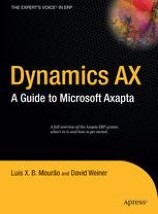
Dynamics AX : A guide to microsoft axapta
The world’s leading Axapta 3.0 experts will take you from Axapta novice to pro in this book. This authoritative and comprehensive guide walks you gently through the bulk of what you need to know to productively apply the system in the real worldwith real data, sizing guidelines, deployment architectures, and code. By the book’s end, you will have acquired practical hands-on experience. You’ll be able to get Axapta 3.0 up and running, and identify gaps between the out-of-the-box product and your actual business needs. You’ll also know how to automate real-world business functions.

Dynamical Vision ; ICCV 2005 and ECCV 2006 Workshops, WDV 2005 and WDV 2006, Beijing, China, October 21, 2005, Graz, Austria, May 13, 2006, Revised Papers
Classical multiple-view geometry studies the reconstruction of a static scene - served by a rigidly moving camera. However, in many real-world applications the scene may undergo much more complex dynamical changes. For instance, the scene may consist of multiple moving objects (e.g., a trafic scene) or arti- lated motions (e.g., a walking human) or even non-rigid dynamics (e.g., smoke, fire, or a waterfall). In addition, some applications may require interaction with the scene through a dynamical system (e.g., vision-guided robot navigation and coordination). To study the problem of reconstructing dynamical scenes, many new al- braic, geometric, statistical, and computational tools have recently emerged in computer vision, computer graphics, image processing, and vision-based c- trol.

Dynamic brain : From neural spikes to behaviors ; 12th International Summer School on Neural Networks, Erice, Italy, December 5-12, 2007, Revised Lectures
The volume presents 12 thoroughly revised tutorial papers based on lectures given by leading researchers at the 12th International Summer School on Neural Networks in Erice, Italy, in December 2007.

Distributed computing and Internet Technology ; 1st International Conference, ICDCIT 2004, Bhubaneswar, India, December 22-24, 2004, Proceedings
Taming the Dynamics of Disributed Data - DISTRIBUTED COMPUTING -- Data in Your Space -- Enabling Technologies for Harnessing Information Explosion -- Fair Leader Election by Randomized Voting -- An Efficient Leader Election Algorithm for Mobile Ad Hoc Networks -- Distributed Balanced Tables: A New Approach - Performance Evaluation of Gigabit Ethernet and SCI in a Linux Cluster -- Performance Evaluation of a Modified-Cyclic-Banyan Based ATM / IP Switching Fabric -- A Scalable and Robust QoS Architecture for WiFi P2P Networks -- NEC: Node Energy Based Clustering Protocol for Wireless Sensor Networks with Guaranteed Connectivity,and other
