



الصفحة 1
الصفحة 1

On the Uniqueness of Humankind
Europäische Akademie organized the conference "The Uniqueness of Humankind – Über die Sonderstellung des Menschen". The proceedings of the conference documented in this volume approached the theoretical and practical concept of the "Sonderstellung" against the background of present day knowledge in biosciences.

On the move to meaningful internet systems : OTM 2008 Workshops ; OTM Confederated International Workshops and Posters, ADI, AWeSoMe, COMBEK, EI2N, IWSSA, MONET, OnToContent + QSI, ORM, PerSys, RDDS, SEMELS, and SWWS 2008, Monterrey, Mexico, November 9-14, 2008. Proceedings
This volume constitutes the refereed proceedings of 13 international workshops held as part of OTM 2008 in Monterrey, Mexico, in November 2008.The 106 revised full papers presented were carefully reviewed and selected from a total of 171 submissions to the workshops. The volume starts with 19 additional revised poster papers of the OTM 2008 main conferences CoopIS and ODBASE. Topics of the workshop papers are ambient data integration (ADI 2008), agents and web services merging in distributed environment (AWeSoMe 2008), community-based evolution of knowledge-intensive systems (COMBEK 2008), enterprise integration, interoperability and networking (EI2N 2008), system/software architectures .

New Frontiers in Artificial Intelligence ; JSAI 2003 and JSAI 2004 Conferences and Workshops, Niigata, Japan, June 23-27, 2003, Kanazawa, Japan, May 31-June 4, 2004, Revised Selected Papers
This book constitutes the thoroughly refereed joint post-proceedings of the 17th and 18th annual conferences of the Japanese Society for Artificial Intelligence, JSAI 2003 and JSAI 2004, and co-located international workshops, held in Niigata, Japan in June 2003 and in Kanazawa, Japan in May/June 2004 respectively.
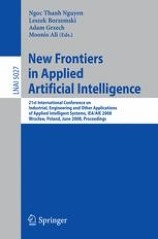
New Frontiers in Applied Artificial Intelligence ; 21st International Conference on Industrial, Engineering and Other Applications of Applied Intelligent Systems, IEA/AIE 2008 Wrocław, Poland, June 18-20, 2008 Proceedings
The 75 revised full papers presented were carefully reviewed and selected from 302 submissions. The papers are organized in topical sections on computer vision, fuzzy system applications, robot and manufacturing, data mining and KDS, neural networks, machine learning, natural language processing, internet application and education, heuristic search, application systems, agent-based system, evolutionary and genetic algorithms, knowledge management, and other applications. The book concludes with 15 contributions from the following special sessions: knowledge driven manufacturing systems, joint session on adaptive networked systems and fuzzy knowledge bases, and software agents and multi-agent systems.

New Directions in Human Information Behavior
The book presents chapters by an interdisciplinary range of scholars who show new directions that often challenge the established views and paradigms of information behavior studies. Beginning with an evolutionary framework, the book examines information behaviors over various epochs of human existence from the Palaeolithic Era and within pre-literate societies, to contemporary behaviors by 21st century humans. Drawing upon social and psychological science theories the book presents a more integrated and holistic approach to the understanding of information behaviors that include multitasking and non-linear longitudinal processes, individuals’ information ground, information practices and information sharing, digital behaviors and human information organizing behaviors. The final chapter of the book integrates these new approaches and presents an overview of the key trends, theories and models for further research.

New Computational Paradigms ; 1st Conference on Computability in Europe, CiE 2005, Amsterdam, The Netherlands, June 8-12, 2005, Proceedings
This book constitutes the refereed proceedings of the first International Conference on Computability in Europe, CiE 2005, held in Amsterdam, The Netherlands in June 2005. The 68 revised full papers presented were carefully reviewed and selected from 144 submissions. Among them are papers corresponding to two tutorials, six plenary talks and papers of six special sessions involving mathematical logic and computer science at the same time as offering the methodological foundations for models of computation. The papers address many aspects of computability in Europe with a special focus on new computational paradigms. These include first of all connections between computation and physical systems (e.g., quantum and analog computation, neural nets, molecular computation), but also cover new perspectives on models of computation arising from basic research in mathematical logic and theoretical computer science.

New challenges in software engineering ; Vol 1
Explores the key challenges shaping the future of software development, including automation, AI-driven development, security-focused engineering, resilient and autonomous architectures, business process optimization, cloud computing, microservices, high-performance distributed systems, and sustainable technologies. Software engineering is undergoing a constant transformation, driven by rapid technological advances and evolving market demands. additionally, it delves into the ethical considerations of AI, the evolution of intuitive user interfaces, and the importance of multidisciplinary collaboration.

Neural Information Processing ; Vol. 4234 ; 13th International Conference, ICONIP 2006, Hong Kong, China, October 3-6, 2006, Proceedings, Part III
This book and its companion volumes constitute the Proceedings of the 13th - ternationalConferenceonNeuralInformationProcessing(ICONIP2006)heldin Hong Kong during October 3–6,2006. ICONIP is the annual ?agship conference oftheAsiaPaci?cNeuralNetworkAssembly(APNNA)withthepasteventsheld in Seoul (1994), Beijing (1995), Hong Kong (1996), Dunedin (1997), Kitakyushu (1998), Perth(1999), Taejon(2000), Shanghai(2001), Singapore(2002), Istanbul (2003), Calcutta(2004), andTaipei(2005). Overtheyears, ICONIPhasmatured into a well-established series of international conference on neural information processing and related ?elds in the Asia and Paci?cregions. Following the tra- tion, ICONIP 2006 provided an academic forum for the participants to diss- inate their new research ?ndings and discuss emerging areas of research.

Neural Information Processing ; Vol. 4233 ; 13th International Conference, ICONIP 2006, Hong Kong, China, October 3-6, 2006, Proceedings, Part II
The three volume set LNCS 4232, LNCS 4233, and LNCS 4234 constitutes the refereed proceedings of the 13th International Conference on Neural Information Processing, ICONIP 2006, held in Hong Kong, China in October 2006. The 386 revised full papers presented were carefully reviewed and selected from 1175 submissions.

Neural Information Processing ; Vol. 4232 ; 13th International Conference, ICONIP 2006, Hong Kong, China, October 3-6, 2006, Proceedings, Part I
This book and its companion volumes constitute the Proceedings of the 13th - ternationalConferenceonNeuralInformationProcessing(ICONIP2006)heldin Hong Kong during October 3–6,2006. ICONIP is the annual ?agship conference oftheAsiaPaci?cNeuralNetworkAssembly(APNNA)withthepasteventsheld in Seoul (1994), Beijing (1995), Hong Kong (1996), Dunedin (1997), Kitakyushu (1998), Perth(1999), Taejon(2000), Shanghai(2001), Singapore(2002), Istanbul (2003), Calcutta(2004), andTaipei(2005). Overtheyears, ICONIPhasmatured into a well-established series of international conference on neural information processing and related ?elds in the Asia and Paci?cregions. Following the tra- tion, ICONIP 2006 provided an academic forum for the participants to diss- inate their new research ?ndings and discuss emerging areas of research.

Network Control and Engineering for QOS, Security and Mobility, III ; IFIP TC6 / WG6.2, 6.6, 6.7 and 6.8. Third International Conference on Network Control and Engineering for QoS, Security and Mobility, NetCon 2004 on November 2-5, 2004, Palma de Mallorca, Spain
This volume contains the proceedings of the Third International Conference on Network Control and Engineering for Quality of Service, Security and Mobility (Net-Con'2004), celebrated in Palma de Mallorca (Illes Balears, Spain) during November 2-5, 2004. This IFIP TC6 Conference was organized by the Universitat de les Illes Balears and sponsored by the following Working Groups: WG6.2 (Network and Internetwork Architectures), WG6.6 (Management of Networks and Distributed Systems), WG6.7 (Smart Networks) and WG6.8 (Mobile and Wireless Communications). The rapid evolution of the networking industry introduces new exciting challenges that need to be explored by the research community. The adoption of Internet as the global network infrastructure places the issue of quality of service among one of the hot topics nowadays: a huge diversity of applications with quite different service requirements must be supported over a basic core of protocols. Also, the open and uncontrolled nature of Internet enforces the need to guarantee secure transactions among users, thus placing security as another hot topic. Finally, the explosion of mobility and its integration as part of the global infrastructure are probably now the most challenging issues in the networking field.

Network Analysis : Methodological Foundations
‘Network’ is a heavily overloaded term, so that ‘network analysis’ means different things to different people. Specific forms of network analysis are used in the study of diverse structures such as the Internet, interlocking directorates, transportation systems, epidemic spreading, metabolic pathways, the Web graph, electrical circuits, project plans, and so on. There is, however, a broad methodological foundation which is quickly becoming a prerequisite for researchers and practitioners working with network models. From a computer science perspective, network analysis is applied graph theory. Unlike standard graph theory books, the content of this book is organized according to methods for specific levels of analysis (element, group, network) rather than abstract concepts like paths, matchings, or spanning subgraphs. Its topics therefore range from vertex centrality to graph clustering and the evolution of scale-free networks. In 15 coherent chapters, this monograph-like tutorial book introduces and surveys the concepts and methods that drive network analysis, and is thus the first book to do so from a methodological perspective independent of specific application areas.

Nature Inspired Problem-Solving Methods in Knowledge Engineering ; 2nd International Work-Conference on the Interplay Between Natural and Artificial Computation, IWINAC 2007, La Manga del Mar Menor, Spain, June 18-21, 2007, Proceedings, Part II
The second of a two-volume set, this book constitutes the refereed proceedings of the Second International Work-Conference on the Interplay between Natural and Artificial Computation, IWINAC 2007, held in La Manga del Mar Menor, Spain in June 2007.

Natural Language Processing and Information Systems ; Vol. 3513 ; 10th International Conference on Applications of Natural Language to Information Systems, NLDB 2005, Alicante, Spain, June 15-17, Proceedings
The development and convergence of computing, telecommunications and information systems has already led to a revolution in the way that we work, communicate with each other, buy goods and use services, and even in the way that we entertain and educate ourselves.The revolution continues, and one of its results is that large volumes of information will increasingly be held in a form which is more natural for users than the data presentation formats typical of computer systems of the past. Natural language processing (NLP) is crucial in solving these problems, and language technologies will make an indispensable contribution to the success of information systems. We hope that NLDB 2005 was a modest contribution to this goal. NLDB 2005 contributed to advancing the goals and the high international standing of these conferences, largely due to its Program Committee, composed of renowned researchers in the field of natural language processing and inf- mation system engineering. Papers were reviewed by three reviewers from the Program Committee. This clearly contributed to the significant number of - pers submitted (95). Twenty-nine were accepted as regular papers, while 18 were accepted as short papers.

Multiparadigm Programming in Mozart/Oz ; 2nd International Conference, MOZ 2004, Charleroi, Belgium, October 7-8, 2004, Revised Selected Papers
Oz's concurrency model yields simplicity and clarity (because Oz makes it easier to express complex programs with many interacting components), g- erality, and better interfaces (because the data?ow model automatically makes interfaces more lightweight). Constraint programming in Oz again yields simplicity and clarity (because theprogrammercanexpresswhatneedstobetrueratherthanthemorecomplex issue of how to make it true), and o?ers a powerful mathematical notation that is di?cult to implement on top of languages that do not support it natively. Mozart's distributed computing model makes for improved interfaces and eases the evolution of systems. In my own work, one of the most important concernsistobeabletoquicklyscaleupaprototypeimplementationintoalar- scale service that can run reliably on thousands of computers, serving millions of users.

Multiobjective Problem Solving from Nature : From Concepts to Applications
he book focuses on how MOEAs and related techniques can be used to solve problems, particularly in the disciplines of science and engineering. Contributions by leading researchers show how the concepts of multiobjective optimization can be used to reformulate and resolve problems in broad areas such as constrained optimization, coevolution, classification, inverse modelling and design. The book is distinguished from other texts on MOEAs in that it is not primarily about the algorithms, nor specific applications, but about the concepts and processes involved in solving problems using a multiobjective approach. Each chapter contributes to the central, deep concepts and themes of the book: evaluating the utility of the multiobjective approach; discussing alternative problem formulations; showing how problem formulation affects the search process; and examining solution selection and decision making.

Multiobjective Optimization : Interactive and Evolutionary Approaches
Multiobjective optimization deals with solving problems having not only one, but multiple, often conflicting, criteria. Such problems can arise in practically every field of science, engineering and business, and the need for efficient and reliable solution methods is increasing. The task is challenging due to the fact that, instead of a single optimal solution, multiobjective optimization results in a number of solutions with different trade-offs among criteria, also known as Pareto optimal or efficient solutions. Hence, a decision maker is needed to provide additional preference information and to identify the most satisfactory solution. Depending on the paradigm used, such information may be introduced before, during, or after the optimization process. Clearly, research and application in multiobjective optimization involve expertise in optimization as well as in decision support.

Multiobjective Evolutionary Algorithms and Applications
Multiobjective Evolutionary Algorithms and Applications provides comprehensive treatment on the design of multiobjective evolutionary algorithms and their applications in domains covering areas such as control and scheduling. Emphasizing both the theoretical developments and the practical implementation of multiobjective evolutionary algorithms, a profound mathematical knowledge is not required. Written for a wide readership, engineers, researchers, senior undergraduates and graduate students interested in the field of evolutionary algorithms and multiobjective optimization with some basic knowledge of evolutionary computation will find this book a useful addition to their book case.

Multimedia security : Algorithm development, analysis and applications (algorithms for intelligent systems)
Provides an insight about various techniques used in multimedia security and identifies its progress in both technological and algorithmic perspectives. In the contemporary world, digitization offers an effective mechanism to process, preserve and transfer all types of information. The incredible progresses in computing and communication technologies augmented by economic feasibility have revolutionized the world. The availability of efficient algorithms together with inexpensive digital recording and storage peripherals have created a multimedia era bringing conveniences to people in sharing the digital data that includes images, audio and video. The ever-increasing pace, at which the multimedia and communication technology is growing, has also made it possible to combine, replicate and distribute the content faster and easier, thereby empowering mankind by having a wealth of information at their disposal.

Multi-Agent Systems and Applications IV ; 4th International Central and Eastern European Conference on Multi-Agent Systems, CEEMAS 2005, Budapest, Hungary, September 15-17, 2005, Proceedings
In the very competitive field of agent oriented conferences and workshops nowadays (such as AAMAS, WI/IAT, EUMAS, CIA, MATES) the special profile of CEEMAS is that it is trying to bridge the gap between applied research achievements and theoretical research activities. Our ambition is to provide a forum for presenting theoretical research with an evident application potential, implemented application prototypes and their properties, as well as industrial case studies of successful (but also unsuccessful) agent technology deployments. This is why the CEEMAS proceedings volume provides a collection of research and application papers. The technical research paper section of the proceedings (see pages 11–499) contains pure research papers as well as research results in application settings while the application papers section (see pages 500–530) contains papers focused on application aspects. The goal is to demonstrate the real life value and commercial reality of multi-agent systems as well as to foster communication between academia and industry in this field.
