



الصفحة 1
الصفحة 1

Open IT-Based Innovation : Moving Towards Cooperative IT Transfer and Knowledge Diffusion ; IFIP TC8 WG 8.6 International Working Conference October 22–24, 2008, Madrid, Spain
The IFIP series publishes state-of-the-art results in the sciences and technologies of information and communication. The scope of the series includes: foundations of computer science; software theory and practice; education; computer applications in technology; communication systems; systems modeling and optimization; information systems; computers and society; computer systems technology; security and protection in information processing systems; artificial intelligence; and human-computer interaction. Proceedings and post-proceedings of refereed international conferences in computer science and interdisciplinary fields are featured.

Ontologies for Agents : Theory and Experiences
On the other hand, ontologies have established themselves as a powerful tool to enable kno- edge sharing, and a growing number of applications have bene?ted from the use of ontologies as a means to achieve semantic interoperability among heterogeneous, distributed systems. In principle ontologies and agents are a match made in heaven, that has failed to happen. What makes a simple piece of software an agent is its ability to communicate in a ”social” environment, to make autonomous decisions, and to be proactive on behalf of its user. Communication ultimately depends on und- standing the goals, preferences, and constraints posed by the user. Autonomy is theabilitytoperformataskwithlittleornouserintervention,whileproactiveness involves acting autonomously with no need for user prompting. Communication, but also autonomy and proactiveness, depend on knowledge. The ability to c- municate depends on understanding the syntax (terms and structure) and the semantics of a language. Ontologies provide the terms used to describe a domain and the semantics associated with them. In addition, ontologies are often comp- mented by some logical rules that constrain the meaning assigned to the terms. These constraints are represented by inference rules that can be used by agents to perform the reasoning on which autonomy and proactiveness are based.

omputer science : Theory and applications ; 3rd International computer science symposium in Russia, CSR 2008 Moscow, Russia, June 7-12, 2008 Proceedings
This book constitutes the refereed proceedings of the Third International Computer Science Symposium in Russia, CSR 2008, held in Moscow, Russia, June 7-12, 2008.

Official Statistics 4.0 : Verified Facts for People in the 21st Century
Explores official statistics and their social function in modern societies. Digitisation and globalisation are creating completely new opportunities and risks, a context in which facts (can) play an enormously important part if they are produced with a quality that makes them credible and purpose-specific. In order for this to actually happen, official statistics must continue to actively pursue the modernisation of their working methods.

Object-Oriented Software Engineering Using UML Patterns and Java
Shows students how to use both the principles of software engineering and the practices of various object-oriented tools, processes, and products. Using a step-by-step case study to illustrate the concepts and topics in each chapter, Bruegge and Dutoit emphasize learning object-oriented software engineer through practical experience: students can apply the techniques learned in class by implementing a real-world software project. The third edition addresses new trends, in particular agile project management (Chapter 14 Project Management) and agile methodologies (Chapter 16 Methodologies).

Object-Oriented ActionScript for Flash 8
Object-Oriented ActionScript For Flash 8 teaches the theory and practice of OOP with ActionScript. You do not need any extensive prior programming experience, you just need to want to go beyond the usual Flash interfaces. Authors and working Flash developers Peter Elst and Todd Yard take you through the complete development cycle of a series of related applications, using numerous step-by-step instructions. You'll be able to develop highly reusable applications and services that leverage the dynamic features in Flash. This book demonstrates professional OOP skills and techniques that are completely transferable to other programming languages and technologies, including Inheritance, Polymorphism, managing classes, component development, consuming web services, and much more. It also includes some cutting edge ActionScript programming techniques, and animation and effects classes.

Objective information theory
Objective Information Theory (OIT) is proposed to represent and compute the information in a large-scale complex information system with big data in this monograph. To formally analyze, design, develop, and evaluate the information, OIT interprets the information from essential nature, measures the information from mathematical properties, and models the information from concept, logic, and physic. As the exemplified applications, Air Traffic Control System (ATCS) and Smart Court SoSs (System of Systems) are introduced for practical OITs.
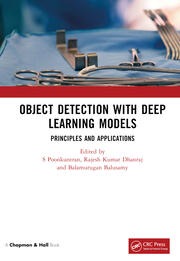
Object detection with deep learning models : Principles and applications
Discusses recent advances in object detection and recognition using deep learning methods, which have achieved great success in the field of computer vision and image processing. It provides a systematic and methodical overview of the latest developments in deep learning theory and its applications to computer vision, illustrating them using key topics, including object detection, face analysis, 3D object recognition, and image retrieval / A structured overview of deep learning in object detection / A diversified collection of applications of object detection using deep neural networks / Emphasize agriculture and remote sensing domains / Exclusive discussion on moving object detection

Numerical analysis
Introduces readers to the theory and application of modern numerical approximation techniques. Providing an accessible treatment that only requires a calculus prerequisite, the authors explain how, why, and when approximation techniques can be expected to work-and why, in some situations, they fail. A wealth of examples and exercises develop readers' intuition, and demonstrate the subject's practical applications to important everyday problems in math, computing, engineering, and physical science disciplines.

Nonlinear dynamics of a wheeled vehicle
This book provides an overview of the theory of stability analysis and its applications. It is focused on various methods devoted to analyzing wheeled vehicle behavior. The authors provide both basic and advanced knowledge of the subject.

Nonblocking Supervisory Control of State Tree Structures
This monograph proposes how to manage complexity by organizing the system as a State Tree Structure (STS). an efficient recursive symbolic algorithm is presented that can perform nonblocking supervisory control design in reasonable time and memory for complex systems.

Nonblocking Electronic and Photonic Switching Fabrics
This state-of-the-art survey of switching fabric architectures gives special attention to combinatorial properties of switching fabrics – nonblockingness and rearrangeability. Also describing control algorithms proposed to control different architectures.

Next Generation Teletraffic and Wired/Wireless Advanced Networking ; 8th International Conference, NEW2AN and 1st Russian Conference on Smart Spaces, ruSMART 2008 St. Petersburg, Russia, September 3-5, 2008. Proceedings
This book constitutes the refereed proceedings of the 8th International Conference on Next Generation Teletraffic and Wired/Wireless Advanced Networking, NEW2AN 2008, held in St. Petersburg, Russia in September 3-5, 2008 in conjunction with the First ruSMART 2008.The 21 revised full papers presented were carefully reviewed and selected from a total of 60 submissions. The NEW2AN papers are organized in topical sections on wireless networks, multi-hop wireless networks, cross-layer design, teletraffic theory, multimedia communications, heterogeneous networks, network security. The ruSMART papers start with three keynote talks followed by seven articles on Smart Spaces.

New Stream Cipher Designs : The eSTREAM Finalists
The goal of eSTREAM was to promote the design of new stream ciphers with a particular emphasis on algorithms that would be either very fast in software or very resource-efficient in hardware. Algorithm designers were invited to submit new stream cipher proposals to eSTREAM, and 34 candidates were proposed from around the world. Over the following years the submissions were assessed with regard to both security and practicality by the cryptographic community, and the results were presented at major conferences and specialized workshops dedicated to the state of the art of stream ciphers.

New Frontiers for Entertainment Computing ; IFIP 20th World Computer Congress, First IFIP Entertainment Computing Symposium (ECS 2008), September 7-10, 2008, Milano, Italy
The IFIP series publishes state-of-the-art results in the sciences and technologies of information and communication. The scope of the series includes: foundations of computer science; software theory and practice; education; computer applications in technology; communication systems; systems modeling and optimization; information systems; computers and society; computer systems technology; security and protection in information processing systems; artificial intelligence; and human-computer interaction. Proceedings and post-proceedings of refereed international conferences in computer science and interdisciplinary fields are featured. These results often precede journal publication and represent the most current research.

New Directions and Applications in Control Theory
This volume contains a collection of papers in control theory and applications presented at a conference in honor of Clyde Martin on the occasion of his 60th birthday, held in Lubbock, Texas, November 14-15, 2003.
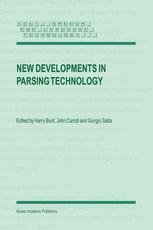
New Developments in Parsing Technology
Parsing can be defined as the decomposition of complex structures into their constituent parts, and parsing technology as the methods, the tools, and the software to parse automatically. Parsing is a central area of research in the automatic processing of human language. Parsers are being used in many application areas, for example question answering, extraction of information from text, speech recognition and understanding, and machine translation. New developments in parsing technology are thus widely applicable. This book contains contributions from many of today's leading researchers in the area of natural language parsing technology. The contributors describe their most recent work and a diverse range of techniques and results. This collection provides an excellent picture of the current state of affairs in this area. This volume is the third in a series of such collections, and its breadth of coverage should make it suitable both as an overview of the current state of the field for graduate students, and as a reference for established researchers.

New Computational Paradigms ; 1st Conference on Computability in Europe, CiE 2005, Amsterdam, The Netherlands, June 8-12, 2005, Proceedings
This book constitutes the refereed proceedings of the first International Conference on Computability in Europe, CiE 2005, held in Amsterdam, The Netherlands in June 2005. The 68 revised full papers presented were carefully reviewed and selected from 144 submissions. Among them are papers corresponding to two tutorials, six plenary talks and papers of six special sessions involving mathematical logic and computer science at the same time as offering the methodological foundations for models of computation. The papers address many aspects of computability in Europe with a special focus on new computational paradigms. These include first of all connections between computation and physical systems (e.g., quantum and analog computation, neural nets, molecular computation), but also cover new perspectives on models of computation arising from basic research in mathematical logic and theoretical computer science.

New Computational Paradigms : Changing Conceptions of What is Computable
This book examines new developments in the theory and practice of computation from a mathematical perspective, with topics ranging from classical computability to complexity, from biocomputing to quantum computing. The book opens with an introduction by Andrew Hodges, the Turing biographer, who analyzes the pioneering work that anticipated recent developments concerning computation’s allegedly new paradigms. The remaining material covers traditional topics in computability theory such as relative computability, theory of numberings, and domain theory, in addition to topics on the relationships between proof theory, computability, and complexity theory.

Neural networks and deep learning
Covers both classical and modern models in deep learning. The primary focus is on the theory and algorithms of deep learning. The theory and algorithms of neural networks are particularly important for understanding important concepts, so that one can understand the important design concepts of neural architectures in different applications. Why do neural networks work? When do they work better than off-the-shelf machine-learning models? When is depth useful? Why is training neural networks so hard? What are the pitfalls? The book is also rich in discussing different applications in order to give the practitioner a flavor of how neural architectures are designed for different types of problems.
