



الصفحة 1
الصفحة 1

Natural language processing and information systems ; 12th International Conference on Applications of Natural Language to Information Systems, NLDB 2007, Paris, France, June 27-29, 2007, Proceedings
NLP techniques may substantially enhance most phases of the information system lifecycle, starting with requirement analysis, specification and validation, and going up to conflict resolution, result processing and presentation.

Nanoinformatics
Brings out the state of the art on how informatics-based tools are used and expected to be used in nanomaterials research. There has been great progress in the area in which “big-data” generated by experiments or computations are fully utilized to accelerate discovery of new materials, key factors, and design rules. Data-intensive approaches play indispensable roles in advanced materials characterization. "Materials informatics" is the central paradigm in the new trend. "Nanoinformatics" is its essential subset, which focuses on nanostructures of materials such as surfaces, interfaces, dopants, and point defects, playing a critical role in determining materials properties. There have been significant advances in experimental and computational techniques to characterize individual atoms in nanostructures and to gain quantitative information. The collaboration of researchers in materials science and information science is growing actively and is creating a new trend in materials science and engineering.

Multimodal Technologies for Perception of Humans ; 1st International Evaluation Workshop on Classification of Events, Activities and Relationships, CLEAR 2006, Southampton, UK, April 6-7, 2006, Revised Selected Papers
This book constitutes the thoroughly refereed post-proceedings of the First International CLEAR 2006 Evaluation Campaign and Workshop on Classification of Events, Activities and Relationships for evaluation of multimodal technologies for the perception of humans, their activities and interactions. The workshop was held in the UK in April 2006.

Motion-Free Super-Resolution
With the explosion of Internet technology and graphics engines, digital images are now everywhere. Image capturing tools are all pervading - in our pockets to inside a satellite. And although imaging applications demand an availability to high resolution images, such images are not picture perfect and may be lacking sufficient details. This requires that these images be super-resolved for improved details. How to achieve this is what constitutes research in the area of image super-resolution. Motion-Free Super-Resolution explores new technology for image super-resolution - applying cues other than the motion cue in super-resolving a scene. This book will serve as an essential reference for both academecians and practicing engineers in the area of image processing and computer vision, as well as providing a basis for ongoing research in this field.

Modeling and Retrieval of Context ; 2nd International Workshop, MRC 2005, Edinburgh, UK, July 31-August 1, 2005, Revised Selected Papers
Computing in context has become a necessity in modern and intelligent IT - plications. With the use of mobile devices and current research on ubiquitous computing, context-awareness has become a major issue. However, context and context-awareness are crucial not only for mobile and ubiquitous computing. They are also vital for spanning various application areas, such as collaborative softwareand Web engineering,personaldigital assistantsand peer-to-peer inf- mation sharing, health care work?ow and patient control, and adaptive games and e-learning solutions. In these areas, context serves as a major source for reasoning, decision making, and adaptation, as it covers not only application knowledge but also environmental knowledge.Likewise, modeling and retrieving context is an important part of modern knowledge management processes.

Introduction à SCILAB
Ce livre est organisé en deux parties. La première partie est consacrée au langage Scilab et à son environnement. Dans la seconde partie, les fonctionnalités des grands domaines d'utilisation du calcul numérique sont décrites et illustrées par des exemples: calcul matriciel, simulation, optimisation, résolution d'équations, statistiques.
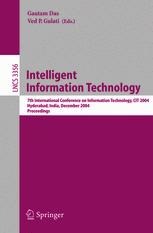
Intelligent Information Technology ; 7th International Conference on Information Technology, CIT 2004, Hyderabad, India, December 20-23, 2004, Proceedings
Focused on the latest research findings on all topics in the area of information technology. Although the natural focus was on computer science issues, research results contributed from management, business and other disciplines formed an integral part. We received more than 200 papers from over 27 countries in the areas of com- tational intelligence, neural networks, mobile and adhoc networks, security, databases, software engineering, signal and image processing, and Internet and WWW-based computing. The programme committee, consisting of eminent researchers, academicians and practitioners, finally selected 43 full papers on the basis of reviewer grades. This proceedings contains the research papers selected for presentation at the c- ference and this is the first time that the proceedings have been published in the Lecture Notes in Computer Science (LNCS) series. The poster papers are being printed as a separate conference proceedings.

Hop Integrity in the Internet
Hop Integrity in the Internet introduces a new security defense, hop integrity, that can be used against denial-of-service attacks in the Internet. A suite of protocols for providing hop integrity in the Internet is discussed in great detail. In particular, each protocol in this suite is specified and verified using an abstract and formal notation, called the Secure Protocol Notation. There are five protocols in this suite: - A secure address resolution protocol - A light-weight key update protocol - A protocol for computing and verifying message digests - An anti-replay protocol that uses soft sequence numbers - An anti-replay protocol that uses hard sequence numbers In addition, other benefits of hop integrity extend to secure routing, mobile IP, and IP multicast.

High performance computing for computational science - VECPAR 2004 ; 6th International conference, Valencia, Spain, June 28-30, 2004, Revised Selected and Invited Papers
VECPAR is a series of international conferences dedicated to the promotion and advancement of all aspects of high-performance computing for computational science, as an industrial technique and academic discipline, extending the fr- tier of both the state of the art and the state of practice. The audience for and participants in VECPAR are seen as researchers in academic departments, g- ernment laboratories and industrial organizations. There is now a permanent website for the series, http://vecpar.fe.up.pt, where the history of the conf- ences is described. ThesixtheditionofVECPARwasthe?rsttimetheconferencewascelebrated outside Porto – at the Universitad Politecnica de Valencia (Spain), June 28–30, 2004.

Hexagonal image processing : A practical approach
Hexagonal Image Processing provides an introduction to the processing of hexagonally sampled images, includes a survey of the work done in the field, and presents a novel framework for hexagonal image processing (HIP) based on hierarchical aggregates. Digital image processing is currently dominated by the use of square sampling lattices, however, hexagonal sampling lattices can also be used to define digital images. The strengths offered by hexagonal lattices over square lattices are considerable: • higher packing density, • uniform connectivity of points (pixels) in the lattice, • better angular resolution by virtue of having more nearest neighbours, and • superlative representation of curves. The utility of the HIP framework is demonstrated by implementing several basic image processing techniques (for the spatial and frequency domain) and some applications. The HIP framework serves as a tool for comparing processing of images defined on a square vs hexagonal grid, to determine their relative merits and demerits. The theory and algorithms covered are supplemented by attention to practical details such as accommodating hardware that support only images sampled on a square lattice. Including a Foreword written by Professor Narendra Ahuja, an eminent researcher in the field of Image Processing and Computer Vision, the book’s fresh approach to the subject offers insight and workable know-how to both researchers and postgraduates.

Graph drawing ; Vol. 3843 ; 13 th International symposium, GD 2005, Limerick, Ireland, September 12-14, 2005, Revised Papers
The 13th International Symposium on Graph Drawing (GD 2005) was held in Limerick, Ireland, September 12-14, 2005. One hundred and ?fteen participants from 19 countries attended GD 2005. In response to the call for papers the Program Committee received 101 subm- sions, each detailing original research or a system demonstration. Each submission was reviewed by at least three Program Committee members; each referee’s c- ments were returned to the authors. Following extensive discussions, the comm- tee accepted 38 long papers, 3 short papers and 3 long system demos, each of which were presented during one of the conference’s 12 sessions. Eight posters were also accepted and were on display throughout the conference.

Fuzzy-Neuro Approach to Agent Applications : From the AI Perspective to Modern Ontology
The book provides a full explanation of the concepts and theories of intelligent agents and agent-based systems. Providing a comprehensive theoretical background, the author covers modern artificial intelligence topics such as ontologies, neural networks, chaos theory, fuzzy logics and genetic algorithms. Finally, the author details how the iJADK toolkit (intelligent Java agent development kit for intelligent e-business applications) can be used in the design and implementation phases of real applications.

Frontiers of Combining Systems ; 6th International Symposium, FroCoS 2007, Liverpool, UK, September 10-12, 2007. Proceedings
This book constitutes the refereed proceedings of the 6th International Symposium on Frontiers of Combining Systems, FroCoS 2007, held in Liverpool, UK, September 2007. combination issues in rewriting and programming as well as in logical frameworks and theorem proving systems.

Formal approaches to software testing and runtime verification ; 1st Combined International Workshops FATES 2006 and RV 2006, Seattle, WA, USA, August 15-16, 2006, Revised Selected Papers
Software validation is one of the most cost-intensive tasks in modern software production processes. The objective of FATES/RV 2006 was to bring sci- tists from both academia and industry together to discuss formal approaches to test and analyze programs and monitor and guide their executions. Formal approaches to test may cover techniques from areas like theorem proving, model checking, constraint resolution, static program analysis, abstract interpretation, Markov chains, and various others. Formal approaches to runtime veri?cation use formal techniques to improve traditional ad-hoc monitoring techniques used in testing, debugging, performance monitoring, fault protection, etc.

Formal approaches to software testing ; Vol. 3997 ; 5th International Workshop, FATES 2005, Edinburgh, UK, July 11, 2005, Revised Selected Papers
This book constitutes the thoroughly refereed post-proceedings of the 5th International Workshop on Formal Approaches to Software Testing, FATES 2005, held in Edinburgh, UK, in July 2005 in conjunction with CAV 2005.

FM 2006: Formal Methods ; 14th International Symposium on Formal Methods, Hamilton, Canada, August 21-27, 2006, Proceedings
This book presents the refereed proceedings of the 14th International Symposium on Formal Methods, FM 2006, held in Hamilton, Canada, August 2006. The book presents 36 revised full papers together with 2 invited contributions and extended abstracts of 7 invited industrial presentations, organized in topical sections on interactive verification, formal modelling of systems, real time, industrial experience, specification and refinement, programming languages, algebra, formal modelling of systems, and more.

Distributed computing in sensor systems ; Vol. 3560 ; 1st IEEE International Conference, DCOSS 2005, Marina del Rey, CA, USA, June 30-July 1, 2005, Proceedings
Constitutes the refereed proceedings of the First International Conference on Distributed Computing in Sensor Systems, DCOSS 2005, held in Marina del Rey, California, USA in June/July 2005. The 26 revised full papers presented were carefully reviewed and selected from 85 submissions; also included are the abstracts of 3 invited talks, 2 short papers, 9 invited poster abstracts, and 10 contributed abstracts.The papers address all current aspects of distributed computing issues in large-scale networked sensor systems, including systematic design techniques and tools, algorithms, and applications.

Discrete Geometry for Computer Imagery Vol. 4245 ; 13th International Conference, DGCI 2006, Szeged, Hungary, October 25-27, 2006, Proceedings
This book constitutes the refereed proceedings of the 13th International Conference on Discrete Geometry for Computer Imagery, DGCI 2006, held in Szeged, Hungary in October 2006. The 28 revised full papers and 27 revised poster papers presented together with two invited papers were carefully reviewed and selected from 99 submissions.

Discrete geometry for computer imagery ; Vol. 3429 ; 12th International Conference, DGCI 2005, Poitiers, France, April 11-13, 2005, Proceedings
This book constitutes the refereed proceedings of the 12th International Conference on Discrete Geometry for Computer Imagery, DGCI 2005, held in Poitiers, France in April 2005. The 36 revised full papers presented together with an invited paper were carefully reviewed and selected from 53 submissions. The papers are organized in topical sections on applications, discrete hierarchical geometry, discrete tomography, discrete topology, object properties, reconstruction and recognition, uncertain geometry, and visualization.

Digital Watermarking ; Vol. 3710 ; 4th International Workshop, IWDW 2005, Siena, Italy, September 15-17, 2005, Proceedings
We are delighted to welcome the attendees of the Fourth International Wo- shop on Digital Watermarking (IWDW). Watermarking continues to generate strong academic interest. Commercialization of the technology is proceeding at a steadypace. We haveseen watermarkingadoptedfor DVD audio.Fingerpri- ing technology was successfully used to determine the source of pirated video material. Furthermore, a number of companies are using watermarking as an enabling technology for broadcast monitoring services. Watermarking of digital cinema contentis anticipated. Future applications may also come from areas- related to digital rights management. For example, the use of watermarking to enhance legacy broadcast and communication systems is now being considered. IWDW 2005 o?ers an opportunity to re?ect upon the state of the art in digital watermarking as well as discuss directions for future research and applications. This year we accepted 31 papers from 74 submissions. This 42% acceptance rate indicates our commitment to ensuring a very high quality conference.
