



الصفحة 1
الصفحة 1
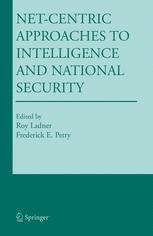
Net-Centric Approaches to Intelligence and National Security
Net-Centric Approaches to Intelligence and National Security considers the web architectures and recent developments that make net-centric approaches for intelligence and national security possible. The development of net-centric approaches for intelligence, national & homeland security applications has become a major concern in many areas such as defense intelligence and national and international law enforcement agencies, especially since the terrorist attacks of 9/11. Net-Centric Approaches to Intelligence and National Security presents developments in information integration and recent advances in web services including the concept of the semantic web. Discovery analysis and management of web-available data pose a number of interesting challenges for research in web-based management systems. Intelligent agents and data mining are among the techniques employed. A number of specific systems that are net-centric based in various areas of military applications, intelligence and law enforcements are presented utlilizing one or more of such techniques Net-Centric Approaches to Intelligence and National Security is designed for a professional audience of researchers and practitioners in industry. This volume is also suitable for graduate-level students in computer science.

Intelligence and Security Informatics for International Security : Information Sharing and Data Mining
Reflects a decade of leading-edge research on intelligence and security informatics from the Artificial Intelligence Laboratory and the NSF COPLINK Center for Homeland Security Information Technology Research, as well as the application in real-world community situations by the center’s director and the book’s author, Dr. Hsinchun Chen.
Intelligence and Security Informatics ; Vol. 3975 ; IEEE International Conference on Intelligence and Security Informatics, ISI 2006, San Diego, CA, USA, May 23-24, 2006.
In the past few years, intelligence and security informatics (ISI) research, which is concerned with the study of the development and use of advanced information te- nologies and systems for national and international security-related applications, has experienced tremendous growth and attracted substantial interest from academic - searchers in related fields as well as practitioners from both government agencies and industry. The ISI community is maturing, and a core set of research methodologies and technical approaches has emerged and is becoming the underpinning of ISI research.
Intelligence and Security Informatics ; Vol. 3917 ; International Workshop, WISI 2006, Singapore, April 9, 2006, Proceedings
Intelligence and security informatics (ISI) can be broadly defined as the study of the development and use of advanced information technologies and systems for national and international security-related applications. The First and Second Symposiums on ISI were held in Tucson, Arizona, in 2003 and 2004, respectively. In 2005, the IEEE International Conference on ISI was held in Atlanta, Georgia. These ISI conferences brought together academic researchers, law enforcement and intelligence experts, information technology consultants and practitioners to discuss their research and practice related to various ISI topics including ISI data management, data and text mining for ISI applications, terrorism informatics, deception detection, terrorist and criminal social network analysis, crime analysis, monitoring and surveillance, policy studies and evaluation, and information assurance, among others. We continued these stream of ISI conferences by organizing the Workshop on Intelligence and Security Informatics (WISI 2006) in conjunction with the Pacific Asia Conference on Knowledge Discovery and Data Mining (PAKDD 2006).
Intelligence and security informatics ; Vol. 3495 : IEEE International Conference on Intelligence and Security Informatics, ISI 2005, Atlanta, GA, USA, May 19-20, 2005, Proceedings
Intelligence and security informatics (ISI) can be broadly defined as the study of the development and use of advanced information technologies and systems for national and international security-related applications, through an integrated technological, organizational, and policy-based approach. In the past few years, ISI research has experienced tremendous growth and attracted substantial interest from academic researchers in related fields as well as practitioners from both government agencies and industry. The first two meetings (ISI 2003 and ISI 2004) in the ISI symposium and conference series were held in Tucson, Arizona, in 2003 and 2004, respectively. They provided a stimulating intellectual forum for discussion among previously disparate communities: academic researchers in information technologies, computer science, public policy, and social studies; local, state, and federal law enforcement and intelligence experts; and information technology industry consultants and practitioners.

Deep fake detection
Deep learning has been successfully applied to solve various complex problems ranging from big data analytics to computer vision and human-level control. Deep learning advances however have also been employed to create software that can cause threats to privacy, democracy and national security. One of those deep learning-powered applications recently emerged is “deepfake”. Deepfake algorithms can create fake images and videos that humans cannot distinguish them from authentic ones. The proposal of technologies that can automatically detect and assess the integrity of digital visual media is therefore indispensable.

Artificial intelligence and national security
Analyses the implications of the technical, legal, ethical and privacy challenges as well as challenges for human rights and civil liberties regarding Artificial Intelligence (AI) and National Security. It also offers solutions that can be adopted to mitigate or eradicate these challenges wherever possible. As a general-purpose, dual-use technology, AI can be deployed for both good and evil. The use of AI is increasingly becoming of paramount importance to the governments mission to keep their nations safe. However, the design, development and use of AI for national security poses a wide range of legal, ethical, moral and privacy challenges. This book explores national security uses for Artificial Intelligence (AI) in Western Democracies and its malicious use. This book also investigates the legal, political, ethical, moral, privacy and human rights implications of the national security uses of AI in the aforementioned democracies. It illustrates how AI for national security purposes could threaten most individual fundamental rights, and how the use of AI in digital policing could undermine user human rights and privacy.
