



الصفحة 1
الصفحة 1

Modeling and Retrieval of Context ; 2nd International Workshop, MRC 2005, Edinburgh, UK, July 31-August 1, 2005, Revised Selected Papers
Computing in context has become a necessity in modern and intelligent IT - plications. With the use of mobile devices and current research on ubiquitous computing, context-awareness has become a major issue. However, context and context-awareness are crucial not only for mobile and ubiquitous computing. They are also vital for spanning various application areas, such as collaborative softwareand Web engineering,personaldigital assistantsand peer-to-peer inf- mation sharing, health care work?ow and patient control, and adaptive games and e-learning solutions. In these areas, context serves as a major source for reasoning, decision making, and adaptation, as it covers not only application knowledge but also environmental knowledge.Likewise, modeling and retrieving context is an important part of modern knowledge management processes.

Mobile health technologies for ambient assisted living and healthcare
The use of telemedicine and mobile devices is growing, and sensors might aid in creating creative solutions. Developing these solutions is crucial for monitoring senior citizens, lifestyles, and medical procedures. The development of assistive technology for various users to follow sports and other activities is strongly tied to this study area. Data protection is crucial, and the development of these solutions for medical uses should be verified. The security and privacy of the information may be tied to other recognized research projects for their acceptability. ICT research has considerably improved quality of life and has fully assimilated all citizens into society through medical rehabilitation and assistive technology. The technologies and research fields that influence medical informatics include databases, networking, graphical user interfaces, data mining, machine learning, intelligent decision support systems, and specialized programming languages.

Mobile forensics : The file format handbook : Common file formats and file systems used in mobile devices
This book summarizes knowledge about several file systems and file formats commonly used in mobile devices. In addition to the fundamental description of the formats, there are hints about the forensic value of possible artefacts, along with an outline of tools that can decode the relevant data.

Mobile computing, applications, and services ; 11th EAI International Conference, MobiCASE 2020, Shanghai, China, September 12, 2020, Proceedings
This book constitutes the thoroughly refereed post-conference proceedings of the 11th International Conference on Mobile Computing, Applications, and Services, MobiCASE 2020, held in Shanghai, China, in September 2020. The conference was held virtually due to the COVID-19 pandemic. The 15 full papers were carefully reviewed and selected from 49 submissions. The papers are organized in topical sections on mobile application and framework; mobile application with data analysis; and AI application.
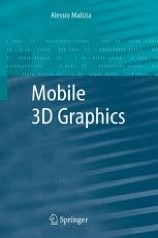
Mobile 3D Graphics
Historically, not enough was understood about how to deliver a high quality playing experience on handheld, small screen, small memory devices, plus there has been considerable confusion about the hardware’s abilities and restrictions. By addressing these issues this book provides: • A comprehensive explanation of 3D mobile graphics programming • Includes an extensive range of code samples in both C and Java • Combines 3D and 2D mobile graphics methods • Covers recent advances in mobile computer graphics techniques and applications. The book teaches fundamental 3D mobile graphics programming with standard APIs, and covers the basic and advanced application programme interfaces behind the major wireless and mobile devices supporting 3D graphics applications. Advanced undergraduates and postgraduates, as well as mobile application and games developers, will find this an excellent reference source.

Interactive systems design, specification, and verification ; 13th International Workshop, DSVIS 2006, Dublin, Ireland, July 26-28, 2006, Revised Papers
This book constitutes the thoroughly refereed post-proceedings of the 13th International Workshop on Design, Specification, and Verification of Interactive Systems, DSVIS 2006, held in Dublin, Ireland in July 2006.

Intelligent technologies for interactive entertainment ; 1st International Conference, INTETAIN 2005, Madonna di Campaglio, Italy, November 30 - December 2, 2005, Proceedings
Constitutes the proceedings of the First International Conference on Intelligent Technologies for Interactive Entertainment, 2005 held in Madonna di Campiglio, Italy. The papers included in this title cover topics such as intelligent interactive games, intelligent music, interactive cinema, edutainment, interactive art, and interactive real TV.

Human-computer interaction : Interaction platforms and techniques ; 12th International Conference, HCI International 2007, Beijing, China, July 22-27, 2007, Proceedings, Part II
The 12th International Conference on Human-Computer Interaction, HCI Inter- tional 2007, was held in Beijing, P.R. This volume, edited by Julie A. Jacko, contains papers in the thematic area of Human-Computer Interaction, addressing the following major topics: • Graphical User Interfaces and Visualization • Mobile Devices and Mobile Interaction • Virtual Environments and 3D Interaction • Ubiquitous Interaction • Emerging Interactive Technologies.

Haptic and Audio Interaction Design ; 2nd International Workshop, HAID 2007 Seoul, Korea, November 29-30, 2007 Proceedings
This book constitutes the refereed proceedings of the Second International Workshop on Haptic and Audio Interaction Design, HAID 2007 held in Seoul, South Korea, in November 2007. The papers are organized in topical sections on tactile displays, communication and games, accessibility and navigation, as well as design.

Handbook of modern sensors. physics, designs, and applications
Presents a comprehensive and up-to-date account of the theory (physical principles), design, and practical implementations of various sensors for scientific, industrial, and consumer applications. This latest edition focuses on the sensing technologies driven by the expanding use of sensors in mobile devices. These new miniature sensors will be described, with an emphasis on smart sensors which have embedded processing systems. The chapter on chemical sensors has also been expanded to present the latest developments.

Fun and Games ; 2nd International conference, Eindhoven, The Netherlands, October 20-21, 2008. Proceedings
This book constitutes the refereed proceedings of the Second International Conference on Fun and Games, held in Eindhoven, The Netherlands, in October 2008.The 17 revised full papers, presented together with 2 invited talks were carefully reviewed and selected from a total of 36 submissions. The papers encompass the study of computer games, game development and experiences by researchers from social sciences, computing, electrical engineering, design, etc. Main focus is given to topics such as tightly-coupled embodied control of movement-sensitive mobile devices, hypercomputation and cultural computing, emerging gaming paradigms.

Foundation Flash Applications for Mobile Devices
Foundation Flash Applications for Mobile Devices is the book you need to learn how to take advantage of new audience of mobile application users. Inside, it covers every facet of mobile Flash, from the essentials of the Flash Lite 1.1 and 2.X platforms and writing applications to testing your work and deploying to mobile users.

Embedded Java Security : Security for Mobile Devices
Whereas Java brings functionality and versatility to the world of mobile devices, at the same time it also introduces new security threats. The rapid growth of the number of mobile devices that support Java makes this a pressing issue. Embedded Java Security carefully examines the security aspects of Java and offers a security evaluation for the Java platform. After explaining background material on the architecture of embedded platforms and relating to its role in security, the book deconstructs the security model into its main components: It explains each component and relates it to the aim of securing the applications and the device. Toward this end, several implementations of the Java platform are examined and tested to relate the model to its actual implementation on devices. The security holes found are further used to clarify security issues and point out common errors. Finally, the book provides an evaluation of embedded Java security that includes security models and security tests performed on real-life implementations.
Databases, Information Systems, and Peer-to-Peer Computing ; International Workshops, DBISP2P 2005/2006, Trondheim, Norway, August 28-29, 2006, Revised Selected Papers
The P2P paradigm lends itself to constructing large-scale, complex, adaptive, autonomous and heterogeneous database and information systems, endowed with clearly specified and difierential capabilities to negotiate, bargain, coordinate and self-organize the information exchanges in large-scale networks. This vision will have a radical impact on the structure of complex organizations (business, sci- tific or otherwise) and on the emergence and the formation of social communities, and on how the information is organized and processed. The P2P information paradigm naturally encompasses static and wireless connectivity and static and mobile architectures. Wireless connectivity combined with the increasingly small and powerful mobile devices and sensors poses new challenges as well as opp- tunities to the database community. Information becomes ubiquitous, highly distributed and accessible anywhere and at any time over highly dynamic, - stable networks with very severe constraints on the information management and processing capabilities.

Databases, information systems, and peer-to-peer computing ; 2nd international workshop, DBISP2P 2004, Toronto, Canada, August 29-30, 2004, revised selected papers
Peer-to-peer (P2P) paradigm lends itself to constructing large-scale complex, adaptive, - tonomous and heterogeneous database and information systems, endowed with clearly speci?ed and di?erential capabilities to negotiate, bargain, coordinate, and self-organize the information exchanges in large-scale networks. This vision will have a radical impact on the structure of complex organizations (business, scienti?c, or otherwise) and on the emergence and the formation of social c- munities, and on how the information is organized and processed. The P2P information paradigm naturally encompasses static and wireless connectivity, and static and mobile architectures. Wireless connectivity c- bined with the increasingly small and powerful mobile devices and sensors pose new challenges to as well as opportunities for the database community. Inf- mation becomes ubiquitous, highly distributed and accessible anywhere and at any time over highly dynamic, unstable networks with very severe constraints on the information management and processing capabilities.
CyberParks – The Interface Between People, Places and Technology: New Approaches and Perspectives
This book is about public open spaces, about people, and about the relationship between them and the role of technology in this relationship. It is about different approaches, methods, empirical studies, and concerns about a phenomenon that is increasingly being in the centre of sciences and strategies – the penetration of digital technologies in the urban space. As the main outcome of the CyberParks Project, this book aims at fostering the understanding about the current and future interactions of the nexus people, public spaces and technology. It addresses a wide range of challenges and multidisciplinary perspectives on emerging phenomena related to the penetration of technology in people’s lifestyles - affecting therefore the whole society, and with this, the production and use of public spaces. Cyberparks coined the term cyberpark to describe the mediated public space, that emerging type of urban spaces where nature and cybertechnologies blend together to generate hybrid experiences and enhance quality of life.

Computers helping people with special needs ; 17th International Conference, ICCHP 2020, Lecco, Italy, September 9–11, 2020, Proceedings, Part II
The two-volume set LNCS 12376 and 12377 constitutes the refereed proceedings of the 17th International Conference on Computers Helping People with Special Needs, ICCHP 2020, held in Lecco, Italy, in September 2020. The conference was held virtually due to the COVID-19 pandemic.

Computers helping people with special needs ; 17th International Conference, ICCHP 2020, Lecco, Italy, September 9–11, 2020, Proceedings, Part I
The two-volume set LNCS 12376 and 12377 constitutes the refereed proceedings of the 17th International Conference on Computers Helping People with Special Needs, ICCHP 2020, held in Lecco, Italy, in September 2020. The conference was held virtually due to the COVID-19 pandemic.

Computer organization and design : The hardware / software interface ; 6th ed.
Designed to be used in modern computing environments such as cloud computing, mobile devices, and other embedded systems. With the post-PC era now upon us, Computer Organization and Design moves forward to explore this generational change with examples, exercises, and material highlighting the emergence of mobile computing and the Cloud. Updated content featuring tablet computers, Cloud infrastructure, and the x86 (cloud computing) and ARM (mobile computing devices) architectures is included
Machine learning for brain disorders
Organized into five parts. Part One presents the fundamentals of ML. Part Two looks at the main types of data used to characterize brain disorders, including clinical assessments, neuroimaging, electro- and magnetoencephalography, genetics and omics data, electronic health records, mobile devices, connected objects and sensors. Part Three covers the core methodologies of ML in brain disorders and the latest techniques used to study them. Part Four is dedicated to validation and datasets, and Part Five discusses applications of ML to various neurological and psychiatric disorders.
