



الصفحة 1
الصفحة 1

Information systems management
Intended for the technical reader who works with large volumes of data. Written by experts in information systems management, the book includes chapters on software development, cloud implementation, networking, and handling large datasets, among other topics. Blockchain and artificial intelligence (AI) are the foundations of automated systems and the authors provide their viewpoints on information management by using these fundamental domains of information technology.

Data mining and Knowledge discovery handbook
Data Mining and Knowledge Discovery Handbook organizes all major concepts, theories, methodologies, trends, challenges and applications of data mining (DM) and knowledge discovery in databases (KDD) into a coherent and unified repository. This book first surveys, then provides comprehensive yet concise algorithmic descriptions of methods, including classic methods plus the extensions and novel methods developed recently. This volume concludes with in-depth descriptions of data mining applications in various interdisciplinary industries including finance, marketing, medicine, biology, engineering, telecommunications, software, and security.
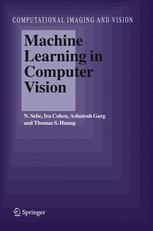
Machine Learning in Computer Vision
The goal of this book is to address the use of several important machine learning techniques into computer vision applications. An innovative combination of computer vision and machine learning techniques has the promise of advancing the field of computer vision, which contributes to better understanding of complex real-world applications. The effective usage of machine learning technology in real-world computer vision problems requires understanding the domain of application, abstraction of a learning problem from a given computer vision task, and the selection of appropriate representations for the learnable (input) and learned (internal) entities of the system. In this book, we address all these important aspects from a new perspective: that the key element in the current computer revolution is the use of machine learning to capture the variations in visual appearance, rather than having the designer of the model accomplish this. As a bonus, models learned from large datasets are likely to be more robust and more realistic than the brittle all-design models.
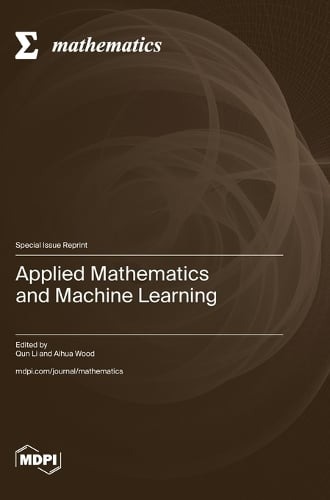
Applied mathematics and machine learning
The simultaneous availability of large datasets and high-performance computing capability in recent years has enabled the rapid development of powerful machine learning algorithms. On the one hand, state-of-the-art machine learning techniques have transformed many areas of science and engineering; on the other hand, theoretical discoveries in mathematical algorithms, differential equations, and statistical inferences, to name a few, have provided the foundation for the exploration of new multidisciplinary models for solving practical problems. This Special Issue endeavors to continue the journey that started in our previous Special Issue (Applied Mathematics and Computational Physics) by providing a platform for researchers from both academia and industry, as well as government, to present their new computational methods that have engineering and physics applications.
