



الصفحة 1
الصفحة 1

Ontology Learning and Population from Text: Algorithms, Evaluation and Applications
Ontology Learning and Population from Text: Algorithms, Evaluation and Applications presents approaches for ontology learning from text and will be relevant for researchers working on text mining, natural language processing, information retrieval, semantic web and ontologies. Containing introductory material and a quantity of related work on the one hand, but also detailed descriptions of algorithms, evaluation procedures etc. on the other, this book is suitable for novices, and experts in the field, as well as lecturers.

Ontologies for Agents : Theory and Experiences
On the other hand, ontologies have established themselves as a powerful tool to enable kno- edge sharing, and a growing number of applications have bene?ted from the use of ontologies as a means to achieve semantic interoperability among heterogeneous, distributed systems. In principle ontologies and agents are a match made in heaven, that has failed to happen. What makes a simple piece of software an agent is its ability to communicate in a ”social” environment, to make autonomous decisions, and to be proactive on behalf of its user. Communication ultimately depends on und- standing the goals, preferences, and constraints posed by the user. Autonomy is theabilitytoperformataskwithlittleornouserintervention,whileproactiveness involves acting autonomously with no need for user prompting. Communication, but also autonomy and proactiveness, depend on knowledge. The ability to c- municate depends on understanding the syntax (terms and structure) and the semantics of a language. Ontologies provide the terms used to describe a domain and the semantics associated with them. In addition, ontologies are often comp- mented by some logical rules that constrain the meaning assigned to the terms. These constraints are represented by inference rules that can be used by agents to perform the reasoning on which autonomy and proactiveness are based.

On the construction of engineering handbooks : With an Illustration from the railway safety domain
This book is the first to reflect upon the question of how to construct a desktop handbook. It is demonstrated how concept analysis can be used for identifying settled knowledge as the key ingredient by utilizing the assembled data for classification; a presentation scheme for handbook articles is developed and demonstrated to be suitable. The sketched approach is then illustrated by an example from the railway safety domain. Finally, the limitations of the presented methods are discussed.

Obstructions in Security-Aware Business Processes : Analysis, Detection, and Handling
This book explores the dilemma-like stalemate between security and regulatory compliance in business processes on the one hand and business continuity and governance on the other. The growing number of regulations, e.g., on information security, data protection, or privacy, implemented in increasingly digitized businesses can have an obstructive effect on the automated execution of business processes. Such security-related obstructions can particularly occur when an access control-based implementation of regulations blocks the execution of business processes. By handling obstructions, security in business processes is supposed to be improved. For this, the book presents a framework that allows the comprehensive analysis, detection, and handling of obstructions in a security-sensitive way. Thereby, methods based on common organizational security policies, process models, and logs are proposed. The Petri net-based modeling and related semantic and language-based research, as well as the analysis of event data and machine learning methods finally lead to the development of algorithms and experiments that can detect and resolve obstructions and are reproducible with the provided software.
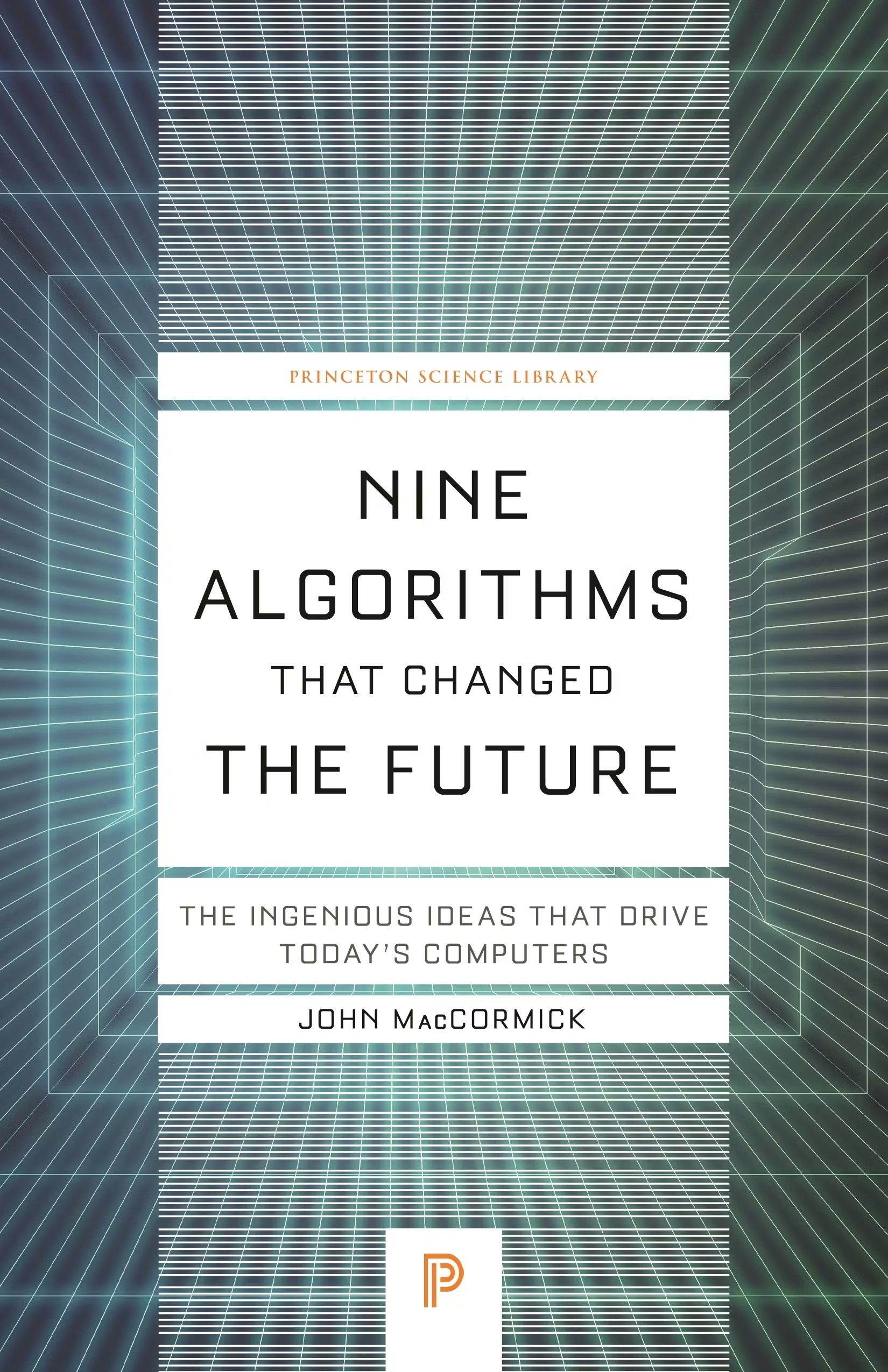
Nine algorithms that changed the future : The ingenious ideas that drive today’s computers
Every day, we use our computers to perform remarkable feats. A simple web search picks out a handful of relevant needles from the world’s biggest haystack. Uploading a photo to Facebook transmits millions of pieces of information over numerous error-prone network links, yet somehow a perfect copy of the photo arrives intact. Without even knowing it, we use public-key cryptography to transmit secret information like credit card numbers, and we use digital signatures to verify the identity of the websites we visit. How do our computers perform these tasks with such ease?

Network+ Guide to Networks
It thoroughly prepares you for success on CompTIA's Network+ N10-007 certification exam with fully mapped coverage of all objectives, including protocols, topologies, hardware, network design, security and troubleshooting. Virtualization-based projects give you experience working with a wide variety of hardware, software, operating systems and device interactions, while "On the Job" stories, Applying Concepts activities, and Hands-On and Capstone Projects let you explore concepts in more depth. MindTap Networking offers additional practice and certification prep.

Network Security, Firewalls, and VPNs ; 3rd ed.
Provides a unique, in-depth look at the major business challenges and threats that are introduced when an organization’s network is connected to the public Internet. Written by industry experts, this book provides a comprehensive explanation of network security basics, including how hackers access online networks and the use of Firewalls and VPNs to provide security countermeasures. Using examples and exercises, this book incorporates hands-on activities to prepare the reader to disarm threats and prepare for emerging technologies and future attacks.

Mute people aiding application
Communication is an essential tool for human survival. It is a fundamental and effective method of sharing thoughts, needs, feelings, and opinions. However, a large portion of the world's population lacks the ability to communicate with others. Such as the ones suffering from hearing loss, speech disability, or even both. Those disabilities have a significant impact on their lives in terms of work and relationships. The majority of these people are sometimes unable to support themselves financially due to the lack of job opportunities. Given these difficulties, we have decided to develop an application to help them overcome the obstacles they may encounter in their daily lives. After consulting with two deaf and mute people we customized an application that works in two ways. One of which is to translate their sign language in real time by using mobile camera and recognizing hand motion. The other works by converting text-to-voice, and accurately expressing the user’s emotions with the help of the facial emotion recognition.

Multi-point Interaction with Real and Virtual Objects
This edited book covers some of the most challenging problems on the forefront of today’s research on physical interaction with real and virtual objects, with special emphasis on modelling contacts between objects, grasp planning algorithms, haptic perception, and advanced design of hands, devices and interfaces.

Mouse controller using electroencephalography (EEG) device
The growing technologies related to neuroscience has to lead many innovative applications, most importantly Electroencephalography, or EEG for short. This field of study has become recently a trend that many companies around the world have started to enter the race of conquering the brain and controlling everything from a mouse controller to the whole human body. This project aims to help disabled people use a computer with ease and simplicity without needing to use their hands, or anything really, which they can achieve by wearing a headset or get someone to put it on them. The headset is designed to read brain activities and send it to a computer program to understand where the user wants to move the mouse cursor on the computer screen using an Artificial Intelligence model. This project helps further researches in this field which pushes the technology even further from where it is now. The device designed for this project can be repurposed pretty easily to serve many different applications other than controlling a mouse.

Modular Algorithms in Symbolic Summation and Symbolic Integration
Brings together two streams in computer algebra: symbolic integration and summation on the one hand, and fast algorithmics on the other hand. In many algorithmically oriented areas of computer science, the analysis of al gorithms placed into the lime light by DonKnuth’stalkat the 1970ICM –provides a crystal-clear criterion for success. The researcher who designs an algorithm that is faster (asymptotically, in the worst case) than any previous method receives instant gratification : her result will be recognized as valuable. Al as, the downside is that such results come along quite infrequently, despite our best efforts. An alternative evaluation method is to run a new algorithm on examples; this has its obvious problems, but is sometimes the best we can do. George Collins, one of the fathers of computer algebra and a great experimenter,wrote in 1969: “I think this demonstrates again that a simple analysis is often more revealing than a ream of empirical data (although both are important). ” Within computer algebra, some areas have traditionally followed the former methodology, notably some parts of polynomial algebra and linear algebra. Other areas, such as polynomial system solving, have not yet been amenable to this - proach. The usual “input size” parameters of computer science seem inadequate, and although some natural “geometric” parameters have been identified (solution dimension, regularity), not all (potential) major progress can be expressed in this framework. Symbolic integration and summation have been in a similar state.
Modern IoT onboarding platforms for advanced applications: a practitioner’s guide to KIS.ME
There is no doubt that digitalization solutions from Industry 4.0 and the Internet of Things (IoT) can be perceived as excellent candidate strategies capable of handling the above-stated issues concerning measurements and transparency. However, IoT tools themselves can provide appropriate data only, while their efficient integration and application are possible using a dedicated onboarding platform only. To settle this issue, the book undertakes the problem of modern IoT onboarding platforms for the advanced applications pertaining to manufacturing and logistics. In particular, instead of deliberating about a possible hypothetic platforms, an existing and efficient one is employed, which is called KIS.ME. KIS.ME (Keep It Simple. Manage Everything) is a complete IoT solution for a simple integration in manufacturing and logistics.

Modern Control Systems ; 13th ed.
Presents the structure of feedback control theory and to provide a sequence of exciting discoveries. The book demonstrates various real-world, global engineering problems while touching on evolving design strategies like green technology. Some of the themes at-hand include climate change, clean water, sustainability, waste management, emissions reduction, and minimizing energy. Throughout the text, students apply theory to the design and analysis of control systems.

Modelling Distributed Systems
Process algebras are languages for the description of elementary parallel systems and are used to study the behavioural properties of distributed systems, but they often lack the ability to handle data. This textbook guides students through algebraic specification and verification of distributed systems, and some of the most prominent formal verification techniques.

Modeling Communication with Robots and Virtual Humans ; Second ZiF Research Group International Workshop on Embodied Communication in Humans and Machines, Bielefeld, Germany, April 5-8, 2006, Revised Selected Papers
The 17 articles in this state-of-the-art survey address artificial intelligence research on communicative agents and also provide an interdisciplinary perspective from linguistics, behavioral research, theoretical biology, philosophy, communication psychology, and computational neuroscience. The topics include studies on human multimodal communication; the modeling of feedback signals, facial expression, eye contact, and deception; the recognition and comprehension of hand gestures and head movements; communication interfaces for humanoid robots; the evolution of cognition and language; emotion and social appraisal in nonverbal communication; dialogue models and methodologies; theory of mind and intentionality; complex systems, dynamic field theory, and connectionist modeling.

Mobile forensics : The file format handbook : Common file formats and file systems used in mobile devices
This book summarizes knowledge about several file systems and file formats commonly used in mobile devices. In addition to the fundamental description of the formats, there are hints about the forensic value of possible artefacts, along with an outline of tools that can decode the relevant data.

Mobile and Wireless Communications Networks ; IFIP TC6 / WG6.8 Conference on Mobile and Wireless Communication Networks (MWCN 2004) October 25-27, 2004 Paris, France
Mobile Ad hoc NETworks (MANETs) has attracted great research interest in recent years. A Mobile Ad Hoc Network is a self-organizing multi-hop wireless network where all hosts (often called nodes) participate in the routing and data forwarding process. The dependence on nodes to relay data packets for others makes mobile ad hoc networks extremely susceptible to various malicious and selfish behaviors. This point is largely overlooked during the early stage of MANET research. Many works simply assume nodes are inherently cooperative and benign. However, experiences from the wired world manifest that the reverse is usually true; and many works [3] [10] [9] [8] [12] [19] have pointed out that the impact of malicious and selfish users must be carefully investigated. The goal of this research is to address the cooperation problem and related security issues in wireless ad hoc networks. As a rule of thumb, it is more desirable to include security mechanisms in the design phase rather than continually patching the system for security breaches. As pointed out in [2] [1], there can be both selfish and malicious nodes in a mobile ad hoc network. Selfish nodes are most concerned about their energy consumption and intentionally drop packets to save power. The purpose of malicious nodes, on the other hand, is to attack the network using various intrusive techniques. In general, nodes in an ad hoc network can exhibit Byzantine behaviors.
Mobile 3D Graphics
Historically, not enough was understood about how to deliver a high quality playing experience on handheld, small screen, small memory devices, plus there has been considerable confusion about the hardware’s abilities and restrictions. By addressing these issues this book provides: • A comprehensive explanation of 3D mobile graphics programming • Includes an extensive range of code samples in both C and Java • Combines 3D and 2D mobile graphics methods • Covers recent advances in mobile computer graphics techniques and applications. The book teaches fundamental 3D mobile graphics programming with standard APIs, and covers the basic and advanced application programme interfaces behind the major wireless and mobile devices supporting 3D graphics applications. Advanced undergraduates and postgraduates, as well as mobile application and games developers, will find this an excellent reference source.

Mind conversation = التنبؤ بالحروف العربية من خلال الإشارات الدماغية
Throughout history, humans have long dreamed of understanding what goes on inside the human mind—what people are thinking or feeling. It seemed like something from a far-off future or a magical realm. But now, thanks to amazing technology called EEG and BCI, this dream is turning into reality. EEG stands for electroencephalography. It's a way of listening to what the brain is up to by placing small sensors on or near the head. These sensors pick up tiny electrical signals produced by the brain's activity. It's like eavesdropping on the brain's conversations with itself. BCI, or Brain-Computer Interface, is like a bridge between the brain and machines. It lets the brain talk to devices or computers. This means people can control things without using their hands or voices. Our system takes advantage of EEG and BCI to create something helpful, a special mobile app. This app is designed for people who can't move their bodies, like those who are paralyzed. It helps them use their phones to express what they are thinking about.

Microprocessor 5 : Software and hardware aspects of development, debugging and testing - the microcomputer
Focuses more particularly on the first two generations of microprocessors, those that handle 4- and 8- bit integers. Microprocessor 5 – the fifth and final volume of this series of books – first presents the hardware and software aspects of the development chain of a microprocessor-based digital system. Finally, to round up the series and offer a historical perspective, the architectures of the first microcomputers are detailed. A comprehensive approach is used, with examples drawn from current and past technologies that illustrate theoretical concepts, making them accessible.
