



الصفحة 1
الصفحة 1
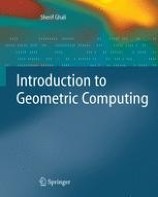
Introduction to Geometric Computing
The geometric ideas in computer science, mathematics, engineering, and physics have considerable overlap and students in each of these disciplines will eventually encounter geometric computing problems. The topic is traditionally taught in mathematics departments via geometry courses, and in computer science through computer graphics modules. This text isolates the fundamental topics affecting these disciplines and lies at the intersection of classical geometry and modern computing.
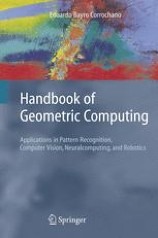
Handbook of Geometric Computing : Applications in Pattern Recognition, Computer Vision, Neuralcomputing, and Robotics
Many computer scientists, engineers, applied mathematicians, and physicists use geometry theory and geometric computing methods in the design of perception-action systems, intelligent autonomous systems, and man-machine interfaces. This handbook brings together the most recent advances in the application of geometric computing for building such systems, with contributions from leading experts in the important fields of neuroscience, neural networks, image processing, pattern recognition, computer vision, uncertainty in geometric computations, conformal computational geometry, computer graphics and visualization, medical imagery, geometry and robotics, and reaching and motion planning. For the first time, the various methods are presented in a comprehensive, unified manner.

Energy minimization methods in computer vision and pattern recognition ; 6th International Conference, EMMCVPR 2007, Ezhou, China, August 27-29, 2007, Proceedings
Contains critical issues of representation, learning, and inference. Important new themes include pr- abilistic grammars, image parsing, and the use of datasets with ground-truth to act as benchmarks for evaluating algorithms and as a way to train learning algorithms. Other themes include the development of efficient inference algorithms using advanced techniques from statistics, computer science, and applied mathematics. This book makes no distinction between oral and poster papers. It also contiants sections on al- rithms, applications, image parsing, image processing, motion, shape, and thr- dimensional processing.

Discrete Geometry for Computer Imagery Vol. 4245 ; 13th International Conference, DGCI 2006, Szeged, Hungary, October 25-27, 2006, Proceedings
This book constitutes the refereed proceedings of the 13th International Conference on Discrete Geometry for Computer Imagery, DGCI 2006, held in Szeged, Hungary in October 2006. The 28 revised full papers and 27 revised poster papers presented together with two invited papers were carefully reviewed and selected from 99 submissions.
