



الصفحة 1
الصفحة 1

Objects, Components, Models and Patterns ; 46th International Conference, TOOLS EUROPE 2008, Zurich, Switzerland, June 30 - July 4, 2008. Proceedings
This book constitutes the thoroughly refereed proceedings of the 46th International Conference on Objects, Components, Models and Patterns, TOOLS EUROPE 2008, held in Zurich, Switzerland, in June/July 2008.TOOLS played a major role in the spread of object-oriented and component technologies. It has now broadened its scope beyond the original topics of object technology and component-based development to encompass all modern, practical approaches to software development.

Networked RFID : Systems, Software and Services
Begins with a quick introduction to RFID basics and then discusses the various elements of the topic, using applications such as e-passports, ticketing and supply-chain management throughout. The text explores RFID technology fundamentals, including operating principles, core system components and performance trade-offs involved in the selection of specific RFID platforms. The emphasis is on a practical approach, developing an arsenal of techniques and designs that can be mixed and matched to fit the needs of new systems and applications.

Nanotechnology and nanoelectronics : Materials, devices, measurement techniques
This book provides a concise and didactically structured presentation of nanotechnology as matters stand.nanotechnology. Based on known facts, an evaluation of nanotechnology, its further development, and its future prospects are attempted.

Multi-processor system-on-chip 1 : Architectures
covers the key components of MPSoC: processors, memory, interconnect and interfaces. It describes advance features of these components and technologies to build efficient MPSoC architectures. All the main components are detailed: use of memory and their technology, communication support and consistency, and specific processor architectures for general purposes or for dedicated applications.

Multiparadigm Programming in Mozart/Oz ; 2nd International Conference, MOZ 2004, Charleroi, Belgium, October 7-8, 2004, Revised Selected Papers
Oz's concurrency model yields simplicity and clarity (because Oz makes it easier to express complex programs with many interacting components), g- erality, and better interfaces (because the data?ow model automatically makes interfaces more lightweight). Constraint programming in Oz again yields simplicity and clarity (because theprogrammercanexpresswhatneedstobetrueratherthanthemorecomplex issue of how to make it true), and o?ers a powerful mathematical notation that is di?cult to implement on top of languages that do not support it natively. Mozart's distributed computing model makes for improved interfaces and eases the evolution of systems. In my own work, one of the most important concernsistobeabletoquicklyscaleupaprototypeimplementationintoalar- scale service that can run reliably on thousands of computers, serving millions of users.

Multilingual Information Access for Text, Speech and Images ; 5th Workshop of the Cross-Language Evaluation Forum, CLEF 2004, Bath, UK, September 15-17, 2004, Revised Selected Papers
The ?fth campaign of the Cross-Language Evaluation Forum (CLEF) for Eu- pean languages was held from January to September 2004. Participation in the CLEF campaigns has increased each year and CLEF 2004 was no exception: 55 groups submitted results for one or more of the di?erent tracks compared with 42 groups in the previous year. CLEF 2004 also marked a breaking point with respect to previous campaigns. The focus was no longer mainly concentrated on multilingual document retrieval as in previous years but was diversi?ed to include di?erent kinds of text retrieval across languages (e. g. , exact answers in the question-answering track) and retrieval on di?erent kinds of media (i. e. , not just plain text but collections containing image and speech as well). In ad- tion, increasing attention was given to issues that regard system usability and user satisfaction with tasks to measure the e?ectiveness of interactive systems or system components being included in both the cross-language question - swering and image retrieval tasks with the collaboration of the coordinators of the interactive track. The campaign culminated in a two-and-a-half-day workshop held in Bath, UK, 15–17 September, immediately following the 8th European Conference on Digital Libraries. The workshop was attended by nearly 100 researchers and s- tem developers.

Modern front-end architecture : Optimize your front-end development with components, storybook, and mise en place philosophy
Learn how to build front-end applications that can help you ship applications faster with fewer defects. Many software projects fail because they are not planned well, or lack organization. Applying strategies from other industries can help you create better software. Explores the “mise en place” technique from cooking and reveals how you can apply it to the art of creating software. Describes to how to structure your code base for reuse, and how to communicate the code’s intent to other developers. You’ll develop your components in isolation and test these building blocks for quality at a granular level. Then compose these components as building blocks in increasingly complicated features. Finally, you’ll apply some strategies not directly related to code to ensure maximum quality and efficiency. You will : Structure an application as a series of components / Build a component library that others in an organization can leverage / Ensure quality and accessibility at a component level rather than a page or app level / Test code in a way that gives the maximum amount of confidence while providing an excellent developer experience / Automate repeatable tasks
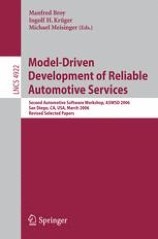
Model-Driven Development of Reliable Automotive Services ; 2nd Automotive Software Workshop, ASWSD 2006, San Diego, CA, USA, March 15-17, 2006, Revised Selected Papers
This book constitutes the thoroughly refereed post-workshop proceedings of the Second Automotive Software Workshop, ASWSD 2006, held in San Diego, CA, USA in March 2006.The 11 revised full papers presented were carefully reviewed and selected from 18 lectures held at the workshop, that brought together experts from industry and academia, working on highly complex, distributed, reactive software systems related to the automotive domain. The papers are organized in topical sections on modeling techniques and infrastructures, model transformations, quality assurance, real-time control, as well as services and components.

Middleware 2008 ; ACM/IFIP/USENIX 9th International Middleware Conference Leuven, Belgium, December 1-5, 2008 Proceedings
This book constitutes the refereed proceedings of the ACM/IFIP/USENIX 9th International Middleware Conference 2008, held in Leuven, Belgium, in December 2008.The 21 revised full papers presented were carefully reviewed and selected from 117 submissions for inclusion in the book. The papers are organized in topical sections on platforms extended to new capabilities, advanced software engineering focusing on specific system properties, system management techniques, as well as components and system algorithms and properties.

Microwave Engineering : Concepts and Fundamentals
Covers everything from wave propagation to reflection and refraction, guided waves, and transmission lines, providing a comprehensive understanding of the underlying principles at the core of microwave engineering. This encyclopedic text not only encompasses nearly all facets of microwave engineering, but also gives all topics—including microwave generation, measurement, and processing—equal emphasis. Packed with illustrations to aid in comprehension. Describes the mathematical theory of waveguides and ferrite devices, devoting an entire chapter to the Smith chart and its applications Discusses different types of microwave components, antennas, tubes, transistors, diodes, and parametric devices Examines various attributes of cavity resonators, semiconductor and RF/microwave devices, and microwave integrated circuits

Medical data processing and analysis
Medical data can be defined as obtaining information from patients (such as signals, images, sounds, chemical components and their concentration, body temperature, respiratory rate, blood pressure, and different treatment measurements) to quantify the patient’s status and disease stage. Computer-aided diagnostic (CAD) systems use classical image processing, computer vision, machine learning, and deep learning methods for image analysis. Using image classification or segmentation algorithms, they find a region of interest (ROI) pointing to a specific location within the given image or an outcome of interest in the form of a label pointing to a diagnosis or prognosis. Computer science, with the evolution of artificial intelligence and machine learning techniques, facilitates the modeling and interpretation of results—from carrying out measurements to experiments and observations.
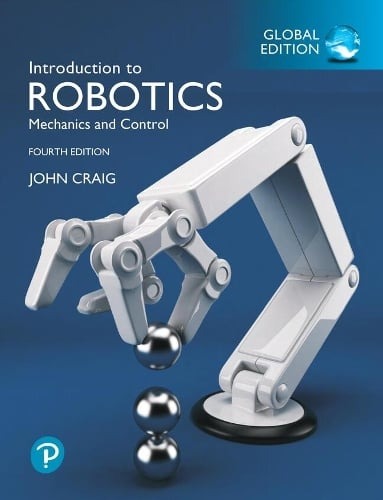
Introduction to robotics : Analysis, control, applications
Offers a guide to the fundamentals of robotics, robot components and subsystems and applications. The author—a noted expert on the topic—covers the mechanics and kinematics of serial and parallel robots, both with the Denavit-Hartenberg approach as well as screw-based mechanics. In addition, the text contains information on microprocessor applications, control systems, vision systems, sensors, and actuators.

Internet of things from hype to reality : The road to digitization
Presents updated material on its core content: an end-to-end IoT architecture that is comprised of devices, network, compute, storage, platform, applications along with management and security components. As with the second edition, it is organized into six main parts: an IoT reference model; fog computing and the drivers; IoT management and applications; smart services in IoT; IoT standards; and case studies. This edition’s features include overhaul of the IoT Protocols (Chapter 5) to include an expanded treatment of low-power wide area networks including narrow band IoT (NB-IoT) protocol, updated IoT platforms and capabilities (Chapter 7) to include comparison of commercially available platforms (e.g. AWS IoT Platform, Google Cloud IoT Platform, Microsoft Azure IoT Platform, and PTC ThinkWorx), updated security (Chapter 8) to include approaches for securing IoT devices with examples of IoT devices used in security attacks and associated solutions including MUD and DICE, and finally new Appendix B to include six IoT project detailed for students.

Intelligent engineering systems and computational cybernetics
A further important component of machine intelligence is a kind of “structural uniformity” giving room and possibility to model arbitrary particular details a priori not specified and unknown.This idea is similar to the ready-to-wear industry, which introduced products, which can be slightly modified later on in contrast to tailor-made creations aiming at maximum accuracy from the beginning. These subsequent corrections can be carried out by machines automatically. This “learning ability” is a key element of machine intelligence.The past decade confirmed that the view of typical components of the present soft computing as fuzzy logic, neural computing.

Integrated formal methods ; 5th International conference, IFM 2005, Eindhoven, The Netherlands, November 29 - December 2, 2005. Proceedings
This book constitutes the refereed proceedings of the 5th International Conference on Integrated Formal Methods, IFM 2005, held in Eindhoven, The Netherlands, in November/December 2005. The 19 revised full papers presented together with 3 invited papers were carefully reviewed and selected from 40 submissions. The papers are organized in topical sections on components, state/event-based verification, system development, applications of B, tool support, non-software domains, semantics, as well as UML and statecharts.

Inside deep learning : Math, algorithms, models
Journey through the theory and practice of modern deep learning, and apply innovative techniques to solve everyday data problems. In Inside Deep Learning, you will learn how to: Implement deep learning with PyTorch Select the right deep learning components Train and evaluate a deep learning model Fine tune deep learning models to maximize performance Understand deep learning terminology Adapt existing PyTorch code to solve new problems Inside Deep Learning is an accessible guide to implementing deep learning with the PyTorch framework. It demystifies complex deep learning concepts and teaches you to understand the vocabulary of deep learning so you can keep pace in a rapidly evolving field. No detail is skipped--you'll dive into math, theory, and practical applications. Everything is clearly explained in plain English.

How Data Quality Affects our Understanding of the Earnings Distribution
This book demonstrates how data quality issues affect all surveys and proposes methods that can be utilised to deal with the observable components of survey error in a statistically sound manner. This book begins by profiling the post-Apartheid period in South Africa's history when the sampling frame and survey methodology for household surveys was undergoing periodic changes due to the changing geopolitical landscape in the country. This book profiles how different components of error had disproportionate magnitudes in different survey years, including coverage error, sampling error, nonresponse error, measurement error, processing error and adjustment error.

High Confidence Software Reuse in Large Systems ; 10th International Conference on Software Reuse, ICSR 2008, Beijing, China, May 25-29, 2008 Proceedings
This book constitutes the refereed proceedings of the 10th International Conference on Software Reuse, ICSR 2008, held in Beijing, China, in May 2008.The 40 revised full papers presented together with 5 workshop summaries and 5 tutorials were carefully reviewed and selected from numerous submissions. The papers are organized in topical sections on architecture and reuse approaches, high confidence and reuse, component selection and reuse repository, product line, domain models and analysis, service oriented environment, components and services, reuse approaches and frameworks, as well as reuse approaches and methods.

High Availability and Disaster Recovery : Concepts, Design, Implementation
Companies and other organizations depend more than ever on the availability of their Information Technology, and most mission critical business processes are IT-based processes. Business continuity is the ability to do business under any circumstances and is an essential requirement modern companies are facing. High availability and disaster recovery are contributions of the IT to fulfill this requirement. And companies will be confronted with such demands to an even greater extent in the future, since their credit ratings will be lower without such precautions. Both, high availability and disaster recovery, are realized by redundant systems. Redundancy can and should be implemented on different abstraction levels: from the hardware, the operating system and middleware components up to the backup computing center in case of a disaster. This book presents requirements, concepts, and realizations of redundant systems on all abstraction levels, and all given examples refer to UNIX and Linux systems.

Hands-On Software Architecture with Java - Learn key architectural techniques and strategies to design efficient and elegant Java applications
Starts with the fundamentals of architecture and takes you through the basic components of application architecture. You'll cover the different types of software architectural patterns and application integration patterns and learn about their most widespread implementation in Java. You'll then explore cloud-native architectures and best practices for enhancing existing applications to better suit a cloud-enabled world. Later, the book highlights some cross-cutting concerns and the importance of monitoring and tracing for planning the evolution of the software, foreseeing predictable maintenance, and troubleshooting. The book concludes with an analysis of the current status of software architectures in Java programming and offers insights into transforming your architecture to reduce technical debt.
