



الصفحة 1
الصفحة 1

Handbook of big data analytics ; Vol.2 : Applications in ICT, security and business analytics
Big Data analytics is the complex process of examining big data to uncover information such as correlations, hidden patterns, trends and user and customer preferences, to allow organizations and businesses to make more informed decisions. These methods and technologies have become ubiquitous in all fields of science, engineering, business and management due to the rise of data-driven models as well as data engineering developments using parallel and distributed computational analytics frameworks, data and algorithm parallelization, and GPGPU programming. However, there remain potential issues that need to be addressed to enable big data processing and analytics in real time.

Facelets Essentials : Guide to JavaServer™ Faces View Definition Framework
Facelets is a templating language developed from the ground up with JavaServer Faces in mind. Created in response to the many concerns involving JavaServer Pages (JSP) when building JavaServer Faces (JSF) views, Facelets steps outside of the JSP specification and provides a highly performant, JSF–centric view technology. Facelets' top properties, templating, reuse, and ease of development, allow it to help making JSF a technology suitable for large–scale projects. One of the first things a developer using Facelets finds is that it immediately leads to a reduction in user interface code.

Data Algorithms with Spark
Apache Spark's speed, ease of use, sophisticated analytics, and multilanguage support makes practical knowledge of this cluster-computing framework a required skill for data engineers and data scientists. With this hands-on guide, anyone looking for an introduction to Spark will learn practical algorithms and examples using PySpark. you will: Learn how to select Spark transformations for optimized solutions Explore powerful transformations and reductions including reduceByKey(), combineByKey(), and mapPartitions() Understand data partitioning for optimized queries Build and apply a model using PySpark design patterns Apply motif-finding algorithms to graph data Analyze graph data by using the GraphFrames API Apply PySpark algorithms to clinical and genomics data Learn how to use and apply feature engineering in ML algorithms Understand and use practical and pragmatic data design patterns
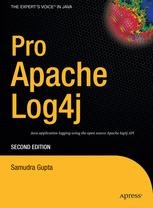
Logging in Java with the JDK 1.4 Logging API and Apache log4j
In development scenarios where things can't be run in a debugger, or when you run the risk of masking the problem, logs are the greatest source of information about running a program. Pro Apache Log4j, Second Edition provides best practices guidelines and comprehensive coverage of the most recent release. Step by step, the book explains core concepts, from basic to advanced. Code samples are in Java and include guidelines for different application-specific needs. You'll also learn how to extend the API to write custom components and best practices for using the feature-rich log4j API. This book concludes with enterprise Java applications using log4j with JSP and J2EE.
Java 17 for Absolute Beginners : Learn the Fundamentals of Java Programming
It teaches Java development in language anyone can understand, giving you the best possible start.
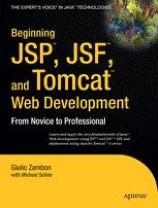
Beginning JSP, JSF, and Tomcat Web Development : From novice to professional
Beginning JSP™, JSF™, and Tomcat™ Web Development is all you need to develop dynamic web applications using JSP, connect to databases with JSF, and put them into action using the world’s most popular open source Java web server, Apache Tomcat.

Beginning Apache Struts: From novice to professional
Beginning Apache Struts will provide you a working knowledge of Apache Struts 1.2. This book is ideal for you Java programmers who have some JSP familiarity, but little or no prior experience with Servlet technology. Organized in a condensed tutorial and lab format, the material in this book has been tested in real classroom environments. It takes a step-by-step, hands-on approach to teaching you Struts. The book even previews the next generation of Struts, the Apache Shale. The overall result is that you can quickly apply Struts to your work settings with confidence.
