



الصفحة 1
الصفحة 1

ICCS 2007 ; Proceedings of the 15th International Workshops on Conceptual Structures
The 15th International Conference on Conceptual Structures (ICCS 2007) is the latest in a series of annual conferences that have been held in Europe, Australia, and North America since 1993. Some of the world's best minds in information technology, arts, humanities and social science converged to explore novel ways that information and communications technology (ICT) can augment human intelligence.
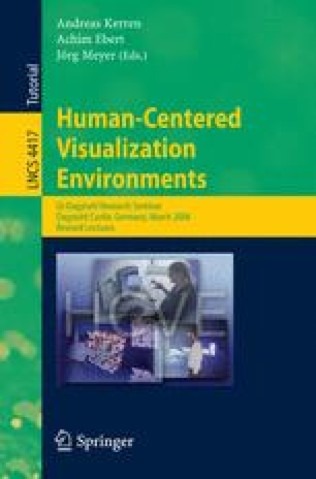
Human-centered visualization environments : GI-Dagstuhl Research Seminar, Dagstuhl Castle, Germany, March 5-8, 2006, Revised Papers
This tutorial book features an augmented selection of the material presented at the GI-Dagstuhl Research Seminar on Human-Centered Visualization Environments, HCVE 2006, held in Dagstuhl Castle, Germany in March 2006. It presents eight tutorial lectures that are the thoroughly cross-reviewed and revised versions of the summaries and findings presented and discussed at the seminar.

Frontiers in Algorithmics ; 2nd Annual International Workshop, FAW 2008, Changsha, China, June 19-21, 2008, Proceeedings
This book constitutes the refereed proceedings of the Second International Frontiers of Algorithmics Workshop, FAW 2008, held in Changsha, China, in June 2008.The 33 revised full papers presented together with the abstracts of 3 invited talks were carefully reviewed and selected from 80 submissions. The papers were selected for 9 special focus tracks in the areas of biomedical informatics, discrete structures, geometric information processing and communication, games and incentive analysis.

Frontiers in Algorithmics ; 1st Annual International Workshop, FAW 2007, Lanzhou, China, August 1-3, 2007, Proceedings
This book constitutes the refereed proceedings of the First Annual International Frontiers of Algorithmics Workshop, FAW 2007, held in Lanzhou, China in August 2007. The 33 revised full papers presented were carefully reviewed and selected from 141 submissions.
Evolutionary computation, machine learning and data mining in bioinformatics ; 6th European Conference, EvoBIO 2008, Naples, Italy, March 26-28, 2008. Proceedings
The feld of bioinformatics has two main objectives: the creation and main- nance of biological databases, and the discovery of knowledge from life sciences data in order to unravel the mysteries of biological function, leading to new drugs and therapies for human disease. Life sciences data come in the form of biological sequences, structures, pathways, or literature. One major aspect of discovering biological knowledge is to search, predict, or model specifc infortioninagivendatasetinorderto generate new in teresting knowledge.Computer science methods such as evolutionary computation, machine learning, and data mining all have a great deal to ofer the feld of bioinformatics.

Evolutionary computation, machine learning and data mining in bioinformatics ; 5th European Conference, EvoBIO 2007, Valencia, Spain, April 11-13, 2007, Proceedings
This book Covers brings together experts in computer science with experts in bioinformatics and the biological sciences. It presents contributions on fundamental and theoretical issues along with papers dealing with different applications areas.

Emerging Technologies in Knowledge Discovery and Data Mining ; PAKDD 2007 International Workshops, Nanjing, China, May 22-25, 2007, Revised Selected Papers
The objective of this volume is to offer the excellent presentations to the public, and to promote the study exchange among researchers worldwide.The first part of this volume contains industrial track. This track was organized to attract papers on new technology trends and real-world solutions in different industry sectors. The succeeding chapters include Data Mining for Biomedical Applications aimed at attracting top researchers, practitioners and students from around the world to discuss data mining applications in the field of bioinformatics

Data Mining in Bioinformatics
8. 1. 1 Protein Subcellular Location The life sciences have entered the post-genome era where the focus of biological research has shifted from genome sequences to protein functionality. Withwhole-genomedraftsofmouseandhumaninhand,scientistsareputting more and more e?ort into obtaining information about the entire proteome in a given cell type. The properties of a protein include its amino acid sequences, its expression levels under various developmental stages and in di?erent tissues, its3Dstructure and activesites,its functionalandstructural binding partners, and its subcellular location. Protein subcellular location is important for understanding protein function inside the cell. For example, the observation that the product of a gene is localized in mitochondria will support the hypothesis that this protein or gene is involved in energy metabolism. Proteins localized in the cytoskeleton are probably involved in intracellular tra?cking and support.

Data mining and knowledge management ; Chinese academy of sciences symposium CASDMKD 2004, Beijing, China, July 12-14, 2004, Revised Paper
Knowledge management for enterprise: These papers address various issues related to the application of knowledge management in corporations using various techniques. A particular emphasis here is on coordination and cooperation. • Risk management: Better knowledge management also requires more advanced techniques for risk management, to identify, control, and minimize the impact of uncertain events, as shown in these papers, using fuzzy set theory and other approaches for better risk management. • Integration of data mining and knowledge management: As indicated earlier, the integration of these two research fields is still in the early stage. Nevertheless, as shown in the papers selected in this volume, researchers have endearored to integrate data mining methods such as neural networks with various aspects related to knowledge management,

Data Mining and Bioinformatics ; 1st International Workshop, VDMB 2006, Seoul, Korea, September 11, 2006, Revised Selected Papers
This volume contains the papers presented at the inaugural workshop on Data Mining and Bioinformatics at the 32nd International Conference on Very Large Data Bases (VLDB). The purpose of this workshop was to begin bringing - gether researchersfrom database, data mining, and bioinformatics areas to help leverage respective successes in each to the others.

Data integration in the life sciences ; Vol. 3615 ; 2nd international workshop, DILS 2005, San Diego, CA, USA, July 20-22, 2005, Proceedings
Constitutes the refereed proceedings of the Second International Workshop on Data Integration in the Life Sciences, DILS 2005, held in San Diego, CA, USA in July 2005. The papers are organized in sections on user applications, ontologies, data integration, and others, and address the issues in data integration from the life science point of view.
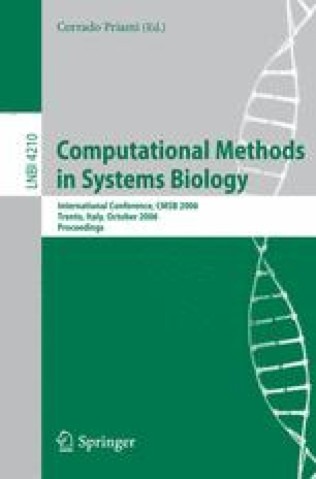
Computational methods in systems biology ; Vol. 4210 ; International Conference, CMSB 2006, Trento, Italy, October 18-19, 2006, Proceedings
This book constitutes the refereed proceedings of the International Conference on Computational Methods in Systems Biology, CMSB 2006, held in Trento, Italy, in October 2006. The papers present a variety of techniques from computer sciences, such as language design, concurrency theory, software engineering, and formal methods.

Computational methods in systems biology ; Vol. 3082 ; International Conference CMSB 2004, Paris, France, May 26-28, 2004, Revised Selected Papers
present CMBSlib, a library of Computational Models of Biological Systems. It is aimed at providing a list of test problems for formalisms, modeling issues and implementation issues in systems biology. The main motivation for CMBSlib is to stimulate research on the formal modeling of biological systems, by facilitating the exchange of formal models between researchers, and by providing a forum of comparison and validation of not only models, but also modeling formalisms and implementations. Unlike a standardization effort, CMBSlib welcomes the most exotic formalisms and models provided they attack the modeling of well documented biological systems. Models of biological systems written in any referenced formalism can be submitted to CMBSlib. No special format or standard is required. We discuss the advantages of and problems encountered in building such a library, give an example of typical entry in the library, and most of all we invite the community to become active contributors to CMBSlib.
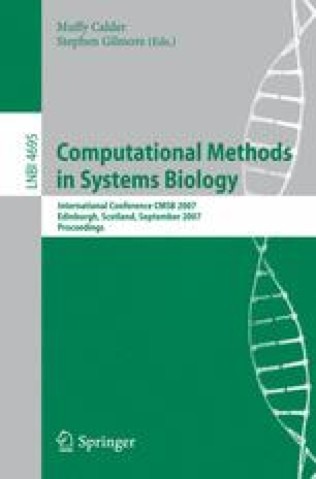
Computational methods in systems biology ; International Conference CMSB 2007, Edinburgh, Scotland, September 20-21, 2007, Proceedings
This book presented present a variety of techniques from computer science, such as language design, concurrency theory, software engineering, and formal methods, for biologists, physicists, and mathematicians interested in the systems-level understanding of cellular processes.

Combinatorics, Algorithms, Probabilistic and Experimental Methodologies ; 1st International Symposium, ESCAPE 2007, Hangzhou, China, April 7-9, 2007, Revised Selected Papers
This book address practical large data processing problems with different, and eventually converging, methodologies from major important disciplines such as computer science, combinatorics, and statistics. The symposium provides an interdisciplinary forum for researchers across their discipline boundaries to exchange their approaches, to search for ideas, methodologies, and tool boxes, to find better, faster and more accurate solutions thus fostering innovative ideas as well as to develop research agenda of common interest.

CMOS Biotechnology
"CMOS Biotechnology reviews the recent research and developments joining CMOS technology with biology. Written by leading researchers these chapters delve into four areas including: Microfluidics for electrical engineers / CMOS Actuators CMOS Electrical Sensors CMOS Optical Sensors Bioanalytical instruments have been miniaturized on ICs to study various biophenomena or to actuate biosystems. These bio-lab-on-IC systems utilize the IC to facilitate faster, repeatable, and standardized biological experiments at low cost with a small volume of biological sample. CMOS Biotechnology will interest electrical engineers, bioengineers, biophysicists as well as researchers in MEMS, bioMEMS, microelectronics, microfluidics, and circuits and systems."
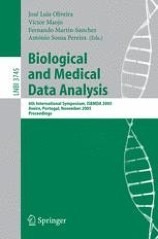
Biological and medical data analysis ; Vol. 3745 ; 6th International symposium, ISBMDA 2005, Aveiro, Portugal, November 10-11, 2005, Proceedings
The 6th International Symposium on Biological and Medical Data Analysisaimed to become a place where researchersinvolved in these diverse but increas-ingly complementary areas could meet topresent and discuss their scientificresults.The papers in this volume discuss issues from statistical models to archi-tectures and applications to bioinformatics and biomedicine. They cover bothpractical experience and novel research ideas and concepts.

Bio-inspired computing and communication ; 1st Workshop on Bio-inspired design of networks, BIOWIRE 2007 Cambridge, UK, April 2-5, 2007 Revised Selected Papers
The book constitutes the thoroughly refereed post-workshop proceedings of the First Workshop on Bio-Inspired Design of Networks, BIOWIRE 2007, held in Cambridge, UK, in April 2007.
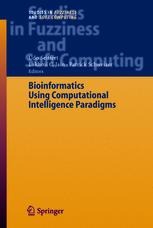
Bioinformatics Using Computational Intelligence Paradigms
Bioinformatics as well as Computational Intelligence are undoubtedly remarkably fast growing fields of research and real-world applications with enormous potential for current and future developments. "Bioinformatics using Computational Intelligence Paradigms" contains recent theoretical approaches and guiding applications of biologically inspired information processing systems(Computational Intelligence) against the background of bioinformatics. This carefully edited monograph combines the latest results of Bioinformatics and Computational Intelligence and offers a promising cross-fertilisation and interdisciplinary work between these growing fields.
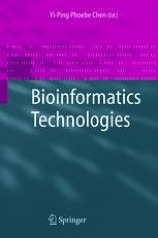
Bioinformatics technologies
Solving modern biological problems requires advanced computational methods. Bioinformatics evolved from the active interaction of two fast-developing disciplines, biology and information technology. The central issue of this emerging field is the transformation of often distributed and unstructured biological data into meaningful information. This book describes the application of well-established concepts and techniques from areas like data mining, machine learning, database technologies, and visualization techniques to problems like protein data analysis, genome analysis and sequence databases. Chen has collected contributions from leading researchers in each area. The chapters can be read independently, as each offers a complete overview of its specific area, or, combined, this monograph is a comprehensive treatment that will appeal to students, researchers, and R&D professionals in industry who need a state-of-the-art introduction into this challenging and exciting young field.
