



الصفحة 1
الصفحة 1
Ontology Alignment : Bridging the Semantic Gap
Ontology Alignment: Bridging the Semantic Gap introduces novel methods and approaches for semantic integration. In addition to developing new methods for ontology alignment, the author provides extensive explanations of up-to-date case studies. The topic of this book, coupled with the application-focused methodology, will appeal to professionals from a number of different domains.
Object-Oriented Technology ; ECOOP 2006 Workshop Reader ; ECOOP 2006 Workshops, Nantes, France, July 3-7, 2006, Final Reports
ECOOP Workshop Reader, a c- pendium of workshop reports pertaining to the ECOOP 2006 conference, held in Nantes during July 3–7, 2006. ECOOP 2006 hosted 19 high-quality research workshops covering a large spectrum of hot research topics. These workshops were chosen through a tight peer review process following a speci?c call for proposals.

Next generation information technologies and systems ; 6th International Conference, NGITS 2006, Kebbutz Sehfayim, Israel, July 4-6, 2006, Proceedings
The selected papers may be classified roughly in ten broad areas: ? Information systems development ? Distributed systems ? Semi-structured data ? Data mining and agent-oriented computing ? User-oriented design ? Frameworks, models and taxonomies ? Simulation and incremental computing ? Information integration ? Security and privacy ? Next-generation applications This event is the culmination of efforts by many talented and dedicated individuals.

Multimedia Content Analysis and Mining ; International Workshop, MCAM 2007, Weihai, China, June 30-July 1, 2007, Proceedings
The workshop gives a snapshot of the current wor- wide research in multimedia analysis. Through recent advances in computing, networking, and data storage, multimedia will create new interesting technical possibilities in a wide range of ?elds, such as entertainment, commerce, science, medicine, and public safety.

Model Driven Engineering Languages and Systems ; Vol. 4199 ; 9th International Conference, MoDELS 2006, Genova, Italy, October 1-6, 2006, Proceedings
This book constitutes the refereed proceedings of the 9th International Conference on Model Driven Engineering Languages and Systems (formerly the UML series of conferences), MoDELS 2006, held in Genova, Italy, in October 2006. The 51 revised full papers and 2 invited papers presented were carefully reviewed and selected from 178 initial submissions. The papers are organized in topical sections on evaluating UML, MDA in software development, concrete syntax, applying UML to interaction and coordination, aspects, model integration, formal semantics of UML, security, model transformation tools and implementation, analyzing dynamic models, specifying transformations, MOF, bridging models, risk, trust and dependability, tool environments, OCL, roundtrip engineering, real time and embedded systems, as well as workshops, tutorials and panels.

Middleware 2006 ; ACM/IFIP/USENIX 7th International Middleware Conference, Melbourne, Australia, November 27 - December 1, 2006, Proceedings
This book constitutes the refereed proceedings of the ACM/IFIP/USENIX 7th International Middleware Conference 2006, held in Melbourne, Australia, in November/December 2006. The 21 revised full papers presented were carefully reviewed and selected from 122 submissions. The papers are organized in topical sections on performance, composition, management, publish/subscribe technology, databases, mobile and ubiquitous computing, security, and data mining techniques.

Intrusion Detection Systems
Sٍheds new light on defense alert systems against computer and network intrusions. It also covers integrating intrusion alerts within security policy framework for intrusion response, related case studies and much more. This volume is presented in an easy-to-follow style while including a rigorous treatment of the issues, solutions, and technologies tied to the field.

Information assurance : Security in the information environment
This updated edition of Information Assurance: Security in the Information Environment was written to help IT managers and assets protection professionals to assure the protection and availability of vital digital information and related information systems assets. This Second Edition of Information Assurance includes major updates, including three new chapters • The Role of Policy in Information Assurance • Incident Management and Response • Security Standards Bridging the gap between information security, information systems security and information warfare, this edition re-examines and explains why organisations need to take information assurance seriously, and discusses the business, legal, and technical knowledge needed to secure these vital government and business assets.

Human-centered software engineering - Integrating usability in the software development lifecycle
Human-CenteredSoftwareEngineering: BridgingHCI,UsabilityandSoftwareEngineering From its beginning in the 1980’s, the ?eld of human-computer interaction (HCI) has beende?nedasamultidisciplinaryarena. BythisImeanthattherehas beenanexplicit recognition that distinct skills and perspectives are required to make the whole effort of designing usable computer systems work well. Thus people with backgrounds in Computer Science (CS) and Software Engineering (SE) joined with people with ba- grounds in various behavioral science disciplines (e. g. , cognitive and social psych- ogy, anthropology) in an effort where all perspectives were seen as essential to creating usable systems. But while the ?eld of HCI brings individuals with many background disciplines together to discuss a common goal - the development of useful, usable, satisfying systems - the form of the collaboration remains unclear.

Fashion forge
"Fashion forge" revolutionizes clothing shopping with a cutting-edge mobile application. This AI-powered platform empowers users to describe their dream garment and visualize it instantly, bridging the gap between imagination and reality for fashion-forward users and designers. A recommendation system tailors clothing suggestions based on user preferences, while stores leverage a dedicated social platform for effective marketing. "Fashion Forge" fosters a connected fashion community, empowering users, designers, and stores alike.

Distributed computing in sensor systems ; 3rd IEEE International Conference, DCOSS 2007, Santa Fe, NM, USA, June 18-20, 2007, Proceedings
The book covering the areas of algorithms, applications, and systems, thus bridging the gap between theory and practice and between the broader field of distributed computing and the specific issues arising in sensor networks and related systems.

Distributed and Parallel Systems : In Focus : Desktop Grid Computing
In this book contributors investigate parallel and distributed techniques, algorithms, models and applications; present innovative software tools, environments and middleware; focus on various aspects of grid computing; and introduce novel methods for development, deployment, testing and evaluation.
Dependable software engineering : Theories, tools, and applications ; 6th International Symposium, SETTA 2020, Guangzhou, China, November 24–27, 2020, Proceedings
This book constitutes the proceedings of the 6th International Symposium on Dependable Software Engineering, SETTA 2020, held in Guangzhou, China, in November 2020. The 10 full and 1 short paper included in this volume were carefully reviewed and selected from 20 submissions. They deal with latest research results and ideas on bridging the gap between formal methods and software engineering.
Cognitive engineering : A distributed approach to machine intelligence
Cognitive Engineering: A Distributed Approach to Machine Intelligence explores the design issues of intelligent engineering systems. Beginning with the foundations of psychological modeling of the human mind, the main emphasis is given to parallel and distributed realization of intelligent models for application in reasoning, learning, planning and multi-agent co-ordination problems. The last two chapters provide case studies on human-mood detection and control, and behavioral co-operation of mobile robots. This is the first comprehensive text of its kind, bridging the gap between Cognitive Science and Cognitive Systems Engineering. Each chapter includes plenty of numerical examples and exercises with sufficient hints, so that the reader can solve the exercises on their own. Computer simulations are also included in most chapters to give a clear idea about the application of the algorithms undertaken in the book. In addition, mathematical analysis on convergence and stability of the neuro-fuzzy models will enable the reader to pursue their research career in cognitive engineering.

Machine Ethics : From Machine Morals to the Machinery of Morality
Offers the first systematic guide to machine ethics, bridging between computer science, social sciences and philosophy. Based on a dialogue between an AI scientist and a novelist philosopher, the book discusses important findings on which moral values machines can be taught and how. In turn, it investigates what kind of artificial intelligence (AI) people do actually want.

Lean Business Systems and Beyond ; 1st IFIP TC 5 Advanced Production Management Systems Conference (APMS’2006), Wroclaw, Poland, September 18-20, 2006
Includes : foundations of computer science; software theory and practice; education; computer applications in technology; communication systems; systems modeling and optimization; information systems; computers and society; computer systems technology; security and protection in information processing systems; artificial intelligence; and human-computer interaction. Proceedings and post-proceedings of referred international conferences in computer science and interdisciplinary fields are featured.
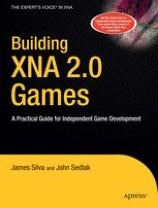
Building XNA 2.0 Games : A Practical Guide for Independent Game Development
Building XNA 2.0 Games: A Practical Guide for Independent Game Development is written by James Silva, who recently won the prestigious Microsoft Dream Build Play game competition with his award–winning game, The Dishwasher: Dead Samurai. Building XNA 2.0 Games: A Practical Guide for Independent Game Development is an in–depth and exclusive look into the entire XNA game development process and includes the creation of a software game masterpiece. James Silva guides you through the process he took to build his award–winning title, from concept to reality. He reveals tips and techniques for creating a polished, high–quality game with very few resources, while bridging the gap between coding and art.
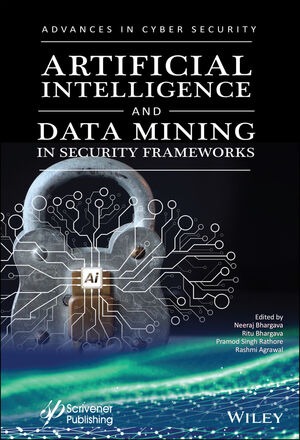
Artificial intelligence and data mining approaches in security frameworks
Offers solutions to the problems of security, outlining the concepts behind allowing computers to learn from experience and understand the world in terms of a hierarchy of concepts, with each concept defined through its relation to simpler concepts. provides state of the art approaches of artificial intelligence and data mining in these areas. It includes areas of detection, prediction, as well as future framework identification, development, building service systems and analytical aspects. In all these topics, applications of AI and data mining, such as artificial neural networks, fuzzy logic, genetic algorithm and hybrid mechanisms, are explained and explored. This book is aimed at the modeling and performance prediction of efficient security framework systems, bringing to light a new dimension in the theory and practice. This groundbreaking new volume presents these topics and trends, bridging the research gap on AI and data mining to enable wide-scale implementation. Whether for the veteran engineer or the student, this is a must-have for any library. This groundbreaking new volume: Clarifies the understanding of certain key mechanisms of technology helpful in the use of artificial intelligence and data mining in security frameworks ; Covers practical approaches to the problems engineers face in working in this field, focusing on the applications used every day ; Contains numerous examples, offering critical solutions to engineers and scientists ; Presents these new applications of AI and data mining that are of prime importance to human civilization as a whole

Arakelov Geometry and Diophantine Applications
Bridging the gap between novice and expert, the aim of this book is to present in a self-contained way a number of striking examples of current diophantine problems to which Arakelov geometry has been or may be applied. Arakelov geometry can be seen as a link between algebraic geometry and diophantine geometry.The first chapters provide some background and introduction to the subject. These are followed by a presentation of different applications to arithmetic geometry. The final part describes the recent application of Arakelov geometry to Shimura varieties and the proof of an averaged version of Colmez's conjecture. This book thus blends initiation to fundamental tools of Arakelov geometry with original material corresponding to current research.
Advances in Rule Interchange and Applications ; International Symposium, RuleML 2007, Orlando, Florida, October 25-26, 2007, Proceedings
The goal of RuleM is to develop an open, general, XML-based family of rule languages as intermediaries between various ‘specialized’ rule vendors, applications, industrial and academic research groups, as well as standardization efforts such as OMG’s PRR or W3C’s RIF. A general advantage of using declarative rules is that they can be easily represented in a machine-readable and platform-independent manner, often governed by an XML schema. This fits well into today’s distributed, heterogeneous Web-based system environments. Rules represented in standardized Web formats can be discovered, interchanged and invoked at runtime within and across Web systems, and can be interpreted and executed on any platform.
