



الصفحة 9
الصفحة 9
Inductive logic programming ; 18th International Conference, ILP 2008 Prague, Czech Republic, September 10-12, 2008 Proceedings
This book constitutes the refereed proceedings of the 18th International Conference on Inductive Logic Programming, ILP 2008, held in Prague, Czech Republic, in September 2008.The 20 revised full papers presented together with the abstracts of 5 invited lectures were carefully reviewed and selected during two rounds of reviewing and improvement from 46 initial submissions. All current topics in inductive logic programming are covered, ranging from theoretical and methodological issues to advanced applications. The papers present original results in the first-order logic representation framework, explore novel logic induction frameworks, and address also new areas such as statistical relational learning, graph mining, or the semantic Web.

Inductive logic programming ; 17th International Conference, ILP 2007, Corvallis, OR, USA, June 19-21, 2007, Revised Selected Papers
The 18th International Conference on Inductive Logic Programming was held in Prague, September 10–12, 2008. ILP returned to Prague after 11 years, and it is tempting to look at how the topics of interest have evolved during that time. The ILP community clearly continues to cherish its beloved ?rst-order logic representation framework. This is legitimate, as the work presented at ILP 2008 demonstrated that there is still room for both extending established ILP approaches (such as inverse entailment) and exploring novel logic induction frameworks (such as brave induction). Besides the topics lending ILP research its unique focus.
Inductive logic programming ; 16th International Conference, ILP 2006, Santiago de Compostela, Spain, August 24-27, 2006, Revised Selected Papers
This book constitutes the thoroughly refereed post-proceedings of the 16th International Conference on Inductive Logic Programming, ILP 2006, held in Santiago de Compostela, Spain, in August 2006. The papers address all current topics in inductive logic programming, ranging from theoretical and methodological issues to advanced applications.
Inductive logic programming ; 15th International Conference, ILP 2005, Bonn, Germany, August 10-13, 2005, Proceedings
“Change is inevitable.” Embracing this quote we have tried to carefully exp- iment with the format of this conference, the 15th International Conference on Inductive Logic Programming, hopefully making it even better than it already was. But it will be up to you, the inquisitive reader of this book, to judge our success. The major changes comprised broadening the scope of the conference to include more diverse forms of non-propositional learning, to once again have tutorials on exciting new areas, and, for the ?rst time, to also have a discovery challenge as a platform for collaborative work. This year the conference was co-located with ICML 2005, the 22nd Inter- tional Conference on Machine Learning, and also in close proximity to IJCAI 2005, the 19th International Joint Conference on Arti?cial Intelligence. - location can be tricky, but we greatly bene?ted from the local support provided by Codrina Lauth, Michael May, and others. We were also able to invite all ILP and ICML participants to shared events including a poster session, an invited talk, and a tutorial about the exciting new area of “statistical relational lea- ing”. Two more invited talks were exclusively given to ILP participants and were presented as a kind of stock-taking—?ttingly so for the 15th event in a series—but also tried to provide a recipe for future endeavours.

IMPROVE - Innovative modelling approaches for production systems to raise validatable efficiency : Intelligent methods for the factory of the future
This open access work presents selected results from the European research and innovation project IMPROVE which yielded novel data-based solutions to enhance machine reliability and efficiency in the fields of simulation and optimization, condition monitoring, alarm management, and quality prediction.
Implementing machine learning for finance : A systematic approach to predictive risk and performance analysis for investment portfolios
Introduces pattern recognition and future price forecasting that exerts effects on time series analysis models, such as the Autoregressive Integrated Moving Average (ARIMA) model, Seasonal ARIMA (SARIMA) model, and Additive model, and it covers the Least Squares model and the Long Short-Term Memory (LSTM) model. It presents hidden pattern recognition and market regime prediction applying the Gaussian Hidden Markov Model. The book covers the practical application of the K-Means model in stock clustering. It establishes the practical application of the Variance-Covariance method and Simulation method (using Monte Carlo Simulation) for value at risk estimation. It also includes market direction classification using both the Logistic classifier and the Multilayer Perceptron classifier. Finally, the book presents performance and risk analysis for investment portfolios. You will: Understand the fundamentals of the financial market and algorithmic trading, as well as supervised and unsupervised learning models that are appropriate for systematic investment portfolio management / Know the concepts of feature engineering, data visualization, and hyperparameter optimization / Design, build, and test supervised and unsupervised ML and DL models / Discover seasonality, trends, and market regimes, simulating a change in the market and investment strategy problems and predicting market direction and prices / Structure and optimize an investment portfolio with preeminent asset classes and measure the / underlying risk

Impact of artificial intelligence on organizational transformation
Covers the areas like artificial intelligence & its impact on professions, as well as machine learning algorithms and technologies. The context of applications of AI in business process innovation primarily includes new business models, AI readiness and maturity at the organizational, technological, financial, and cultural levels. The book has extensive details on machine learning and the applications such as robotics, blockchain, Internet of Things. Also discussed are the influence of AI on financial strategies and policies, human skills & values, procurement innovation, production innovation, AI in marketing & sales platforms.

Image and video processing and recognition based on artificial intelligence (Vol. II)
Focuses on challenging issues in the field of AI-based image and video processing and recognition, including the topics of AI-based image processing, understanding, recognition, compression, and reconstruction; AI-based video processing, understanding, recognition, compression, and reconstruction; computer vision based on AI; AI-based biometrics; AI-based object detection and tracking; approaches that combine AI techniques and conventional methods for image and video processing and recognition; explainable AI (XAI) for image and video processing and recognition; generative adversarial network (GAN)-based image and video processing and recognition; and approaches that combine AI techniques and blockchain methods for image and video processing and recognition.

Image and Signal Processing ; 3rd International Conference, ICISP 2008. Cherbourg-Octeville, France, July 1 - 3, 2008. Proceedings
This book constitutes the refereed proceedings of the Third International Conference on Image and Signal Processing, ICISP 2008, held in Cherbourg-Octeville, France, in July 2008.The 48 revised full papers and 22 revised poster papers presented were carefully reviewed and selected from 193 submissions. The papers are organized in topical sections on image filtering, image segmentation, computer vision, feature extraction, pattern recognition, graph-based representations, motion detection and estimation, new interfaces, document processing, and signal processing.

Image Analysis and Recognition ; 17th International Conference, ICIAR 2020, Póvoa de Varzim, Portugal, June 24–26, 2020, Proceedings, Part II
This two-volume set LNCS 12131 and LNCS 12132 constitutes the refereed proceedings of the 17th International Conference on Image Analysis and Recognition, ICIAR 2020, held in Póvoa de Varzim, Portugal, in June 2020. The 54 full papers presented together with 15 short papers were carefully reviewed and selected from 123 submissions. The papers are organized in the following topical sections: image processing and analysis; video analysis; computer vision; 3D computer vision; machine learning; medical image and analysis; analysis of histopathology images; diagnosis and screening of ophthalmic diseases; and grand challenge on automatic lung cancer patient management.

Image Analysis and Recognition ; 17th International Conference, ICIAR 2020, Póvoa de Varzim, Portugal, June 24–26, 2020, Proceedings, Part I
This two-volume set LNCS 12131 and LNCS 12132 constitutes the refereed proceedings of the 17th International Conference on Image Analysis and Recognition, ICIAR 2020, held in Póvoa de Varzim, Portugal, in June 2020. The 54 full papers presented together with 15 short papers were carefully reviewed and selected from 123 submissions. The papers are organized in the following topical sections: image processing and analysis; video analysis; computer vision; 3D computer vision; machine learning; medical image and analysis; analysis of histopathology images; diagnosis and screening of ophthalmic diseases; and grand challenge on automatic lung cancer patient management.

Identification of nonlinear systems using neural networks and polynomial models : A block-oriented approach
The book gives a comparative study of their gradient approximation accuracy, computational complexity, and convergence rates and furthermore presents some new and original methods concerning the model parameter adjusting with gradient-based techniques. "Identification of Nonlinear Systems Using Neural Networks and Polynomal Models".

ICCS 2007 ; Proceedings of the 15th International Workshops on Conceptual Structures
The 15th International Conference on Conceptual Structures (ICCS 2007) is the latest in a series of annual conferences that have been held in Europe, Australia, and North America since 1993. Some of the world's best minds in information technology, arts, humanities and social science converged to explore novel ways that information and communications technology (ICT) can augment human intelligence.

Hyperparameter tuning for machine and deep learning with R : A practical guide
Equips readers with the ability to achieve better results with significantly less time, costs, effort and resources using the methods described here. The case studies presented in this book can be run on a regular desktop or notebook computer. The content focuses on the hyperparameter tuning of ML and DL algorithms, and is divided into two main parts: theory (Part I) and application (Part II). Essential topics covered include: a survey of important model parameters; four parameter tuning studies and one extensive global parameter tuning study; statistical analysis of the performance of ML and DL methods based on severity; and a new, consensus-ranking-based way to aggregate and analyze results from multiple algorithms.

Hybrid metaheuristics ; 4th International Workshop,HM 2007, Dortmund, Germany, October 8-9, 2007, Proceedings
This book constitutes the refereed proceedings of the 4th International Workshop on Hybrid Metaheuristics, HM 2007, held in Dortmund, Germany. The 14 revised full papers discuss specific aspects of hybridization of metaheuristics, hybrid metaheuristics design, development and testing.

Hybrid Learning and Education ; 1st International Conference, ICHL 2008 Hong Kong, China, August 13-15, 2008 Proceedings
This book constitutes the refereed proceedings of the First International Conference on Hybrid Learning, ICHL 2008, held in Hong Kong, China, in August 2008.The 38 revised full papers presented together with 3 keynote lectures were carefully reviewed and selected from 142 submissions. The papers are organized in topical sections on hybrid education, model and pedagogies for hybrid learning, trends, pervasive learning, mobile and ubiquitous learning, hybrid learning experiences, hybrid learning systems, technologies, as well as contextual attitude and cultural effects.
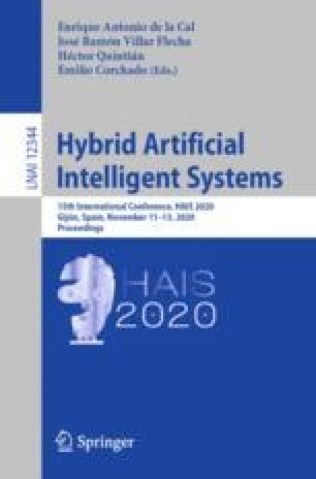
Hybrid Artificial Intelligent Systems ; 15th International Conference, HAIS 2020, Gijón, Spain, November 11-13, 2020, Proceedings
This book constitutes the refereed proceedings of the 15th International Conference on Hybrid Artificial Intelligent Systems, HAIS 2020, held in Gijón, Spain, in November 2020. The 65 regular papers presented in this book were carefully reviewed and selected from 106 submissions. The papers are grouped into these topics: advanced data processing and visualization techniques; bio-inspired models and optimization; learning algorithms; data mining, knowledge discovery and big data; and hybrid artificial intelligence applications.

Human-computer interaction – INTERACT 2007 ; 11th IFIP TC 13 International Conference, Rio de Janeiro, Brazil, September 10-14, 2007, Proceedings, Part II
This book is part of a two-volume work that constitutes the refereed proceedings of the 11th IFIP TC13 International Conference on Human-Computer Interaction, INTERACT 2007, held in Rio de Janeiro, Brazil in September 2007. It covers tangible user interfaces and interaction; as well as software engineering and HCI.

Human-computer interaction - HCI : Applications and services ; 12th International Conference, HCI International 2007, Beijing, China, July 22-27, 2007, Proceedings, Part IV
The 12th International Conference on Human-Computer Interaction, HCI Inter- tional 2007, was held in Beijing, P.R. This volume, edited by Julie A. Jacko, contains papers in the thematic area of - man-Computer Interaction, addressing the following major topics: • Business Applications • Learning and Entertainment • Health Applications • Work and Collaboration Support • Web-Based and Mobile Applications and Services • Advanced Design and Development Support.

Human motion : Understanding, modeling, capture and animation ; 2nd Workshop, HumanMotion 2007, Rio de Janeiro, Brazil, October 20, 2007, Proceedings
This LNCS volume contains the papers presented at the second Workshop on Human Motion Understanding, Modeling, Capture and Animation. The accepted papers re?ect the state of the art in the ?eld and cover various topicsrelatedto humanmotiontrackingandanalysis.Thepapersinthisvolume have been classi?ed into three categories based on the topics they cover: human motion capture and pose estimation, body and limb tracking and segmentation, and activity recognition.
