



الصفحة 9
الصفحة 9
Middleware 2008 ; ACM/IFIP/USENIX 9th International Middleware Conference Leuven, Belgium, December 1-5, 2008 Proceedings
This book constitutes the refereed proceedings of the ACM/IFIP/USENIX 9th International Middleware Conference 2008, held in Leuven, Belgium, in December 2008.The 21 revised full papers presented were carefully reviewed and selected from 117 submissions for inclusion in the book. The papers are organized in topical sections on platforms extended to new capabilities, advanced software engineering focusing on specific system properties, system management techniques, as well as components and system algorithms and properties.
Middleware 2007 ; ACM/IFIP/USENIX 8th International Middleware Conference, Newport Beach, CA, USA, November 26-30, 2007, Proceedings
This book constitutes the refereed proceedings of the ACM/IFIP/USENIX 8th International Middleware Conference 2007, held in Newport Beach, CA, USA, in November 2007.

Middleware 2006 ; ACM/IFIP/USENIX 7th International Middleware Conference, Melbourne, Australia, November 27 - December 1, 2006, Proceedings
This book constitutes the refereed proceedings of the ACM/IFIP/USENIX 7th International Middleware Conference 2006, held in Melbourne, Australia, in November/December 2006. The 21 revised full papers presented were carefully reviewed and selected from 122 submissions. The papers are organized in topical sections on performance, composition, management, publish/subscribe technology, databases, mobile and ubiquitous computing, security, and data mining techniques.
Microsoft SharePoint : Building Office 2007 Solutions in VB 2005
Microsoft SharePoint: Building Office 2007 Solutions in VB 2005 is the third edition of Scot Hillier's market-leading SharePoint book. The new version includes extensive updates from the previous editions, with a complete focus on SharePoint 2007 and its integration with the 2007 Microsoft Office System. This edition also features new approaches for using SharePoint to improve business efficiency, plus new workflow solutions for SharePoint and BizTalk, as well as a brand new chapter on building a SharePoint solution from start to finish.

Microsoft SharePoint : Building Office 2007 Solutions in C# 2005
Microsoft SharePoint: Building Office 2007 Solutions in C# 2005 is the third edition of Scot Hilliers market-leading SharePoint book. This book features extensive updates to the previous edition, with a complete focus on SharePoint 2007 and its integration with the 2007 Microsoft Office System. It also features new approaches for using SharePoint to improve business efficiency as well as new workflow solutions for SharePoint and BizTalk, plus a new chapter on building a SharePoint solution from start to finish.

Microsoft SharePoint : Building Office 2003 Solutions
This detailed second edition is Scot Hilliers follow-up to his market-leading SharePoint book. This version includes extensive updates to the previous edition, with emphasis on Visual Studio Tools for Office 2005 and new approaches for using SharePoint to improve business efficiency. Also featured are new workflow solutions for SharePoint and BizTalk, and a new chapter on building a SharePoint solution from start to finish.

Microsoft Dynamics NAV : Jump Start to Optimization
Mastering Microsoft Dynamics NAV for beginners and IT professionals: from jump start to optimization. This book covers general use and shows you how to tailor Microsoft Dynamics NAV to mirror your firm's unique needs. Learn skills that enable you to navigate and interpret the world of possibilities locked within the ERP system. Through easy, concrete examples, you will master the layered environment and be able to use and create reports, forms, import/export functions and more. This book gives you the basis you need to demand the best information infrastructure for your enterprise.

Microsoft Content Management Server Field Guide
Microsoft Content Management Server Field Guide provides simple crisis-management instructions for intermediate- to advanced-level network administrators who work in the trenches. It offers practical procedural information, reference materials, and focused presentations. This book also features self-contained topics so you do not have to look further to obtain prerequisite information.

Microservices : Science and Engineering
This book describes in contributions by scientists and practitioners the development of scientific concepts, technologies, engineering techniques and tools for a service-based society. The focus is on microservices, i.e cohesive, independent processes deployed in isolation and equipped with dedicated memory persistence tools, which interact via messages.
Microprocessor 5 : Software and hardware aspects of development, debugging and testing - the microcomputer
Focuses more particularly on the first two generations of microprocessors, those that handle 4- and 8- bit integers. Microprocessor 5 – the fifth and final volume of this series of books – first presents the hardware and software aspects of the development chain of a microprocessor-based digital system. Finally, to round up the series and offer a historical perspective, the architectures of the first microcomputers are detailed. A comprehensive approach is used, with examples drawn from current and past technologies that illustrate theoretical concepts, making them accessible.

Microprocessor 2 : Communication in a digital system
Focuses more particularly on the first generations of microprocessors, that is to say those that handle integers in 4 and 8-bit formats. The first chapter presents the calculation function and reminds the memory function. The following is devoted to notions of calculation model and architecture. The concept of bus is then presented. Chapters 4 and 5 can then address the internal organization and operation of the microprocessor first in hardware and then software. The mechanism of the function call, conventional and interrupted, is more particularly detailed in a separate chapter. The book ends with a presentation of architectures of the first microcomputers for a historical perspective. The knowledge is presented in the most exhaustive way possible with examples drawn from current and old technologies that illustrate and make accessible the theoretical concepts. Each chapter ends if necessary with corrected exercises and a bibliography. The list of acronyms used and an index are at the end of the book.

Micro-ISV : From Vision to Reality
Micro-ISV: From Vision to Reality explains what works and why in today's emerging micro-ISV sector. Currently, thousands of programmers build and deliver great solutions ISV-style, earning success and revenues much larger than you might guess. Written by and for micro-ISVs, with help from some of the leaders of the field, this book takes you beyond just daydreaming to running your own business. It thoroughly explores how it is indeed possible to launch and maintain a small and successful ISV business, and is an ideal read if you're interested in getting started.

Microformats : Empowering Your Markup for Web 2.0
This book is a comprehensive guide to microformats. It explores why—in Bill Gates' words—"We need microformats," how microformats work, and the kinds of problems microformats help solve. The book covers every current microformat, with complete details of the syntax, semantics, and uses of each, along with real-world examples and a comprehensive survey of the tools available for working with them. the book also features case studies detailing how major web content publishers such as yahoo put microformats to work in their web applications.

MICAI 2005 : Advances in Artificial Intelligence ; 4th Mexican International Conference on Artificial Intelligence, Monterrey, Mexico, November 14-18, 2005, Proceedings
Constitutes the refereed proceedings of the 4th Mexican International Conference on Artificial Intelligence, MICAI 2005, held Mexico, in November 2005. This book is organized in topical sections on knowledge representation and management, logic and constraint programming, uncertainty reasoning, multiagent systems and distributed AI, and others.

Methods and Procedures for the Verification and Validation of Artificial Neural Networks
Methods and Procedures for the Verification and Validation of Artificial Neural Networks is the culmination of the first steps in that research. This volume introduces some of the more promising methods and techniques used for the verification and validation (V&V) of neural networks and adaptive systems. A comprehensive guide to performing V&V on neural network systems, aligned with the IEEE Standard for Software Verification and Validation, will follow this book. The NASA IV&V and the Institute for Scientific Research, Inc. are working to be at the forefront of software safety and assurance for neural network and adaptive systems.
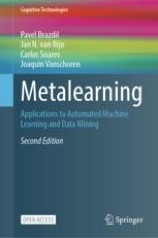
Metalearning : Applications to Automated Machine Learning and Data Mining
This book as one of the fastest-growing areas of research in machine learning, metalearning studies principled methods to obtain efficient models and solutions by adapting machine learning and data mining processes. This adaptation usually exploits information from past experience on other tasks and the adaptive processes can involve machine learning approaches. As a related area to metalearning and a hot topic currently, automated machine learning (AutoML) is concerned with automating the machine learning processes. Metalearning and AutoML can help AI learn to control the application of different learning methods and acquire new solutions faster without unnecessary interventions from the user.

Metainformatics ; International Symposium, MIS 2004, Salzburg, Austria, September 15-18, 2004, Revised Selected Papers
Constitutes the refereed post-proceedings of the Metainformatics Symposium, MIS 2004, held in Salzburg, Austria. This book reviews 17 papers that are devoted to finding useful abstractions, analytical frameworks, and systems that improve the understanding of the underlying structure of disciplines and families of systems within computer science.

Membrane Computing ; Vol. 4361 ; 7th International Workshop, WMC 2006, Leiden, Netherlands, July 17-21, 2006, Revised, Selected, and Invited Papers
The present volume contains a selection of papers presented at the Seventh Workshop on Membrane Computing, WMC7, which took place in Leiden, The Netherlands, during July 17–21, 2006. The ?rst three workshops on membrane computing were organized in Curtea de Arge¸ s, Romania – they took place in August 2000 (with the proceedings published in Lecture Notes in Computer Science, volume2235),in August 2001(with a selection of papers published asa special issue of Fundamenta Informaticae, volume 49, numbers 1–3, 2002), and in August 2002 (with the proceedings published in Lecture Notes in Computer Science, volume 2597). The next three workshops were organized in Tarragona, Spain, in July 2003, in Milan, Italy, in June 2004, and in Vienna, Austria, in July 2005, with the proceedings published as volumes 2933, 3365, and 3850, respectively, of Lecture Notes in Computer Science. The 2006edition of WMC wasorganized(and supported) byLorentzCenter, Leiden, under the auspices of the European Molecular Computing Consortium (EMCC). Special attention was paid to the interaction of membrane computing with biology, focusing both on the biological roots of membrane computing and on applications of membrane computing in biology and medicine.

Membrane Computing ; Vol. 3365 ; 5th International Workshop, WMC 2004, Milan, Italy, June 14-16, 2004, Revised Selected and Invited Papers
Constitutes the refereed extended postproceedings of the 5th International Workshop on Membrane Computing, held in Italy, in June 2004. This book addresses various topics in the area of membrane computing, ranging from mathematics and theoretical computer science to applications in biology, linguistics, and computer graphics.

Medical imaging systems : An introductory guide
Gives a complete and comprehensive introduction to the fields of medical imaging systems, as designed for a broad range of applications. The authors of the book first explain the foundations of system theory and image processing, before highlighting several modalities in a dedicated chapter. The initial focus is on modalities that are closely related to traditional camera systems such as endoscopy and microscopy. This is followed by more complex image formation processes: magnetic resonance imaging, X-ray projection imaging, computed tomography, X-ray phase-contrast imaging, nuclear imaging, ultrasound, and optical coherence tomography.
