



الصفحة 9
الصفحة 9

Human-centered software engineering - Integrating usability in the software development lifecycle
Human-CenteredSoftwareEngineering: BridgingHCI,UsabilityandSoftwareEngineering From its beginning in the 1980’s, the ?eld of human-computer interaction (HCI) has beende?nedasamultidisciplinaryarena. BythisImeanthattherehas beenanexplicit recognition that distinct skills and perspectives are required to make the whole effort of designing usable computer systems work well. Thus people with backgrounds in Computer Science (CS) and Software Engineering (SE) joined with people with ba- grounds in various behavioral science disciplines (e. g. , cognitive and social psych- ogy, anthropology) in an effort where all perspectives were seen as essential to creating usable systems. But while the ?eld of HCI brings individuals with many background disciplines together to discuss a common goal - the development of useful, usable, satisfying systems - the form of the collaboration remains unclear.
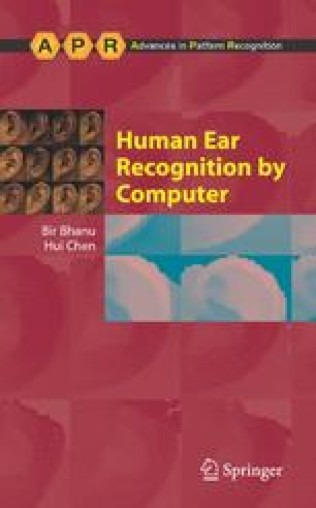
Human Ear Recognition by Computer
Human Ear Recognition by Computer is the first book on the automatic recognition of human ears. It presents an entire range of computational algorithms for recognition of humans by their ears. These algorithms have been tested and validated on the largest databases that are available today,This state-of-the-art research reference explores all aspects of 3D ear recognition, including representation, detection, recognition, indexing and performance prediction. It has been written for a professional audience of both researchers and practitioners within industry, and is also ideal as an informative text for graduate students in computer science and engineering.

How to engineer software : A model-based approach
The book promotes development scalability through domain partitioning and subdomain partitioning. It also explores software documentation that specifically and intentionally adds value for development and maintenance. Contains many illustrative examples of model-based software engineering, from semantic model all the way to executable code Explains how to derive verification (acceptance) test cases from a semantic model Describes project estimation, along with alternative software development and maintenance processes Shows how to develop and maintain cost-effective software that solves real-world problems

How humans judge machines
80 experimental scenarios help us understand how humans judge AIs as opposed to other humans in the same situation

Hotel management system
The hotel management system is a system that manages a hotel reservation and services distributed within the hotel, as it manages the reservations and help the customer to know about the hotel services through a mobile application and web application. The system makes guests more comfortable in the hotel through easy accessing to all hotel services and room reservations. The system also gives the admins full access to the data of rooms and reservations and customers and the employees can access to accept the services and the reservations. Our system also gives a benefit to the hotel owner which the guest can make a report in the application about the room and the services to the managers and the hotel owner to improve the quality of the services in the hotel.

Hosting server management
At a high level, this project involves building and configuring a hosting server to provide website, email, and FTP hosting services to customers. The project also includes building a website where customers can register an account, choose hosting packages, and manage their hosting plan by linking the website to the hosting server's control panel using APIs. To effectively manage the hosting server and provide reliable hosting services to customers, it is important to have a deep understanding of the technologies and protocols involved in web hosting. This includes knowledge of web server software, email protocols, FTP protocols, and security best practices.

Holonic and multi-agent systems for manufacturing ; 2nd International conference on industrial applications of holonic and multi-agent systems, HoloMAS 2005, Copenhagen, Denmark, August 22-24, 2005, Proceedings
The challenge faced in today’s manufacturing and business environments is the question of how to satisfy increasingly stringent customer requirements while managing growing system complexity. For example, customers expect high-quality, customizable, low-cost products that can be delivered quickly. The systems that deliver these expectations are by nature distributed, concurrent, and stochastic, and, as a result, increasingly difficult to manage. Unfortunately, the traditional hierarchical, strictly centralized approach to control used in these domains is characteristically inflexible, fragile, and difficult to maintain. These shortcomings have led to the development of a new class of manufacturing and supply-chain decision-making approaches in recent years. Solutions based on these approaches usually explore a set of highly distributed decision-making units that are capable of autonomous operations while cooperating interactively to resolve larger problems. The units, referred to as agents in classical computer science and software engineering, or holons if physically integrated with the manufacturing hardware, interact by exchanging information. These units are motivated by arriving at local solutions as well as collaborating and sharing resources and goals in solving the overall problem in question collectively.
High-Performance Modelling and Simulation for Big Data Applications: Selected Results of the COST Action IC1406 cHiPSet
This book is the final compendium of case studies emanated from “High-Performance Modelling and Simulation for Big Data Applications” (cHiPSet).cHiPSet has created a sustainable reference network linking applied research in High Performance Computing (HPC) and Modelling & Simulation to tangibly address Big Data challenges.cHiPSet has also endeavoured to use and exploit results through Open Science practices, i.e., open access publication, open access to data repositories, and open-source software development. A testament to this philosophy, this compendium is set to become a required reference for the fast-changing fields of HPC, Big Data, and Modelling & Simulation.

High-Performance Computing ; 6th International Symposium, ISHPC 2005, Nara, Japan, September 7-9, 2005, First International Workshop on Advanced Low Power Systems, ALPS 2006, Revised Selected Papers
This is the joint post-proceedings of the 6th International Symposium on High Performance Computing (ISHPC-VI) and the First International Workshop on Advanced Low Power Systems 2006 (ALPS2006). The post-proceedings also contain the papers presented at the Second HPF International Workshop: - periences and Progress (HiWEP2005) and the Workshop on Applications for PetaFLOPS Computing (APC2005), which are workshops of ISHPC-VI. ISHPC-VI, HiWEP2005 and APC2005 were held in Nara, Japan during September 7–9, 2005. Fifty-eight papers from 11 countries were submitted to ISHPC-VI. After the reviews of the submitted papers, the ISHPC-VI Program Committee selected 15 regular (12-page) papers for oral presentation. In ad- tion, several other papers with favorable reviews were recommended for poster presentation, and 14 short (8-page) papers were also selected.

High-Linearity CMOS RF Front-End Circuits
High-Linearity CMOS RF Front-End Circuits presents some unique techniques to enhance the linearity of both the receiver and transmitter. For example, using harmonic cancellation techniques, the linearity of the receiver front-end can be increased by few tens of dB with only minimal impact on the other circuit parameters. The new parallel class A&B power amplifier can not only increase the transmitter's output power in the linear range, but can also result in significant savings in power consumption. High-Linearity CMOS RF Front-End Circuits can be used as a textbook for graduate courses in RF CMOS design and will also be useful as a reference for the practicing engineer.

High Performance Computing for Geospatial Applications
This volume fills a research gap between the rapid development of High Performance Computing (HPC) approaches and their geospatial applications. With a focus on geospatial applications, the book discusses in detail how researchers apply HPC to tackle their geospatial problems. Based on this focus, the book identifies the opportunities and challenges revolving around geospatial applications of HPC. Readers are introduced to the fundamentals of HPC, and will learn how HPC methods are applied in various specific areas of geospatial study.

High performance computing ; 4th International Symposium, ISHPC 2002, Kansai Science City, Japan, May 15-17, 2002. Proceedings
The objective of this symposium is to exchange the latest research results in software, architecture, and applications in HPC in a more informal and friendly atmosphere. I am delighted that the symposium is, like past successful ISHPCs, comprised of excellent invited talks, panels, workshops, as well as high-quality technical papers on various aspects of HPC. We hope that the symposium will provide an excellent opportunity for lively exchange and discussion about - rections in HPC technologies and all the participants will enjoy not only the symposium but also their stay in Kansai Science City.

High Confidence Software Reuse in Large Systems ; 10th International Conference on Software Reuse, ICSR 2008, Beijing, China, May 25-29, 2008 Proceedings
This book constitutes the refereed proceedings of the 10th International Conference on Software Reuse, ICSR 2008, held in Beijing, China, in May 2008.The 40 revised full papers presented together with 5 workshop summaries and 5 tutorials were carefully reviewed and selected from numerous submissions. The papers are organized in topical sections on architecture and reuse approaches, high confidence and reuse, component selection and reuse repository, product line, domain models and analysis, service oriented environment, components and services, reuse approaches and frameworks, as well as reuse approaches and methods.

Hexagonal image processing : A practical approach
Hexagonal Image Processing provides an introduction to the processing of hexagonally sampled images, includes a survey of the work done in the field, and presents a novel framework for hexagonal image processing (HIP) based on hierarchical aggregates. Digital image processing is currently dominated by the use of square sampling lattices, however, hexagonal sampling lattices can also be used to define digital images. The strengths offered by hexagonal lattices over square lattices are considerable: • higher packing density, • uniform connectivity of points (pixels) in the lattice, • better angular resolution by virtue of having more nearest neighbours, and • superlative representation of curves. The utility of the HIP framework is demonstrated by implementing several basic image processing techniques (for the spatial and frequency domain) and some applications. The HIP framework serves as a tool for comparing processing of images defined on a square vs hexagonal grid, to determine their relative merits and demerits. The theory and algorithms covered are supplemented by attention to practical details such as accommodating hardware that support only images sampled on a square lattice. Including a Foreword written by Professor Narendra Ahuja, an eminent researcher in the field of Image Processing and Computer Vision, the book’s fresh approach to the subject offers insight and workable know-how to both researchers and postgraduates.

Heterogeneity in statistical genetics : How to assess, address, and account for mixtures in association studies
Heterogeneity, or mixtures, are ubiquitous in genetics. Even for data as simple as mono-genic diseases, populations are a mixture of affected and unaffected individuals. Still, most statistical genetic association analyses, designed to map genes for diseases and other genetic traits, ignore this phenomenon.In this book, we document methods that incorporate heterogeneity into the design and analysis of genetic and genomic association data. Among the key qualities of our developed statistics is that they include mixture parameters as part of the statistic, a unique component for tests of association. A critical feature of this work is the inclusion of at least one heterogeneity parameter when performing statistical power and sample size calculations for tests of genetic association.
Healthcare solutions using machine learning and informatics
Covers novel and innovative solutions for the healthcare that apply machine learning and biomedical informatics technology. The healthcare sector is one of the most critical in society. This book presents a series of artificial intelligence, machine learning, intelligent IoT-based solutions for medical image analysis, medical big data processing, disease predictions. Machine learning and artificial intelligence use cases in healthcare presented in the book give researchers, practitioners, and students a wide range of practical examples of cross-domain convergence. The wide variety of topics covered include: Artificial Intelligence in healthcare Machine learning solutions for such disease as diabetes, arthritis, cardiovascular disease, and COVID-19 Big data analytics solutions for healthcare data processing Reliable biomedical applications using AI models Intelligent IoT in healthcare. The book explains fundamental concepts as well as the advanced use cases illustrating how to apply emerging technologies such as machine learning, AI models, data informatics into practice to tackle challenges in the field of healthcare with real-world scenarios. Chapters contributed by noted academicians and professionals examine various solutions, frameworks, applications, case studies, and best practices in the healthcare domain

Health information systems : Technological and management perspectives
Details a variety of scenarios in the context of both health and heath care, including where prevention and wellness are related, such as the treatment of both acute and chronic diseases. Stakeholder requirements are also described to provide perspectives for describing the architectures and management techniques associated with health information systems, enabling the reader to develop a detailed holistic overview of the subject. Health Information Systems: Technological and Management Perspectives features a detailed overview of how information systems in health care can be managed and is a vital resource for medical informatics students seeking an up-to-date text on the topic.

HCI related papers of Interacción 2004 ; Conference proceedings
The present book contains a collection of the best papers presented at the 5th International Conference on Interacción Persona Ordenador (IPO) (which is Human Computer Interaction in Spanish), which took place in th th Lleida on May 5 -7 , 2004. . The main goals of Interacción 2004 were: To expand the conference scope with internationally recognised invited speakers. The plenary talks were presented by Alan Dix, Yvonne Rogers, Geritt van der Veer, and Angel Puerta. To open the participation to Spanish speaker worldwide in order to be a point of reference of this discipline not only in Spain but also in the wider Spanish speaking community. This goal was reached through a very diverse program which included panels and posters sessions, where many different aspect of the Human Computer Interaction (HCI) were presented. All through the program, research from outside Spain was reflected through the contributions from people of other countries.

Hardening Windows
Hardening is the process of protecting a system against unknown threats. System administrators harden against that which they think could be a threat. Administrators know the Internet is a hostile environment. Although they can't tell, for example, that a hacker will attempt to gain access to the SQL server next Tuesday, they can bet money there'll be an attempt soon and should "batten down the hatches" in anticipation. Hardening Windows, Second Edition is the definitive "counterintelligence" guide to performing preventative security measures for the Windows operating system. This second edition covers the release of Windows XP Service Pack 2 and its new security features, including the Windows Firewall and the Security Center. It also covers Windows Server 2003 Service Pack 1, Windows Server R2's new Security Configuration Wizard, Windows NT, Windows 2000, branch-office security features, and new setup options.

Hands-On Software Architecture with Java - Learn key architectural techniques and strategies to design efficient and elegant Java applications
Starts with the fundamentals of architecture and takes you through the basic components of application architecture. You'll cover the different types of software architectural patterns and application integration patterns and learn about their most widespread implementation in Java. You'll then explore cloud-native architectures and best practices for enhancing existing applications to better suit a cloud-enabled world. Later, the book highlights some cross-cutting concerns and the importance of monitoring and tracing for planning the evolution of the software, foreseeing predictable maintenance, and troubleshooting. The book concludes with an analysis of the current status of software architectures in Java programming and offers insights into transforming your architecture to reduce technical debt.
