



الصفحة 85
الصفحة 85

Computer Vision - ACCV 2006 ; Vol. 3852 ; 7th Asian Conference on Computer Vision, Hyderabad, India, January 13-16, 2006, Proceedings, Part II
ACCV has been making its rounds through the Asian landscape and came to India this year. Interest in computer vision is increasing and ACCV 2006 attracted about 500 submission. The evaluation team consisted of 27 experts serving as Area Chairs and about 270 reviewers in all. The whole process was conducted electronically in a double-blind manner,a ?rstfor ACCV.

Computer Vision - ACCV 2006 ; Vol. 3851 ; 7th Asian Conference on Computer Vision, Hyderabad, India, January 13-16, 2006, Proceedings, Part I
proceedings. ACCV has been making its rounds through the Asian landscape and came to India this year. Interest in computer vision is increasing and ACCV 2006 attracted about 500 submission. The evaluation team consisted of 27 experts serving as Area Chairs and about 270 reviewers in all. The whole process was conducted electronically in a double-blind manner,a ?rstfor ACCV.

Computer Viruses and Malware
This book discusses both the technical and human factors involved in computer viruses, worms, and anti-virus software. It also looks at the application of malicious software to computer crime and information warfare. Computer Viruses and Malware is designed for a professional audience composed of researchers and practitioners in industry. This book is also suitable as a secondary text for advanced-level students in computer science.
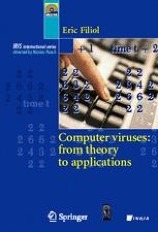
Computer Viruses : from theory to applications
The purpose of this book is to propose a teaching approach to under- 1 stand what computer viruses really are and how they work. To do this, three aspects are covered ranging from theoretical fundamentals, to pr- tical applications and technical features; fully detailed, commented source 1 We will systematically use the plural form “viruses” instead of the litteral one “virii”. The latter is now an obsolete, though gramatically recommended, form. VIII Preface codes of viruses as well as inherent applications are proposed. So far, the applications-oriented aspects have hardly ever been addressed through the scarce existing literature devoted to computer viruses.

Computer Supported Cooperative Work in Design IV ; 11th International Conference, CSCWD 2007, Melbourne, Australia, April 26-28, 2007. Revised Selected Papers
This book constitutes the thoroughly refereed post-conference proceedings of the 11th International Conference on Computer Supported Cooperative Work in Design, CSCWD 2007, held in Melbourne, Australia, in April 2007.

Computer Supported Cooperative Work in Design III ; 10th International Conference, CSCWD 2006, Nanjing, China, May 3-5, 2006, Revised Selected Papers
The design of complex artifacts and systems requires the cooperation of multidiscip- nary design teams using multiple commercial and proprietary engineering software tools (e.g., CAD, modeling, simulation, visualization, and optimization), engineering databases, and knowledge-based systems. Individuals or individual groups of mult- isciplinary design teams usually work in parallel and separately with various en- neering software tools which are located at different sites. In addition, individual members may be working on different versions of a design or viewing the design from different perspectives, at different levels of detail. In order to accomplish the work, it is necessary to have effective and efficient c- laborative design environments. Such environments should not only automate in- vidual tasks, in the manner of traditional computer-aided engineering tools, but also enable individual members to share information, collaborate, and coordinate their activities within the context of a design project. CSCW (computer-supported coope- tive work) in design is concerned with the development of such environments.

Computer Supported Cooperative Work in Design II ; 9th International Conference, CSCWD 2005, Coventry, UK, May 24-26, 2005, Revised Selected Papers
This book constitutes the thoroughly refereed post-proceedings of the 9th International Conference on Computer Supported Cooperative Work in Design, CSCWD 2005. it contain expanded versions of the papers presented at the conference and are organized in topical sections on CSCW techniques and methods, Grids and Web services, agents and multi-agent systems, ontology and knowledge management, collaborative design and manufacturing, enterprise collaboration, workflows, and other related approaches and applications.
Computer Supported Cooperative Work in Design I
The design of complex artifacts and systems requires the cooperation of multidisciplinary design teams using multiple commercial and non-commercial engineering tools such as CAD tools, modeling, simulation and optimization software, engineering databases, and knowledge-based systems. Individuals or individual groups of multidisciplinary design teams usually work in parallel and separately with various engineering tools, which are located on different sites, often for quite a long time. At any moment, individual members may be working on different versions of a design or viewing the design from various perspectives, at different levels of detail. In order to meet these requirements, it is necessary to have effective and efficient collaborative design environments. These environments should not only automate individual tasks, in the manner of traditional computer-aided engineering tools, but also enable individual members to share information, collaborate and coordinate their activities within the context of a design project. CSCW (computer-supported cooperative work) in design is concerned with the development of such environments.

Computer supported cooperative work and social computing ; 15th CCF Conference, ChineseCSCW 2020, Shenzhen, China, November 7–9, 2020, Revised Selected Papers
This book constitutes the refereed post-conference proceedings of the 15th CCF Conference on Computer Supported Cooperative Work and Social Computing, ChineseCSCW 2020, held in Shenzhen, China, in November 2020. The 40 revised full papers and 15 revised short papers were carefully reviewed and selected from 137 submissions. The papers of this volume are organized in topical sections on: crowdsourcing, crowd intelligence, and crowd cooperative computing; domain-specific collaborative applications; collaborative mechanisms, models, approaches, algorithms, and systems; social media and online communities; and short papers.

Computer Security in the 21st Century
Computer Security in the 21st Century shares some of the emerging important research trends reflected in recent advances in computer security, including: security protocol design, secure peer-to-peer and ad hoc networks, multimedia security, and intrusion detection, defense and measurement. Highlights include presentations of : * Fundamental new security * Cryptographic protocols and design, * A new way of measuring network vulnerability: attack surfaces, * Network vulnerability and building impenetrable systems, * Multimedia content protection including a new standard for photographic images, JPEG2000. Researchers and computer security developers will find in this book interesting and useful insights into building computer systems that protect against computer worms, computer viruses, and other related concerns.
Computer Security - ESORICS 2008 ; 13th European Symposium on Research in Computer Security, Málaga, Spain, October 6-8, 2008. Proceedings
This book constitutes the refereed proceedings of the 13th European Symposium on Research in Computer Security, ESORICS 2008, held in Torremolinos, Spain, in October 2008.
Computer Security – ESORICS 2007 ; 12th European Symposium On Research In Computer Security, Dresden, Germany, September 24 - 26, 2007, Proceedings
This book address issues such as data protection; security protocols; systems; web and network security; privacy; threat modeling and detection; information flow; and security in emerging applications such as cryptocurrencies, the Internet of Things and automotive.

Computer Security – ESORICS 2006 ; 11th European Symposium on Research in Computer Security, Hamburg, Germany, September 18-20, 2006, Proceedings
This book constitutes the refereed proceedings of the 11th European Symposium on Research in Computer Security, ESORICS 2006. it presents original research contributions, case studies and implementation experiences addressing any aspect of computer security - in theory, mechanisms, applications, or practical experience.

Computer Security - ESORICS 2005
These proceedings contain the papers selected for presentation at the 10th - ropean Symposium on Research in Computer Security (ESORICS), held S- tember 12–14, 2005 in Milan, Italy. In response to the call for papers 159 papers were submitted to the conf- ence. These paperswere evaluated on the basis of their signi?cance, novelty,and technical quality. Each paper was reviewed by at least three members of the program committee. The program committee meeting was held electronically,

Computer science logic ; Vol. 4207 ; 20th International Workshop, CSL 2006, 15th Annual Conference of the EACSL, Szeged, Hungary, September 25-29, 2006, Proceedings
Coverage includes automated deduction and interactive theorem proving, constructive mathematics and type theory, equational logic and term rewriting, automata and formal logics, modal and temporal logic, model checking, finite model theory, and more.

Computer Science Logic ; Vol. 3634
This book constitutes the refereed proceedings of the 19th International Workshop on Computer Science Logic, CSL 2005, held as the 14th Annual Conference of the EACSL in Oxford, UK in August 2005. The 33 revised full papers presented together with 4 invited contributions were carefully reviewed and selected from 108 papers submitted. All current aspects of logic in computer science are addressed ranging from mathematical logic and logical foundations to methodological issues and applications of logics in various computing contexts. The volume is organized in topical sections on semantics and logics, type theory and lambda calculus, linear logic and ludics, constraints, finite models, decidability and complexity, verification and model checking, constructive reasoning and computational mathematics, and implicit computational complexity and rewriting.

Computer Science Logic ; 22nd International Workshop, CSL 2008 , 17th Annual Conference of the EACSL, Bertinoro, Italy, September 16-19, 2008. Proceedings
This book constitutes the refereed proceedings of the 22nd International Workshop on Computer Science Logic, CSL 2008, held as the 17th Annual Conference of the EACSL in Bertinoro, Italy, in September 2008.

Computer Science Logic ; 21 International Workshop, CSL 2007, 16th Annual Conference of the EACSL, Lausanne, Switzerland, September 11-15, 2007, Proceedings
This book covers logic and games, expressiveness, games and trees, logic and deduction, lambda calculus, finite model theory, linear logic, proof theory, and game semantics.

Computer Science : Theory and Applications ; 2nd International Symposium on Computer Science in Russia, CSR 2007, Ekaterinburg, Russia, September 3-7, 2007, Proceedings
This book covers theory track deals with algorithms, protocols, and data structures; complexity and cryptography; formal languages, automata and their applications to computer science; computational models and concepts; proof theory; and applications of logic to computer science. Many applications are presented.

Computer science : Theory and applications ; 1st International symposium on computer science in Russia, CSR 2006, St. Petersburg, Russia, June 8-12, 2006, Proceedings
This book constitutes the refereed proceedings of the First International Symposium on Computer Science in Russia, CSR 2006. The 35 revised full theory papers and 29 revised application papers together with 3 invited talks address all major areas in computer science are addressed.
