



الصفحة 8
الصفحة 8

IoT-enabled Smart Healthcare Systems, Services and Applications
In IoT-Enabled Smart Healthcare Systems, Services and Applications, an accomplished team of researchers delivers an insightful and comprehensive exploration of the roles played by cutting-edge technologies in modern healthcare delivery. The distinguished editors have included resources from a diverse array of learned experts in the field that combine to create a broad examination of a rapidly developing field.

IOT glass tempering controller
The Internet of things (IoT) subject speaks to a thought for the electronic-mechanical arrangement of devices to detect and gather data from the encompassing environmental factors and a short time later share that data over the Internet where it will, in general, be arranged and utilized for various purposes. This project will show the use of Iot in the process of Harding glass to accomplish a well-tempered glass and solving the problem of arching glass which is caused because of the difference of the temperature in the upper and lower heat, Iot will help in monitoring and controlling the temperature through blynk program.

IOT control and surveillance system
An automated system is a combination of both software and hardware which is designed and programmed to work automatically without the need of any human operator to provide inputs and instructions for each operation. The Internet of Things (IoT) is a network of connected things. These ‘things’ (devices) communicate with each other using machine to machine communication (M2M). Information is traversed between devices so that processes can be automated, without the need for human intervention. By reducing the number of people involved in a business process, several advantages arise, including improved accuracy and up-time. We will build an IoT automated system to control access of humans and vehicles to a warehouse based on biometrics and image recognition techniques.

IoT and AI Technologies for Sustainable Living : A Practical Handbook
Brings together all the latest methodologies, tools and techniques related to the Internet of Things and Artificial Intelligence in a single volume to build insight into their use in sustainable living. The areas of application include agriculture, smart farming, healthcare, bioinformatics, self-diagnosis systems, body sensor networks, multimedia mining, and multimedia in forensics and security. Provides a comprehensive discussion of modeling and implementation in water resource optimization, recognizing pest patterns, traffic scheduling, web mining, cyber security and cyber forensics. It will help develop an understanding of the need for AI and IoT to have a sustainable era of human living. The tools covered include genetic algorithms, cloud computing, water resource management, web mining, machine learning, block chaining, learning algorithms, sentimental analysis and Natural Language Processing (NLP).
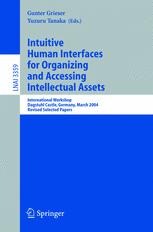
Intuitive Human Interfaces for Organizing and Accessing Intellectual Assets ; International Workshop, Dagstuhl Castle, Germany, March 1-5, 2004, Revised Selected Papers
This book constitutes the thoroughly refereed post-proceedings of the 2004 International Workshop on Intuitive Human Interfaces for Organizing and Accessing Intellectual Assets, held in Dagstuhl Castle, Germany in March 2004. The 17 revised full papers presented together with an introductory overview have gone through two rounds of reviewing and revision. The papers are organized in topical sections on man-machine interface for intuitive knowledge access, intelligent pad and meme media, visualization and design of information access spaces, and semantics and narrative organization and access of knowledge.

Intrusion Detection Systems
Sٍheds new light on defense alert systems against computer and network intrusions. It also covers integrating intrusion alerts within security policy framework for intrusion response, related case studies and much more. This volume is presented in an easy-to-follow style while including a rigorous treatment of the issues, solutions, and technologies tied to the field.

Intrusion Detection and Correlation : Challenges and Solutions
Challenges and Solutions presents intrusion detection systems (IDSs) and addresses the problem of managing and correlating the alerts produced. This volume discusses the role of intrusion detection in the realm of network security with comparisons to traditional methods such as firewalls and cryptography. Challenges and Solutions analyzes the challenges in interpreting and combining (i.e., correlating) alerts produced by these systems. In addition, existing academic and commercial systems are classified; their advantage and shortcomings are presented, especially in the case of deployment in large, real-world sites. Challenges and Solutions is designed for a professional audience composed of researchers and practitioners in industry. This book is also suitable for graduate-level students in computer science.

Introduction to Video Search Engines
Their book has a practical emphasis with the goal of bringing readers up to date on the state of the art in multimedia search technologies and systems. It explains the overall process of video content acquisition, indexing and retrieval with browsing, it provides overviews of constituent technologies such as information retrieval, Internet video systems, video and multimedia processing to extract index data, and it gives examples of research prototypes and existing commercial systems and describes their features.

Introduction to Scientific Programming with Python
This book offers an initial introduction to programming for scientific and computational applications using the Python programming language. The presentation style is compact and example-based, making it suitable for students and researchers with little or no prior experience in programming.
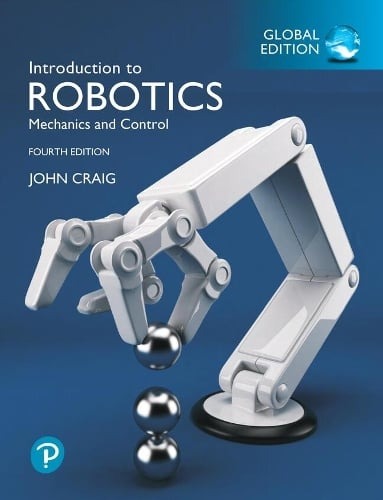
Introduction to robotics : Analysis, control, applications
Offers a guide to the fundamentals of robotics, robot components and subsystems and applications. The author—a noted expert on the topic—covers the mechanics and kinematics of serial and parallel robots, both with the Denavit-Hartenberg approach as well as screw-based mechanics. In addition, the text contains information on microprocessor applications, control systems, vision systems, sensors, and actuators.
Introduction to Reliable Distributed Programming
Guerraoui and Rodrigues present an introductory description of fundamental reliable distributed programming abstractions as well as algorithms to implement these abstractions. The authors follow an incremental approach by first introducing basic abstractions in simple distributed environments, before moving to more sophisticated abstractions and more challenging environments. Each core chapter is devoted to one specific class of abstractions, covering reliable delivery, shared memory, consensus and various forms of agreement. This textbook comes with a companion set of running examples implemented in Java. These can be used by students to get a better understanding of how reliable distributed programming abstractions can be implemented and used in practice. Combined, the chapters deliver a full course on reliable distributed programming. The book can also be used as a complete reference on the basic elements required to build reliable distributed applications.

Introduction to Programming with Fortran : with coverage of Fortran 90, 95, 2003 and 77
Introduction to Programming with Fortran contains: lots of clear and simple examples highlighting the key language features of the most recent versions of Fortran – Fortran 2003, 95 and 90. practical examples based on ISO TR 15580 and ISO TR 15581 which are widely supported and cover the ISO TR on Enhanced Modules – particularly important to large code suites common problems that occur when programming which are highlighted via clear examples and solutions Introduction to Programming with Fortran is an essential introduction for beginners as well as a concise reference for professionals. Overall the book gives a very effective hands-on coverage of Fortran, valuable to students and practitioners alike.

Introduction to Machine Learning with Applications in Information Security
Provides a classroom-tested introduction to a wide variety of machine learning and deep learning algorithms and techniques, reinforced via realistic applications. The book is accessible and doesn't prove theorems, or dwell on mathematical theory. The goal is to present topics at an intuitive level, with just enough detail to clarify the underlying concepts. The book covers core classic machine learning topics in depth, including Hidden Markov Models (HMM), Support Vector Machines (SVM), and clustering. Additional machine learning topics include k-Nearest Neighbor (k-NN), boosting, Random Forests, and Linear Discriminant Analysis (LDA). The fundamental deep learning topics of backpropagation, Convolutional Neural Networks (CNN), Multilayer Perceptrons (MLP), and Recurrent Neural Networks (RNN) are covered in depth. A broad range of advanced deep learning architectures are also presented, including Long Short-Term Memory (LSTM), Generative Adversarial Networks (GAN), Extreme Learning Machines (ELM), Residual Networks (ResNet), Deep Belief Networks (DBN), Bidirectional Encoder Representations from Transformers (BERT), and Word2Vec.
Introduction to Intelligent Construction Technology of Transportation Infrastructure
Expounds on the related technologies of intelligent transportation infrastructure construction. Based on the essential characteristics of intelligent construction, "perception, analysis, decision-making, and execution," the basic structure of intelligent construction technology (ICT) is established. With the integration of engineering construction technologies, the analyses of the essence of intelligent algorithms and the feasibility of Artificial Intelligence (AI) are provided. The book introduces the essential characteristics of Big Data and the Internet of Things and their relationship with engineering construction. On this basis, the feasibility and implementation plan of intelligent technology applications in design, construction, and maintenance are analyzed and demonstrated with engineering examples.

Introduction to data systems : Building from Python
Encompassing a broad range of forms and sources of data, this textbook introduces data systems through a progressive presentation. Introduction to Data Systems covers data acquisition starting with local files, then progresses to data acquired from relational databases, from REST APIs and through web scraping. It teaches data forms/formats from tidy data to relationally defined sets of tables to hierarchical structure like XML and JSON using data models to convey the structure, operations, and constraints of each data form.

Introduction to C++ : 500+ Difficulty-Scaled Solved Programming Exercises
Includes more than 500 exercises and examples of progressive difficulty to aid the reader in understanding the C++ principles and to see how concepts can materialize in code. The examples are designed to be short, concrete, and substantial, quickly giving the reader the ability to understand how to apply correctly and efficiently the features of the C++ language and to get a solid programming know-how. Rest assured that if you are able to understand this book's examples and solve the exercises, you can safely go on to edit larger programs, you will be able to develop your own applications, and you will have certainly established a solid fundamental conceptual and practical background to expand your knowledge and skills

Introduction to blender 3.0 : Learn organic and architectural modeling, lighting, materials, painting, rendering, and compositing with blender
Explains modeling, materials, lighting, painting, and more with Blender and other external tools. You will configure a 3D architectural environment and set up the workflow of an art and design project within Blender. You will use Blender's main tools—mesh modeling and sculpting—to create virtual objects and environments. And, you will explore building materials and light scenes, followed by drawing and virtual painting. Chapters cover rendering scenes and transforming them into 2D images or videos. You will learn to use Blender 3.0 for video editing as a compositor and video sequence editor (VSE or sequencer) with a wide range of effects available through the nodal system. You Will Learn : Create objects and architectural buildings with different techniques of 3D modeling / Master creating an environment for your objects and how to light them / Determine how to create node materials and assign them to your Blender objects / Pick up UV unwrapping and texture painting / Get closer to painting and drawing in Blender / Render your scenes and create stunning videos

Introduction to Assembly Language Programming : For Pentium and RISC Processors
Assembly language continues to hold a core position in the programming world because of its similar structure to machine language and its very close links to underlying computer-processor architecture and design. These features allow for high processing speed, low memory demands, and the capacity to act directly on the system’s hardware. This completely revised second edition of the highly successful Introduction to Assembly Language Programming introduces readers to assembly language programming and its role in computer programming and design. It focuses on providing a firm grasp of the main features of assembly programming, and how it can be used to improve a computer's performance. The revised edition covers a broad scope of subjects and adds valuable material on protected-mode Pentium programming, MIPS assembly language programming, and use of the NASM and SPIM assemblers for a Linux orientation. All of the language's main features are covered in depth. The book requires only some basic experience with a structured, high-level language.

Introduction to Advanced System-on-Chip Test Design and Optimization
SOC test design and its optimization is the topic of Introduction to Advanced System-on-Chip Test Design and Optimization. It gives an introduction to testing, describes the problems related to SOC testing, discusses the modeling granularity and the implementation into EDA (electronic design automation) tools. The book is divided into three sections: i) test concepts, ii) SOC design for test, and iii) SOC test applications.

Introduction pratique aux bases de données relationnelles = A practical introduction to relational databases
Cet ouvrage introduit le lecteur dans le domaine des bases de données relationnelles en présentant une vaste sélection de sujets portant sur la modélisation des données, les langages de base de données, l'architecture des systèmes et l'évolution post-relationnelle. - Notions fondamentales: le modèle relationnel, les composants d’un système de gestion de bases de données, l’organisation de la mise en œuvre d’une base de données, les tâches de gestion des données. - De l'analyse à la base de données : le modèle entité association, la généralisation et l’agrégation, les dépendances et les formes normales,les contraintes d’intégrité. - Aperçu des langages de requête et de manipulation des données: l’algèbre relationnelle, le calcul des prédicats, SQL, QUEL, QBE, le traitement des valeurs nulles, la protection des données. - Les composants de l'architecture d'un système de bases de données : la compilation, l’interprétation et l’optimisation des requêtes, l’environnement multiutilisateur, le concept de transaction et la sérialisation, les méthodes optimiste et pessimiste, les structures de stockage et les méthodes d’accès. L’intégration et la migration des bases de données: l’exploitation des bases de données hétérogènes, les bases de données sur le Web, les règles de conversion pour effectuer l’intégration et la migration, les variantes de migration des bases de données hétérogènes, la planification de l’intégration et de la migration.
