



الصفحة 7
الصفحة 7

Artificial general intelligence
This book focused on engineering general intelligence – autonomous, self-reflective, self-improving, commonsensical intelligence.Each author explains a specific aspect of AGI in detail in each chapter, while also investigating the common themes in the work of diverse groups, and posing the big, open questions in this vital area.

Artificial evolution ; 7th International Conference, Evolution artificielle, EA 2005, revised selected papers
This book constitutes the thoroughly refereed post-proceedings of the 7th International Conference on Artificial Evolution, EA 2005, held in Lille, France, in October 2005. They cover all aspects of artificial evolution: genetic programming, machinelearning, combinatorial optimization, co-evolution, self-assembling, artificial lifeand bioinformatics.In addition, the program included an invited talk by David Corne on “Evolu-tionary Computation in Bioinformatics: How to Save Lives and Make ScientificBreakthrough.

Architecture of computing systems ; 34th International Conference, ARCS 2021, Virtual Event, June 7–8, 2021, Proceedings
This book constitutes the proceedings of the 34th International Conference on Architecture of Computing Systems, ARCS 2021, held virtually in July 2021. The 12 full papers in this volume were carefully reviewed and selected from 24 submissions. 2 workshop papers (VEFRE) are also included. ARCS has always been a conference attracting leading-edge research outcomes in Computer Architecture and Operating Systems, including a wide spectrum of topics ranging from fully integrated, self-powered embedded systems up to high-performance computing systems. It also provides a platform covering newly emerging and cross-cutting topics, such as autonomous and ubiquitous systems, reconfigurable computing and acceleration, neural networks and artificial intelligence. The selected papers cover a variety of topics from the ARCS core domains, including heterogeneous computing, memory optimizations, and organic computing.

Architecture of computing systems - ARCS 2007 ; 20th International Conference, Zurich, Switzerland, March 12-15, 2007, Proceedings
The ARCS is reporting hi- quality results in computer architecture and operating systems research.It is also represent a - namic, evolving community that closely follows new research trends and topics. ARCS has evolved towards a strong focus on s- tem aspects of pervasive computing and self-organization techniques (organic and autonomic computing).

Arakelov Geometry and Diophantine Applications
Bridging the gap between novice and expert, the aim of this book is to present in a self-contained way a number of striking examples of current diophantine problems to which Arakelov geometry has been or may be applied. Arakelov geometry can be seen as a link between algebraic geometry and diophantine geometry.The first chapters provide some background and introduction to the subject. These are followed by a presentation of different applications to arithmetic geometry. The final part describes the recent application of Arakelov geometry to Shimura varieties and the proof of an averaged version of Colmez's conjecture. This book thus blends initiation to fundamental tools of Arakelov geometry with original material corresponding to current research.

Applications of declarative programming and knowledge management ; 15th international conference on applications of declarative programming and knowledge management, INAP 2004, and 18th workshop on logic programming, WLP 2004, Potsdam, Germany, March 4-6, 2004, Revised Selected Papers
This volume contains a selection of papers presented at the 15th International Conference on Applications of Declarative Programming and Knowledge M- agement, INAP 2004, and the 18th Workshop on Logic Programming, WLP 2004, Declarative programming is an advanced paradigm for the modeling and solving of complex problems. This speci?cation method has become more and more attractive in recent years, Thetopicsoftheselectedpapersofthisyear’sjointconferenceconcentrateon three currently important ?elds: knowledge management and decision support, constraint programming and constraint solving, and declarative programming and Web-based systems.
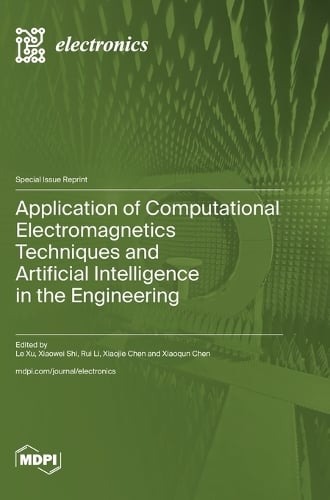
Application of computational electromagnetics techniques and artificial intelligence in the engineering
Introduces the latest developments in electromagnetic computing and artificial intelligence technology. Artificial intelligence technology can be applied to the modeling, analysis, and optimization design of microwave equipment, solving the routing problem of self-organizing networks in small unmanned aerial vehicle systems, calculating the radiation characteristics of antenna arrays on large electrical platforms, analyzing the impact of electromagnetic wave coupling on electronic devices, simulating the field distribution characteristics of electronic devices, and so on. With the help of artificial intelligence, designers can more conveniently, quickly, and accurately solve engineering problems.

An Introduction to Kolmogorov Complexity and Its Applications
Written by two experts in the field, this book is ideal for advanced undergraduate students, graduate students, and researchers in all fields of science. It is self-contained: it contains the basic requirements from mathematics, probability theory, statistics, information theory, and computer science. Included are history, theory, new developments, a wide range of applications, numerous (new) problem sets, comments, source references, and hints to solutions of problems. This is the only comprehensive treatment of the central ideas of Kolmogorov complexity and their applications.

An introduction to description logics
Designed so that domain knowledge can be described and so that computers can reason about this knowledge. DLs have recently gained increased importance since they form the logical basis of widely used ontology languages, in particular the web ontology language OWL. Written by four renowned experts, this is the first textbook on description logics. It is suitable for self-study by graduates and as the basis for a university course. Starting from a basic DL, the book introduces the reader to their syntax, semantics, reasoning problems and model theory and discusses the computational complexity of these reasoning problems and algorithms to solve them.

Algorithms in Bioinformatics : Theory and Implementation
Explores a comprehensive and insightful treatment of the practical application of bioinformatic algorithms in a variety of fields. Delivers a fulsome treatment of some of the main algorithms used to explain biological functions and relationships. It introduces readers to the art of algorithms in a practical manner which is linked with biological theory and interpretation. The book covers many key areas of bioinformatics, including global and local sequence alignment, forced alignment, detection of motifs, Sequence logos, Markov chains or information entropy. Other novel approaches are also described, such as Self-Sequence alignment, Objective Digital Stains (ODSs) or Spectral Forecast and the Discrete Probability Detector (DPD) algorithm. Readers will also benefit from the inclusion of: A detailed presentation of new methods, such as Self-sequence alignment, Objective Digital Stains and Spectral Forecast ; A treatment of sequence alignment, including local sequence alignment, global sequence alignment and forced sequence alignment with full implementations ; Discussions of position-specific weight matrices, including the count, weight, relative frequencies, and log-likelihoods matrices ; A detailed presentation of the methods related to Markov Chains as well as a description of their implementation in Bioinformatics and adjacent fields ; An examination of information and entropy, including sequence logos and explanations related to their meaning ; A chapter on philosophical transactions that allows the reader a broader view of the prediction process ; Extensive worked examples with detailed case studies that point out the meaning of different results
Algorithms for Sensor and Ad Hoc Networks : Advanced Lectures
Thousands of mini computers (comparable to a stick of chewing gum in size), equipped with sensors, are deployed in some terrain or other. After activation the sensors form a self-organized network and provide data, for example about a forthcoming earthquake. The trend towards wireless communication increasingly affects electronic devices in almost every sphere of life. Conventional wireless networks rely on infrastructure such as base stations; mobile devices interact with these base stations in a client/server fashion. In contrast, current research is focusing on networks that are completely unstructured, but are nevertheless able to communicate (via several hops) with each other, despite the low coverage of their antennas. Such systems are called sensor or ad hoc networks, depending on the point of view and the application. Wireless ad hoc and sensor networks have gained an incredible research momentum. Computer scientists and engineers of all flavors are embracing the area. Sensor networks have been adopted by researchers in many fields: from hardware technology to operating systems, from antenna design to databases, from information theory to networking, from graph theory to computational geometry.

Algorithmic Aspects of Wireless Sensor Networks ; 3rd International Workshop, ALGOSENSORS 2007, Wroclaw, Poland, July 14, 2007, Revised Selected Papers
This book contains the proceedings of the Third International Workshop on Algorithmic Aspects of Wireless Sensor Networks. Coverage includes abstract models, complexity-theoretic results, and the design and analysis of algorithms for wireless sensor networks.

Algorithmic Aspects of Wireless Sensor Networks ; 2nd International Workshop, ALGOSENSORS 2006, Venice, Italy, July 15, 2006, Revised Selected Papers
This volume contains the contributed papers and invited talks presented at the 1stInternational Workshop on Algorithmic Aspect sof Wireless Sensor Networks (ALGOSENSORS 2004), which was held July 16, 2004, in Turku, Finland, - located with the 31st International Colloquium on Automata, Languages, and Programming (ICALP 2004). Wireless ad hoc sensor networks have become a very important research subject due to their potential to provide diverse services in numerous appli- tions. The realization of sensor networks requires intensive technical research and development e?orts, especially in power-aware scalable wireless ad hoc c- munications protocols, due to their unusual application requirements and severe constraints. On the other hand, a solid theoretical background seems necessary for sensor networks to achieve their full potential. It is an algorithmic challenge to achieve e?cient and robust realizations of such large, highly dynamic, complex, n- conventional networking environments

Agents and peer-to-peer computing ; 2nd International workshop, AP2PC 2003, Melbourne, Australia, July 14, 2003, revised and invited papers
This book brings together an introduction, three invited articles, and revised versions of the papers presented at the Second International Workshop on Agents and Peer-to-Peer Computing, AP2PC 2003, held in Melbourne, Australia, July 2003."" "Peer-to-peer (P2P) computing is currently attracting enormous public attention, a very large number of autonomous computing nodes, the peers, rely on each other for services. P2P networks are emerging as a new distributed computing paradigm because of their potential to harness the computing power and the storage capacity of the hosts composing the network, and because they realize a completely open decentralized environment where everybody can join in autonomously.
Agent Intelligence Through Data Mining
AGENT INTELLIGENCE THROUGH DATA MINING offers a self-contained overview of a relatively young but important area of research: the intersection of agent technology and data mining. This intersection leads to considerable advancements in the area of information technologies, drawing the increasing attention of both research and industrial communities. It can take two forms: a) the more mundane use of intelligent agents for improved data mining and; b) the use of data mining for smarter, more efficient agents. The second approach is the main focus of this volume. this book presents a methodology for developing multi-agent systems, describes available open-source tools to support this process, and demonstrates the application of the methodology on three different cases. AGENT INTELLIGENCE THROUGH DATA MINING is designed for a professional audience composed of researchers and practitioners in industry.

Advances in Production Technology
This edited volume contains the selected papers presented at the scientific board meeting of the German Cluster of Excellence on “Integrative Production Technology for High-Wage Countries”, held in November 2014. The topical structure of the book is clustered in six sessions: Integrative Production Technology, Individualised Production, Virtual Production Systems, Integrated Technologies, Self-Optimising Production Systems and Human Factors in Production Technology. The Aachen perspective on a holistic theory of production is complemented by conference papers from external leading researchers in the fields of production, materials science and bordering disciplines.

Advances in Learning Classifier Systems ; 4th International Workshop, IWLCS 2001, San Francisco, CA, USA, July 7-8, 2001. Revised Papers
The Fourth International Workshop on Learning Classifier Systems (IWLCS2001) was held July 7-8, 2001, in San Francisco, California, during the Geneticand Evolutionary Computation Conference (GECCO 2001). We have includedin this volume revised and extended versions of eleven of the papers presentedat the workshop.The volume is organized into two main parts. The first is dedicated to importanttheoretical issues of learning classifier systems research including the influenceof exploration strategy, a model of self-adaptive classifier systems, and the useof classifier systems for social simulation. The second part contains papers dis-cussing applications of learning classifier systems such as data mining, stocktrading, and power distribution networks.An appendix contains a paper presenting a formal description of ACS, a rapidlyemerging learning classifier system model.

Advances in knowledge discovery and data mining ; Vol. 3518 ; 9th Pacific-Asia conference, PAKDD 2005, Hanoi, Vietnam, May 18-20, 2005, Proceedings
This book constitutes the refereed proceedings of the 9th Pacific-Asia Conference on Knowledge Discovery and Data Mining, PAKDD 2005, held in Hanoi, Vietnam, in May 2005. Including Topics Artificial Intelligence Database Management Information Storage and Retrieval Probability and Statistics in Computer Science Multimedia Information Systems Computer Appl. in Administrative Data Processing

Advances in Artificial Reality and Tele-Existence ; 16th International Conference on Artificial Reality and Telexistence, ICAT 2006, Hangzhou, China, November 28 - December 1, 2006, Proceedings
ICAT is the oldest international conference on virtual reality and tele-existence. ICAT 2006 not only looked for innovations in the technology itself, but also explored novel ways to transfer and express information and creative ideas to the society and people. The 16th International Conference on Artificial Reality and Telexistence was held at the Zhejiang University of Technology, Hangzhou, P. R. China from November 29 to December 1, 2006. The main purpose of the conference is to provide opportunities for researchers and practitioners to present their research findings and exchange opinions on the development and use of such systems.

Advances in Artificial Life ; 9th European Conference, ECAL 2007, Lisbon, Portugal, September 10-14, 2007, Proceedings
This book is organized in topical sections on conceptual articles, morphogenesis and development, robotics and autonomous agents, evolutionary computation and theory, cellular automata, models of biological systems and their applications, ant colony and swarm systems, evolution of communication, simulation of social interactions, self-replication, artificial chemistry, and posters.
