



الصفحة 7
الصفحة 7
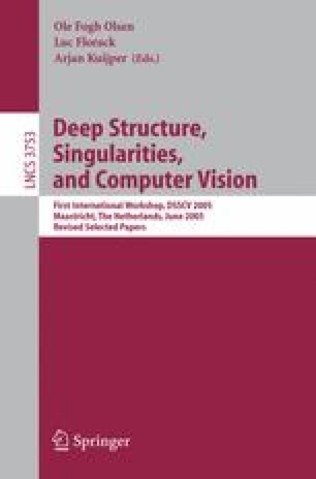
Deep structure, singularities, and computer vision ; 1st international workshop, DSSCV 2005, Maastricht, The Netherlands, June 9-10, 2005, revised selected papers
Constitutes the refereed post-proceedings of the First International Workshop on Deep Structure, Singularities, and Computer Vision, DSSCV 2005, held in Maastricht. This book represents in understanding the relation between structural, topological information represented by singularities and metric information of signals, shapes, and colors.

Deep Learning-Based Face Analytics
Provides an overview of different deep learning-based methods for face recognition and related problems. Specifically, the authors present methods based on autoencoders, restricted Boltzmann machines, and deep convolutional neural networks for face detection, localization, tracking, recognition, etc. The authors also discuss merits and drawbacks of available approaches and identifies promising avenues of research in this rapidly evolving field.

Deep Learning, Machine Learning and IoT in Biomedical and Health Informatics : Techniques and Applications
Examines and demonstrates state-of-the-art approaches for IoT and Machine Learning based biomedical and health related applications. This book aims to provide computational methods for accumulating, updating and changing knowledge in intelligent systems and particularly learning mechanisms that help us to induce knowledge from the data. It is helpful in cases where direct algorithmic solutions are unavailable, there is lack of formal models, or the knowledge about the application domain is inadequately defined. In the future IoT has the impending capability to change the way we work and live. These computing methods also play a significant role in design and optimization in diverse engineering disciplines. With the influence and the development of the IoT concept, the need for AI (artificial intelligence) techniques has become more significant than ever.
Deep Learning to See : Towards New Foundations of Computer Vision
Topics and features: Presents a curiosity-driven approach, posing questions to stimulate readers to design novel computational models of vision Offers a rethinking of computer vision, arguing for an approach based on vision in nature, versus regarding visual signals as collections of images Provides an interdisciplinary commentary, aiming to unify computer vision, machine learning, human vision, and computational neuroscience Serving to inspire and stimulate critical reflection and discussion, yet requiring no prior advanced technical knowledge, the text can naturally be paired with classic textbooks on computer vision to better frame the current state of the art, open problems, and novel potential solutions.

Deep learning methods for converting speech to text = تقنيات التعلم العميق في تحويل الصوت إلى نص
Aims to design and develop a system capable of extracting audio content from films and audio recordings and converting it into text using deep learning techniques. This is done by analyzing audio patterns, extracting sounds and words from the video, and then converting them into written text. Deep learning, a branch of artificial intelligence, is used to accomplish this task. The study also includes comparing different deep learning techniques to determine their effectiveness in this context.

Deep learning architecture and application
As one of the fastest-growing topics in machine learning, deep learning algorithms have achieved unprecedented success in recent years. Novel paradigms (such as contrastive learning and few-shot learning) in deep learning and rising neural network architectures (e.g., transformer and masked autoencoder) are dramatically changing the field of data-driven algorithms. More importantly, deep learning models are redefining the next generation of industrial applications spanning image recognition, speech processing, language translation, healthcare, and other sciences. For example, recent advances in deep representation learning are allowing us to learn about protein 3D structures, which sheds new light on fundamental medicine and biology along with potentially bringing in billions of dollars (e.g., in the pharmaceutical market).

Deep Learning and its Applications
Presents an introduction to deep learning and various applications of deep learning such as recommendation systems, text recognition, diabetic retinopathy prediction of breast cancer, prediction of epilepsy, sentiment, fake news detection, software defect prediction and protein function prediction.

Data science and analytics ; 5th International conference on recent developments in science, engineering and technology, REDSET 2019, Gurugram, India, November 15–16, 2019, Revised Selected Papers, Part I
This two-volume set (CCIS 1229 and CCIS 1230) constitutes the refereed proceedings of the 5th International Conference on Recent Developments in Science, Engineering and Technology, REDSET 2019, held in Gurugram, India, in November 2019. The 74 revised full papers presented were carefully reviewed and selected from total 353 submissions. The papers are organized in topical sections on data centric programming; next generation computing; social and web analytics; security in data science analytics; big data analytics.

Data Mining for Biomedical Applications ; PAKDD 2006 Workshop, BioDM 2006, Singapore, April 9, 2006, Proceedings
This book constitutes the refereed proceedings of the International Workshop on Data Mining for Biomedical Applications, BioDM 2006, held in Singapore in conjunction with the 10th Pacific-Asia Conference on Knowledge Discovery and Data Mining (PAKDD 2006). The 14 revised full papers presented together with 1 keynote talks were carefully reviewed and selected from 35 submissions. The papers are organized in topical sections on protein-protein interactions, database and search, bio data clustering, and in-silico diagnosis.

Data Mining and Knowledge Discovery Approaches Based on Rule Induction Techniques
This book will give the reader a perspective into the core theory and practice of data mining and knowledge discovery (DM&KD). Its chapters combine many theoretical foundations for various DM&KD methods, and they present a rich array of examples—many of which are drawn from real-life applications. Most of the theoretical developments discussed are accompanied by an extensive empirical analysis, which should give the reader both a deep theoretical and practical insight into the subjects covered.

Data Integration in the Life Sciences ; 5th International Workshop, DILS 2008, Evry, France, June 25-27, 2008. Proceedings
This book constitutes the refereed proceedings of the 5th International Workshop on Data Integration in the Life Sciences, DILS 2008, held in Evry, France in June 2008.

Data Complexity in Pattern Recognition
Data Complexity in Pattern Recognition is unique in its comprehensive coverage and multidisciplinary approach from various methodological and practical perspectives. Researchers and practitioners alike will find this book an insightful reference to learn about the current status of available techniques as well as application areas.

Constructing Ambient Intelligence ; AmI 2007 Workshops Darmstadt, Germany, November 7-10, 2007 Revised Papers
This book constitutes the refereed proceedings of the workshops of the First European Conference on Ambient Intelligence, AmI 2007, held in Darmstadt, Germany, in November 2007.

Computing Characterizations of Drugs for Ion Channels and Receptors Using Markov Models
Flow of ions through voltage gated channels can be represented theoretically using stochastic differential equations where the gating mechanism is represented by a Markov model. The flow through a channel can be manipulated using various drugs, and the effect of a given drug can be reflected by changing the Markov model. These lecture notes provide an accessible introduction to the mathematical methods needed to deal with these models. They emphasize the use of numerical methods and provide sufficient details for the reader to implement the models and thereby study the effect of various drugs. Examples in the text include stochastic calcium release from internal storage systems in cells, as well as stochastic models of the transmembrane potential. Well known Markov models are studied and a systematic approach to including the effect of mutations is presented.
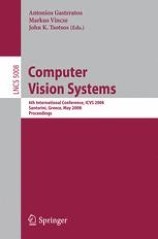
Computer vision systems ; 6th International conference, ICVS 2008 Santorini, Greece, May 12-15, 2008 Proceedings
This book constitutes the refereed proceedings of the 6th International Conference on Computer Vision Systems, ICVS 2008, held in Santorini, Greece, May 12-15, 2008.

Computer Vision Systems ; 2nd International Workshop, ICVS 2001 Vancouver, Canada, July 7-8, 2001 Proceedings
Computer Vision has reached a level of maturity that allows us not only to p- form research on individual methods and system components but also to build fully integrated computer vision systems of signi cant complexity. This opens a number of new problems related to system architecture, methods for system synthesis and veri cation, active vision systems, control of perception and - tion, knowledge and system representation, context modeling, cue integration, etc. By focusing on methods and concepts for the construction of fully integrated vision systems, ICVS aims to bring together researchers interested in computer vision systems. Similar to the previous event in Las Palmas, ICVS 2001 was organized as a single-track workshop consisting of high-quality.

Computer Vision in Human-Computer Interaction ; Vol.3979 ; ECCV 2006 Workshop on HCI, Graz, Austria, May 13, 2006, Proceedings
This volume presents the proceedings of the HCI 2006 Workshop, held in conjunction with ECCV 2006 (European Conference on Computer Vision) in Graz, Austria. The goal of this workshop was to bring together researchers from the field of computer vision whose work is related to human–computer interaction.

Computer vision in human-computer interaction ; Vol. 3766
Human-Computer Interaction (HCI) lies at the crossroads of many scienti?c areas including arti?cial intelligence, computer vision, face recognition, motion tracking, etc. In order for HCI systems to interact seamlessly with people, they need to understand their environment through vision and auditory input. Mo- over, HCI systems should learn how to adaptively respond depending on the situation. The goal of this workshop was to bring together researchers from the ?eld of computer vision whose work is related to human-computer interaction. The selected articles for this workshop address a wide range of theoretical and - plication issues in human-computer interaction ranging from human-robot - teraction, gesture recognition, and body tracking, to facial features analysis and human-computer interaction systems.

Computer Vision Beyond the Visible Spectrum
Recently, there has been a dramatic increase in the use of sensors in the non-visible bands. As a result, there is a need for existing computer vision methods and algorithms to be adapted for use with non-visible sensors, or for the development of completely new methods and systems. Computer Vision Beyond the Visible Spectrum is the first book to bring together state-of-the-art work in this area. It presents new & pioneering research across the electromagnetic spectrum in the military, commercial, and medical domains. By providing a detailed examination of each of these areas, it focuses on the development of state-of-the-art algorithms and looks at how they can be used to solve existing & new challenges within computer vision. Essential reading for academics & industrial researchers working in the area of computer vision, image processing, and medical imaging, it will also be useful background reading for advanced undergraduate & postgraduate students.

Computer vision approaches to medical image analysis ; 2nd International ECCV Workshop, CVAMIA 2006, Graz, Austria, May 12, 2006, Revised Papers
This was the second time that a satellite workshop,solely devoted to medical image analysis issues, was held in conjunction with the European Conference on Computer Vision (ECCV). We received 38 full-length paper submissions to the second Computer Vision Approaches to Medical Image Analysis (CVAMIA) Workshop, out of which 10 were accepted for oral and 11 for poster presentation after a rigorous peer-review process. In addition, the workshop included three invited talks.
