



الصفحة 7
الصفحة 7

Experimental Algorithms ; 6th International Workshop, WEA 2007, Rome, Italy, June 6-8, 2007, Proceedings
Fostering and disseminating high quality research results focused on the experimental analysis of algorithms the papers are devoted to the design, analysis, implementation, experimental evaluation, and engineering of efficient algorithms. Among the application areas addressed are most fields applying advanced algorithmic techniques, such as combinatorial optimization, approximation, graph theory, discrete mathematics, data mining, simulation, cryptography and security, scheduling, searching, sorting, string matching, coding, networking, etc.

Experimental Algorithms ; 5th International Workshop, WEA 2006, Cala Galdana, Menorca, Spain, May 24-27, 2006, Proceedings
This book constitutes the refereed proceedings of the 5th International Workshop on Experimental and Efficient Algorithms, WEA 2006, held in Cala Galdana, Menorca, Spain in May 2006. The 26 revised full papers presented together with 3 invited talks were carefully reviewed and selected from 92 submissions. The book is devoted to the design, analysis, implementation, experimental evaluation, and engineering of efficient algorithms. Among the application areas addressed are most fields applying advanced algorithmic techniques.

Evolvable systems : From biology to hardware ; 7th International Conference, ICES 2007, Wuhan, China, September 21-23, 2007, Proceedings
The 41 revised full papers collected in this volume are organized in topical sections on digital hardware evolution, analog hardware evolution, bio-inspired systems, mechanical hardware evolution, evolutionary design, evolutionary algorithms in hardware design, and hardware implementation of evolutionary algorithms.

Evolvable systems : From biology to hardware ; 6th International Conference, ICES 2005, Sitges, Spain, September 12-14, 2005, Proceedings
The flying machines proposed by Leonardo da Vinci in the fifteenth century, the se- reproducing automata theory proposed by John von Neumann in the middle of the twentieth century and the current possibility of designing electronic and mechanical systems using evolutionary principles are all examples of the efforts made by humans to explore the mechanisms present in biological systems that permit them to tackle complex tasks. These initiatives have recently given rise to the emergent field of b- inspired systems and evolvable hardware. The inaugural workshop, Towards Evolvable Hardware, took place in Lausanne in October 1995, followed by the successive events of the International Conference on Evolvable Systems: From Biology to Hardware, held in Tsukuba (Japan) in October 1996, in Lausanne (Switzerland) in September 1998, in Edinburgh (UK) in April 2000, in Tokyo (Japan) in October 2001, and in Trondheim (Norway) in March 2003. Following the success of these past events the sixth international conference was aimed at presenting the latest developments in the field, bringing together researchers who use biologically inspired concepts to implement real systems in artificial intelligence, artificial life, robotics, VLSI design, and related domains. The sixth conference consolidated this biennial event as a reference meeting for the community involved in bio-inspired systems research. All the papers received were reviewed by at least three independent reviewers, thus guaranteeing a high-quality bundle for ICES 2005.

Euro-Par 2019 : Parallel Processing Workshops ; Euro-Par 2019 International Workshops, Göttingen, Germany, August 26–30, 2019, Revised Selected Papers
Euro-Par is an annual, international conference in Europe, covering all aspects of parallel and distributed processing. These range from theory to practice, from small to the largest parallel and distributed systems and infrastructures, from fundamental computational problems to full-edged applications, from architecture, compiler, language and interface design and implementation to tools, support infrastructures, and application performance aspects.

English proofreader
Using Natural Language Processing via Deep Learning, we will attempt to implement a context-sensitive spelling error correction system focused on casual text messaging. For example, usual autocorrect systems will not correct a sentence like “An apple is better than a banana” as this is a syntactically correct sentence. However, a correction should be made here to the word “then” and the sentence should be, “An apple is better than a banana.” These types of mistakes are common in people texting and can be found for example in people learning English as a second language. Natural Language Processing can be summarized as combining the utilization of computation to understand the concepts of natural language and speech.
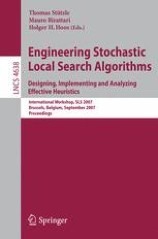
Engineering Stochastic Local Search Algorithms. Designing, Implementing and Analyzing Effective Heuristics ; International Workshop, SLS 2007, Brussels, Belgium, September 6-8, 2007, Proceedings
Stochastic local search (SLS) algorithms enjoy great popularity as powerful and versatile tools for tackling computationally hard decision and optimization pr- lems from many areas of computer science, operations research, and engineering. However, in recent years it has become evident that at the core of this development task there is a highly complex engineering process, which combines various aspects of algorithm design with empirical analysis techniques and problem-specific background, and which relies heavily on knowledge from a number of disciplines and areas, including computer science, operations research, artificial intelligence, and statistics. This development process needs to be - sisted by a sound methodology that addresses the issues arising in the various phases of algorithm design, implementation, tuning, and experimental eval- tion.

Engineering Multi-Agent Systems ; 7th International Workshop, EMAS 2019, Montreal, QC, Canada, May 13–14, 2019, Revised Selected Papers
This book constitutes the thoroughly refereed post-conference proceedings of the 7th International Workshop on Engineering Multi-Agent Systems, EMAS 2019, held in Montreal, QC, Canada, in May 2019. The 13 revised full papers presented in this book were carefully selected and reviewed from 20 submissions. The papers are grouped in the following topical sections: Multi-Agent Interaction and Organization; Simulation; Social Awareness and Explainability; Learning and Reconfiguration; and Implementation Techniques and Tools.

Embedded Java Security : Security for Mobile Devices
Whereas Java brings functionality and versatility to the world of mobile devices, at the same time it also introduces new security threats. The rapid growth of the number of mobile devices that support Java makes this a pressing issue. Embedded Java Security carefully examines the security aspects of Java and offers a security evaluation for the Java platform. After explaining background material on the architecture of embedded platforms and relating to its role in security, the book deconstructs the security model into its main components: It explains each component and relates it to the aim of securing the applications and the device. Toward this end, several implementations of the Java platform are examined and tested to relate the model to its actual implementation on devices. The security holes found are further used to clarify security issues and point out common errors. Finally, the book provides an evaluation of embedded Java security that includes security models and security tests performed on real-life implementations.

Embedded image processing on the TMS320C6000™ DSP : Examples in code composer studio™ and MATLAB
the author also explains the uses and rationale behind a plethora of technologies, most notably several industry-standard and essential TI developer technologies, including the Code Composer Studio™ IDE. Highlights include numerous debugged MATLAB and C/C++ Visual Studio prototype applications and efficient C implementations of real-world algorithms tested on both the C6416 DSK and C6701 EVM development platforms

Embedded Computer Systems : Architectures, Modeling, and Simulation ; 8th International Workshop, SAMOS 2008, Samos, Greece, July 21-24, 2008. Proceedings
This book constitutes the refereed proceedings of the 8th International Workshop on Systems, Architectures, Modeling, and Simulation, SAMOS 2008, held in Samos, Greece, in July 2008.

Elementary logic : For software development
This book teaches readers how to better reason about software development, to communicate reasoning, to distinguish between good and bad reasoning, and to read professional literature that presumes knowledge of elementary logic. It explains fundamental concepts and provides reader-friendly instructions for applying logic to software development.

Elementary Functions : Algorithms and Implementation
This unique book provides concepts and background necessary to understand and build algorithms for computing the elementary functions—sine, cosine, tangent, exponentials, and logarithms. The author presents and structures the algorithms, hardware-oriented as well as software-oriented, and also discusses issues related to accurate floating-point implementation. The purpose is not to give "cookbook recipes" that allow one to implement a given function, but rather to provide the reader with tools necessary to build or adapt algorithms for their specific computing environment.

ECOOP 2007 – Object-Oriented Programming ; 21th European Conference, Berlin, Germany, July 30 - August 3, 2007, Proceedings
This book contains sections on runtime implementation, empirical studies, programs and predicates, language design, inheritance and derivation, aspects, as well as language about language.

E-CARGO and role-based collaboration : Modeling and solving problems in the complex
A model for collaboratively solving complex problems Explains the nature of collaboration, explores an easy-to-follow process of collaboration, and defines a model to solve complex problems in collaboration and complex systems. Written by a noted expert on the topic, the book initiates the study of an effective collaborative system from a novel perspective. The role-based collaboration (RBC) methodology investigates the most important aspects of a variety of collaborative systems including societal-technical systems. The models and algorithms can also be applied across system engineering, production, and management. Contains a set of concepts, models, and algorithms for the analysis, design, implementation, maintenance, and assessment of a complex system Presents computational methods that use roles as a primary underlying mechanism to facilitate collaborative activities including role assignment Explores the RBC methodology that concentrates on the aspects that can be handled by individuals to establish a well-formed team Offers an authoritative book written by a noted expert on the topic

E-business and telecommunication networks ; 1st International conference, ICETE 2004, Setúbal, Portugal,
This book contains the best papers of the First International Conference on e-Business and Telecommunication Networks (ICETE 2004), held in Setúbal (Portugal). The conference was organized by INSTICC (Institute for Systems and Technologies of Information, Communication and Control) in collaboration with the School of Business of the Polytechnic Institute of Setúbal, who hosted the event. This conference represented a major initiative to increase the technical exchanges among professionals, who work in the e-Business and Telecommunication Networks fields, and who are implementing new services and technologies affecting the lives of ordinary consumers.

Early Aspects: Current Challenges and Future Directions ; 10th International Workshop, Vancouver, Canada, March 13, 2007, Revised Selected Papers
Traditionally, aspect-oriented software development (AOSD) has focused on the implementation phase of the software lifecycle: aspects are identified and captured mainly in code. Therefore, most current AOSD approaches place the burden for aspect identification and management on the programmer working at low levels of abstraction. However, aspects are often present well before the implementation phase, such as in domain models, requirements and software architecture. Identification and capture of these early aspects ensure that aspects related to the problem domain (as opposed to merely the implementation) will be appropriately captured, reasoned about and available. This offers improved opportunities for early recognition and negotiation of trade-offs and allows forward and backward aspect traceability. This makes requirements, architecture, and implementation more seamless, and allows a more systematic application of aspects.

Drousi: A private lessons management system
Private teaching is considered to be an effective way to increase academic achievement of students and it seen as being a supplementary education, so it has become very common all around the world, however, previous studies have come to different conclusions regarding its necessity, so Drousi application had been made ,it’s a user-friendly mobile application to manage and arrange private lessons, and There has never been a better time to become a private tutor, as class sizes in schools increase, this can result in teachers being unable to give their undivided attention to students, and this document lays out a project plan for the development of “Drousi”, The plan will include a summary of the system functionality and how it implemented.

Dream catcher
Dream Catcher is a video generation application that helps in many fields as science fiction, imagine event’s scenarios, education, animation and montage. By applying artificial algorithms implemented and trained on a dataset containing video samples and there descriptions to generate videos from any given text. The idea of generating videos from text is a new idea that was first presented at 2017, even that international companies like Google and OpenAi In the last year, was working on developing models to generate images from text. To make it easier to use the application, there are many ways to enter the text either by an image, voice or Typing from the keyboard.
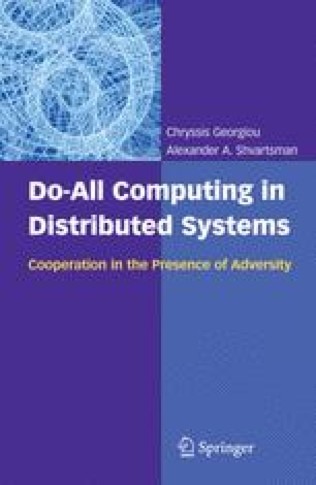
Do-All Computing in Distributed Systems : Cooperation in the Presence of Adversity
Do-All Computing in Distributed Systems: Cooperation in the Presence of Adversity is the first book that presents an in depth study of cooperation problems, abstracted in terms of the Do-All problem, where a collection of processors cooperatively perform a collection of independent tasks in the presence of adversity.
