



الصفحة 7
الصفحة 7

Cellular Automata and Discrete Complex Systems ; 26th IFIP WG 1.5 International Workshop, AUTOMATA 2020, Stockholm, Sweden, August 10–12, 2020, Proceedings
This volume constitutes the refereed post-conference proceedings of the 26th IFIP WG 1.5 International Workshop on Cellular Automata and Discrete Complex Systems, AUTOMATA 2020, held in Stockholm, Sweden, in August 2020. The workshop was held virtually. The 11 full papers presented in this book were carefully reviewed and selected from a total of 21 submissions. The topics of the conference include dynamical, topological, ergodic and algebraic aspects of CA and DCS, algorithmic and complexity issues, emergent properties, formal languages, symbolic dynamics, tilings, models of parallelism and distributed systems, timing schemes, synchronous versus asynchronous models, phenomenological descriptions, scientific modeling, and practical applications.

CASCOM : Intelligent service coordination in the semantic web
A general architecture for service delivery and coordination in intelligent agent-based peer-to-peer (IP2P) environments, that has been developed within the CASCOM research project, is presented in this book.
Body Sensor Networks
While the problems of long-term stability and biocompatibility are being addressed, several promising prototypes are starting to emerge for managing patients with acute diabetes, for treatment of epilepsy and other debilitating neurological disorders and for monitoring of patients with chronic cardiac diseases. Despite the technological developments in sensing and monitoring devices, issues related to system integration, sensor miniaturization, low-power sensor interface circuitry design, wireless telemetric links and signal processing still have to be investigated.

Biology and Control Theory : Current Challenges
Creating some links between control feedback and biology modeling communities based on similarities in modeling, observing and perceiving alive structures, and analyzing interconnections between biological structures and subsystems was the main objective of this volume. The idea of this book was conceived in the context mentioned above with the objective to help in claiming many of the problems for control researchers, starting discussions and opening interactive debates between the control and biology communities, and, finally, to alert graduate students to the many interesting ideas at the frontier between control feedback theory and biology.
Bioinformatics : Problem Solving Paradigms
This book highlights basic paradigms of problem analysis and algorithm design in the context of core bioinformatics problems. Mathematically demanding themes are put across to the reader by properly chosen representations with the aid of lots of illustrations.
Biogeochemical cycles in globalization and sustainable development
This valuable study of environmental subsystems functioning under various climatic and anthropogenic conditions provides a unique insight into the social context of global changes in biogeochemical cycles and demonstrates current understanding of globalization and sustainable development.

Bioethics in Cultural Contexts : Reflections on Methods and Finitude
This book discusses a range of methodological issues for an interdisciplinary bioethics. How can bioethics be an enterprise that does not only isolate issues and moral reasons but also (re)contextualises them? What are the strengths and weaknesses of different traditional and innovative modes of ethical work in terms of these tasks?

Bioethics in a Small World
Bioethics has addressed many of the issues that arise in the context of globalisation. This book presents the results of a conference the Europaische Akademie held in 2003 which developed its thesis in open discussions of foundational and applied problems of bioethics from an interdisciplinary and international perspective.

Big Data in Context : Legal, Social and Technological Insights
Sheds new light on a selection of big data scenarios from an interdisciplinary perspective. It features legal, sociological and economic approaches to fundamental big data topics such as privacy, data quality and the ECJ’s Safe Harbor decision on the one hand, and practical applications such as smart cars, wearables and web tracking on the other. Addressing the interests of researchers and practitioners alike, it provides a comprehensive overview of and introduction to the emerging challenges regarding big data.All contributions are based on papers submitted in connection with ABIDA (Assessing Big Data), an interdisciplinary research project exploring the societal aspects of big data and funded by the German Federal Ministry of Education and Research.

Beyond Cartesian Dualism : Encountering affect in the teaching and learning of science.
There is surprisingly little known about affect in science education. Despite periodic forays into monitoring students’ attitudes-toward-science, the effect of affect is too often overlooked. Beyond Cartesian Dualism gathers together contemporary theorizing in this axiomatic area. In fourteen chapters, senior scholars of international standing use their knowledge of the literature and empirical data to model the relationship between cognition and affect in science education. Their revealing discussions are grounded in a broad range of educational contexts including school classrooms, universities, science centres, travelling exhibits and refugee camps, and explore an array of far reaching questions. What is known about science teachers’ and students’ emotions? How do emotions mediate and moderate instruction? How might science education promote psychological

Between Necessity and Probability : Searching for the Definition and Origin of Life
This study investigates the major theories of the origins of life in light of modern research with the aim of distinguishing between the necessary and the optional and between deterministic and random influences in the emergence of what we call ‘life.’ Life is treated as a cosmic phenomenon whose emergence and driving force should be viewed independently from its Earth-bound natural history. The author synthesizes all the fundamental life-related developments in a comprehensive scenario, and makes the argument that understanding life in its broadest context requires a material-independent perspective that identifies its essential fingerprints.
Best practices in software measurement : How to use metrics to improve project and process performance
Not everything that counts can be counted. Not everything that is counted counts. Albert Einstein This is a book about software measurement from the practitioner’s point of view and it is a book for practitioners. Software measurement needs a lot of practical guidance to build upon experiences and to avoid repeating errors. This book t- gets exactly this need, namely to share experiences in a constructive way that can be followed. It tries to summarize experiences and knowledge about software measurement so that it is applicable and repeatable. It extracts experiences and lessons learned from the narrow context of the specific industrial situation, thus facilitating transfer to other contexts. Software measurement is not at a standstill. With the speed software engine- ing is evolving, software measurement has to keep pace. While the underlying theory and basic principles remain invariant in the true sense (after all, they are not specific to software engineering), the application of measurement to specific contexts and situations is continuously extended. The book thus serves as a ref- ence on these invariant principles as well as a practical guidance on how to make software measurement a success.

Beginning JBoss Seam : From novice to professional
Reacting to the popularity of Java 2.0 Enterprise Edition™ alternatives such as Ruby on Rails and the enterprise Spring Framework, Red Hat JBoss®, Inc. developed JBoss® Seam, a new open-source lightweight Java™ EE 5-based contextual application development framework. Beginning JBoss® Seam: From Novice to Professional gets you started as the first book on this popular framework.

Becoming citizens in a changing world : IEA international civic and citizenship education study 2016 International Report
Presents the results from the second cycle of the IEA International Civic and Citizenship Education Study (ICCS 2016). Using data from 24 countries in Asia, Europe and Latin America, the study investigates the ways in which young people are prepared to undertake their roles as citizens in a range of countries in the second decade of the 21st century. It also responds to the enduring and emerging challenges of educating young people in a world where contexts of democracy and civic participation continue to change. New developments of this kind include the increase in the use of social media by young people as a tool for civic engagement, growing concerns about global threats and sustainable development, as well as the role of schools in fostering peaceful ways of interaction between young people. Besides enabling the evaluation of a wide range of aspects of civic and citizenship education, including those related to recent developments in a number of countries, the inclusion of test and questionnaire material from the first cycle of the study in 2009 allows the results from ICCS 2016 to be used to examine changes in civic knowledge, attitudes and engagement over seven years.
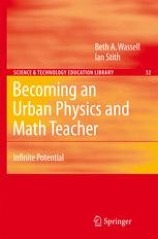
Becoming an urban physics and math teacher : Infinite potential
What happens as beginning urban teachers transition through their first few years in the classroom? This book captures one teacher's journey through the first three years of teaching science and mathematics in a large urban district in the US. The authors focus on Ian's agency as a beginning teacher and explore his success in working with diverse students. Using critical ethnography combined with first-person narrative, they investigate Ian's teaching practices in four contexts: his student teaching experience, his work with students on a summer curriculum development project, his first year of teaching in a small, urban high school, and his second year of teaching in a large, comprehensive high school. In each field, the authors describe the structural changes Ian encounters and the ways in which he re-utilizes the practices he used successfully in previous fields.

Balanced Website Design : Optimising Aesthetics, Usability and Purpose
Balanced Website Design (BWD) is a new methodology that fuses the strengths of traditional structured, stepped, and iterative approaches with a sharp focus on defining and achieving the desired characteristics of purpose, usability and aesthetics – absolutely essential requirements for any website. The book includes discussions of new perspectives on usability and aesthetics in the special context of website design. BWD is suitable for all types of websites, for individual and/or team projects, and should prove to be of significant value for even the most experienced of website designers. BWD provides guidance, structure and detailed documentation/process support for the activity of designing and implementing your next website – helping you to maximise its effectiveness and relevance.

Average-Cost Control of Stochastic Manufacturing Systems
This book is concerned with hierarchical control of manufacturing systems under uncertainty. It focuses on system performance measured in long-run average cost criteria, exploring the relationship between control problems with a discounted cost and that with a long-run average cost in connection with hierarchical control. A new theory is articulated that shows that hierarchical decision making in the context of a goal-seeking manufacturing system can lead to a near optimization of its objective. The approach in the book considers manufacturing systems in which events occur at different time scales.

Autonomy and human rights in health care : An international perspective
Autonomy and Human Rights in Healthcare: An International Perspective is a group of essays published in memory of David Thomasma, one of the leading humanists in the field of bioethics during the twentieth century. A pioneer in the field of multidisciplinary research, having integrated major theological and philosophical traditions in the west with modern science, Thomasma was a role model to the authors who have devoted essays to his major avenues of inquiry. The authors represent many different countries and disciplines throughout the globe. The volume deals with the pressing issue of how to ground a universal bioethics in the context of the conflicted world of combative cultures and perspectives.

Autonomic networking ; 1st International IFIP TC6 Conference, AN 2006, Paris, France, September 27-29, 2006, Proceedings
The autonomic communication paradigm has been defined mainly through the Autonomic Communications Forum (ACF) and particularly as follows: Autonomic communication is centered on selfware – an innovative approach to perform known and emerging tasks of a network control plane, both end-to-end and middle box communication-based. Selfware assures the capacity to evolve; however, it requires generic network instrumentation. Selfware principles and technologies borrow largely from well-established research on distributed systems, fault tolerance among others, from emerging research on non-conventional networking (multihop ad hoc, sensor, peer-to-peer, group communication, etc.

Autonomic communication ; Vol. 3457 ; 1st International IFIP Workshop, WAC 2004, Berlin, Germany, October 18-19, 2004, Revised Selected Papers
The ?rst IFIP Workshop on Autonomic Communication (WAC 2004) was held 2004 in Berlin, Germany. The purpose of this workshop was to discuss Autonomic Communication—a new communication paradigm to assist the design of the next-generation n- works. WAC 2004 was explicitly focused on the principles that help to achieve purposeful behavior on top of self-organization (self-management, self-healing, self-awareness, etc. ). The workshop intended to derive these common principles from submissions that study network element’s autonomic behavior exposed by innovative (cross-layer optimized, context-aware, and securely programmable) protocol stack (or its middleware emulations) in its interaction with numerous, often dynamic network groups and communities. The goals were to understand how autonomic behaviors are learned, in?uenced or changed, and how, in turn, these a?ect other elements, groups and the network. Panel reports were compiled by panel moderators and conclude this volume.
