



الصفحة 6
الصفحة 6

Computer Aided Systems Theory – EUROCAST 2007 ; 11th International Conference on Computer Aided Systems Theory, Las Palmas de Gran Canaria, Spain, February 12-16, 2007, Revised Selected Papers
This book presented formal approaches, Computation and Simulation in Modelling Biological Systems, Intelligent Information Processing, Computers in Education, Grid Computing, Applied Formal Verification, Cellular Automata, Computer Vision, Heuristic Problem So.

Computer Aided Systems Theory – EUROCAST 2005 ; 10th International Conference on Computer Aided Systems Theory, Las Palmas de Gran Canaria, Spain, February 7-11, 2005, Revised Selected Papers
The concept of CAST, computer aided systems Theory, was introduced by F. Pichler of Linz in the late 1980s to include those computer theoretical and practical developments used as tools to solve problems in system science. It was considered as the third component (the other two being CAD and CAM) that would provide for a complete picture of the path from computer and systems sciences to practical developments in science and engineering. Selected papers were published as Springer Lecture Notes in Computer Science vols. 410, 585, 763, 1030, 1333, 1728, 2178 and 2809 and in several special issues of Cybernetics and Systems: an lnternational

Computational Science - ICCS 2006 ; Vol. 3993 ; 6th International Conference, Reading, UK, May 28-31, 2006, Proceedings, Part III
The four-volume set LNCS 3991-3994 constitutes the refereed proceedings of the 6th International Conference on Computational Science, ICCS 2006, held in Reading, UK, in May 2006. The papers span the whole range of computational science.

Computational Science - ICCS 2006 ; Vol. 3991 ; 6th International Conference, Reading, UK, May 28-31, 2006, Proceedings, Part I
The four-volume set LNCS 3991-3994 constitutes the refereed proceedings of the 6th International Conference on Computational Science, ICCS 2006, held in Reading, UK, in May 2006. The papers span the whole range of computational science.

Mathematical Foundations of Computer Science 2008 ; 33rd International Symposium, MFCS 2008, Toru´n, Poland, August 25-29, 2008. Proceedings
Constitutes the refereed proceedings of the 33rd International Symposium on Mathematical Foundations of Computer Science, MFCS 2008, held in Torun, Poland, in August 2008.The 45 revised full papers presented together with 5 invited lectures were carefully reviewed and selected from 119 submissions. All current aspects in theoretical computer science and its mathematical foundations are addressed, ranging from algorithmic game theory, algorithms and data structures, artificial intelligence, automata and formal languages, bioinformatics, complexity, concurrency and petrinets, cryptography and security, logic and formal specifications, models of computations, parallel and distributed computing, semantics and verification.

Mathematical Foundations of Computer Science 2007 ; 32nd International Symposium, MFCS 2007 Ceský Krumlov, Czech Republic, August 26-31, 2007, Proceedings
This book constitutes the refereed proceedings of the 32nd International Symposium on Mathematical Foundations of Computer Science, MFCS 2007, held in Cesk?? Krumlov, Czech Republic, August 26-31, 2007. All current aspects in theoretical computer science and its mathematical foundations are addressed.

Mathematical foundations of computer science 2006 ; 31st International Symposium, MFCS 2006, Stará Lesná, Slovakia, August 28-September 1, 2006, Proceedings
This book constitutes the refereed proceedings of the 31st International Symposium on Mathematical Foundations of Computer Science, MFCS 2006, held in Stará Lesná, Slovakia in August/September 2006. The 62 revised full papers presented together with the full papers or abstracts of 7 invited talks were carefully reviewed and selected from 174 submissions. All current aspects in theoretical computer science and its mathematical foundations are addressed, ranging from algorithms and data structures, to complexity, automata, semantics, logic, formal specifications, models of computation, concurrency theory, computational geometry, parallel and distributed computing, networks, bioinformatics, quantum computing, cryptography, knowledge-based systems, and artificial intelligence.

Mathematical Foundations of Computer Science 2005 ; 30th International Symposium, MFCS 2005, Gdansk, Poland, August29-September 2. 2005, Proceedings
Constitutes the proceedings of the 30th International Symposium on Mathematical Foundations of Computer Science, MFCS 2005, held in Gdansk, Poland in August/September 2005. The 62 papers address various aspects in theoretical computer science, ranging from quantum computing, approximation, automata, circuits, scheduling, games, and more.

Machines, Computations, and Universality ; 5th International Conference, MCU 2007, Orleans, France, September 10-13, 2007, Proceedings
The 18 revised full papers presented together with nine invited papers cover Turing machines, register machines, word processing, cellular automata, tiling of the plane, neural networks, molecular computations, BSS machines, infinite cellular automata, real machines, and quantum computing.

Machines, Computations, and Universality ; 4th International Conference, MCU 2004, Saint Petersburg, Russia, September 21-24, 2004, Revised Selected Papers
Constitutes the post-proceedings of the 4th International Conference on Machines, Computations, and Universality, MCU 2004, held in St Petersburg, Russia in September 2004. This book covers a variety of foundational aspects in theoretical computer science such as cellular automata, molecular computing, quantum computing, and formal languages

Logical aspects of computational linguistics ; 4th International Conference, LACL 2001, Le Croisic, France, June 27-29, 2001, Proceedings
Structural Equations in Language Learning.- On the Distinction between Model-Theoretic and Generative-Enumerative Syntactic Frameworks.- Contributed Papers.- A Formal Definition of Bottom-Up Embedded Push-Down Automata and Their Tabulation Technique.- An Algebraic Approach to French Sentence Structure.- Deductive Parsing of Visual Languages.- Lambek Grammars Based on Pregroups.- An Algebraic Analysis of Clitic Pronouns in Italian.- Consistent Identification in the Limit of Any of the Classes k-Valued Is NP-hard.- Polarized Non-projective Dependency Grammars.- On Mixing Deduction and Substitution in Lambek Categorial Grammars.- A Framework for the Hyperintensional Semantics of Natural Language with Two Implementations.- A Characterization of Minimalist Languages.- of Speech Tagging from a Logical Point of View.- Transforming Linear Context-Free Rewriting Systems into Minimalist Grammars.- Recognizing Head Movement.- Combinators for Paraconsistent Attitudes.- Combining Syntax and Pragmatic Knowledge for the Understanding of Spontaneous Spoken Sentences.- Atomicity of Some Categorially Polyvalent Modifiers.

Logic for Programming, Artificial Intelligence, and Reasoning ; Vol. 3835 : 12th International Conference, LPAR 2005, Montego Bay, Jamaica, December 2-6, 2005, Proceedings
Constitutes the refereed proceedings of the 12th International Conference on Logic for Programming, Artificial Intelligence, and Reasoning, LPAR 2005. This book presents 46 revised papers with 3 abstracts, addressing issues in logic programming, logic-based program manipulation, formal method, automated reasoning, and various kinds of AI logics.

Logic for Programming, Artificial Intelligence, and Reasoning ; 15th International Conference, LPAR 2008, Doha, Qatar, November 22-27, 2008. Proceedings
This book constitutes the refereed proceedings of the 15th International Conference on Logic for Programming, Artificial Intelligence, and Reasoning, LPAR 2008, which took place in Doha, Qatar, during November 22-27, 2008.The 45 revised full papers presented together with 3 invited talks were carefully revised and selected from 153 submissions. The papers address all current issues in automated reasoning, computational logic, programming languages and their applications and are organized in topical sections on automata, linear arithmetic, verification knowledge representation, proof theory, quantified constraints, as well as modal and temporal logics.

Leveraging applications of formal methods, verification and validation : Verification Principles ; 9th International Symposium on Leveraging Applications of Formal Methods, ISoLA 2020, Rhodes, Greece, October 20–30, 2020, Proceedings, Part I
Constitutes the refereed proceedings of the 9th International Symposium on Leveraging Applications of Formal Methods, ISoLA 2020, which was planned to take place during October 20–30, 2020, on Rhodes, Greece. The papers presented were carefully reviewed and selected for inclusion in the proceedings. Each volume focusses on an individual topic with topical section headings within the volume : Part I, Verification Principles : Modularity and (De-)Composition in Verification ; X-by-Construction: Correctness meets Probability ; 30 Years of Statistical Model Checking ; Verification and Validation of Concurrent and Distributed Systems.

LATIN 2008 : Theoretical Informatics ; 8th Latin American Symposium, Búzios, Brazil, April 7-11, 2008. Proceedings
The Latin American Theoretical INformatics Symposium (LATIN) is becoming a traditional and high-quality conference on the Theory of Computing. Previous conferences havebeen organized twiceinBrazil: SaoPaulo (1992) and Campinas (1998); twice in Chile: Valpara so (1995) and Valdivia (2006); once in Uruguay: Punta del Este (2000); once in Mexico: Cancun (2002); and once in Argentina: Buenos Aires (2004). This volume contains the proceedings of the 8th Latin American Theore- cal INformatics Symposium (LATIN 2008), which was held in Buzio s, Rio de Janeiro, Brazil, April 7 11, 2008.

LATIN 2006 : Theoretical Informatics ; 7th Latin American Symposium, Valdivia, Chile, March 20-24, 2006, Proceedings
This book constitutes the refereed proceedings of the 7th International Symposium, Latin American Theoretical Informatics, LATIN 2006, held in March 2006. The 66 revised full papers presented together with seven invited papers were carefully reviewed and selected from 224 submissions. The papers presented are devoted to a broad range of topics in theoretical computer science with a focus on algorithmics and computations related to discrete mathematics as well as on cryptography, data compression and Web applications.

Language and Automata Theory and Applications ; 2nd International Conference, LATA 2008, Tarragona, Spain, March 13-19, 2008. Revised Papers
This book constitutes the refereed proceedings of the Second International Conference on Language and Automata Theory and Applications, LATA 2008, held in Tarragona, Spain, in March 2008.The 40 revised full papers presented were carefully reviewed and selected from 134 submissions. The papers deal with the various issues related to automata theory and formal languages
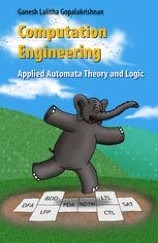
Computation Engineering : Applied Automata Theory and Logic
This book covers automata in depth, providing good intuitions along the way, and culminating with applications that are used every day in the field. In this respect, it is a departure from the conventional textbooks on complexity and computability, although these 'tradtional' aspects remain well represented.

Computation and Logic in the Real World ; 3rd Conference on Computability in Europe, CiE 2007, Siena, Italy, June 18-23, 2007, Proceedings
This volume, Computation and Logic in the Real World, is the proceedings of the third in a series of conferences of CiE Computability in Europe, (CiE) is an informal network working on computability theory including its foundations, technical development, and applications. It performed with discrete or continuous data by all kinds of algorithms, programs, and machines. The sources of new ideas and methods include practical developments in areas such as neural networks, quantum computation, natural computation, molecular computation, computational learning.

Comprehensive mathematics for computer scientists 1 : Sets and numbers, graphs and algebra, logic and machines, linear geometry
This two-volume textbook Comprehensive Mathematics for Computer Scientists is a self-contained comprehensive presentation of mathematics including sets, numbers, graphs, algebra, logic, grammars, machines, linear geometry, calculus, ODEs, and special themes such as neural networks, Fourier theory, wavelets, numerical issues, statistics, categories, and manifolds. The concept framework is streamlined but defining and proving virtually everything.
