



الصفحة 6
الصفحة 6

Distributed, High-Performance and Grid Computing in Computational Biology ; International Workshop, GCCB 2006, International Workshop, GCCB 2006, Eilat, Israel, January 21, 2007, Proceedings
Modern computational biology and bioinformatics are characterized by large and complex structured data and by applications requiring considerable computing resources, such as processing units, storage elements and software programs. In addition, these disciplines are intrinsically geographically distributed in terms of their instruments, communities and computing resources. Tackling the computational challenges in computational biology and bioinformatics increasingly requires high-end and distributed computing infrastructures, systems and tools.
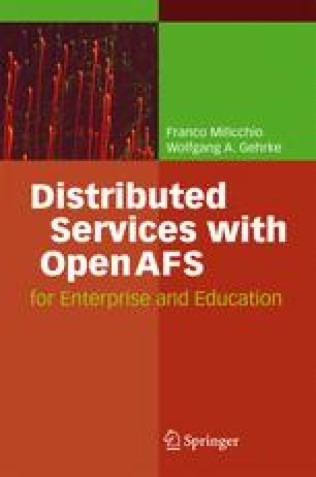
Distributed Services with OpenAFS : For Enterprise and Education
This book shows in detail how to build enterprise-level secure, redundant, and highly scalable services from scratch on top of the open source Linux operating system, suitable for small companies as well as big universities. The core architecture presented is based on Kerberos, LDAP, AFS, and Samba. It is shown how to integrate web, message related, data base and other services with this backbone. This architecture provides a Single-Sign-On solution for different client platforms and can also be employed for clustering. Although it is implemented with Debian GNU/Linux, the content can be applied to other UNIX flavors.

Distributed embedded systems : Design, middleware and resources ; IFIP 20th World computer congress, TC10 Working conference on distributed and parallel embedded systems (DIPES 2008), September 7-10, 2008, Milano, Italy
The IFIP series publishes state-of-the-art results in the sciences and technologies of information and communication. The principal aim of the IFIP series is to encourage education and the dissemination and exchange of information about all aspects of computing.

Digital Watermarking ; Vol. 3710 ; 4th International Workshop, IWDW 2005, Siena, Italy, September 15-17, 2005, Proceedings
We are delighted to welcome the attendees of the Fourth International Wo- shop on Digital Watermarking (IWDW). Watermarking continues to generate strong academic interest. Commercialization of the technology is proceeding at a steadypace. We haveseen watermarkingadoptedfor DVD audio.Fingerpri- ing technology was successfully used to determine the source of pirated video material. Furthermore, a number of companies are using watermarking as an enabling technology for broadcast monitoring services. Watermarking of digital cinema contentis anticipated. Future applications may also come from areas- related to digital rights management. For example, the use of watermarking to enhance legacy broadcast and communication systems is now being considered. IWDW 2005 o?ers an opportunity to re?ect upon the state of the art in digital watermarking as well as discuss directions for future research and applications. This year we accepted 31 papers from 74 submissions. This 42% acceptance rate indicates our commitment to ensuring a very high quality conference.

Digital Document Processing : Major Directions and Recent Advances
With the advent of the Digital Library initiative, web document processing and biometric aspects of digital document processing, together with new techniques of printed and handwritten Optical Character Recognition (OCR), a good overview of this fast-developing field is invaluable. In this book, all the major and frontier topics in the field of document analysis are brought together into a single volume creating a unique reference source.

Digital cities III : Information technologies for social capital: Cross-cultural Perspectives ; 3rd international digital cities workshop, Amsterdam, The Netherlands, September 18-19, 2003, Revised Selected Papers
Digital cities constitutes a multidisciplinary field of research and development, where researchers, designers and developers of communityware interact and collaborate with social scientists studying the use and effects of these kinds of infrastructures and systems in their local application context. The field is rather young. After the diffusion of ICT in the world of organizations and companies, ICT entered everyday life. And this also influenced ICT research and development. The 1998 Workshop on Communityware and Social Interaction in Kyoto was an early meeting in which this emerging field was discussed.

Differential Evolution : A Practical Approach to Global Optimization
Problems demanding globally optimal solutions are ubiquitous, yet many are intractable when they involve constrained functions having many local optima and interacting, mixed-type variables. The differential evolution (DE) algorithm is a practical approach to global numerical optimization which is easy to understand, simple to implement, reliable, and fast. Packed with illustrations, computer code, new insights, and practical advice, this volume explores DE in both principle and practice. It is a valuable resource for professionals needing a proven optimizer and for students wanting an evolutionary perspective on global numerical optimization.

DevOps Tools for Java Developers : Best Practices from Source Code to Production Containers
Explore software lifecycle best practices Use DevSecOps methodologies to facilitate software development and delivery Understand the business value of DevSecOps best practices Manage and secure software dependencies Develop and deploy applications using containers and cloud native technologies Manage and administrate source control repositories and development processes Use automation to set up and administer build pipelines Identify common deployment patterns and antipatterns Maintain and monitor software after deployment
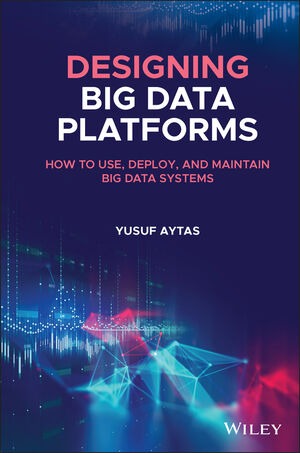
Designing big data platforms : How to use, deploy, and maintain big data systems
Provides expert guidance and valuable insights on getting the most out of Big Data systems. Helps readers understand how to process large amounts of data with well-known Linux tools and database solutions, use effective techniques to collect and manage data from multiple sources, transform data into meaningful business insights, and much more. Author Yusuf Aytas, a software engineer with a vast amount of big data experience, discusses the design of the ideal Big Data platform: one that meets the needs of data analysts, data engineers, data scientists, software engineers, and a spectrum of other stakeholders across an organization. Detailed yet accessible chapters cover key topics such as stream data processing, data analytics, data science, data discovery, and data security. This real-world manual for Big Data technologies: Provides up-to-date coverage of the tools currently used in Big Data processing and management / Offers step-by-step guidance on building a data pipeline, from basic scripting to distributed systems / Highlights and explains how data is processed at scale / Includes an introduction to the foundation of a modern data platform
Design Patterns in Modern C++20 : Reusable Approaches for Object-Oriented Software Design
As well as covering traditional design patterns, this book fleshes out new design patterns and approaches that will be useful to modern C++ developers. Author Dmitri Nesteruk presents concepts as a fun investigation of how problems can be solved in different ways, along the way using varying degrees of technical sophistication and explaining different sorts of trade-offs. You will: Use creational patterns such as builder, factories, prototype and singleton / Implement structural patterns such as adapter, bridge, decorator, facade and more / Work with the behavioral patterns such as chain of responsibility, command, iterator, mediator and more / Apply functional design patterns such as the Maybe Monad
Deployment and operation of complex software in heterogeneous execution environments : The SODALITE approach
This book provides an overview of the work developed within the SODALITE project, which aims at facilitating the deployment and operation of distributed software on top of heterogeneous infrastructures, including cloud, HPC and edge resources. The experts participating in the project describe how SODALITE works and how it can be exploited by end users. While multiple languages and tools are available in the literature to support DevOps teams in the automation of deployment and operation steps, still these activities require specific know-how and skills that cannot be found in average teams. The SODALITE framework tackles this problem by offering modelling and smart editing features to allow those we call Application Ops Experts to work without knowing low level details about the adopted, potentially heterogeneous, infrastructures. The framework offers also mechanisms to verify the quality of the defined models, generate the corresponding executable infrastructural code, automatically wrap application components within proper execution containers, orchestrate all activities concerned with deployment and operation of all system components, and support on-the-fly self-adaptation and refactoring.

Deep learning for computational problems in hardware security : Modeling attacks on strong physically unclonable function circuits
Discusses a broad overview of traditional machine learning methods and state-of-the-art deep learning practices for hardware security applications, in particular the techniques of launching potent "modeling attacks" on Physically Unclonable Function (PUF) circuits, which are promising hardware security primitives. The volume is self-contained and includes a comprehensive background on PUF circuits, and the necessary mathematical foundation of traditional and advanced machine learning techniques such as support vector machines, logistic regression, neural networks, and deep learning. This book can be used as a self-learning resource for researchers and practitioners of hardware security, and will also be suitable for graduate-level courses on hardware security and application of machine learning in hardware security.

Deep learning and computer vision in remote sensing-II
Computer vision (CV) have seen a massive rise in popularity in the remote sensing field over the last few years. This success is mostly due to the effectiveness of deep learning (DL) algorithms. However, remote sensing data acquisition and annotation, as well as information extraction from massive remote sensing data, are still challenging. This reprint collected novel developments in the field of deep learning and computer vision methods for remote sensing. Papers dealing with fundamental theoretical analyses, as well as those demonstrating their application to real-world problems, have been published. With practical examples and real-world case studies, this reprint provides a valuable resource for researchers, professionals, and students seeking to harness the power of deep learning in the field of remote sensing.
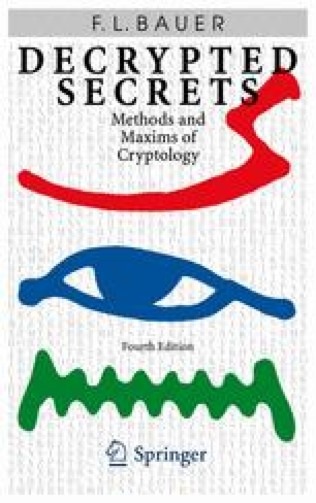
Decrypted Secrets : Methods and Maxims of Cryptology
Cryptology, for millennia a "secret science", is rapidly gaining in practical importance for the protection of communication channels, databases, and software. Beside its role in computerized information systems (public key systems), more and more applications within computer systems and networks are appearing, which also extend to access rights and source file protection. The first part of this book treats secret codes and their uses - cryptography. The second part deals with the process of covertly decrypting a secret code - cryptanaly-sis - where in particular advice on assessing methods is given. The book presupposes only elementary mathematical knowledge.

Data-Driven 3D Facial Animation
Data-Driven 3D Facial Animation: systematically describes the emerging data-driven techniques developed over the last ten years or so. Although data-driven 3D facial animation is used more and more in animation practice, to date there have been very few books that specifically address the techniques involved. Comprehensive in scope, the book covers not only traditional lip-sync (speech animation), but also expressive facial motion, facial gestures, facial modeling, editing and sketching, and facial animation transferring. It provides an up-to-date reference source for academic research and for professionals working in the facial animation field.

Database systems for advanced applications ; Vol. 3453 ; 10th international conference, DASFAA 2005, Beijing, China, April 17-20, 2005, Proceedings
Data Stream Mining and Resource Adaptive Computation.- Purpose Based Access Control for Privacy Protection in Database Systems.- Complex Networks and Network Data Mining.- Bioinformatics.- Indexing DNA Sequences Using q-Grams.- PADS: Protein Structure Alignment Using Directional Shape Signatures.- LinkageTracker: A Discriminative Pattern Tracking Approach to Linkage Disequilibrium Mapping.- Watermarking and Encryption.- Query Optimization in Encrypted Database Systems.- Watermarking Spatial Trajectory Database.- Effective Approaches for Watermarking XML Data.- XML Query Processing.- A Unifying Framework for Merging and Evaluating XML Information.- Efficient Evaluation of Partial Match Queries for XML Documents Using Information Retrieval Techniques.- PathStack: A Holistic Path Join Algorithm for Path Query with Not-Predicates on XML Data.- XML Coding and Metadata Management.- An Improved Prefix Labeling Scheme: A Binary String Approach for Dynamic Ordered XML.- Efficiently Coding and Indexing XML Document.- XQuery-Based TV-Anytime Metadata Management.- Data Mining.- Effective Database Transformation and Efficient Support Computation for Mining Sequential Patterns.

Database performance at scale: a practical guide
Optimizing database performance at the scale required for today’s data-intensive applications often requires more than performance tuning and scaling out. This book shares commonly overlooked considerations, pitfalls, and opportunities that have helped many teams break through database performance plateaus. It’s neither a definitive guide to distributed databases nor a beginner’s resource. Rather, it’s a look at the many different factors that impact performance, and our top field-tested recommendations for navigating them. Chapter 1 provides two (fun and fanciful) tales that surface some of the many roadblocks you might face and highlight the range of strategies for navigating around them.

Data science, AI, and machine learning in drug development
The confluence of big data, AI, and machine learning has led to a paradigm shift in how innovative medicines are developed and healthcare delivered. To fully capitalize on these technological advances, it is essential to systematically harness data from diverse sources and leverage digital technologies and advanced analytics to enable data-driven decisions. Data science stands at a unique moment of opportunity to lead such a transformative change. Intended to be a single source of information, Data Science, AI, and Machine Learning in Drug Research and Development covers a wide range of topics on the changing landscape of drug R&D, emerging applications of big data, AI and machine learning in drug development, and the build of robust data science organizations to drive biopharmaceutical digital transformations

Data science for economics and finance : Methodologies and applications
The book starts with an introduction on the use of data science technologies in economics and finance and is followed by thirteen chapters showing success stories of the application of specific data science methodologies, touching on particular topics related to novel big data sources and technologies for economic analysis (e.g. social media and news); big data models leveraging on supervised/unsupervised (deep) machine learning; natural language processing to build economic and financial indicators; and forecasting and nowcasting of economic variables through time series analysis.

Data parallel C++programming accelerated systems using C++ and SYCL
Full of practical advice, detailed explanations, and code examples to illustrate key topics. SYCL enables access to parallel resources in modern accelerated heterogeneous systems. Now, a single C++ application can use any combination of devices–including GPUs, CPUs, FPGAs, and ASICs–that are suitable to the problems at hand. This book teaches data-parallel programming using C++ with SYCL and walks through everything needed to program accelerated systems. The book begins by introducing data parallelism and foundational topics for effective use of SYCL. Later chapters cover advanced topics, including error handling, hardware-specific programming, communication and synchronization, and memory model considerations.
