



الصفحة 6
الصفحة 6

Image Analysis and Recognition ; 5th International Conference, ICIAR 2008, Póvoa de Varzim, Portugal, June 25-27, 2008. Proceedings
The 110 revised full papers presented together with 2 invited papers were carefully reviewed and selected from 226 submissions. The papers are organized in topical sections on image restoration and enhancement, image and video segmentation, non-linear image processing, image and video coding and encryption, indexing and retrieval, computer vision, feature extraction and classification, shape representation and matching, object recognition, character recognition, texture and motion analysis, tracking, biomedical image analysis, biometrics, face recognition, and a special session on recent advances in multimodal biometric systems and applications.

Image Analysis and Recognition ; 4th International Conference, ICIAR 2007, Montreal, Canada, August 22-24, 2007, Proceedings
These papers cover image restoration and enhancement, image and video processing and analysis, image segmentation, computer vision, pattern recognition for image analysis, shape and matching, motion analysis, tracking, and more.

Image Analysis and Recognition ; 17th International Conference, ICIAR 2020, Póvoa de Varzim, Portugal, June 24–26, 2020, Proceedings, Part II
This two-volume set LNCS 12131 and LNCS 12132 constitutes the refereed proceedings of the 17th International Conference on Image Analysis and Recognition, ICIAR 2020, held in Póvoa de Varzim, Portugal, in June 2020. The 54 full papers presented together with 15 short papers were carefully reviewed and selected from 123 submissions. The papers are organized in the following topical sections: image processing and analysis; video analysis; computer vision; 3D computer vision; machine learning; medical image and analysis; analysis of histopathology images; diagnosis and screening of ophthalmic diseases; and grand challenge on automatic lung cancer patient management.

Image Analysis and Recognition ; 17th International Conference, ICIAR 2020, Póvoa de Varzim, Portugal, June 24–26, 2020, Proceedings, Part I
This two-volume set LNCS 12131 and LNCS 12132 constitutes the refereed proceedings of the 17th International Conference on Image Analysis and Recognition, ICIAR 2020, held in Póvoa de Varzim, Portugal, in June 2020. The 54 full papers presented together with 15 short papers were carefully reviewed and selected from 123 submissions. The papers are organized in the following topical sections: image processing and analysis; video analysis; computer vision; 3D computer vision; machine learning; medical image and analysis; analysis of histopathology images; diagnosis and screening of ophthalmic diseases; and grand challenge on automatic lung cancer patient management.

Image Analysis and Processing – ICIAP 2005 ; 13th International Conference, Cagliari, Italy, September 6-8, 2005, Proceedings
This volume contains the Proceedings of the 13th International Conference on Image Analysis and Processing (ICIAP 2005), held in Cagliari, Italy, at the conference centre “Centro della Cultura e dei Congressi”, on September 6–8, 2005. ICIAP 2005 was the thirteenth edition of a series of conferences organized every two years by the Italian group of researchersa?liated to the International Association for Pattern Recognition (GIRPR) with the aim to bring together researchers in image processing and pattern recognition from around the world. As for the previous editions, conference topics concerned the theory of image analysis and processing and its classical and Internet-driven applications. The central theme of ICIAP 2005 was “Pattern Recognition in the Internet and Mobile Communications Era”. The interest for such a theme was con?rmed by the large number of papers dealing with it, the special session devoted to pattern recognition for computer network security, and the emphasis of two invited talks on Internet and mobile communication issues. ICIAP 2005 received 217 paper submissions. Fifteen papers were collected into the two special sessions dealing with Pattern Recognition for Computer Network Security and Computer Vision for Augmented Reality and Augmented Environments.

Image Analysis ; 15th Scandinavian Conference, SCIA 2007, Aalborg, Denmark, June 10-24, 2007, Proceedings
The present volume contains the proceedings of the Scandinavian Conference on Image Analysis, SCIA 2007, held at Hotel Hvide Hus, Aalborg, Denmark, June 10–14, 2007. Initiated in 1979 by Torleiv Orhaug in Sweden, SCIA 2007 represented the 15th in the biennial series of conferences.

Image Analysis ; 14th Scandinavian Conference, SCIA 2005, Joensuu, Finland, June 19-22, 2005, Proceedings
This proceedings volume collects the scienti?c presentations of the Scandinavian Conference on Image Analysis, SCIA 2005, which was held at the University of Joensuu, Finland, June 19–22, 2005. The conference was the fourteenth in the series of biennial conferences started in 1980. The name of the series re?ects the fact that the conferences are organized in the Nordic (Scandinavian) countries, following the cycle Sweden, Finland, Denmark, and Norway. The event itself has always been international in its participants and presentations. Today there are many conferences in the ?elds related to SCIA. In this s- uation our goal is to keep up the reputation for the high quality and friendly environment of SCIA. We hope that participants feel that it’s worth attending the conference. Therefore, both the scienti?c and social program were designed to support the best features of a scienti?c meeting: to get new ideas for research and to have the possibility to exchange thoughts with fellow scientists.

Hyperspectral Data Compression
HYPERSPECTRAL DATA COMPRESSION presents the most recent results in the field of compression of remote sensing 3D data, with a focus on multispectral and hyperspectral imagery. This book is essential for researchers working across related fields including: multi-dimensional data compression, multispectral and hyperspectral data archives, remote sensing, scientific image processing, military and aerospace image processing, image segmentation, image classification, and target detection.

Hydra = هايدرا
Forgery involves the use of advanced algorithms to replicate and distribute deceptive products across various categories, casting shadows of doubt on the authenticity of goods. Although counterfeit detection can be useful in identifying and mitigating fraudulent activities, the widespread presence of counterfeit goods poses significant dangers, undermining consumer confidence and brand reputation. To underscore the severity of this issue, consider instances such as fake luxury items flooding the market, counterfeit electronics compromising safety, or bogus pharmaceuticals endangering health. Addressing this issue is critical in maintaining the integrity of brands, safeguarding consumer well-being, and preserving trust in the marketplace. The ability to distinguish between authentic and counterfeit products is paramount in ensuring accurate decision-making and preventing the harmful consequences of fraudulent goods. This technological context underscores the urgency of developing and deploying cutting-edge solutions to combat the evolving landscape of product forgery. Hydra emerges as a robust solution, utilizing a comprehensive approach that includes extracting posts and images from search engine tools, and is integrated with AI models to detect forgery. The Hydra platform not only provides users with a powerful tool for detecting counterfeit products but also offers tangible benefits such as enhanced brand security, increased awareness about the prevalence of forgeries, and the opportunity to actively participate in a real-time community.

Hybrid Artificial Intelligent Systems ; 15th International Conference, HAIS 2020, Gijón, Spain, November 11-13, 2020, Proceedings
This book constitutes the refereed proceedings of the 15th International Conference on Hybrid Artificial Intelligent Systems, HAIS 2020, held in Gijón, Spain, in November 2020. The 65 regular papers presented in this book were carefully reviewed and selected from 106 submissions. The papers are grouped into these topics: advanced data processing and visualization techniques; bio-inspired models and optimization; learning algorithms; data mining, knowledge discovery and big data; and hybrid artificial intelligence applications.

Human–computer interaction ; International Workshop, HCI 2007 Rio de Janeiro, Brazil, October 20, 2007 Proceedings
Constitutes the refereed proceedings of the International Workshop on Human Computer Interaction, HCI 2007, held in Rio de Janeiro, Brazil, October 20, 2007. This book covers such topics as: Affective detection and recognition, Smart interfaces, Human motion tracking, Gesture recognition, and Multimedia data modeling and visualization.

Human-computer interaction - HCI Intelligent Multimodal interaction environments ; 12th International Conference, HCI International 2007, Beijing, China, July 22-27, 2007, Proceedings, Part III
The 12th International Conference on Human-Computer Interaction, HCI Inter- tional 2007, was held in Beijing, P.R. This volume, edited by Julie A. Jacko, contains papers in the thematic area of Human-Computer Interaction, addressing the following major topics: • Multimodality and Conversational Dialogue • Adaptive, Intelligent and Emotional User Interfaces • Gesture and Eye Gaze Recognition • Interactive TV and Media.
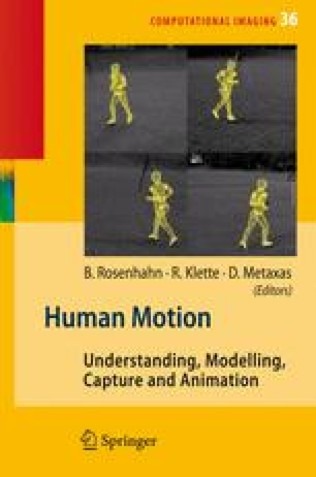
Human motion : Understanding, modeling, capture and animation
Edward Muybridge (1830–1904) is known as the pioneer in motion capt- ing with his famous experiments in 1887 called “Animal Locomotion”. Since then, the feld of animal or human motion analysis has grown in many dir- tions. However, research and results that involve human-like animation and the recovery of motion is still far from being satisfactory. Progress in human motion analysis depends on empirically anchored and grounded research in computer vision, computer graphics, and biomechanics. This book is based on a June 2006 workshop held in Dagstuhl, Germany. This workshop brought together for the frst time researchers from the afo- mentioned disciplines.

Human interface and the management of information : Interacting in information environments ; Symposium on Human Interface 2007, Held as Part of HCI International 2007, Beijing, China, July 22-27, 2007, Proceedings, Part II
The 12th International Conference on Human-Computer Interaction, HCI Inter- tional 2007, was held in Beijing, P.R. This volume, edited by Michael J. Smith and Gavriel Salvendy, contains papers in the thematic area of Human Interface and the Management of Information, addressing the following major topics: • Communication and Collaboration • Knowledge, Learning and Education • Mobile Interaction • Interacting with the World Wide Web and Electronic Services • Business Management and Industrial Applications • Environment, Transportation and Safety.

Human interactive proofs ; 2nd International workshop, HIP 2005, Bethlehem, PA, USA, May 19-20, 2005, Proceedings
Constitutes the refereed proceedings of the Second International Workshop on Human Interactive Proofs, HIP 2005, held in Bethlehem, PA, USA in May 2005. This book is devoted to the new class of security protocols called human interactive proofs. It includes sections such as: CAPTCHAs and performance analysis, and HIP architectures.

Human Ear Recognition by Computer
Human Ear Recognition by Computer is the first book on the automatic recognition of human ears. It presents an entire range of computational algorithms for recognition of humans by their ears. These algorithms have been tested and validated on the largest databases that are available today,This state-of-the-art research reference explores all aspects of 3D ear recognition, including representation, detection, recognition, indexing and performance prediction. It has been written for a professional audience of both researchers and practitioners within industry, and is also ideal as an informative text for graduate students in computer science and engineering.

High performance computing for computational science - VECPAR 2004 ; 6th International conference, Valencia, Spain, June 28-30, 2004, Revised Selected and Invited Papers
VECPAR is a series of international conferences dedicated to the promotion and advancement of all aspects of high-performance computing for computational science, as an industrial technique and academic discipline, extending the fr- tier of both the state of the art and the state of practice. The audience for and participants in VECPAR are seen as researchers in academic departments, g- ernment laboratories and industrial organizations. There is now a permanent website for the series, http://vecpar.fe.up.pt, where the history of the conf- ences is described. ThesixtheditionofVECPARwasthe?rsttimetheconferencewascelebrated outside Porto – at the Universitad Politecnica de Valencia (Spain), June 28–30, 2004.

High performance computational science and engineering : IFIP TC5 Workshop on High Performance Computational Science and Engineering (HPCSE), World Computer Congress, August 22-27, 2004, Toulouse, France
The IFIP series publishes state-of-the-art results in the sciences and technologies of information and communication. The scope of the series includes: foundations of computer science; software theory and practice; education; computer applications in technology; communication systems; systems modeling and optimization; information systems; computers and society; computer systems technology; security and protection in information processing systems; artificial intelligence; and human-computer interaction. Proceedings and post-proceedings of referred international conferences in computer science and interdisciplinary fields are featured. These results often precede journal publication and represent the most current research. The principal aim of the IFIP series is to encourage education and the dissemination and exchange of information about all aspects of computing.

High accuracy detection of mobile malware using machine learning
As increasingly sophisticated and evasive malware attacks continue to emerge, more effective detection solutions to tackle the problem are being sought through the application of advanced machine learning techniques. This reprint presents several advances in the field including: a new method of generating adversarial samples through byte sequence feature extraction using deep learning; a state-of-the-art comparative evaluation of deep learning approaches for mobile botnet detection; a novel visualization-based approach that utilizes images for Android botnet detection; a study on the detection of drive-by exploits in images using deep learning; etc. Furthermore, this reprint presents state-of-the-art reviews about machine learning-based detection techniques that will increase researchers' knowledge in the field and enable them to identify future research and development directions.

Hexagonal image processing : A practical approach
Hexagonal Image Processing provides an introduction to the processing of hexagonally sampled images, includes a survey of the work done in the field, and presents a novel framework for hexagonal image processing (HIP) based on hierarchical aggregates. Digital image processing is currently dominated by the use of square sampling lattices, however, hexagonal sampling lattices can also be used to define digital images. The strengths offered by hexagonal lattices over square lattices are considerable: • higher packing density, • uniform connectivity of points (pixels) in the lattice, • better angular resolution by virtue of having more nearest neighbours, and • superlative representation of curves. The utility of the HIP framework is demonstrated by implementing several basic image processing techniques (for the spatial and frequency domain) and some applications. The HIP framework serves as a tool for comparing processing of images defined on a square vs hexagonal grid, to determine their relative merits and demerits. The theory and algorithms covered are supplemented by attention to practical details such as accommodating hardware that support only images sampled on a square lattice. Including a Foreword written by Professor Narendra Ahuja, an eminent researcher in the field of Image Processing and Computer Vision, the book’s fresh approach to the subject offers insight and workable know-how to both researchers and postgraduates.
