



الصفحة 53
الصفحة 53

Algebraic informatics ; 2nd International conference, CAI 2007, Thessalonkik, Greece, May 21-25, 2007, Revised Selected and Invited Papers
It covers algebraic semantics on graphs and trees, formal power series, syntactic objects, algebraic picture processing, infinite computation, acceptors and transducers for strings, trees, graphs, arrays, etc., and decision problems.

Algebraic Biology ; 2nd International Conference, AB 2007, Castle of Hagenberg, Austria, July 2-4, 2007, Proceedings
This volume constitutes the refereed proceedings of the Second International Conference on Algebraic Biology. The conference served as an interdisciplinary forum for the presentation of research on all aspects of the application of symbolic computation in biology, including computer algebra, computational logic, and related methods.

Ajax Patterns and Best Practices
Ajax is taking us into the next generation of web applications. Ajax has broken the client-server barrier by decoupling the client from the server, but an Ajax application still needs a server to extract content from. The most effective use of Ajax and the server requires an understanding of REST, an architectural style used to define Web services. Ajax Patterns and Best Practices explores dynamic web applications that combine Ajax and REST as a single solution. A major advantage of REST is that, like Ajax, it can be used with today's existing technologies.

Ajax in Oracle JDeveloper
The book covers web search and RSS Feed with Ajax as well as form validation with Ajax frameworks for Java, JSP, JSF, and PHP. It discusses using Ajax in Oracle JDeveloper and is IDE based. JDeveloper has the following advantages over Eclipse IDE.

AIU projects evaluation platform
The project is a cloud computing system constructed to provide the service of helping students run their practical projects and work together while keeping track of every change in it, and teachers running the projects online and evaluating them. The system provided help doing this mission in real-time dialogue without having any dependencies downloaded on the machine and running it over the internet. The development of the system used a full-stack web framework and a database processing technology. The system has accomplished such services as running the projects online. The tests of the system are running in good conditions. The use of this system will solve the problem of teacher’s project evaluation and running them online.

AI voice dubbing = الدبلجة الصوتية بالذكاء الاصطناعي
The advent of artificial intelligence has revolutionized numerous domains, including media and entertainment. This project focuses on developing an AI Voice Dubbing application that facilitates the seamless dubbing of audio content from English to Arabic. Unlike traditional robotic voice outputs, our application ensures that the dubbed content retains the original voice characteristics, providing a natural and authentic listening experience. The system also offers users the option to select alternative output voices, including those of celebrities, or any other voice by uploading their media, providing a YouTube link, or recording audio directly. The core functionality of the application is to produce a dubbed audio file, maintaining high fidelity to the original speaker's voice tone and style, the application provides a text output of the dubbed content, which users can edit as needed to ensure accuracy and personal preference.

AI virtual mouse system
Even today, many people still find interacting with computers and hardware to be an unpleasant experience, despite the development of input devices over decades. Computers and hardware should be tailored to our natural modes of communication: Body language and speech. Intelligent machines that can work alongside computers are now being developed, allowing for friendlier Human-Computer Interaction (HCI). this project, intends a hand gesture-based system that allows users to control virtual keyboard, desktop mouse movements and connect it with mobile phone in order to monitor and control.

AI journal submitting = تقديم المقالات بالذكاء الصنعي
Aims to develop a comprehensive platform to support academic writers in preparing their research papers in word file format, adhering to the Damascus University template. The platform leverages advanced artificial intelligence techniques to offer services such as grammatical and spelling correction, plagiarism detection, and citation analysis. It also provides comprehensive evaluation tools for peer reviewers, facilitating accurate and reliable feedback.The platform consists of four main components: • User Interface for Creating and Formatting Papers: Simplifies the entry and automatic formatting of texts according to the Damascus University template. / • Intelligent Language Correction System: Utilizes natural language processing techniques to enhance language quality and clarity. / • Citation Analysis and Plagiarism Detection Tool: Identifies improper citations and provides detailed reports on copied sections. / • Peer Review Support System: Offers advanced evaluation tools and AI-driven analytical reports for reviewers.This platform aims to improve the quality and integrity of academic research, streamline the formatting process, and enhance the efficiency of the peer review process, thereby elevating the level of scientific output at Damascus University.

AI home decorator
Presents the development of “DesignMate”, an innovative AI home decorator application designed to revolutionize interior design. With three main features powered by artificial intelligence, DesignMate simplifies and enhances the process of home decoration. The first feature leverages an Autoregressive transformer model trained on the extensive 3Dfront dataset to suggest room decor based on room layouts. The second feature employs Generative Adversarial Networks (GANs) to enhance the colors of specific room layouts. The third feature introduces an expert system that tailors decor options to user-entered conditions. DesignMate also introduces an integrated e-commerce platform dedicated to furniture, offering users a wide selection of high-quality items that perfectly complement their preferred room designs.
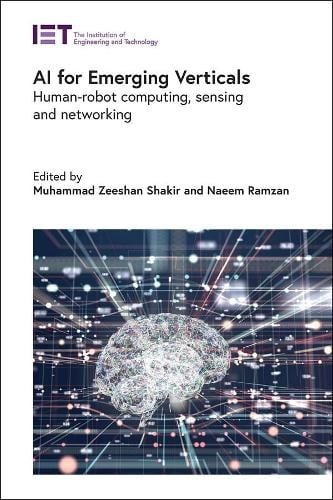
AI For Emerging Verticals : Human-robot computing, sensing and networking
Artificial intelligence (AI) and machine learning (ML) will play a major role. By adopting AI software and services, businesses can create predictive strategies, enhance their capabilities, better interact with customers, and streamline their business processes. Explores novel concepts and cutting-edge research and developments towards designing these fully automated advanced digital systems. Fostered by technological advances in artificial intelligence and machine learning, such systems potentially have a wide range of applications in robotics, human computing, sensing and networking. The chapters focus on models and theoretical approaches to guarantee automation in large multi-scale implementations of AI and ML systems; protocol designs to ensure AI systems meet key requirements for future services such as latency; and optimisation algorithms to leverage the trusted distributed and efficient complex architectures.

AI and UX : Why artificial intelligence needs user experience
Great effort has been put forth to continuously make AI “smarter.” But, will smarter always equal more successful AI? It is not just about getting a product to market, but about getting the product into a user’s hands in a form that will be embraced. This demands examining the product from the perspective of the user. Authors Gavin Lew and Robert Schumacher have written AI and UX to examine just how product managers and designers can best strike this balance. From exploring the history of the parallel journeys of AI and UX, to investigating past product examples and failures, to practical expert knowledge on how to best execute a positive user experience, AI and UX examines all angles of how AI can best be developed within a UX framework.

AI 2006 : Advances in artificial intelligence ; 19th Australian Joint Conference on Artificial Intelligence, Hobart, Australia, December 4-8, 2006, Proceedings
This volume contains the proceedings of the 19th Australian Joint Conference on Artificial Intelligence (AI 2006) held at Hobart, Australia. AI 2006 received a record number of submissions, a total of 689 submissions from 35 countries. The papers in this volume give an indication of recent advances in artificial int- ligence. The topics covered include Machine Learning, Robotics, AI Applications, Planning, Agents, Data Mining and Knowledge Discovery, Cognition and User Interface, Vision and Image Processing, Information Retrieval and Search, AI in the Web, Knowledge Representation, Knowledge-Based Systems, and Neural Networks.

AI 2004 : Advances in artificial intelligence ; 17th Australian Joint conference on artificial intelligence, Cairns, Australia, December 4-6, 2004, proceedings
AI 2004 was the seventeenth in the series of annual Australian artificial intelli-gence conferences. This conference is the major forum for artificial intelligenceresearch in Australia. It has consistently attracted strong international partic-ipation. This year more than two thirds of the submissions were from outsideAustralia.The current volume is based on the proceedings of AI 2004. AI 2004 was collo-cated with Complex 2004, the 7th Asia-Pacific Conference on Complex Systems,with the aim of promoting cross-fertilization and collaboration in areas of com-plex and intelligent systems
Agile software engineering
This textbook presents the crucial issues in software engineering using the agile approach to software development - one of the mainstream paradigms for the management of software projects and one that is being applied more and more extensively.

Agile software construction
Agile software is a means of putting the software first while at the same time reacting to these user requirements in a flexible and agile way.Agile Software Construction covers the emerging methods and approaches (including extreme programming, feature-driven development and adaptive software development), that are loosely described as "Agile" and shows how to apply them effectively to software development projects. It shows how to plan, organise and develop systems using agile techniques, and highlights some of the problems that may be encountered.
Agile processes in software engineering and extreme programming ; 20th International Conference, XP 2019, Montréal, QC, Canada, May 21–25, 2019, Proceedings
XP is the premier agile software development conference combining research and practice. It is a hybrid forum where agile researchers, academics, practitioners, thought leaders, coaches, and trainers get together to present and discuss their most recent innovations, research results, experiences, concerns, challenges, and trends. Following this history, for both researchers and seasoned practitioners XP 2019 provided an informal environment to network, share, and discover trends in Agile for the next 20 years.This volume presented agile adoption, agile practices; large-scale agile; agility beyond IT, and the future of agile.

Agents and peer-to-peer computing ; 2nd International workshop, AP2PC 2003, Melbourne, Australia, July 14, 2003, revised and invited papers
This book brings together an introduction, three invited articles, and revised versions of the papers presented at the Second International Workshop on Agents and Peer-to-Peer Computing, AP2PC 2003, held in Melbourne, Australia, July 2003."" "Peer-to-peer (P2P) computing is currently attracting enormous public attention, a very large number of autonomous computing nodes, the peers, rely on each other for services. P2P networks are emerging as a new distributed computing paradigm because of their potential to harness the computing power and the storage capacity of the hosts composing the network, and because they realize a completely open decentralized environment where everybody can join in autonomously.

Agent-oriented software engineering V ; 5th International workshop, AOSE 2004, New York, NY, USA, July 2004, revised selected papers
The explosive growth of application areas such as electronic commerce, ent- prise resource planning and mobile computing has profoundly and irreversibly changed our views on software systems. Nowadays, software is to be based on open architectures that continuously change and evolve to accommodate new components and meet new requirements. Software must also operate on di?- ent platforms, without recompilation, and with minimal assumptions about its operating environment and its users. Furthermore, software must be robust and ¨ autonomous, capable of serving a naive user with a minimum of overhead and interference. Agent concepts hold great promise for responding to the new realities of software systems. They o?er higher-level abstractions and mechanisms which address issues such as knowledge representation and reasoning, communication, coordination, cooperation among heterogeneous and autonomous parties, p- ception, commitments, goals, beliefs, and intentions, all of which need conceptual modelling. On the one hand, the concrete implementation of these concepts can lead to advanced functionalities.

Agent-oriented information systems IV ; 8th International bi-conference workshop, AOIS 2006, Hakodate, Japan, May 9, 2006 and Luxembourg, Luxembourg, June 6, 2006, Revised Selected Papers
In AOIS, we focus on the application of agent technology in information systems development and explore the potential for facilitating the increased usage of agent technology in the creation of information systems in the widest sense.

Agent-mediated electronic commerce VI ; Theories for and engineering of distributed mechanisms and systems, AAMAS 2004 Workshop, Amec 2004, New York, NY, USA, July 19, 2004, revised selected papers
The design of intelligent trading agents, mechanisms, and systems has receivedgrowing atttention in the agents and multiagent systems communities in aneffort to address the increasing costs of search, transaction, and coordinationwhich follows from the increasing number of Internet-enabled distibuted elec-tronic markets. Furthermore, new technologies and supporting business modelsare resulting in a growing volume of open and horizontally integrated markets fortrading of an increasingly diverse set of goods and services. However, growth oftechnologies for such markets requires innovative solutions to a diverse set of ex-isting and novel technical problems which we are only beginning to understand.Specifically, distributed markets present not only traditional
