



الصفحة 50
الصفحة 50

Combinatorial optimization and applications ; 14th International Conference, COCOA 2020, Dallas, TX, USA, December 11–13, 2020, Proceedings
This volume constitutes the proceedings of the 14th International Conference on Combinatorial Optimization and Applications, COCOA 2020, held in Dallas, TX, USA, in December 2020. The 55 full papers presented in this volume were carefully reviewed and selected from 104 submissions. The papers are grouped into the following topics: Approximation Algorithms; Scheduling; Network Optimization; Complexity and Logic; Search, Facility and Graphs; Geometric Problem; Sensors, Vehicles and Graphs; and Graph Problems.

Combinatorial and algorithmic aspects of networking ; Vol.3405 ; 1st Workshop on combinatorial and algorithmic aspects of networking, CAAN 2004, Banff, Alberta, Canada, August 5-7, 2004, Revised Selected Papers
The Internet is a massive global network of over 700 million users and it is addingusers at the rate of 300,000 per day. This large, distributed, and everchangingnetwork poses a challenge to researchers: How does one study, model, or under-stand such a decentralized, constantly evolving entity? The workshop Combi-natorial and Algorithmic Aspects of Networking and the Internet (CAAN 2004)provided a forum for the exchange of ideas on these topics. and among thepapers were some new and surprising results as well as some introductions tothe foundations of the field.The workshop program featured 12 peer-reviewed papers bracketed by Topics covered by the talks ranged from the Web graph to game theoryto string matching, all in the context of large-scale networks. This volume collectstogether the talks delivered at the workshop along with a number of survey articlesto round out the presentation and give a comprehensive introduction to the topic.

Combinatorial and Algorithmic Aspects of Networking ; 4th Workshop, CAAN 2007, Halifax, Canada, August 14, 2007, Revised Papers
It contiants developments on all aspects of networking could be presented. It covered were diverse, with talks on strategies for searching in networks, for cleaning networks of unwanted - truders, on difierent routing strategies, and on scheduling, load balancing, probability, a concept central to network modeling and managing.

Collaborative networks and their breeding environments ; IFIP TC 5 WG 5.5 Sixth IFIP Working Conference on VIRTUAL ENTERPRISES, 26-28 September 2005, Valencia, Spain
This book contains selected articles from PRO-VE'05, the sixth working conference on virtual enterprises, which was sponsored by the International Federation for Information Processing (IFIP) and held in Valencia, Spain. Being recognized as the most focused scientific / technical conference on Collaborative Networks, PRO-VE continues offering the opportunity for the presentation and discussion of both the latest research developments and practical application case studies. Following the IFIP vision. The articles included in this book represent a comprehensive overview of recent advances in various domains and lines of development of collaborative networks. Of particular relevance are the topics of holistic approaches and breeding environments management, creation and management of virtual organizations and professional virtual communications, performance measurement and management, benefit analysis, trust management, process modeling and meta-modeling, ICT infrastructures and support services, legal issues, and case studies.

Collaborative and Distributed Chemical Engineering : From Understanding to Substantial Design Process Support; Results of the IMPROVE Project
The focus of IMRPOVE is on understanding, formalizing, evaluating, and, consequently, improving design processes in chemical engineering. In particular, IMPROVE focuses on conceptual design and basic engineering, where the fundamental decisions concerning the design or redesign of a chemical plant are undertaken.

Cold Micro Metal Forming : Research Report of the Collaborative Research Center “Micro Cold Forming” (SFB 747), Bremen, Germany
This book contains the research report of the Collaborative Research Center “Micro Cold Forming” (SFB 747) of the University of Bremen, Germany. The topical research focus lies on new methods and processes for a mastered mass production of micro parts which are smaller than 1mm (by forming in batch size higher than one million). The target audience primarily comprises research experts and practitioners in production engineering, but the book may also be of interest to graduate students alike.

Co-governed Sovereignty Network : Legal Basis and Its Prototype & Applications with MIN Architecture
This book introduces MIN, a novel networking architecture to implement the sovereign equality of all countries in the cyberspace. Combining legal theory and network technology, it first discusses the historical development of sovereignty and expounds the legal basis of cyberspace sovereignty. Then, based on the high-performance blockchain, it describes a new network architecture designed to implement co-governance at the technical level.

Cognitive Vision Systems : Sampling the Spectrum of Approaches
This volume is a post-event proceedings volume and contains selected papers based on the presentations given, and the lively discussions that ensued, during a seminar held in Dagstuhl Castle, Germany, in October 2003. Co-sponsored by ECVision, the cognitive vision network of excellence, it was organized to further strengthen cooperation between research groups from different countries, and scientists active in related areas were invited from around the world.

Cognitive Systems ; Joint Chinese-German Workshop, Shanghai, China, March 7-11, 2005, Revised Selected Papers
This book organized in topical sections on multimodal human-computer interfaces, neuropsychology and neurocomputing, Chinese-German natural language processing and psycholinguistics, as well as information processing and retrieval from the semantic Web for intelligent applications.
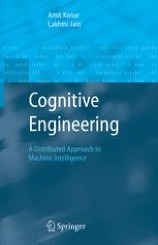
Cognitive engineering : A distributed approach to machine intelligence
Cognitive Engineering: A Distributed Approach to Machine Intelligence explores the design issues of intelligent engineering systems. Beginning with the foundations of psychological modeling of the human mind, the main emphasis is given to parallel and distributed realization of intelligent models for application in reasoning, learning, planning and multi-agent co-ordination problems. The last two chapters provide case studies on human-mood detection and control, and behavioral co-operation of mobile robots. This is the first comprehensive text of its kind, bridging the gap between Cognitive Science and Cognitive Systems Engineering. Each chapter includes plenty of numerical examples and exercises with sufficient hints, so that the reader can solve the exercises on their own. Computer simulations are also included in most chapters to give a clear idea about the application of the algorithms undertaken in the book. In addition, mathematical analysis on convergence and stability of the neuro-fuzzy models will enable the reader to pursue their research career in cognitive engineering.

Cognitive Computing in Human Cognition : Perspectives and Applications
This edited book designs the Cognitive Computing in Human Cognition to analyze to improve the efficiency of decision making by cognitive intelligence. The book is also intended to attract the audience who work in brain computing, deep learning, transportation, and solar cell energy. Due to this in the recent era, smart methods with human touch called as human cognition is adopted by many researchers in the field of information technology with the Cognitive Computing.

Cognition, Communication and Interaction : Transdisciplinary Perspectives on Interactive Technology
This book aims to provide a trans-disciplinary research framework and methodology for interaction design. The analysis directs attention to three human capacities that our engagement with interactive technology has made salient and open to constant redefinition.

Coding and Cryptography ; International Workshop, WCC 2005, Bergen, Norway, March 14-18, 2005, Revised Selected Papers
This volume contains refereed papers devotedtocodingandcrypto graphy.These papers arethe full versionsof a selectionof the best extended abstractsaccepted for presentation at the International Workshop on Coding and Cryptography (WCC 2005) held in Bergen, Norway, March 14–18, 2005. Each of the 118 - tended abstracts originallysubmitted to the workshop were reviewed by at least two members of the Program Committee. As a result of this screening process, 58 papers were selected for presentation, of which 52 were eventually presented at the workshop together with four invited talks.

Codici cifrati: Arne Beurling e la crittografia nella II guerra mondiale = Cipher codes : Arne Beurling and cryptography in world war II
The story of the German codebreaking is told in detail for the first time and has all the makings of a thriller, but with elements that make it an excellent introduction to the field of cryptography, as well as a vibrant and human portrait of the society of the time: a desperate wartime situation, political and espionage intrigue, the sometimes incomprehensible yet always fascinating genius of the main architect of its success — mathematician Arne Beurling—the difficulties and tricks of the trade, but also the systematic and obscure work of a crowd of codebreakers who treat their situation as if it were a normal job. The author, Bengt Beckman, was for years, after the war, head of the cryptanalysis department of the Swedish intelligence agency.

CMOS PLL synthesizers : Analysis and design
CMOS PLL Synthesizers: Analysis and Design presents both fundamentals and state-of-the-art PLL synthesizer design and analysis techniques. A complete overview of both system-level and circuit-level design and analysis is given. A 16mW, 2.4GHz, sub-2V, S D fractional-N synthesizer prototype is implemented in 0.35mm CMOS. It features a high-speed and robust phase-switching prescaler, and a low-complexity and area-efficient loop capacitance multiplier, which tackle speed and integration bottlenecks of PLL synthesizers." "This book is useful as a PLL synthesizer manual for both academic researchers and industry design engineers.

CMOS Hotplate Chemical Microsensors
Covers all aspects of successful sensor prototyping: theory of transducer modelling, microelectronics design considerations, system design issues, and issues related to system and device microfabrication, packaging, and testing. A variety of different hotplates for different operation conditions is detailed and a family of metal-oxide-covered microhotplate-based microsensor systems with increasing complexity is presented. These systems belong to a new generation of chemical microsensors and represent examples of the successful integration of nanomaterials, microtechnology and microelectronics.The book provides students, scientists and engineers with an accessible introduction to the field of microhotplate-based chemical sensing, with all the necessary fundamental knowledge included. Beyond that, it also provides detailed information on all important issues concerning complex high-performance CMOS chemical microsensor systems; hence it will also be valuable to experts already familiar with the field.

CMOS Cascade Sigma-Delta Modulators for Sensors and Telecom : Error Analysis and Practical Design
CMOS Cascade Sigma-Delta Modulators for Sensors and Telecom: Error Analysis and Practical Design starts with a tutorial presentation of the fundamentals of low-pass sigma-delta modulators, their applications, and their most common architectures. It then presents an exhaustive analysis of SC circuit errors with a twofold outcome. On the one hand, compact expressions are derived to support design plans and quick top-down design. On the other, detailed behavioral models are presented to support accurate verification. This set of models allows the designer to determine the required specifications for the different modulator building blocks and form the basis of a systematic design approach. The book is completed in subsequent chapters with the detailed presentation of three high-performance modulator ICs: the first two are intended for DSL-like applications, whereas the third one is intended for automotive sensors.

CMOS Biotechnology
"CMOS Biotechnology reviews the recent research and developments joining CMOS technology with biology. Written by leading researchers these chapters delve into four areas including: Microfluidics for electrical engineers / CMOS Actuators CMOS Electrical Sensors CMOS Optical Sensors Bioanalytical instruments have been miniaturized on ICs to study various biophenomena or to actuate biosystems. These bio-lab-on-IC systems utilize the IC to facilitate faster, repeatable, and standardized biological experiments at low cost with a small volume of biological sample. CMOS Biotechnology will interest electrical engineers, bioengineers, biophysicists as well as researchers in MEMS, bioMEMS, microelectronics, microfluidics, and circuits and systems."

Cloud-Based Benchmarking of Medical Image Analysis
Presents the VISCERAL project benchmarks for analysis and retrieval of 3D medical images (CT and MRI) on a large scale, which used an innovative cloud-based evaluation approach where the image data were stored centrally on a cloud infrastructure and participants placed their programs in virtual machines on the cloud. The book presents the points of view of both the organizers of the VISCERAL benchmarks and the participants.

Cloud Native Architecture and Design : A Handbook for Modern Day Architecture and Design with Enterprise-Grade Examples
Explains the fundamentals of cloud-native architecture and services, what cloud principles and patterns to use, and details of designing a cloud-native element. And Progresses to cover the details of how IT systems can modernize to embrace cloud-native architecture, and also provides details of various enterprise assessment techniques to decide what systems can move and cannot move into the cloud. Architecting and designing a cloud-native system isn’t possible without modernized software engineering principles, the culture of automation, and the culture of innovation. As such, this book covers the details of cloud-native software engineering methodologies, and process, and how to adopt an automated governance approach across enterprises with the adoption of artificial intelligence. You will: Discover cloud-native principles and patterns, and how you can leverage them to solve your business problems ; Gain the techniques and concepts you need to adapt to design a cloud-native application ; Use assessment techniques and tools for IT modernization ; Apply cloud-native engineering principles to the culture of automation and culture of innovation ; Harness the techniques and tools to run your cloud-native applications and automate infrastructure ; Operate your cloud-native applications by using AI techniques and zero operation techniques
