



الصفحة 5
الصفحة 5

FM 2006: Formal Methods ; 14th International Symposium on Formal Methods, Hamilton, Canada, August 21-27, 2006, Proceedings
This book presents the refereed proceedings of the 14th International Symposium on Formal Methods, FM 2006, held in Hamilton, Canada, August 2006. The book presents 36 revised full papers together with 2 invited contributions and extended abstracts of 7 invited industrial presentations, organized in topical sections on interactive verification, formal modelling of systems, real time, industrial experience, specification and refinement, programming languages, algebra, formal modelling of systems, and more.

Fluent Python : Clear, Concise, and Effective Programming
You’ll learn how to write effective, modern Python 3 code by leveraging its best ideas. Don’t waste time bending Python to fit patterns you learned in other languages. Discover and apply idiomatic Python 3 features beyond your past experience. Author Luciano Ramalho guides you through Python’s core language features and libraries and teaches you how to make your code shorter, faster, and more readable.
Expert F#
Expert F# is about practical programming in a beautiful language that puts the power and elegance of functional programming into the hands of .NET developers. In combination with .NET, F# achieves unrivaled levels of programmer productivity and program clarity. This books serves as: The authoritative guide to F# by the designer of F#. A comprehensive reference of F# concepts, syntax, and features. A treasury of expert F# techniques for practical, real–world programming.

Expert C++/CLI : .NET for Visual C++ Programmers
C++/CLI is Microsofts latest extension to C++ that targets the heart of .NET 2.0, the common language runtime. Expert Visual C++/CLI is written by visual C++ MVP Marcus Heege, who examines the core of the C++/CLI language. He explains both how the language elements work and how Microsoft intends them to be used.
Enterprise Information Systems VI
This book contains the best papers of the Sixth International Conference on Enterprise Information Systems (ICEIS 2004), held in Porto (Portugal) and organized by INSTICC (Institute for Systems and Technologies of Information, Communication and Control) in collaboration with PORTUCALENSE UNIVERSITY, who hosted the event. Following the route started in 1999, ICEIS has become a major point of contact between research scientists, engineers and practitioners on the area of business applications of information systems. This conference has received an increased interest every year, from especially from the international academic community, and it is now one of the world largest conferences in its area. This year, five simultaneous tracks were held, covering different aspects related to enterprise computing, including: “Databases and Information Systems Integration”,

Engineering Multi-Agent Systems ; 7th International Workshop, EMAS 2019, Montreal, QC, Canada, May 13–14, 2019, Revised Selected Papers
This book constitutes the thoroughly refereed post-conference proceedings of the 7th International Workshop on Engineering Multi-Agent Systems, EMAS 2019, held in Montreal, QC, Canada, in May 2019. The 13 revised full papers presented in this book were carefully selected and reviewed from 20 submissions. The papers are grouped in the following topical sections: Multi-Agent Interaction and Organization; Simulation; Social Awareness and Explainability; Learning and Reconfiguration; and Implementation Techniques and Tools.

End-User Development
By now, most people have become familiar with the basic functionality and interfaces of computers. However, developing new or modified applications that effectively support users' goals still requires considerable expertise in programming that cannot be expected from most people. Thus, one fundamental challenge for the coming years is to develop environments that allow users who do not have background in programming to develop or modify their own applications, with the ultimate aim of empowering people to flexibly employ advanced information and communication technologies.
Embedded systems design : The ARTIST roadmap for research and development
Embedded systems now include a very large proportion of the advanced products designed in the world, spanning transport (avionics, space, automotive, trains), electrical and electronic appliances (cameras, toys, televisions, home appliances, audio systems, and cellular phones), process control (energy production and distribution, factory automation and optimization), telecommunications (satellites, mobile phones and telecom networks), and security (e-commerce, smart cards), etc. The extensive and increasing use of embedded systems and their integration in everyday products marks a significant evolution in information science and technology. We expect that within a short timeframe embedded systems will be a part of nearly all equipment designed or manufactured in Europe, the USA, and Asia. There is now a strategic shift in emphasis for embedded systems designers: from simply achieving feasibility, to achieving optimality. Optimal design of embedded systems means targeting a given market segment at the lowest cost and delivery time possible. Optimality implies seamless integration with the physical and electronic environment while respecting real-world constraints such as hard deadlines, reliability, availability, robustness, power consumption, and cost. In our view, optimality can only be achieved through the emergence of embedded systems as a discipline in its own right.

Elementary logic : For software development
This book teaches readers how to better reason about software development, to communicate reasoning, to distinguish between good and bad reasoning, and to read professional literature that presumes knowledge of elementary logic. It explains fundamental concepts and provides reader-friendly instructions for applying logic to software development.

ECOOP 2008 - Object-Oriented Programming ; 22nd European Conference Paphos, Cyprus, July 7-11, 2008 Proceedings
This book constitutes the refereed proceedings of the 22nd European Conference on Object-Oriented Programming, ECOOP 2008, held in Paphos, Cyprus, in July 2008.

Domain-driven design with Java, a practitioner's guide : create simple, elegant, and valuable software solutions for complex business problems
Helps you as a developer and architect to put your knowledge to work in order to create elegant software designs that are enjoyable to work with and easy to reason about. You'll begin with an introduction to the concepts of domain-driven design and discover various ways to apply them in real-world scenarios. You'll also appreciate how DDD is extremely relevant when creating cloud native solutions that employ modern techniques such as event-driven microservices and fine-grained architectures. As you advance through the chapters, you'll get acquainted with core DDD's strategic design concepts such as the ubiquitous language, context maps, bounded contexts, and tactical design elements like aggregates and domain models and events. You'll understand how to apply modern, lightweight modeling techniques such as business value canvas, Wardley mapping, domain storytelling, and event storming, while also learning how to test-drive the system to create solutions that exhibit high degrees of internal quality.

Distributed systems : Concurrency and consistency
Explores the gray area of distributed systems and draws a map of weak consistency criteria, identifying several families and demonstrating how these may be implemented into a programming language. Unlike their sequential counterparts, distributed systems are much more difficult to design, and are therefore prone to problems. On a large scale, usability reminiscent of sequential consistency, which would provide the same global view to all users, is very expensive or impossible to achieve.
Distributed Applications and Interoperable Systems ; 8th IFIP WG 6.1 International Conference, DAIS 2008, Oslo, Norway, June 4-6, 2008. Proceedings
This volume contains the proceedings of DAIS 2008, the 8th IFIP International Conference on Distributed Applications and Interoperable Systems.
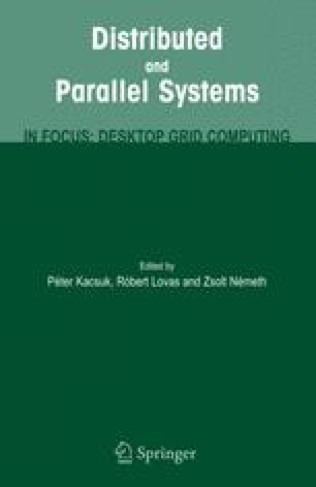
Distributed and Parallel Systems : In Focus : Desktop Grid Computing
In this book contributors investigate parallel and distributed techniques, algorithms, models and applications; present innovative software tools, environments and middleware; focus on various aspects of grid computing; and introduce novel methods for development, deployment, testing and evaluation.

DevOps Tools for Java Developers : Best Practices from Source Code to Production Containers
Explore software lifecycle best practices Use DevSecOps methodologies to facilitate software development and delivery Understand the business value of DevSecOps best practices Manage and secure software dependencies Develop and deploy applications using containers and cloud native technologies Manage and administrate source control repositories and development processes Use automation to set up and administer build pipelines Identify common deployment patterns and antipatterns Maintain and monitor software after deployment

Designing a programming education system for children to program and simulate robots
JuniorCoders is an innovative educational platform designed to introduce programming and robotics concepts to kids and beginners. It provides an easy-to-use visual programming interface that allows users to create Arduino programs by dragging and dropping blocks of code. The system aims to make programming accessible and shareable, allowing them to create complex programs without having to learn a traditional programming language. Enables users to program and simulate robots using Arduino boards.
Deployment and operation of complex software in heterogeneous execution environments : The SODALITE approach
This book provides an overview of the work developed within the SODALITE project, which aims at facilitating the deployment and operation of distributed software on top of heterogeneous infrastructures, including cloud, HPC and edge resources. The experts participating in the project describe how SODALITE works and how it can be exploited by end users. While multiple languages and tools are available in the literature to support DevOps teams in the automation of deployment and operation steps, still these activities require specific know-how and skills that cannot be found in average teams. The SODALITE framework tackles this problem by offering modelling and smart editing features to allow those we call Application Ops Experts to work without knowing low level details about the adopted, potentially heterogeneous, infrastructures. The framework offers also mechanisms to verify the quality of the defined models, generate the corresponding executable infrastructural code, automatically wrap application components within proper execution containers, orchestrate all activities concerned with deployment and operation of all system components, and support on-the-fly self-adaptation and refactoring.
Dependable software engineering : Theories, tools, and applications ; 6th International Symposium, SETTA 2020, Guangzhou, China, November 24–27, 2020, Proceedings
This book constitutes the proceedings of the 6th International Symposium on Dependable Software Engineering, SETTA 2020, held in Guangzhou, China, in November 2020. The 10 full and 1 short paper included in this volume were carefully reviewed and selected from 20 submissions. They deal with latest research results and ideas on bridging the gap between formal methods and software engineering.
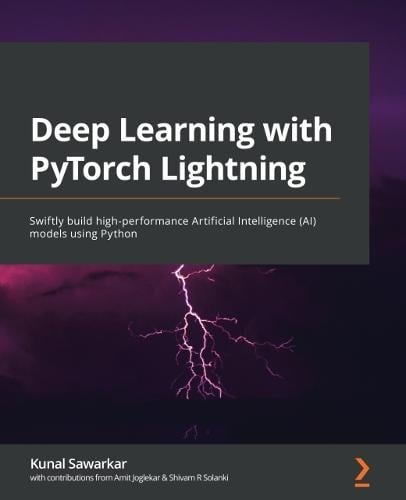
Deep Learning with PyTorch Lightning : Build and train high-performance artificial intelligence and self-supervised models using Python
You’ll learn how to configure PyTorch Lightning on a cloud platform, understand the architectural components, and explore how they are configured to build various industry solutions. You’ll build a neural network architecture, deploy an application from scratch, and see how you can expand it based on your specific needs, beyond what the framework can provide. In the later chapters, you’ll also learn how to implement capabilities to build and train various models like Convolutional Neural Nets (CNN), Natural Language Processing (NLP), Time Series, Self-Supervised Learning, Semi-Supervised Learning, Generative Adversarial Network (GAN) using PyTorch Lightning.

Declarative programming for knowledge management ; 16th International conference on applications of declarative programming and knowledge management, INAP 2005, Fukuoka, Japan, October 22-24, 2005. Revised Selected Papers
Presents a selection of papers presented at the 16th Inter- tional Conference on Applications of Declarative Programming and Knowledge Management, INAP 2005,held in October 2005 at Waseda University, Fukuoka, Japan. These papers re?ect a snapshot of ongoing research and current app- cations in knowledge management and declarative programming.
