



الصفحة 5
الصفحة 5

Modelling Distributed Systems
Process algebras are languages for the description of elementary parallel systems and are used to study the behavioural properties of distributed systems, but they often lack the ability to handle data. This textbook guides students through algebraic specification and verification of distributed systems, and some of the most prominent formal verification techniques.

Modelling and Simulation : Exploring Dynamic System Behaviour
Modelling and Simulation: Exploring Dynamic System Behaviour provides the reader with a balanced and integrated presentation of the modelling and simulation activity for both Discrete Event Dynamic Systems (DEDS) and Continuous Time Dynamic Systems (CTDS). This book presents the fundamentals necessary to understand the many important facets of the modeling and simulation methodology.

Modeling, Simulation and Optimization of Complex Processes HPSC 2018 ; Proceedings of the 7th International Conference on High Performance Scientific Computing, Hanoi, Vietnam, March 19-23, 2018
The contributions cover a broad, interdisciplinary spectrum of scientific computing and showcase recent advances in theory, methods, and practical applications. Subjects covered include numerical simulation, methods for optimization and control, machine learning, parallel computing and software development, as well as the applications of scientific computing in mechanical engineering, airspace engineering, environmental physics, decision making, hydrogeology, material science and electric circuits.
Modeling Semantic Web Services : The Web Service Modeling Language
In this book, Jos de Bruijn and his coauthors lay the foundations for understanding the requirements that shape the description of the various aspects related to Semantic Web services, such as the static background knowledge in the form of ontologies, the functional description of the service, and the behavioral description of the service. They introduce the Web Service Modeling Language (WSML), which provides means for describing the functionality and behavior of Web services, as well as the underlying business knowledge, in the form of ontologies, with a conceptual grounding in the Web Service Modeling Ontology.

Modeling Communication with Robots and Virtual Humans ; Second ZiF Research Group International Workshop on Embodied Communication in Humans and Machines, Bielefeld, Germany, April 5-8, 2006, Revised Selected Papers
The 17 articles in this state-of-the-art survey address artificial intelligence research on communicative agents and also provide an interdisciplinary perspective from linguistics, behavioral research, theoretical biology, philosophy, communication psychology, and computational neuroscience. The topics include studies on human multimodal communication; the modeling of feedback signals, facial expression, eye contact, and deception; the recognition and comprehension of hand gestures and head movements; communication interfaces for humanoid robots; the evolution of cognition and language; emotion and social appraisal in nonverbal communication; dialogue models and methodologies; theory of mind and intentionality; complex systems, dynamic field theory, and connectionist modeling.
Modeling and using context ; 6th International and interdisciplinary Conference, CONTEXT 2007, Roskilde, Denmark, August 20-24, 2007, Proceedings
This volume contains the papers presented at CONTEXT 2007, the Sixth International and Interdisciplinary Conference on Modeling and Using Context. We believe that the papers of this volume represent a snapshot of current work and contribute to both theoretical and applied aspects of research.
Modeling and Using Context ; 5th International and Interdisciplinary Conference, CONTEXT 2005, Paris, France, July 5-8, 2005, Proceedings
Context is of crucial importance for research and applications in many disciplines, as evidenced by many workshops, symposia, seminars, and conferences on specific aspects of context. The International and Interdisciplinary Conference on Modeling and Using Context (CONTEXT), the oldest conference series focusing on context, provides a unique interdisciplinary emphasis, bringing together participants from a wide range of disciplines, including artificial intelligence, cognitive science, computer science, linguistics, organizational science, philosophy, psychology, ubiquitous computing, and application areas such as medicine and law, to discuss and report on context-related research and projects. Previous CONTEXT conferences were held in Rio de Janeiro, Brazil (1997), Trento, Italy (1999, LNCS 1688), Dundee, UK (2001, LNCS 2116), and Palo Alto, USA (2003, LNCS 2680). CONTEXT 2005 was held in Paris, France during July 5–8, 2005. There was a strong response to the CONTEXT 2005 Call for Papers, with 120 submissions received. A careful review process assessed all submissions, with each paper first reviewed by the international Program Committee, and then reviewer discussions were initiated as needed to assure that the final decisions carefully considered all aspects of each paper. Reviews of submissions by the Program Chairs were supervised independently and anonymously, to assure fair consideration of all work. Out of the 120 submissions, 23 were selected as full papers for oral presentation, and 20 were selected as full papers for poster presentation. These outstanding papers are presented in this proceedings.

Modeling and simulation of complex communication networks
Covers important topics and approaches related to the modeling and simulation of complex communication networks from a complex adaptive systems perspective. The authors present different modeling paradigms and approaches as well as surveys and case studies. Modern network systems such as Internet of Things, Smart Grid, VoIP traffic, Peer-to-Peer protocol, and social networks, are inherently complex. They require powerful and realistic models and tools not only for analysis and simulation but also for prediction. With contributions from an international panel of experts, this book is essential reading for networking, computing, and communications professionals, researchers and engineers in the field of next generation networks and complex information and communication systems, and academics and advanced students working in these fields.
Modeling and Simulation for RF System Design
The focus of Modeling and Simulation for RF System Design lies on RF specific modeling and simulation methods and the consideration of system and circuit level descriptions. It contains application-oriented training material for RF designers which combines the presentation of a mixed-signal design flow.
Modeling and Retrieval of Context ; 2nd International Workshop, MRC 2005, Edinburgh, UK, July 31-August 1, 2005, Revised Selected Papers
Computing in context has become a necessity in modern and intelligent IT - plications. With the use of mobile devices and current research on ubiquitous computing, context-awareness has become a major issue. However, context and context-awareness are crucial not only for mobile and ubiquitous computing. They are also vital for spanning various application areas, such as collaborative softwareand Web engineering,personaldigital assistantsand peer-to-peer inf- mation sharing, health care work?ow and patient control, and adaptive games and e-learning solutions. In these areas, context serves as a major source for reasoning, decision making, and adaptation, as it covers not only application knowledge but also environmental knowledge.Likewise, modeling and retrieving context is an important part of modern knowledge management processes.
Modeling and Management of Fuzzy Semantic RDF Data
Presents the latest research findings in fuzzy RDF data modeling and management. Fuzziness widely exist in many data and knowledge intensive applications. With the increasing amount of metadata available, efficient and scalable management of massive semantic data with uncertainty is of crucial importance. This book goes to great depth concerning the fast-growing topic of technologies and approaches of modeling and managing fuzzy metadata with Resource Description Framework (RDF) format. Its major topics include representation of fuzzy RDF data, fuzzy RDF graph matching, query of fuzzy RDF data, and persistence of fuzzy RDF data in diverse databases. The objective of the book is to provide the state-of-the-art information to researchers, practitioners, and postgraduates students who work on the area of big data intelligence and at the same time serve as the uncertain data and knowledge engineering professional as a valuable real-world reference.
Model-Driven Development and Operation of Multi-Cloud Applications : The MODAClouds Approach
In this book readers will find technological discussions on the existing and emerging technologies across the different stages of the big data value chain. They will learn about legal aspects of big data, the social impact, and about education needs and requirements. And they will discover the business perspective and how big data technology can be exploited to deliver value within different sectors of the economy. The book is structured in four parts: Part I "The Big Data Opportunity" explores the value potential of big data with a particular focus on the European context. It also describes the legal, business and social dimensions that need to be addressed, and briefly introduces the European Commission's BIG project.
Model-Driven Design Using Business Patterns
This book takes exactly this step: it shows you how to apply the pattern ideas in business applications and presents more than 20 structural and behavioral business patterns that use the REA (resources, events, agents) pattern as a common backbone. If you are a developer working on business frameworks, you can use the patterns presented to derive the right abstractions (e.g., business objects) and to design and ensure that the meta-rules (e.g., process patterns) are followed by the developers of the actual applications. And if you are an application developer, you can use these patterns to design your business application, to ensure that it does not violate the domain rules, and to adapt the application to changing requirements without the need to change the overall architecture. As with patterns in general, this approach allows for both more flexible and more solid software architectures and hence better software quality.
Model-driven architecture in practice ; A Software Production Environment Based on Conceptual Modeling
This book introduces all the relevant information required to understand and put Model Driven Architecture (MDA) into industrial practice. The book combines a sound theoretical approach based on more than 10 years' research.
Model-Based Engineering of Collaborative Embedded Systems : Extensions of the SPES Methodology
This book presents the results of the "Collaborative Embedded Systems" (CrESt) project, aimed at adapting and complementing the methodology underlying modeling techniques developed to cope with the challenges of the dynamic structures of collaborative embedded systems (CESs) based on the SPES development methodology.
Model Driven Engineering Languages and Systems ; 11th International Conference, MoDELS 2008, Toulouse, France, September 28 - October 3, 2008. Proceedings
The book also contains three keynote speeches and contributions to workshops, symposia, tutorials and panels at the conference. The papers are organized in topical sections on Model Transformation: Foundations; Requirements Modeling; Domain-Specific Modeling; Model Transformation: Techniques, Composition and Analysis of Behavioral Models; Model Comprehension; Model Management; Behavioral Conformance and Refinement; Metamodeling and Modularity; Constraints; Model Analysis; Service-Oriented Architectures; Adaptive and Autonomic Systems; Empirical Studies; Evolution and Reverse Engineering; Modeling Language Semantics; Dependability Analysis and Testing; Aspect-Oriented Modeling; Structural Modeling;and Embedded Systems.
Model Driven Architecture ; European MDA Workshops : Foundations and Applications, MDAFA 2003 and MDAFA 2004, Twente, The Netherlands, June 26-27, 2003, and Linköping, Sweden, June 10-11, 2004, Revised Selected Papers
Model-Driven Architecture (MDA) is an initiative proposedby the Object M- agement Group (OMG) for platform-generic software development. MDA s- arates the specification of system functionality from the implementation on a specific platform. It is aimed at making software assets more resilient to changes caused by emerging technologies. While stressing the importance of modeling, the MDA initiative covers a wide spectrum of research areas. Further efforts are required to bring them into a coherent approach based on open standards and supported by matured tools and techniques. This volume contains the selected papers of two workshops on “Model-Driven Architecture – Foundations and Applications” (MDAFA): MDAFA 2003 held at the University of Twente, Twente, The Netherlands, June 26–27, 2003, and MDAFA 2004 held at Linko ¨ping University, Link¨ oping, Sweden, June 10–11, 2004. The goal of the workshops was to understand the foundations of MDA, to share experience in applying MDA techniques and tools, and to outline future research directions. The workshops organizers encouraged authors of accepted papers to re-submit their papers to a post-workshop reviewing process; 15 of these papers were accepted to appear in this volume on MDA.
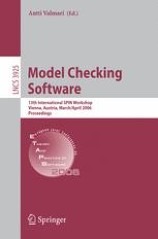
Model Checking Software ; Vol. 3925 ; 13th International SPIN Workshop, Vienna, Austria, March 30 - April 1, 2006, Proceedings
he name “SPIN” refers both to a workshopon model checking and to a famous model checking tool. The SPIN workshop is an annual forum for practitioners and researchersinterested in state space-based techniques for the validation and analysis of software and hardware systems, including communication protocols. It focuses on techniques based on explicit representations of state spaces, as implemented in the SPIN model checker or other tools, and techniques based on a combination of explicit representations with other representations. The SPIN model checker has proven to be particularly suited for the analysis of concurrent asynchronous systems. The workshop aims to encourage interaction and exchange of ideas with all related areas in software engineering.

Model and Design of Improved Current Mode Logic Gates : Differential and Single-ended
This book presents MOSFET-based current mode logic (CML) topologies, which increase the speed, and lower the transistor count, supply voltage and power consumption. The improved topologies modify the conventional PDN, load, and the current source sections of the basic CML gates.

Model and Design of Bipolar and MOS Current-Mode Logic : CML, ECL and SCL Digital Circuits
many works and results have been published which reinforce the importance of Current-Mode digital circuits. In the topic of Current-Mode digital circuits, the authors properly exploited classical paradigms developed and used in the analog circuit domain (a topic in which one of the authors maturated a great experience).
