



الصفحة 5
الصفحة 5

Mobile and Wireless Communication Networks; IFIP 19th World Computer Congress, TC-6, 8th IFIP/IEEE Conference on Mobile and Wireless Communications Networks, August 20-25, 2006, Santiago, Chile
International Federation for Information Processing The IFIP series publishes state-of-the-art results in the sciences and technologies of information and communication. The scope of the series includes: foundations of computer science; software theory and practice; education; computer applications in technology; communication systems; systems modeling and optimization; information systems; computers and society; computer systems technology; security and protection in information processing systems; artificial intelligence; and human-computer interaction. Proceedings and post-proceedings of referred international conferences in computer science and interdisciplinary fields are featured. These results often precede journal publication and represent the most current research. The principal aim of the IFIP series is to encourage education and the dissemination and exchange of information about all aspects of computing.

Mobile Ad-hoc and Sensor Networks ; Vol. 3794 : 1st International Conference, MSN 2005, Wuhan, China, December 13-15, 2005, Proceedings
Constitutes the refereed proceedings of the First International Conference on Mobile Ad-hoc and Sensor Networks held in 2005. The papers address topical areas in mobile ad hoc and sensor networks, such as network architecture and protocols, software platforms and development tools, self-organization and synchronization, and more

Mining Complex Data ; ECML/PKDD 2007 Third International Workshop, MCD 2007, Warsaw, Poland, September 17-21, 2007, Revised Selected Papers
This book constitutes the refereed proceedings of the Third International Workshop on Mining Complex Data, MCD 2007, held in Warsaw, Poland, in September 2007, co-located with ECML and PKDD 2007.The 20 revised full papers presented were carefully reviewed and selected; they present original results on knowledge discovery from complex data. In contrast to the typical tabular data, complex data can consist of heterogenous data types, can come from different sources, or live in high dimensional spaces. All these specificities call for new data mining strategies.
Middleware 2008 ; ACM/IFIP/USENIX 9th International Middleware Conference Leuven, Belgium, December 1-5, 2008 Proceedings
This book constitutes the refereed proceedings of the ACM/IFIP/USENIX 9th International Middleware Conference 2008, held in Leuven, Belgium, in December 2008.The 21 revised full papers presented were carefully reviewed and selected from 117 submissions for inclusion in the book. The papers are organized in topical sections on platforms extended to new capabilities, advanced software engineering focusing on specific system properties, system management techniques, as well as components and system algorithms and properties.
Middleware 2005 ; ACM/IFIP/USENIX 6th International Middleware Conference, Grenoble, France, November 28 - December 2, 2005, Proceedings
Today, middleware is a key part of almost any application. Gone are the days when middleware was only used in the IT industry for high-end applications. Rather than middleware being part of the IT world, today IT applications r- resent only one aspect of middleware. With the increase in distribution, network capacity, and widespread deployment of computing devices (in homes, auto- biles, mobile phones, etc.), middleware has surpassed the importance of operating systems as the platform where application development and deployment take place. This makes middleware very exciting as a research area but also a very challenging one since it encompasses many different concepts and techniques from a wide varietyof ?elds: networking, distributed systems, softwareengine- ing, performance analysis, computer architecture, and data management. Middleware 2005 in Grenoble, France, was the 6th edition of an increasingly successfulconference.The scope of the conference has been slowly widening with every edition to accommodate new ?elds and applications.

Microsoft Visual C# Step by Step
Guide to Microsoft Visual C# fundamentals with Visual Studio. Expand your expertiseand teach yourself the fundamentals of programming with the latest version of Visual C# with Visual Studio. If you are an experienced software developer, you'll get all the guidance, exercises, and code you need to start building responsive, scalable, cloud-connected applications that can run almost anywhere. Discover how to: Quickly start creating Visual C# code and projects with Visual Studio Work with variables, operators, expressions, methods, and program flow Build more robust apps with error, exception, and resource management Spot problems fast with the Visual Studio debugger Make the most of improvements to C# methods, parameters, and switch statements Master the C# object model, and create your own functional data structures Leverage advanced properties, indexers, generics, and collection classes Create Windows 10 apps that share data, collaborate, and use cloud services Integrate Cortana to voice-enable your applications Perform complex queries over object collections with LINQ

Microservices : Science and Engineering
This book describes in contributions by scientists and practitioners the development of scientific concepts, technologies, engineering techniques and tools for a service-based society. The focus is on microservices, i.e cohesive, independent processes deployed in isolation and equipped with dedicated memory persistence tools, which interact via messages.
Microprocessor 5 : Software and hardware aspects of development, debugging and testing - the microcomputer
Focuses more particularly on the first two generations of microprocessors, those that handle 4- and 8- bit integers. Microprocessor 5 – the fifth and final volume of this series of books – first presents the hardware and software aspects of the development chain of a microprocessor-based digital system. Finally, to round up the series and offer a historical perspective, the architectures of the first microcomputers are detailed. A comprehensive approach is used, with examples drawn from current and past technologies that illustrate theoretical concepts, making them accessible.

Microprocessor 4 : Core concepts - software aspects
Addresses the software aspects of this component. Coding of an instruction, addressing modes and the main features of the Instruction Set Architecture (ISA) of a generic component are presented. Futhermore, two approaches are discussed for altering the flow of execution using mechanisms of subprogram and interrupt. A comprehensive approach is used, with examples drawn from current and past technologies that illustrate theoretical concepts, making them accessible.
Microprocessor 3 : Core concepts - hardware aspects
Calculation is the main function of a computer. The central unit is responsible for executing the programs. The microprocessor is its integrated form. This component, since the announcement of its marketing in 1971, has not stopped breaking records in terms of computing power, price reduction and integration of functions (calculation of basic functions, storage with integrated controllers). It is present today in most electronic devices. Knowing its internal mechanisms and programming is essential for the electronics engineer and computer scientist to understand and master the operation of a computer and advanced concepts of programming.

Microprocessor 2 : Communication in a digital system
Focuses more particularly on the first generations of microprocessors, that is to say those that handle integers in 4 and 8-bit formats. The first chapter presents the calculation function and reminds the memory function. The following is devoted to notions of calculation model and architecture. The concept of bus is then presented. Chapters 4 and 5 can then address the internal organization and operation of the microprocessor first in hardware and then software. The mechanism of the function call, conventional and interrupted, is more particularly detailed in a separate chapter. The book ends with a presentation of architectures of the first microcomputers for a historical perspective. The knowledge is presented in the most exhaustive way possible with examples drawn from current and old technologies that illustrate and make accessible the theoretical concepts. Each chapter ends if necessary with corrected exercises and a bibliography. The list of acronyms used and an index are at the end of the book.

Microprocessor 1 : Prolegomena - calculation and storage functions - models of computation and computer architecture
Presents the computation function, recalls the memory function and clarifies the concepts of computational models and architecture. A comprehensive approach is used, with examples drawn from current and past technologies that illustrate theoretical concepts, making them accessible.

Micro-ISV : From Vision to Reality
Micro-ISV: From Vision to Reality explains what works and why in today's emerging micro-ISV sector. Currently, thousands of programmers build and deliver great solutions ISV-style, earning success and revenues much larger than you might guess. Written by and for micro-ISVs, with help from some of the leaders of the field, this book takes you beyond just daydreaming to running your own business. It thoroughly explores how it is indeed possible to launch and maintain a small and successful ISV business, and is an ideal read if you're interested in getting started.

Microformats : Empowering Your Markup for Web 2.0
This book is a comprehensive guide to microformats. It explores why—in Bill Gates' words—"We need microformats," how microformats work, and the kinds of problems microformats help solve. The book covers every current microformat, with complete details of the syntax, semantics, and uses of each, along with real-world examples and a comprehensive survey of the tools available for working with them. the book also features case studies detailing how major web content publishers such as yahoo put microformats to work in their web applications.
Micro-Assembly Technologies and Applications ; IFIP TC5 WG5.5 Fourth International Precision Assembly Seminar (IPAS’2008) Chamonix, France February 10–13, 2008
The IFIP series publishes state-of-the-art results in the sciences and technologies of information and communication. The scope of the series includes: foundations of computer science; software theory and practice; education; computer applications in technology; communication systems; systems modeling and optimization; information systems; computers and society; computer systems technology; security and protection in information processing systems; artificial intelligence; and human-computer interaction. Proceedings and post-proceedings of referred international conferences in computer science and interdisciplinary fields are featured. These results often precede journal publication and represent the most current research.
Methods and Tools for Collaborative Networked Organizations
Provides a comprehensive set of reference materials derived from the results of the ECOLEAD project in one organized volume. The ECOLEAD project, a large 4-year European initiative, involved 28 organizations (from academia, research and industry), from 14 countries (in Europe and Latin America).Three main types of results from ECOLEAD are presented: (i) Conceptual frameworks and models, (ii) Methods and processes, and (iii) Software tools and systems.

Methods and Procedures for the Verification and Validation of Artificial Neural Networks
Methods and Procedures for the Verification and Validation of Artificial Neural Networks is the culmination of the first steps in that research. This volume introduces some of the more promising methods and techniques used for the verification and validation (V&V) of neural networks and adaptive systems. A comprehensive guide to performing V&V on neural network systems, aligned with the IEEE Standard for Software Verification and Validation, will follow this book. The NASA IV&V and the Institute for Scientific Research, Inc. are working to be at the forefront of software safety and assurance for neural network and adaptive systems.

Mechanizing Mathematical Reasoning : Essays in Honor of Jörg H. Siekmann on the Occasion of His 60th Birthday
By presenting state-of-the-art results in logical reasoning and formal methods in the context of artificial intelligence and AI applications, this book commemorates the 60th birthday of Jörg H. Siekmann. The 30 revised reviewed papers are written by former and current students and colleagues of Jörg Siekmann; also included is an appraisal of the scientific career of Jörg Siekmann entitled "A Portrait of a Scientist: Logics, AI, and Politics." The papers are organized in four parts on logic and deduction, applications of logic, formal methods and security, and agents and planning.
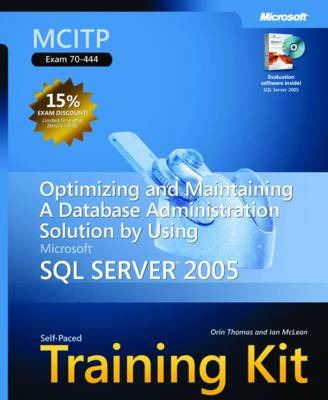
MCITP self-paced training Kit (Exam 70-444) : Optimizing and maintaining a database administration solution microsoft SQL server 2005
Designed to help you make the most of your study time. Maximize your performance on the exam by learning to: * Monitor and troubleshoot queries, databases, and servers * Help defend against injection attacks, denial of service attacks, worms, and viruses * Manage security strategies and perform audits * Detect and resolve data conflicts * Diagnose faults and recover from database failures and disasters * Optimize database availability with failover clustering, database mirroring, log shipping, and replication * Customize a maintenance strategy and automate routine tasks * Build, debug, and deploy SQL Server Integration Services packages PRACTICE TESTS Assess your skills with practice tests on CD. You can work through hundreds of questions using multiple testing modes to meet your specific learning needs. You get detailed explanations for right and wrong answers-including a customized learning path that describes how and where to focus your studies. Your training kit includes: Details inside. * Official self-paced study guide. * Practice tests with multiple, customizable testing options and a learning plan based on your results. *400+ practice and review questions. * Case scenarios, practice exercises, and best practices. *180-day evaluation version of Microsoft SQL Server 2005 Enterprise Edition. * Fully searchable eBook of this guide.
Maturing Usability : Quality in Software, Interaction and Value
Divided into three parts, ‘Quality in Software’ looks at how using development tools can enhance usability of a system, and how methods and models can be integrated into the development process to produce effective user interfaces. ‘Quality in Interaction’ addresses theoretical frameworks on the nature of interactions; techniques and metrics for evaluation interaction quality; and the transfer of concepts and methods from research to practice. Finally, ‘Quality in Value’ assesses the impact that a system has in the real world, focusing on increasing the value of usability practice for software development and on increasing value for the users.
