



الصفحة 5
الصفحة 5
Mathematical Approaches to Software Quality
This book considers the potential and limitations of the various mathematical approaches and thereby aims to give a balanced view of the usability of each mathematical approach. Written with both student and professional in mind, this book assists the reader in applying mathematical methods to solve practical problems that are relevant to software engineers. It is suitable for coursework or self-study and there is helpful material on tools to support the various mathematical approaches.
Logics of Specification Languages
Dedicated chapters address : the use of ASM (Abstract State Machines) in the classroom; the Event-B modelling method; a methodological guide to CafeOBJ logic; CASL, the Common Algebraic Specification Language; the Duration Calculus; the logic of the RAISE specification language (RSL); the specification language TLA+; the typed logic of partial functions and the Vienna Development Method (VDM); and Z logic and its applications. Each chapter is self-contained, with references, and symbol and concept indexes. Finally, in a unique feature, the book closes with short commentaries on the specification languages written by researchers closely associated with their original development.
Logic Programming with Prolog
Logic Programming is the name given to a distinctive style of programming, very different from that of conventional programming languages such as C++ and Java. By far the most widely used Logic Programming language is Prolog. Prolog is a good choice for developing complex applications, especially in the field of Artificial Intelligence. This book does not assume that the reader is an experienced programmer or has a background in Mathematics, Logic or Artificial Intelligence. It starts from scratch and aims to arrive at the point where quite powerful programs can be written in the language. It is intended both as a textbook for an introductory course and as a self-study book. On completion the reader will know enough to use Prolog in their own research or practical projects. Each chapter has self-assessment exercises so that the reader may check their own progress. A glossary of the technical terms used completes the book.

Liapunov Functions and Stability in Control Theory
Presents a modern and self-contained treatment of the Liapunov method for stability analysis, in the framework of mathematical nonlinear control theory. A Particular focus is on the problem of the existence of Liapunov functions (converse Liapunov theorems) and their regularity, whose interest is especially motivated by applications to automatic control.

Leveraging applications of formal methods, verification and validation : Engineering Principles ; 9th International Symposium on Leveraging Applications of Formal Methods, ISoLA 2020, Rhodes, Greece, October 20–30, 2020, Proceedings, Part II
Constitutes the refereed proceedings of the 9th International Symposium on Leveraging Applications of Formal Methods, ISoLA 2020, which was planned to take place during October 20–30, 2020, on Rhodes, Greece. The event itself was postponed to 2021 due to the COVID-19 pandemic. The papers presented were carefully reviewed and selected for inclusion in the proceedings. Each volume focusses on an individual topic with topical section headings within the volume: Part II, Engineering Principles : Automating Software Re-Engineering ; Rigorous Engineering of Collective Adaptive Systems.

Leveraging applications of formal methods, verification and validation : Applications ; 9th International Symposium on Leveraging Applications of Formal Methods, ISoLA 2020, Rhodes, Greece, October 20–30, 2020, Proceedings, Part III
The three-volume set LNCS 12476 - 12478 constitutes the refereed proceedings of the 9th International Symposium on Leveraging Applications of Formal Methods, ISoLA 2020, which was planned to take place during October 20–30, 2020, on Rhodes, Greece. The event itself was postponed to 2021 due to the COVID-19 pandemic. The papers presented were carefully reviewed and selected for inclusion in the proceedings. Each volume focusses on an individual topic with topical section headings within the volume: Part III, Applications: Reliable Smart Contracts: State-of-the-art, Applications, Challenges and Future Directions; Automated Verification of Embedded Control Software; Formal methods for DIStributed COmputing in future RAILway systems.

Learning Design : A Handbook on Modelling and Delivering Networked Education and Training
Put together contributions from members of the "Valkenburg Group", consisting of 33 experts deeply involved in e-learning and more specifically learning design. The result is a rich and lasting source of information for both e-learning course and tool developers, providing information about the specification itself, how to implement it in practice, what tools to use, and what pitfalls to avoid. The book not only reports first experiences, but also goes beyond the current state of the art by looking at future prospects and emerging applications.
Knowledge and Information Visualization : Searching for Synergies
The basic ideas underlying knowledge visualization and information vi- alization are outlined. In a short preview of the contributions of this volume, the idea behind each approach and its contribution to the goals of the book are outlined. 2 The Basic Concepts of the Book Three basic concepts are the focus of this book: "data", "information", and "kno- edge". There have been numerous attempts to define the terms "data", "information", and "knowledge", among them, the OTEC Homepage "Data, Information, Kno- edge, and Wisdom" (Bellinger, Castro, & Mills, see http://www.syste- thinking.org/dikw/dikw.htm): Data are raw. They are symbols or isolated and non-interpreted facts. Data rep- sent a fact or statement of event without any relation to other data. Data simply exists and has no significance beyond its existence (in and of itself). It can exist in any form, usable or not. It does not have meaning of itself.

Comprehensive mathematics for computer scientists 1 : Sets and numbers, graphs and algebra, logic and machines, linear geometry
This two-volume textbook Comprehensive Mathematics for Computer Scientists is a self-contained comprehensive presentation of mathematics including sets, numbers, graphs, algebra, logic, grammars, machines, linear geometry, calculus, ODEs, and special themes such as neural networks, Fourier theory, wavelets, numerical issues, statistics, categories, and manifolds. The concept framework is streamlined but defining and proving virtually everything.

Component models and systems for grid applications ; Proceedings of the Workshop on Component Models and Systems for Grid Applications held June 26, 2004 in Saint Malo, France.
This first volume of the CoreGRID series addresses such vital issues as the architecture of the Grid, the way software will influence the development of the Grid, and the practical applications of Grid technologies for individuals and businesses alike. Part I of the book, Application-Oriented Designs, focuses on development methodology and how it may contribute to a more component-based use of the Grid. Middleware Architecture, the second part, examines portable Grid engines, hierarchical infrastructures, interoperability, as well as workflow modeling environments. The final part of the book, Communication Frameworks, looks at dynamic self-adaptation, collective operations, and higher-order components. With Component Models and Systems for Grid Applications, editors Vladimir Getov and Thilo Kielmann offer the computing professional and the computing researcher the most informative, up-to-date, and forward-looking thoughts on the fast-growing field of Grid studies.
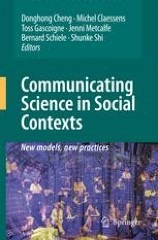
Communicating Science in Social Contexts : New models, new practices
Science communication, as a multidisciplinary field, has developed remarkably in recent years. It is now a distinct and exceedingly dynamic science that melds theoretical approaches with practical experience. Formerly well-established theoretical models now seem out of step with the social reality of the sciences, and the previously clear-cut delineations and interacting domains between cultural fields have blurred. Communicating Science in Social Contexts examines that shift, which itself depicts a profound recomposition of knowledge fields, activities and dissemination practices, and the value accorded to science and technology.
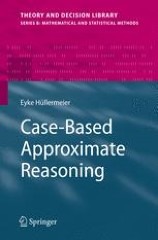
Case-Based Approximate Reasoning
Case-based reasoning (CBR) has received a great deal of attention in recent years and has established itself as a core methodology in the field of artificial intelligence. The key idea of CBR is to tackle new problems by referring to similar problems that have already been solved in the past. More precisely, CBR proceeds from individual experiences in the form of cases. The generalization beyond these experiences typically relies on a kind of regularity assumption demanding that 'similar problems have similar solutions'. Making use of different frameworks of approximate reasoning and reasoning under uncertainty, notably probabilistic and fuzzy set-based techniques, this book develops formal models of the above inference principle, which is fundamental to CBR. The case-based approximate reasoning methods thus obtained especially emphasize the heuristic nature of case-based inference and aspects of uncertainty in CBR. This way, the book contributes to a solid foundation of CBR which is grounded on formal concepts and techniques from the aforementioned fields. Besides, it establishes interesting relationships between CBR and approximate reasoning, which not only cast new light on existing methods but also enhance the development of novel approaches and hybrid systems.

Business process management Workshops ; Vol. 4103 : BPM 2006 International Workshops, BPD, BPI, ENEI, GPWW, DPM, semantics4ws, Vienna, Austria, September 4-7, 2006, Proceedings
BPM 2006 was the fourth in a conference series that provides a forum for - searchers and practitioners in all areas of business process management. In c- junction with BPM 2006, a series of workshops were held. They were meant to facilitate the exchange of ideas and experiences between active researchers, and to stimulate discussions on new and emerging topics in line with the conference topics. We see the workshops as a necessary extension to the main conference. BPM has established itself rapidly as a high quality conference with a highly competitive selection process.
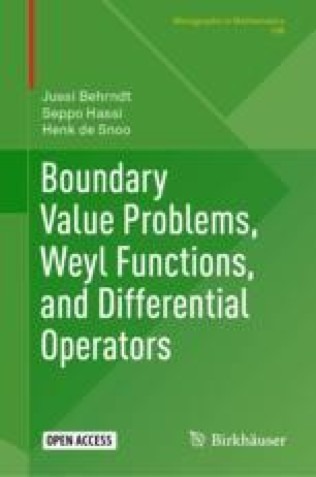
Boundary value problems, Weyl Functions, and differential operators
This book presents a comprehensive survey of modern operator techniques for boundary value problems and spectral theory, employing abstract boundary mappings and Weyl functions.
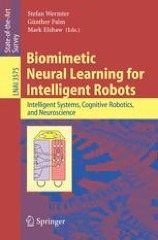
Biomimetic neural learning for intelligent robots : Intelligent systems, cognitive robotics, and neuroscience
This book presents research performed as part of the EU project on biomimeticmultimodal learning in a mirror neuron-based robot (MirrorBot) and contribu-tions presented at the International AI-Workshop on NeuroBotics. The over-all aim of the book is to present a broad spectrum of current research intobiomimetic neural learning for intelligent autonomous robots. In this book we show the development of newtechniques using cell assemblies, associative neural networks, and Hebbian-typelearning in order to associate vision, language and motor concepts. We havedeveloped biomimetic multimodal learning and language instruction in a robotto investigate the task of searching for objects. As well as the research performedin this area for the MirrorBot project, the second part of this book incorporatessignificant contributions from other research in the field of biomimetic robotics.This second part of the book concentrates on the progress made in neuroscienceinspired robotic learning approaches (in short: NeuroBotics). We hope that this book stimulates and encourages new research in this in-teresting and dynamic area.

Bioactive Confirmation II
Specific binding of a ligand to a receptor is a key step in a variety of biol- ical processes, such as immune reactions, enzyme cascades, or intracellular transport processes. The ligand-receptor terminology implies that the rec- tor molecule is signi?cantly larger than the ligand, and the term "bioactive conformation" usually characterizes the conformation of a ligand when it is bound to a receptor. In a more general sense, bioactive conformation applies toanymoleculeinabiologicallyrelevantboundstateregardlessofsizecons- erations. Mostofthecontributions tothisbookaddressligandsthat aremuch smaller than their receptors. X-ray crystallography and high resolution NMR spectroscopy are the two main experimental techniques used to study bioactive conformations. The- fore, the twovolumes ofthisbookcover approachesthat use either ofthetwo techniques, or a combination thereof.

Bilinear integrable systems : From classical to quantum, continuous to discrete ; Proceedings of the NATO Advanced Research Workshop on Bilinear Integrable Systems: From Classical to Quantum, Continuous to Discrete St. Petersburg, Russia, 15-19 September 2002
Trained as a physicistin his home university Kyushu University, Professor Hirota earned his PhD in’61 at Northwestern University with Professor Siegert in the field of “QuantumStatistical mechanics”. He wrote a widely appreciated Doctoral dissertation on“Functional Integral representation of the grand partition function”. As a youngresearcher, he entered the RCA Company in Tokyo to do research on semi-conductor plasmas. Professor Hirota was led to model the Toda lattice as a non-linear networkof ladder-type LC circuits. The self-dual case led to equations very reminiscentof the Sine-Gordon equation, with much the same features (existence of onesoliton, soliton-soliton interaction, etc)

Big Data in Context : Legal, Social and Technological Insights
Sheds new light on a selection of big data scenarios from an interdisciplinary perspective. It features legal, sociological and economic approaches to fundamental big data topics such as privacy, data quality and the ECJ’s Safe Harbor decision on the one hand, and practical applications such as smart cars, wearables and web tracking on the other. Addressing the interests of researchers and practitioners alike, it provides a comprehensive overview of and introduction to the emerging challenges regarding big data.All contributions are based on papers submitted in connection with ABIDA (Assessing Big Data), an interdisciplinary research project exploring the societal aspects of big data and funded by the German Federal Ministry of Education and Research.

Big Data : Conceptual Analysis and Applications
The book is devoted to the analysis of big data in order to extract from these data hidden patterns necessary for making decisions about the rational behavior of complex systems with the different nature that generate this data. To solve these problems, a group of new methods and tools is used, based on the self-organization of computational processes, the use of crisp and fuzzy cluster analysis methods, hybrid neural-fuzzy networks, and others. The book solves various practical problems. In particular, for the tasks of 3D image recognition and automatic speech recognition large-scale neural networks with applications for Deep Learning systems were used.

Beyond partial differential equations : On linear and Quasi-Linear abstract hyperbolic evolution equations
The present volume is self-contained and introduces to the treatment of linear and nonlinear (quasi-linear) abstract evolution equations by methods from the theory of strongly continuous semigroups.
