



الصفحة 5
الصفحة 5

Graph-based representations in pattern recognition ; 5th IAPR International Workshop, GbRPR 2005, Poitiers, France, April 11-13, 2005, Proceedings
Many vision problems have to deal with di?erent entities (regions, lines, line junctions, etc.) and their relationships. These entities together with their re- tionships may be encoded using graphs or hypergraphs. The structural inf- mation encoded by graphs allows computer vision algorithms to address both the features of the di?erent entities and the structural or topological relati- ships between them. Moreover, turning a computer vision problem into a graph problem allows one to access the full arsenal of graph algorithms developed in computer science. The Technical Committee (TC15, http://www.iapr.org/tcs.html) of the IAPR (International Association for Pattern Recognition) has been funded in order to federate and to encourage research work in these ?elds. Among its - tivities, TC15 encourages the organization of special graph sessions at many computer vision conferences and organizes the biennial workshop GbR.

Grammatical Inference : Algorithms and Applications ; 8th International Colloquium, ICGI 2006, Tokyo, Japan, September 20-22, 2006, Proceedings
The topics discussed range from theoretical results of learning algorithms to innovative applications of grammatical inference and from learning several interesting classes of formal grammars to applications to natural language processing.

Gesture smart control
Nowadays actions are increasingly being handled in electronic ways, instead of physical interaction. From earlier times biometrics is used in the authentication of a person. It recognizes a person by using a human trait associated with it like eyes (by calculating the distance between the eyes) and using hand gestures, fingerprint detection, face detection etc. Advantages of using these traits for identification are that they uniquely identify a person and cannot be forgotten or lost. These are unique features of a human being which are being used widely to make the human life simpler. Hand gesture recognition system is a powerful tool that supports efficient interaction between the user and the computer.

Gesture in Human-Computer Interaction and Simulation ; 6th International Gesture Workshop, GW 2005, Berder Island, France, May 18-20, 2005, Revised Selected Papers
The international Gesture Workshops have become the leading interdisciplinary events for dissemination of the latest results on gesture-based communication. The goal of these workshops is to bring together researchers who want to meet and share ideas on advanced research on gesture related to multidisciplinary scienti?c ?elds. Depending on the ?elds, the objectives can be very di?erent. While physiology and biomechanics aim to extract fundamental knowledge of physical gesture, computer sciences try to capture di?erent aspects of gesture and extract features that help to identify, interpret or rebuild the underlying mechanisms of communication gestures. Other approaches and methodologies are followed by cognitive sciences and linguistics, bringing a complementary - derstanding of motor control and gesture meaning. The results can be enhanced by technological applications or demonstrations.

Geometric Modeling and Processing - GMP 2006 ; 4th International Conference, GMP 2006, Pittsburgh, PA, USA, July 26-28, 2006, Proceedings
This book constitutes the refereed proceedings of the 4th International Conference on Geometric Modeling and Processing, GMP 2006, held in Pittsburgh, PA, USA in July 2006. The 36 revised full papers and 21 revised short papers presented were carefully reviewed and selected from a total of 84 submissions. All current issues in the area of geometric modeling and processing are addressed and the impact in such areas as computer graphics, computer vision, machining, robotics, and scientific visualization is shown. The papers are organized in topical sections on shape reconstruction, curves and surfaces, geometric processing, shape deformation, shape description, shape recognition, geometric modeling, subdivision surfaces, and engineering applications.

Fuzzy systems and knowledge discovery ; Vol. 3614 ; 2nd International Conference, FSKD 2005, Changsha, China, August 27-29, 2005, Proceedings, Part II
This book and its sister volume, LNAI 3613 and 3614, constitute the proce- ings of the Second International Conference on Fuzzy Systems and Knowledge Discovery (FSKD 2005), jointly held with the First International Conference on Natural Computation (ICNC 2005, LNCS 3610, 3611, and 3612) from - gust 27–29, 2005 in Changsha, Hunan, China. FSKD 2005 successfully attracted 1249 submissions from 32 countries/regions (the joint ICNC-FSKD 2005 received 3136 submissions). After rigorous reviews, 333 high-quality papers, i. e. , 206 long papers and 127 short papers, were included in the FSKD 2005 proceedings, r- resenting an acceptance rate of 26. 7%. The ICNC-FSKD 2005 conference featured the most up-to-date research - sults in computational algorithms inspired from nature, including biological, e- logical, and physical systems. It is an exciting and emerging interdisciplinary area in which a wide range of techniques and methods are being studied for dealing with large, complex, and dynamic problems. The joint conferences also promoted cross-fertilization over these exciting and yet closely-related areas, which had a signi?cant impact on the advancement of these important technologies. Speci?c areas included computation with words, fuzzy computation, granular com- tation, neural computation, quantum computation, evolutionary computation, DNA computation, chemical computation, information processing in cells and tissues, molecular computation, arti?cial life, swarm intelligence, ants colony, arti?cial immune systems, etc. , with innovative applications to knowledge d- covery, ?nance, operations research, and more.

Fuzzy systems and knowledge discovery ; Vol. 3613 ; 2nd International Conference, FSKD 2005, Changsha, China, August 27-29, 2005, Proceedings, Part I
This book and its sister volume, LNAI 3613 and 3614, constitute the proce- ings of the Second International Conference on Fuzzy Systems and Knowledge Discovery (FSKD 2005), jointly held with the First International Conference on Natural Computation (ICNC 2005, LNCS 3610, 3611, and 3612) from - gust 27–29, 2005 in Changsha, Hunan, China. FSKD 2005 successfully attracted 1249 submissions from 32 countries/regions (the joint ICNC-FSKD 2005 received 3136 submissions). After rigorous reviews, 333 high-quality papers, i. e. , 206 long papers and 127 short papers, were included in the FSKD 2005 proceedings, r- resenting an acceptance rate of 26. 7%. The ICNC-FSKD 2005 conference featured the most up-to-date research - sults in computational algorithms inspired from nature, including biological, e- logical, and physical systems. It is an exciting and emerging interdisciplinary area in which a wide range of techniques and methods are being studied for dealing with large, complex, and dynamic problems. The joint conferences also promoted cross-fertilization over these exciting and yet closely-related areas, which had a signi?cant impact on the advancement of these important technologies. Speci?c areas included computation with words, fuzzy computation, granular com- tation, neural computation, quantum computation, evolutionary computation, DNA computation, chemical computation, information processing in cells and tissues, molecular computation, arti?cial life, swarm intelligence, ants colony, arti?cial immune systems, etc. , with innovative applications to knowledge d- covery, ?nance, operations research, and more.

Fuzzy Models and Algorithms for Pattern Recognition and Image Processing
Fuzzy Models and Algorithms for Pattern Recognition and Image Processing presents a comprehensive introduction of the use of fuzzy models in pattern recognition and selected topics in image processing and computer vision. Unique to this volume in the Kluwer Handbooks of Fuzzy Sets Series is the fact that this book was written in its entirety by its four authors. A single notation, presentation style, and purpose are used throughout. The result is an extensive unified treatment of many fuzzy models for pattern recognition. The main topics are clustering and classifier design, with extensive material on feature analysis relational clustering, image processing and computer vision. Also included are numerous figures, images and numerical examples that illustrate the use of various models involving applications in medicine, character and word recognition, remote sensing, military image analysis, and industrial engineering.

Fuzzy Logic and Applications ; Vol. 3849 ; 6th International Workshop, WILF 2005, Crema, Italy, September 15-17, 2005, Revised Selected Papers
This volume contains the proceedings of the 6th International Workshop on Soft Computing and Applications (WILF 2005), which took place in Crema, Italy, on September 15–17, 2005, continuing an established tradition of biannual meetings among researchers and developers from both academia and industry to report on the latest scienti?c and theoretical advances, to discuss and debate major issues, and to demonstrate state-of-the-art systems. This edition of the workshop included two special sessions, sort of subwo- shops, focusing on the application of soft computing techniques (or compu- tional intelligence) to image processing (SCIP) and bioinformatics (CIBB).

Fuzzy Group Theory
This book presents an up-to-date account of research in important topics of fuzzy group theory. The book concentrates on the theoretical aspects of fuzzy subgroups of a group. It also includes applications to some abstract recognition problems and to coding theory. The book begins with basic properties of fuzzy subgroups. The notions of ascending series and descending series of fuzzy subgroups are used to define nilpotency of a fuzzy subgroup. The material presented in this book makes it a good reference for graduate students and researchers working in fuzzy group theory.

Fundamentals of pattern recognition and machine learning
Fundamentals of Pattern Recognition and Machine Learning is designed for a one or two-semester introductory course in Pattern Recognition or Machine Learning at the graduate or advanced undergraduate level. The book combines theory and practice and is suitable to the classroom and self-study.

Fundamentals of multimedia ; 3rd ed.
Addresses real issues commonly faced in the workplace. The essential concepts are explained in a practical way to enable students to apply their existing skills to address problems in multimedia. Fully revised and updated, this new edition now includes coverage of such topics as 3D TV, social networks, high-efficiency video compression and conferencing, wireless and mobile networks, and their attendant technologies.

Fundamentals of multimedia ; 2nd ed.
Addresses real issues commonly faced in the workplace. The essential concepts are explained in a practical way to enable students to apply their existing skills to address problems in multimedia. Fully revised and updated, this new edition now includes coverage of such topics as 3D TV, social networks, high-efficiency video compression and conferencing, wireless and mobile networks, and their attendant technologies.

Foundations of 3D Graphics Programming : Using JOGL and Java3D ; 2nd ed.
This thoroughly updated and enhanced second edition of Foundations of 3D Graphics Programming is an innovative shortcut to graphics theory and programming using JOGL, a new vehicle of 3D graphics programming in Java. This revised edition of the successful, reader-friendly text covers all graphics basics and several advanced topics, as well as some basic concepts in Java programming for those who currently are C/C++ programmers. Specifically, it provides all the core aspects of OpenGL programming in Java using JOGL, along with concisely presented computer graphics theories. In addition, it uses a top-down approach to lead the reader into programming and applications up-front. The content about theory provides a high-level understanding of all basic graphics, and of using JOGL instead of implementing a graphics system. Explanations are integrated with the sample programs, which are specifically designed for learning and accompanying this book.

Food lens = فود لينس
Food lens is an innovative application designed to revolutionize dietary management by leveraging advanced image recognition and nutritional analysis. The primary objective of this senior project is to develop a user-friendly tool that identifies various foods through a camera interface and provides detailed nutritional information. This application not only enhances the user's understanding of their dietary intake but also assists in achieving personalized health and fitness goals. The core functionality of Food Lens involves the integration of a robust image recognition system capable of accurately identifying a wide range of foods. Upon identification, the application retrieves comprehensive nutritional data, including calorie content, macronutrient distribution (proteins, fats, carbohydrates), and essential micronutrients (vitamins and minerals). This data is then seamlessly integrated into the user's dietary profile. Food Lens is designed to track the user's daily caloric intake and compare it against personalized recommendations based on age, gender, weight, height, and activity level. By maintaining a dynamic record of consumed foods, the application provides real-time feedback on the user’s nutritional progress. This feature is particularly beneficial for individuals aiming to manage weight, address dietary restrictions, or improve overall health.

Fadfada
Sharing personal problems and true feeling on social media has a lot of fears and is not likable nowadays, because of bullying, shaming, and making fun of the user by other users, Fadfada is a multi-platform social networking service, that aims to give the users the ability to share their problems or feeling via written newsfeed (posts) or videos (stories) that had an impact on their psychological health without revealing their true identity, by putting a mask on their faces and changing their voices after recording the story. In addition to extracting features from posts and stories to match users based on it.

Explainable AI with Python
This book provides a full presentation of the current concepts and available techniques to make “machine learning” systems more explainable. The approaches presented can be applied to almost all the current “machine learning” models: linear and logistic regression, deep learning neural networks, natural language processing and image recognition, among the others.

Evolving Connectionist Systems : The Knowledge Engineering Approach
Evolving Connectionist Systems is aimed at all those interested in developing and using intelligent computational models and systems to solve challenging real world problems in computer science, engineering, bioinformatics and neuroinformatics. The book challenges scientists and practitioners with open questions about future creation of new information models inspired by Nature. This edition includes new methods for adaptive, knowledge-based learning, such as online incremental feature selection, spiking neural networks, transductive neuro-fuzzy inference, adaptive data and model integration, cellular automata and artificial life systems, particle swarm optimisation, ensembles of evolving systems, and quantum inspired neural networks. New applications to gene and protein interaction modelling, brain data analysis and brain model creation, computational neuro-genetic modelling, adaptive speech, image and multimodal recognition, language modelling, adaptive robotics, modelling dynamic financial and socio-economic systems, and ecological modelling, are covered. An important new feature of the book is the attempt to connect different structural and functional levels of a complex, intelligent system, looking for inspiration from functional relationships in natural systems, such as the genetic and the brain activity.
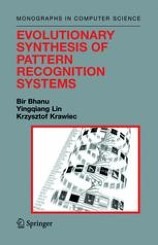
Evolutionary Synthesis of Pattern Recognition Systems
Evolutionary Synthesis of Pattern Recognition Systems presents novel effective approaches based on evolutionary computational techniques, such as genetic programming (GP), linear genetic programming (LGP), coevolutionary genetic programming (CGP) and genetic algorithms (GA) to automate the synthesis and analysis of object detection and recognition systems. The book’s concepts, principles, and methodologies will enable readers to automatically build robust and flexible systems—in a systematic manner—that can provide human-competitive performance and reduce the cost of designing and maintaining these systems. Its content covers all key aspects of object recognition: object detection, feature selection, feature discovery, object recognition, domain knowledge. Basic knowledge of programming and data structures, and some calculus, is presupposed.ing the book’s novel ideas
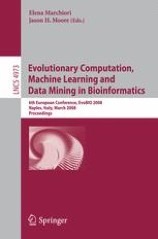
Evolutionary computation, machine learning and data mining in bioinformatics ; 6th European Conference, EvoBIO 2008, Naples, Italy, March 26-28, 2008. Proceedings
The feld of bioinformatics has two main objectives: the creation and main- nance of biological databases, and the discovery of knowledge from life sciences data in order to unravel the mysteries of biological function, leading to new drugs and therapies for human disease. Life sciences data come in the form of biological sequences, structures, pathways, or literature. One major aspect of discovering biological knowledge is to search, predict, or model specifc infortioninagivendatasetinorderto generate new in teresting knowledge.Computer science methods such as evolutionary computation, machine learning, and data mining all have a great deal to ofer the feld of bioinformatics.
