



الصفحة 5
الصفحة 5

Digital human modeling and applications in health, safety, ergonomics and risk management : Posture, motion and health ; 11th International Conference, DHM 2020, Held as Part of the 22nd HCI International Conference, HCII 2020, Copenhagen, Denmark, July 19–24, 2020, Proceedings, Part I
This two-volume set LNCS 12198 and 12199 constitutes the thoroughly refereed proceedings of the 11th International Conference on Digital Human Modeling and Applications in Health, Safety, Ergonomics and Risk Management, DHM 2020, which was supposed to be held as part of the 22st HCI International Conference, HCII 2020, in Copenhagen, Denmark, in July 2020. The conference was held virtually due to the COVID-19 pandemic.

Digital Human Modeling ; 1st International Conference, ICDHM 2007, Held as Part of HCI International 2007, Beijing, China, July 22-27, 2007, Proceedings
Theis book includes human aspects of design and use of computing systems.It covers the entire field of Human-Computer Interaction, addressing major - vances in knowledge and effective use of computers in a variety of application areas. It also contains thematic area of Digital Human Modeling, Shape and Movement Modeling and Anthropometry, Building and Applying Virtual Humans, Medical and Rehabilitation Applications, Industrial and Ergonomic Applications

Design, user experience, and usability interaction design ; 9th International Conference, DUXU 2020, Held as Part of the 22nd HCI International Conference, HCII 2020, Copenhagen, Denmark, July 19–24, 2020, Proceedings, Part I
This book constitutes the refereed proceedings of the 9th International Conference on Design, User Experience, and Usability, DUXU 2020, held as part of the 22nd International Conference on Human-Computer Interaction, HCII 2020, in Copenhagen, Denmark, in July 2020. The conference was held virtually due to the COVID-19 pandemic. From a total of 6326 submissions, a total of 1439 papers and 238 posters has been accepted for publication in the HCII 2020 proceedings. The 40 papers included in this volume were organized in topical sections on UX design methods, tools and guidelines, interaction design and information visualization, and emotional design.

Design and analysis of randomized algorithms : Introduction to design paradigms
Randomness is a powerful phenomenon that can be harnessed to solve various problems in all areas of computer science. Randomized algorithms are often more efficient, simpler and, surprisingly, also more reliable than their deterministic counterparts. Computing tasks exist that require billions of years of computer work when solved using the fastest known deterministic algorithms, but they can be solved using randomized algorithms in a few minutes with negligible error probabilities. Introducing the fascinating world of randomness, this book systematically teaches the main algorithm design paradigms – foiling an adversary, abundance of witnesses, fingerprinting, amplification, and random sampling, etc. – while also providing a deep insight into the nature of success in randomization. Taking sufficient time to present motivations and to develop the reader's intuition, while being rigorous throughout, this text is a very effective and efficient introduction to this exciting field.

Defence Applications of Multi-Agent Systems; International Workshop, DAMAS 2005, Utrecht, The Netherlands, July 25, 2005, Revised and Invited Papers
This book constitutes the thoroughly refereed post-proceedings of the International Workshop on Defence Applications of Multi-Agent Systems, DAMAS 2005, held in Utrecht, The Netherlands in July 2005 as an associated event of AAMAS 2005, the main international conference on autonomous agents and multi-agent systems. The 10 revised full papers presented together with 1 invited article are organized in topical sections on decision support and simulation, unmanned aerial vehicles, as well as on systems and security.

Deepfake
The technology used to create such digital content has quickly become accessible to the masses, such as “DEEPFAKE.” Deep fakes refer to manipulated videos, or other digital representations produced by sophisticated artificial intelligence, that yields to synthesize a sequence of face images and voices of characters corresponding to their identities, such as voice tone, facial expression, with a good lip synchronization. Therefore, this study is about developing real-time video generation software, which generates a target video from a single input image. Several methods and algorithms have been applied to detect, analyze personalize facial expression, voice and natural head poses to present a life-like image instead of a low quality one.
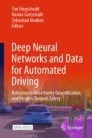
Deep neural networks and data for automated driving : robustness, uncertainty quantification, and insights towards safety
Environment perception for highly automated driving heavily employs deep neural networks, facing many challenges. How much data do we need for training and testing? How to use synthetic data to save labeling costs for training? How do we increase robustness and decrease memory usage? For inevitably poor conditions: How do we know that the network is uncertain about its decisions? Can we understand a bit more about what actually happens inside neural networks? This leads to a very practical problem particularly for DNNs employed in automated driving: What are useful validation techniques and how about safety? This book unites the views from both academia and industry, where computer vision and machine learning meet environment perception for highly automated driving. Naturally, aspects of data, robustness, uncertainty quantification, and, last but not least, safety are at the core of it. This book is unique: In its first part, an extended survey of all the relevant aspects is provided. The second part contains the detailed technical elaboration of the various questions mentioned above.

Deep learning approaches to cloud security
Covering one of the most important subjects to our society today, cloud security, this editorial team delves into solutions taken from evolving deep learning approaches, solutions allowing computers to learn from experience and understand the world in terms of a hierarchy of concepts, with each concept defined through its relation to simpler concepts.

Declarative agent languages and technologies II ; 2nd international workshop, DALT 2004, New York, NY, USA, July 19, 2004, revised selected papers
Nearly 40 research groups worldwide were motivated to contribute to this event by submitting their most recent research achievements, covering a wide variety of the topics listed in the call for papers. More than 30 top researchers agreed to join the Program Committee, which then collectively faced the hard task of selecting the one-day event program. The fact that research in multi-agent systems is no longer only a novel and promising research horizon at dawn is, in our opinion, the main reason behind DALT’s (still short) success story. On the one hand, agent theories and app- cations are mature enough to model complex domains and scenarios, and to successfully address a wide range of multifaceted problems, thus creating the urge to make the best use of this expressive and versatile paradigm, and also pro?t from all the important results achieved so far. On the other hand, bui- ing multi-agent systems still calls for models and technologies that could ensure system predictability, accommodate ?exibility, heterogeneity and openness, and enable system veri?cation.

Datatype-Generic Programming ; International Spring School, SSDGP 2006, Nottingham, UK, April 24-27, 2006, Revised Lectures
A leitmotif in the evolution of programming paradigms has been the level and extent of parametrisation that is facilitated — the so-called genericity of the paradigm. The sorts of parameters that can be envisaged in a programming language range from simple values, like integers and fioating-point numbers, through structured values, types and classes, to kinds (the type of types and/or classes).Datatype-generic programming is about parametrising programsby the structure of the data that they manipulate. To appreciate the importance of data type genericity,one need look no further than the internet. The internet is a massive repository of structured data, but the structure is rarely exploited. For example, compression of data can be much more efiective if its structure is known, but most compression algorithms regard the input data as simply a string of bits, and take no account of its internal organisation. Datatype-generic programming is about exploiting the structure of data when it is relevant and ignoring it when it is not. Programming languages most c- monly used at the present time do not provide efiective mechanisms for do- menting and implementing datatype genericity.

Data-Driven 3D Facial Animation
Data-Driven 3D Facial Animation: systematically describes the emerging data-driven techniques developed over the last ten years or so. Although data-driven 3D facial animation is used more and more in animation practice, to date there have been very few books that specifically address the techniques involved. Comprehensive in scope, the book covers not only traditional lip-sync (speech animation), but also expressive facial motion, facial gestures, facial modeling, editing and sketching, and facial animation transferring. It provides an up-to-date reference source for academic research and for professionals working in the facial animation field.

Data Algorithms with Spark
Apache Spark's speed, ease of use, sophisticated analytics, and multilanguage support makes practical knowledge of this cluster-computing framework a required skill for data engineers and data scientists. With this hands-on guide, anyone looking for an introduction to Spark will learn practical algorithms and examples using PySpark. you will: Learn how to select Spark transformations for optimized solutions Explore powerful transformations and reductions including reduceByKey(), combineByKey(), and mapPartitions() Understand data partitioning for optimized queries Build and apply a model using PySpark design patterns Apply motif-finding algorithms to graph data Analyze graph data by using the GraphFrames API Apply PySpark algorithms to clinical and genomics data Learn how to use and apply feature engineering in ML algorithms Understand and use practical and pragmatic data design patterns

Creating Flash Widgets with Flash CS4 and ActionScript 3.0
Creating Flash Widgets with Flash CS4 and ActionScript 3.0 is an introduction to developing widgets for the Internet using the features of Flash CS4 and ActionScript 3.0. Many social-networking sites, blogs, and personal home pages have adopted the use of widgets and Flash developers can create and distribute their own widgets for others to use. A step-by-step example demonstrates how to design and develop your own Flash widgets and integrate them with XML. In addition, publishing, promoting, and capitalizing on your Flash widgets is discussed.

Cooperative Design, Visualization, and Engineering ; 17th International Conference, CDVE 2020, Bangkok, Thailand, October 25–28, 2020, Proceedings
This book constitutes the proceedings of the 17th International Conference on Cooperative Design, Visualization, and Engineering, CDVE 2020, held in Bangkok, Thailand, in October 2020.* The 33 full papers and 7 short papers presented were carefully reviewed and selected from 74 submissions. The achievement, progress and future challenges are reported in areas such as health care, industrial design, banking IT systems, cultural activities support, operational maritime cybersecurity assurance, emotion communication, and social network data analytics.

Computing Attitude and Affect in Text : Theory and Applications
Human Language Technology (HLT) and Natural Language Processing (NLP) systems have typically focused on the “factual” aspect of content analysis. Other aspects, including pragmatics, opinion, and style, have received much less attention. However, to achieve an adequate understanding of a text, these aspects cannot be ignored. The chapters in this book address the aspect of subjective opinion, which includes identifying different points of view, identifying different emotive dimensions, and classifying text by opinion. Various conceptual models and computational methods are presented.

Computer Vision in Human-Computer Interaction ; Vol.3979 ; ECCV 2006 Workshop on HCI, Graz, Austria, May 13, 2006, Proceedings
This volume presents the proceedings of the HCI 2006 Workshop, held in conjunction with ECCV 2006 (European Conference on Computer Vision) in Graz, Austria. The goal of this workshop was to bring together researchers from the field of computer vision whose work is related to human–computer interaction.

Computer vision in human-computer interaction ; Vol. 3766
Human-Computer Interaction (HCI) lies at the crossroads of many scienti?c areas including arti?cial intelligence, computer vision, face recognition, motion tracking, etc. In order for HCI systems to interact seamlessly with people, they need to understand their environment through vision and auditory input. Mo- over, HCI systems should learn how to adaptively respond depending on the situation. The goal of this workshop was to bring together researchers from the ?eld of computer vision whose work is related to human-computer interaction. The selected articles for this workshop address a wide range of theoretical and - plication issues in human-computer interaction ranging from human-robot - teraction, gesture recognition, and body tracking, to facial features analysis and human-computer interaction systems.

Computer Vision and Internet of Things : Technologies and Applications
Explores the utilization of Internet of Things (IoT) with computer vision and its underlying technologies in different applications areas. Using a series of present and future applications – including business insights, indoor-outdoor securities, smart grids, human detection and tracking, intelligent traffic monitoring, e-health departments, and medical imaging – this book focuses on providing a detailed description of the utilization of IoT with computer vision and its underlying technologies in critical application areas, such as smart grids, emergency departments, intelligent traffic cams, insurance, and the automotive industry.

Computer vision : Algorithms and applications
Explores the variety of techniques used to analyze and interpret images. It also describes challenging real-world applications where vision is being successfully used, both in specialized applications such as image search and autonomous navigation, as well as for fun, consumer-level tasks that students can apply to their own personal photos and videos. Suitable for an upper-level undergraduate or graduate-level course in computer science or engineering, this textbook focuses on basic techniques that work under real-world conditions and encourages students to push their creative boundaries. Its design and exposition also make it eminently suitable as a unique reference to the fundamental techniques and current research literature in computer vision.

Computer vision - ECCV 2008 ; 10th European conference on computer vision, Marseille, France, October 12-18, 2008, Proceedings, Part IV
The four-volume set comprising LNCS volumes 5302/5303/5304/5305 constitutes the refereed proceedings of the 10th European Conference on Computer Vision, ECCV 2008, held in Marseille, France, in October 2008.
