



الصفحة 5
الصفحة 5
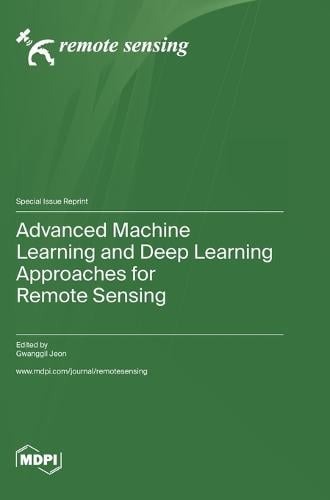
Advanced machine learning and deep learning approaches for remote sensing
Provides research on how technologies such as artificial intelligence-based machine learning and deep learning can be applied to remote sensing. Through this, we can see the process of solving the existing problems of image and image signal processing for remote sensing. These techniques are computationally intensive and require the help of high-performance computing devices. With the development of devices such as GPUs, remote sensing technology, and aerial sensing technology, it is possible to monitor the Earth with high-resolution images and to obtain vast amounts of Earth observation data. The papers published in this reprint describe recent advances in big data processing and artificial intelligence-based technologies for remote sensing technology.

Advanced driver assistance system (ADAS)
The purpose of Advanced Driver Assistance Systems (ADAS) is to reduce or eliminate driver errors, and to enhance efficiency in traffic and transportation. Our project is a means and a great contribution to safe driving, and the user does not need to install sensors or hard tools to the vehicle, and through it, the cost can be reduced and maintenance cost can be eliminated. The images are processed and segmented to find different features in the image. Segmented images are used for identification and classification based on various machine learning algorithms and neural networks. The main focus of ADAS technologies is to contribute to factors such as safety management and automated, stress-free driving for the driver

Advanced concepts for intelligent vision systems ; Vol. 3708 ; 7th International conference, ACIVS 2005, Antwerp, Belgium, September 20-23, 2005, Proceedings
"Thisvolumecollectsthepapersacceptedforpresentationatthe7thInternational Conferenceon Advanced Conceptsfor IntelligentVision Systems (ACIVS 2005). ThoughACIVS is a conference on all areas in image processing, one of its major domains is image and video compression. A third of the selected papers dealt with compression, motion estimation, moving object detection and other video applications. This year, topics related to clustering, pattern recognition and biometrics constituted another third of the conference. The last third was more related to the fundamentals of image processing, namely noise reduction, ?ltering, restorationandimagesegmentation.We wouldliketothankthe invited speakers Fernando Pereira"
Advance Concepts of Image Processing and Pattern Recognition : Effective Solution for Global Challenges
Explains the important concepts and principles of image processing to implement the algorithms and techniques to discover new problems and applications. It contains numerous fundamental and advanced image processing algorithms and pattern recognition techniques to illustrate the framework. It presents essential background theory, shape methods, texture about new methods, and techniques for image processing and pattern recognition. It maintains a good balance between a mathematical background and practical implementation. This book also contains the comparison table and images that are used to show the results of enhanced techniques. This book consists of novel concepts and hybrid methods for providing effective solutions for society. It also includes a detailed explanation of algorithms in various programming languages like MATLAB, Python, etc.
3-D Shape Estimation and Image Restoration : Exploiting Defocus and Motion-Blur
Images contain information about the spatial properties of the scene they depict. When coupled with suitable assumptions, images can be used to infer three-dimensional information. This useful volume concentrates on motion blur and defocus, which can be exploited to infer the 3-D structure of a scene—as well as its radiance properties—and which in turn can be used to generate novel images with better quality. 3-D Shape Estimation and Image Restoration presents a coherent framework for the analysis and design of algorithms to estimate 3-D shape from defocused and motion blurred images, and to eliminate defocus and motion blur to yield "restored" images. It provides a collection of algorithms that are optimal with respect to the chosen model and estimation criterion.

3D Segmentation for medical images (OsteoVision) = التقطيع ثلاثي الأبعاد للصور الطبية
With the increasing integration of AI across various sectors, artificial intelligence (AI) is already playing a significant role in the healthcare industry, and its use is expected to grow further. AI systems used in image processing and computer vision algorithms have shown a significant ability to perform many operations such as segmentation, classification, and detection. This project presents the application of computer vision algorithms in the field of medical imaging for diagnostic, therapeutic, and interventional purposes. This thesis explores the use of several computer vision algorithms to address different pathologies, specifically brain tumors (glioma) (see Appendix A) and knee osteoarthritis (OA), as well as tracking the progression of knee osteoarthritis using the Kellgren and Lawrence (KL) grading system, a common method for classifying the severity of OA into five grades. To achieve the desired impact, the project employs various techniques, including 3D segmentation for brain tumors, 2D segmentation for knee joints, and multinomial classification for determining the severity of knee OA injuries. The primary aims of the project are to enhance diagnostic accuracy, assist in creating treatment plans, provide an assistive tool for healthcare providers to make more informed decisions, leverage AI's capabilities to detect abnormalities that might escape the human eye, and streamline workflow. To facilitate these goals, the project incorporates a user-friendly UI, a website, and a Flutter-based mobile application, enabling healthcare providers to efficiently integrate these tools into their practice and improve patient care.
